Explained
Desk Organizers, Explained
After reading, you'll know which of the four desk-organizer types fixes your specific clutter and how to judge one before you buy.
In this guide
"Desk organizer" isn't one product - it's a label stuck on four very different tools that solve four different messes. A tiered sorter fights paper, a cable box fights cords, a monitor riser fights wasted vertical space, and a drawer tray fights loose small parts. The mistake nearly everyone makes is buying a do-everything unit or the wrong type entirely, so it ends up half-used or returned.
The 30-second version
- There is no single "best" organizer - the right one depends entirely on which mess bothers you most, so name your problem before you shop.
- Match material to load: steel mesh handles heavy paper stacks and monitors, while bamboo and plastic are for looks and light small-parts storage.
- Measure before you order - big sorters eat real desk depth and drawer trays only fit certain drawers, and a size mismatch is the top reason these get returned.
- "Adjustable" dividers are often friction-fit, meaning they can slide loose in a drawer you open all day; fixed or locking compartments hold better.
- A fixed-height riser is only ergonomic if that one height happens to match your posture, so confirm the lift before assuming it fixes neck strain.
The products this guide is about
Our verdict on each, with the full reasoning on the companion review.
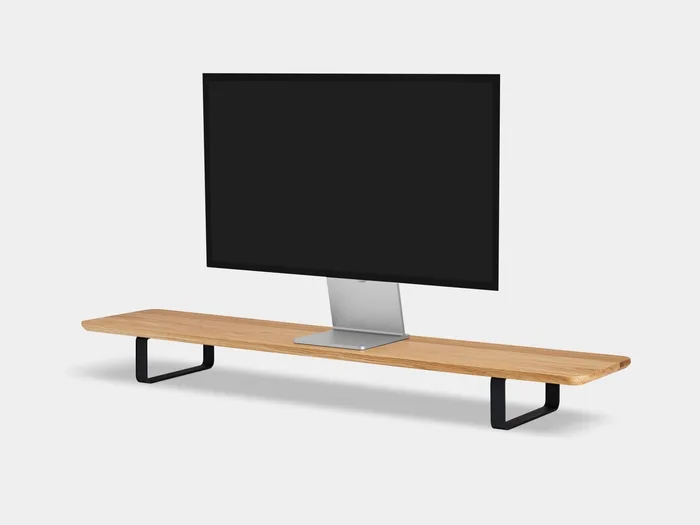
- Buy Oakywood Desk Shelf A solid wood monitor shelf rated for 100 kg that turns the space under your screens into storage.
- Buy Bluelounge CableBox Drop a plugged-in power strip in, close the lid, and the cable nest is gone. Amazon
- It depends Joseph Joseph Blox 7-piece Drawer Organiser Set Seven trays that clip together on all sides, if your drawer is deep enough for the layout. Amazon
- Skip Poppin Letter Trays, Set of 2 Two stackable paper trays sold on a single figure: 300 sheets each.
What actually matters
- The job it does - paper, cables, monitor height, or drawer contents are four separate problems; buying the type that matches your actual clutter is the single most important decision.
- Material and load rating - powder-coated steel mesh carries heavy stacks and a monitor without sagging, while bamboo and plastic look nicer but are meant for light loads, so don't ask them to hold weight.
- Footprint - a big multi-tier sorter claims a real chunk of desk depth, so the storage it adds has to be worth the surface it costs you.
- Capacity that fits your stuff - count the trays, slots, cups, and drawers against what you're actually storing rather than buying the biggest unit on offer.
- Compartment stability - dividers and trays that lock or are fixed stay put; friction-fit "adjustable" ones tend to wander every time the drawer moves.
- Assembly and setup - some units drop in ready to use, others need a few minutes of assembly, which matters if you want it working the moment it arrives.
- Aesthetics for where it lives - an organizer on a visible desk or console has to look intentional, while one hidden in a drawer only needs to function.
The specs, in plain English
Green flags vs red flags
Green flags
- It's clearly built for one job and does that job completely, rather than promising to do everything at once.
- Steel mesh or a solid frame on anything meant to hold heavy paper stacks or a monitor.
- Listed dimensions you can measure against your desk or drawer before buying.
- Owner reports that it holds up months later - no sagging, splitting, or dividers drifting.
- Non-slip feet and a design that stays planted when you open, close, or bump it.
Red flags
- A "do-everything" unit that seems to solve paper, cables, and drawers at once - it usually does none of them well.
- Friction-fit "adjustable" dividers with no locking mechanism, if you'll open that drawer often.
- Bamboo or thin plastic marketed for heavy loads it isn't built to carry.
- A fixed-height riser sold as an ergonomic fix without telling you the actual height.
- No dimensions listed, so you can't tell whether it fits your space until it arrives.
- A light lid that owners report flexes or splits at an edge.
Who's who: the brands
- Oakywood - Makes solid wood desk shelves and accessories, with a stated load rating, published dimensions and a 5-year warranty.
- Bluelounge - Cable management maker whose CableBox hides a plugged-in power strip in a flame-retardant plastic box.
- Joseph Joseph - Housewares designer whose Blox drawer trays clip together on all sides to fit the drawer.
- Poppin - Office furniture and accessories brand selling stackable letter trays and desk organizers in bright colours.
How to read a listing without getting fooled
Start by ignoring the word "organizer" and figuring out which of the four jobs the listing is really for - paper sorter, cable box, monitor riser, or drawer tray - because that decides whether it fits your problem at all. Then read the material and the dimensions like they're the headline: mesh or metal signals it can bear weight, bamboo or plastic signals looks and light duty, and the length-by-width figure tells you whether it will actually fit your desk depth or drawer. Treat "adjustable" as a yellow flag on drawer dividers and check the reviews for whether they hold; treat any riser's ergonomic claim as unproven until you find the fixed height and compare it to what your posture needs. Photos flatter every one of these, so let capacity counts and owner reports about durability - sagging, flex, splitting, drifting dividers - carry more weight than the styled hero shot.
How much should you spend?
Desk organizers are an inexpensive category overall, so the real question isn't how little you can spend but whether you're buying the right type. A simple cable box, a basic drawer tray, or a modest monitor riser sits at the budget end and is perfectly good at its one job - paying more there rarely buys more usefulness. Spending steps up when you want a large multi-tier steel sorter that replaces several smaller organizers at once; that's where a mid-range price earns its keep, because the added capacity and sturdier build genuinely do more work. What isn't worth paying for is aesthetics on something hidden in a drawer, or a "premium" material like bamboo asked to carry loads it can't handle. Match the spend to the job: cheap and simple for a single, hidden fix, a bit more for a sturdy do-most-things desktop unit you'll see and lean on daily.
Questions, answered
What's the best desk organizer for a generally messy desk?
For the most common problem - stacks of paper, mail, and scattered supplies - a multi-tier mesh sorter does the most in one footprint and is the best first buy. If your desk is otherwise clear and only the cables are the eyesore, a cable box is the smarter first purchase. The trick is buying for the mess you actually have, not a do-everything unit you won't fully use.
Do I need a monitor stand or a drawer organizer?
They solve unrelated problems, so it's not really either-or. A monitor riser lifts your screen and reclaims the dead space beneath it - it's about desk-surface real estate and posture. A drawer organizer only tidies what's already inside a drawer. Plenty of people end up wanting one of each rather than choosing between them.
Are cable management boxes safe to use with a power strip?
For a normal desk power strip and low-wattage chargers, owners generally report no issues, since those draw little current and generate little heat. Give higher-draw devices some airflow and don't cram the box so full that cords get pinched. As a general rule, don't enclose space heaters or other high-wattage loads in any cable box.
Do "adjustable" bamboo drawer dividers actually stay in place?
This is the weak point of most friction-fit dividers: they hold if the drawer stays still, but sliding it open and shut can nudge them loose over time. If you set a layout once and rarely disturb it, they're fine. If you open that drawer constantly, a tray with fixed compartments or spring-loaded dividers will frustrate you less.
Metal mesh or bamboo - which should I pick?
Metal mesh is the more durable, load-bearing choice and shrugs off heavy paper stacks or a monitor. Bamboo looks warmer and suits visible surfaces or nice drawers, but it's better for light small-parts storage than heavy loads. Choose mesh for capacity and toughness, bamboo for looks in a spot people will see.
Will a fixed-height monitor riser fix my neck strain?
Only if that one height happens to bring your screen close to eye level for your seated posture. A fixed riser can't be dialed in, so a lift that's perfect for one person is too low for a taller user chasing true eye-level ergonomics. Check the actual height against how far your screen needs to rise before counting on it as a posture fix.
Or jump to the head-to-head: Oakywood Desk Shelf vs Bluelounge CableBox.