Explained
Compression Boots, Explained
After reading this you'll understand how compression boots squeeze your legs, which specs actually change the experience, and how to tell a real recovery tool from a wellness gadget.
In this guide
Pneumatic compression boots wrap your legs and inflate in timed waves to help you feel less tired and heavy after training. The category looks confusing because marketing leans hard on pressure numbers and zone counts, when what really separates a good system from a gimmick is how smoothly and controllably it squeezes. This guide decodes the jargon so you can match a system to how you'll actually use it, without paying for polish you don't need.
The 30-second version
- Sequential beats uniform. The single biggest quality difference is whether the boot inflates zone-by-zone from foot to thigh in a smooth wave, or just squeezes the whole leg at once.
- The evidence is modest, not magic. Owners and independent testing broadly agree boots make legs feel fresher and less sore, but claims of big next-day performance gains are weak, so treat them as a comfortable recovery ritual.
- Tethered vs untethered is the real decision. A hose-connected pump usually buys more pressure, more zones, and a lower price; an untethered pump-in-the-boot design buys freedom and travel-friendliness at a premium.
- Sizing is by leg length, not shoe size. Getting the inseam right so the zones line up with your calf, knee, and thigh matters more than any single spec on the box.
- Pressure numbers are a range to sit inside, not a target to max. A usable spread of levels in mmHg with the ability to hold extra pressure on a sore spot beats a bigger headline peak you'll never comfortably use.
The products this guide is about
Our verdict on each, with the full reasoning on the companion review.
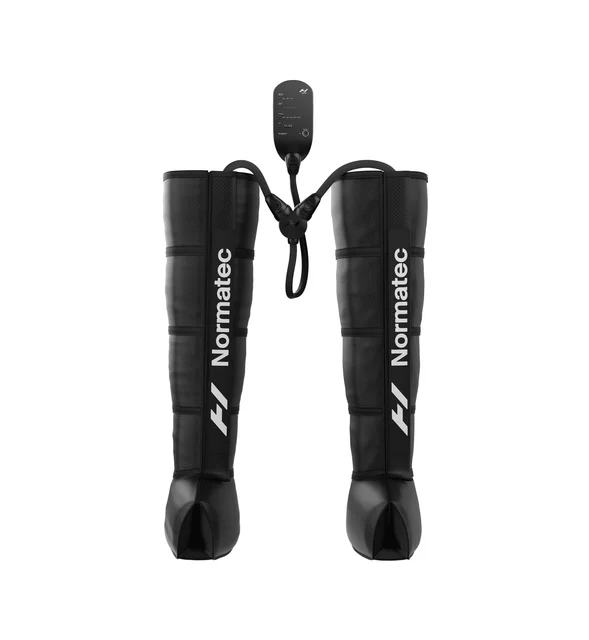
- Buy Hyperice Normatec 3 The polished sequential-compression benchmark, with gapless zone-by-zone squeezing and the best app control here.
- Buy Therabody RecoveryAir JetBoots Prime Fully untethered boots with the pump built in, so recovery happens anywhere without a cabled base unit.
- It depends Rapid Reboot Compression Boot System A durable, high-pressure sequential system that delivers most of the benefit for less money, if you can live with a cable.
- Skip Renpho Aeria Boot A cheap, untethered leg boot that is fine for casual circulation relief but too crude for real athletic recovery.
What actually matters
- Compression style (sequential vs uniform) — sequential systems inflate one zone at a time in a foot-to-thigh wave, which owners describe as more natural and effective; a uniform whole-leg squeeze is the classic tell of a budget system.
- Number of zones or chambers — more overlapping zones (typically four to five on serious systems) make the wave feel smoother and gapless; two chambers means a crude squeeze.
- Pressure range and control (mmHg) — a usable spread of levels lets you find a comfortable, sustainable setting, and targeted boosting lets you hold extra pressure on one sore calf or quad.
- Tethered vs untethered — decide up front whether you want the control and value of a hose-connected pump or the cable-free freedom of a pump built into the boots.
- Sizing and coverage (inseam, full-leg vs calf-only) — match boot length to your leg so zones align; full-leg boots cover foot to hip, while calf-only or shorter cuffs cover less.
- Battery, noise, and connectivity — if it's wireless, check how long a charge lasts; check how loud the pump is since you'll relax next to it; and decide whether onboard presets are enough or you want app control.
- Warranty and durability — these are powered fabric garments that get zipped, stuffed in bags, and inflated hundreds of times, so a longer warranty and a reputation for holding up are worth real money.
The specs, in plain English
Green flags vs red flags
Green flags
- Clearly stated sequential (zone-by-zone) compression with four or more overlapping zones per leg
- A named pressure range in mmHg and several adjustable levels, ideally with the ability to boost one zone
- Distinct inseam or length sizes (short/standard/tall) so you can match the boots to your leg
- Honest specs on battery life and noise if it's untethered, and a clearly stated warranty length
- The pair is priced and sold together, with coverage (full-leg or calf) stated plainly
Red flags
- Only two chambers or a 'uniform' whole-leg squeeze dressed up with recovery language
- Big headline pressure or zone claims with no mmHg figures, no real sizing options, and vague mode names
- Sold per single boot so the advertised price quietly doubles to cover both legs
- Bold promises of dramatic performance or injury-healing benefits, which outrun the evidence
- No warranty details, no clear sizing guide, and reviews describing it as a gadget rather than a recovery tool
Who's who: the brands
- Hyperice (Normatec) - The reference point in the category, known for refined, gapless sequential compression, app control, and targeted zone boosting.
- Therabody (RecoveryAir) - Recovery-tech brand whose untethered boots build the pump into the cuff for genuinely cable-free use.
- Rapid Reboot - Value-oriented maker known for deep, durable sequential systems and a longer standard warranty, usually tethered.
- Renpho - Budget wellness brand whose leg boots suit gentle circulation relief more than serious athletic recovery.
How to read a listing without getting fooled
Read past the biggest number on the page. First find the compression style: the word you want is 'sequential' (or 'peristaltic'), not 'uniform', and a zone or chamber count of four or five signals a smoother wave than two. Next look for a real pressure range in mmHg plus how many levels you can set, rather than a single dramatic peak figure. Confirm it's sized by leg length with more than one option, and check whether it's full-leg or calf-only so you know what's covered. If it's advertised as wireless or untethered, hunt for the battery life and noise figures the marketing tends to bury. Finally, scan for the warranty and whether the listing quietly sells one boot instead of a pair, since that changes the price. Where a spec sheet is silent on sizing, mmHg, and warranty, assume the answer is unflattering.
How much should you spend?
Spend is driven mostly by three things: how refined the sequential squeeze is (more, overlapping, gapless zones cost more), whether the pump is untethered (cable-free convenience carries a real premium), and software polish like app control and saved routines. The value sweet spot for most people is a solid tethered sequential system with a genuine mmHg range and durable build; it delivers a large share of the flagship feel for meaningfully less, as long as you don't mind sitting near a hose. Paying up makes sense if being untethered is something you'll use every single session, or if the smoothest possible wave and fine app control genuinely matter to you. Paying up does not make sense just to chase a bigger peak-pressure number you'll never comfortably use. At the bottom of the market, the savings are often an illusion: crude two-chamber boots sold per leg tend to be wellness gadgets, and stepping up to a real sequential system is usually the better use of money.
Questions, answered
Do compression boots actually speed up recovery?
The answer is that the evidence is modest. Owners and independent testing broadly agree the boots reduce the feeling of soreness and heaviness after hard training and are genuinely relaxing to use. What's much weaker and more individual is the claim that they dramatically boost next-day performance. The sensible expectation is a comfortable recovery ritual that helps you feel fresher and unwind, not a guaranteed performance upgrade.
Are compression boots safe to use, and is there anyone who shouldn't?
This is general product information, not medical advice. For most healthy people, using boots at a comfortable pressure for the recommended session length is generally uneventful. But squeezing the legs isn't appropriate in every situation. If you have a circulatory condition or risk factors, for example a history of blood clots or deep vein thrombosis (DVT), varicose veins, neuropathy, diabetes, an injury or implanted device, or if you are pregnant, consult a qualified healthcare professional before using pneumatic compression. Stop and reassess if you feel numbness, tingling, or pain rather than a firm, pleasant squeeze.
Tethered or untethered, which should I get?
A tethered system keeps the pump and controls in a small unit connected to the boots by a hose. That usually buys more precise pressure, more zones, and a lower price, but you have to sit near the unit. Untethered boots put the pump inside the cuff so you can move around and travel light, at the cost of some pressure ceiling, battery limits, and money. Pick tethered for the most control and value, untethered for convenience you'll use often.
How do I choose the right size, and does full-leg vs calf-only matter?
Boots are sized by leg length (inseam or height), not shoe size, and getting this right matters more than any spec because it determines whether the zones line up with your calf, knee, and thigh. Measure per the maker's guide before buying. Full-leg boots cover foot to upper thigh (and some systems add hip or arm attachments); calf-only or shorter cuffs cover less and suit people focused on lower-leg relief. Match coverage to where you actually feel tired.
How much pressure and how often should I use them?
Start low and build up; higher pressure is not automatically better, and a comfortable, sustainable session beats maxing the dial. Many people use boots for roughly 15 to 30 minutes after training or in the evening. Follow the manufacturer's guidance on session length and pressure, keep the pump noise and comfort in mind since you'll be relaxing next to it, and back off if anything feels numb or painful rather than firmly pleasant.
Do I need the app, and how do I keep the boots clean?
An app is a nice-to-have, not a requirement. It mainly adds saved routines and finer tuning; if you'll use one or two settings, capable onboard presets are plenty. For cleaning, most boots are wiped down inside with a damp cloth or gentle antibacterial wipe and left to air out, since the fabric traps sweat over time; follow the manufacturer's instructions and avoid soaking the parts that house electronics.
Or jump to the head-to-head: Hyperice Normatec 3 vs Therabody RecoveryAir JetBoots Prime.