

Health & Wellness
The Best Pneumatic Compression Boots: 4 Compared (and One to Skip)
We compared four leg-recovery compression systems on zones, pressure control, portability, battery, sizing, noise and warranty.
The short version
Pneumatic compression boots use timed air waves to help flush your legs after hard training, and the difference between systems is how smoothly and controllably they squeeze. The Hyperice Normatec 3 is our overall pick for its gapless five-zone sequential compression, seven pressure levels and the best app control. The Therabody RecoveryAir JetBoots Prime is the top choice if you want to be fully untethered, with the pump built into the boots. The Rapid Reboot system is the value play, delivering deep sequential pressure and durability if you can live with a cabled pump. The Renpho Aeria Boot is fine for casual leg relief but too crude for serious recovery. Best for: athletes who want the smoothest, most controllable sequential recovery should buy the Normatec 3, or the JetBoots Prime if going cable-free matters more.
Our picks at a glance
- Hyperice Normatec 3 - Buy. The polished sequential-compression benchmark, with gapless zone-by-zone squeezing and the best app control here.
- Therabody RecoveryAir JetBoots Prime - Buy. Fully untethered boots with the pump built in, so recovery happens anywhere without a cabled base unit.
- Rapid Reboot Compression Boot System - It depends. A durable, high-pressure sequential system that delivers most of the benefit for less money, if you can live with a cable.
- Renpho Aeria Boot - Skip. A cheap, untethered leg boot that is fine for casual circulation relief but too crude for real athletic recovery.
The verdict in 30 seconds
What mattered most
- Compression style
- Pressure control
- Portability
- Power
- App & presets
- Sizing / inseam
Pneumatic compression boots inflate around your legs in timed waves to help flush tired muscles after training. The category splits neatly: refined sequential systems that squeeze zone-by-zone from foot to thigh, untethered boots that free you from a cabled pump, and cheaper 'wellness' boots that look the part but compress more crudely. We put four current systems side by side. Two are easy recommendations, one is a strong value pick with a catch, and one is better skipped by anyone serious about recovery.
The polished sequential-compression benchmark, with gapless zone-by-zone squeezing and the best app control here.
Best for: Runners, lifters and endurance athletes who want the most refined, app-controlled sequential recovery and will pay for polish.
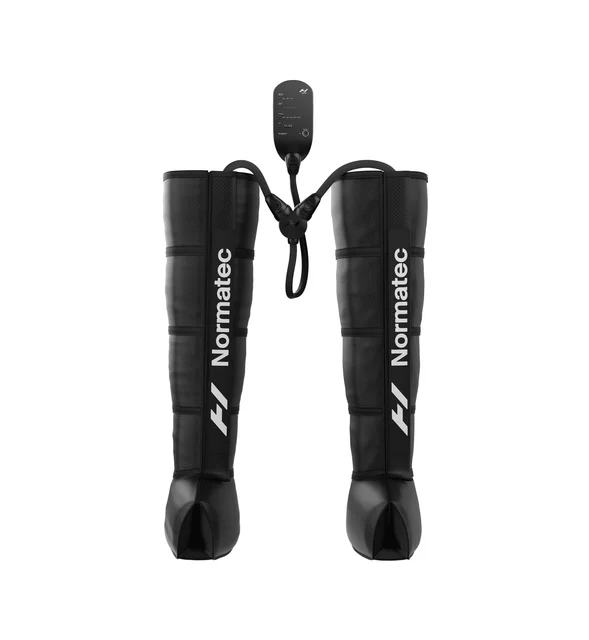
- Five gapless, overlapping zones deliver a smooth foot-to-hip wave that owners consistently rate as the most natural-feeling
- Seven pressure levels (roughly 40-110 mmHg) plus ZoneBoost to hold extra pressure on a sore zone
- Rechargeable, TSA-friendly control unit and Bluetooth app for saved routines and fine tuning
- The control unit still tethers to the boots by a hose, so it is not truly wireless
- Sits at a premium price and the boots are calf-to-thigh only (no separate hip attachment in the box)
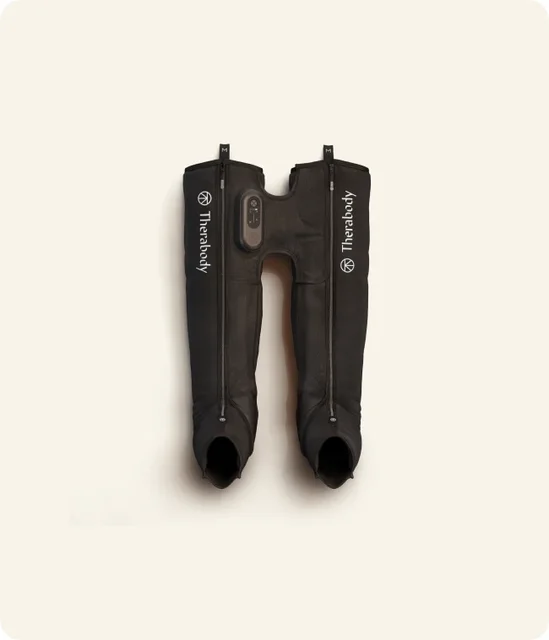
Fully untethered boots with the pump built in, so recovery happens anywhere without a cabled base unit.
Best for: Travelers and anyone who hates cables and wants to recover on the couch, in a hotel or trackside without tethering to a pump.
- Completely wireless: the pump is integrated into the boots, with no external control box or hoses to a base
- Sequential zone compression with Therabody's TruGrade pressure system and simple onboard presets
- Compact and travel-friendly, and among the quieter systems reviewers tested
- Prime keeps controls onboard rather than in an app, so customization is shallower than the Normatec
- Battery life is finite per charge, and the untethered design costs more than a comparable cabled system
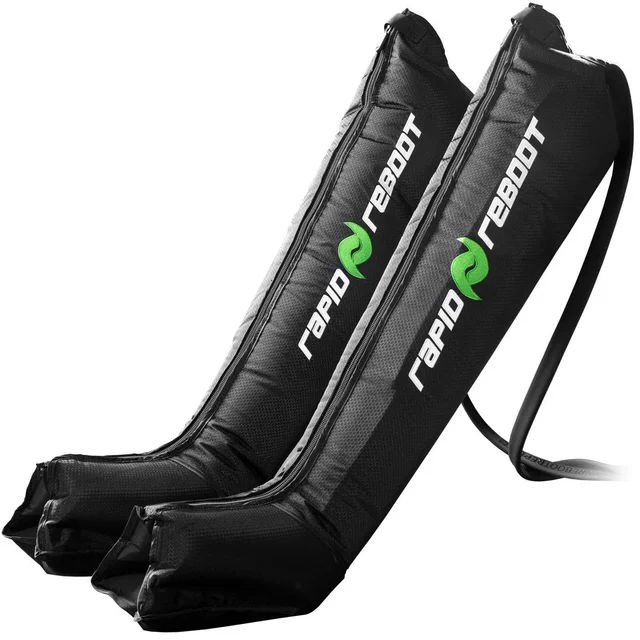
A durable, high-pressure sequential system that delivers most of the benefit for less money, if you can live with a cable.
Best for: Budget-conscious athletes and gyms who prioritize pressure and durability over wireless convenience and app polish.
- Sequential four-chamber squeeze with a strong pressure range that owners call genuinely deep
- Rugged, simple and repair-friendly, with a longer standard warranty than most rivals
- Clear value: much of the recovery experience of the flagships at a mid-range price
- The control unit is tethered by a hose and typically runs on mains power (battery is an add-on)
- Base package leans on onboard controls; app connectivity is limited to the newer premium tier
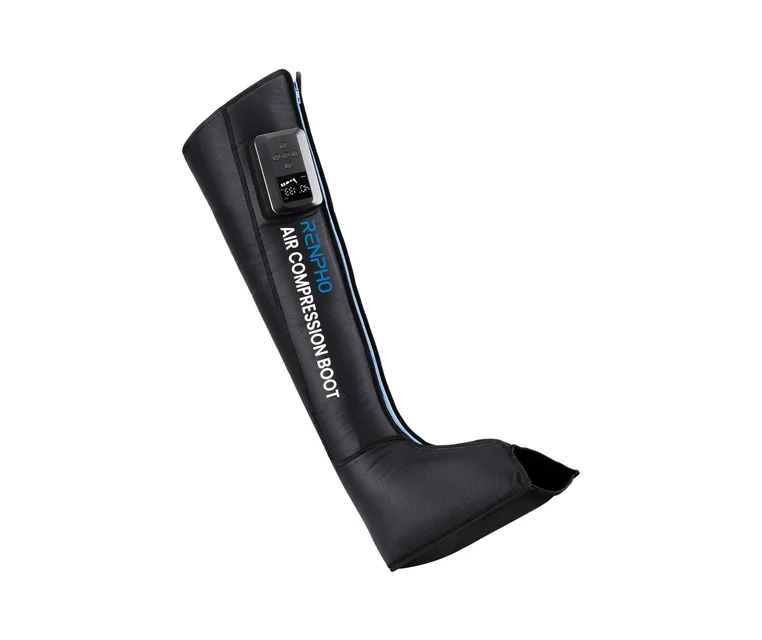
A cheap, untethered leg boot that is fine for casual circulation relief but too crude for real athletic recovery.
Best for: Casual users who mainly want gentle leg relief and desk-worker circulation, not post-training muscle recovery.
- Low price and a self-contained boot with the pump built in, so there is no separate base unit
- A few preset modes and adjustable intensity for light, general leg relief at home
- Rechargeable and easy to store
- Only a couple of chambers with a largely uniform squeeze, so it lacks the true zone-by-zone sequential wave athletes want
- Sold per boot, so equipping both legs narrows the price advantage
- Lower peak pressure, shorter cuff and no meaningful app; owners describe it as a wellness gadget, not a recovery tool
| Criteria | Hyperice Normatec 3 Top pick | Therabody RecoveryAir JetBoots Prime | Rapid Reboot Compression Boot System | Renpho Aeria Boot |
|---|---|---|---|---|
| Verdict | Buy it | Buy it | It depends | Skip it |
| Best for | Runners, lifters and endurance athletes who want the most refined, app-controlled sequential recovery and will pay for polish. | Travelers and anyone who hates cables and wants to recover on the couch, in a hotel or trackside without tethering to a pump. | Budget-conscious athletes and gyms who prioritize pressure and durability over wireless convenience and app polish. | Casual users who mainly want gentle leg relief and desk-worker circulation, not post-training muscle recovery. |
| Price tier | $$$ · premium | $$$ · premium | $$ · mid-range | $ · budget |
| Compression style | 5 gapless zones, sequential | 4 zones, sequential (TruGrade) | 4 chambers, sequential | 2 chambers, mostly uniform |
| Pressure control | 7 levels, ~40-110 mmHg + ZoneBoost | Adjustable sequential, onboard | Wide range, deep peak pressure | A few intensity steps, modest peak |
| Portability | Hose-tethered unit, but battery + TSA-friendly | Fully untethered (pump in the boots) | Hose-tethered, mains-powered | Untethered single boot, built-in pump |
| Power | Rechargeable (~3 hrs) | Rechargeable, wireless | Corded AC (battery optional) | Rechargeable |
| App & presets | Hyperice app + saved routines | Onboard presets, no app | Onboard modes (Bluetooth on premium tier) | Onboard presets, no app |
| Sizing / inseam | 3 inseam sizes (short/standard/tall) | Multiple sizes | Standard and tall lengths | One length, sold per boot |
| Warranty | Limited (registration to activate) | Limited manufacturer warranty | Longer standard warranty | Limited (1-year typical) |
| Price tier | $$$ · premium | $$$ · premium | $$ · mid-range | $ · budget |
Which one is right for you?
- Runners, lifters and endurance athletes who want the most refined, app-controlled sequential recovery and will pay for polish. Buy it Hyperice Normatec 3
- Travelers and anyone who hates cables and wants to recover on the couch, in a hotel or trackside without tethering to a pump. Buy it Therabody RecoveryAir JetBoots Prime
- Budget-conscious athletes and gyms who prioritize pressure and durability over wireless convenience and app polish. It depends Rapid Reboot Compression Boot System
- Casual users who mainly want gentle leg relief and desk-worker circulation, not post-training muscle recovery. Skip it Renpho Aeria Boot
How we judged the field
We don’t run our own lab. Instead we synthesize independent testing, expert reviews and aggregated owner reports, then weigh them against what actually separates a good recovery boot from a gimmick. Five things carried the most weight.
First, compression style: the best systems are sequential, inflating zone-by-zone from the foot upward in a smooth wave rather than squeezing the whole leg at once. The number of zones and how ‘gapless’ the overlap feels drive most of the quality difference. Second, pressure control: a usable range of levels, expressed in mmHg, plus the ability to target a sore area. Third, portability: whether the pump tethers to the boots by a hose or lives inside the boots for cable-free use. Fourth, the practical stuff owners complain about most, battery, noise, sizing and app control. And fifth, warranty and durability, because these are pieces of powered fabric that get zipped, stuffed in bags and inflated hundreds of times.
We kept the lineup to four current, buyable systems that bracket the market: two flagship-tier picks, one value system and one budget option we ultimately steer people away from.
Hyperice Normatec 3 - buy
The Normatec 3 is the system most others get compared to, and it earns that. Its signature is five overlapping, gapless zones that squeeze in sequence from the foot to the top of the thigh, and owners consistently describe the wave as the smoothest and most natural-feeling in the category. You get seven pressure levels spanning roughly 40-110 mmHg, plus ZoneBoost, which holds extra pressure on a specific zone when one calf or quad needs more attention.
The control unit is rechargeable and TSA-friendly, and Bluetooth pairing with the Hyperice app unlocks saved routines and finer adjustment than the onboard buttons alone. Sizing is handled properly, with distinct short, standard and tall inseam options so the zones actually line up with your leg. The honest caveats: the control unit still connects to the boots by a hose, so this is not a wireless design, and it sits firmly at a premium price. For the smoothest, most controllable recovery, it’s worth it.
Therabody RecoveryAir JetBoots Prime - buy
If the hose is a dealbreaker, the JetBoots Prime is the answer. Therabody builds the pump directly into the boots, so there is no external control box and no cable to a base unit; you strap in and walk away. It uses sequential zone compression driven by Therabody’s TruGrade pressure system, with simple onboard presets, and reviewers rate it among the quieter systems and easy to travel with.
What you give up for going cable-free is depth of control. Prime keeps everything on the boots rather than in an app, so customization is shallower than the Normatec’s, and any wireless boot lives within a battery budget per charge. It also commands a premium for the convenience. But for people who recover on the couch, in a hotel room or beside the track, being genuinely untethered is worth a lot, and Prime delivers that better than anything else here.
Rapid Reboot Compression Boot System - it depends
Rapid Reboot is the value pick, and whether it’s right for you comes down to one question: do you mind a cable? The system uses a sequential four-chamber squeeze with a strong pressure range that owners describe as genuinely deep, housed in rugged, simple hardware that is easy to live with and backed by a longer standard warranty than most rivals. For a gym, a team or a budget-conscious athlete, it delivers a large share of the flagship experience for meaningfully less money.
The trade-offs are real. The control unit tethers to the boots by a hose and typically runs on mains power, with a battery available only as an add-on, so it’s the least portable system here. The base package also leans on onboard controls, with app connectivity reserved for the newer premium tier. If pressure and durability matter more to you than wireless freedom and software polish, it’s an easy recommendation; if you want to move around freely, look at the untethered options instead.
Renpho Aeria Boot - skip
The Aeria Boot looks like a bargain entry into recovery boots, and for casual use it’s fine. It’s inexpensive, self-contained with the pump built into the boot, rechargeable, and offers a few preset modes and adjustable intensity for gentle leg relief at home. The problem is that it isn’t really doing the same job as the others. With only a couple of chambers and a largely uniform squeeze, it lacks the true zone-by-zone sequential wave that defines athletic recovery, and its peak pressure and cuff length fall short of the field.
It’s also sold per boot, so equipping both legs quietly erodes the price advantage. Owners tend to describe it as a wellness gadget for tired legs and desk-worker circulation rather than a post-training recovery tool, and that’s the right expectation. If gentle relief is all you want, it’s harmless; if you’re buying for real recovery, spend up to the Rapid Reboot instead.
Hyperice Normatec 3 vs Therabody RecoveryAir JetBoots Prime: which should you buy?
These are the two systems worth the most money, and they optimize for different things. The Normatec 3 is about the quality of the squeeze: five gapless zones, seven pressure levels, ZoneBoost targeting and app-saved routines add up to the most refined, controllable recovery here. The compromise is the hose to the control unit, which keeps you near the pump.
The JetBoots Prime is about freedom: the pump lives in the boots, so you can recover anywhere with no cables at all, and it’s quiet and travel-ready. The compromise is depth, with onboard-only controls and a battery ceiling per charge.
Choose the Normatec 3 if you want the smoothest, most tunable compression and don’t mind sitting near a small unit. Choose the JetBoots Prime if being genuinely untethered, whether for travel, for moving around the house or for trackside use, is the feature you’ll value every single session. Most buyers focused on recovery quality will be happiest with the Normatec; cable-haters will never regret the Prime.
What to look for
- Sequential, not uniform: prioritize boots that inflate zone-by-zone from the foot up. A uniform squeeze on the whole leg is the biggest tell of a budget system.
- Enough zones and pressure control: four to five overlapping zones and several pressure levels (ideally with mmHg figures) give you a usable range. Targeting a single sore zone is a bonus.
- Tethered vs untethered: decide up front. A hose-tethered pump usually means more control and lower cost; an untethered, pump-in-boot design means freedom and travel-friendliness at a higher price.
- Correct inseam sizing: match the boot length to your leg, not your shoe size. Distinct size options matter more than any single spec.
- Battery, noise and app: check charge time and battery life if wireless, how loud the pump is, and whether presets are onboard only or app-controlled.
- Warranty and build: these are powered fabric garments that get handled roughly, so a longer warranty and a reputation for durability are worth real money.
Our final take
Compression boots are a genuinely nice recovery ritual, and the gap between a good one and a poor one is entirely about how smoothly and controllably they squeeze. The Hyperice Normatec 3 is our overall pick because it nails that better than anything else: gapless five-zone sequential compression, seven pressure levels, targeted boosting and real app control. If you’d rather be free of the hose, the Therabody RecoveryAir JetBoots Prime is the untethered runner-up worth paying for. The Rapid Reboot system is the smart-value choice for anyone who cares more about deep pressure and durability than wireless convenience. And the Renpho Aeria Boot is best skipped by anyone serious about recovery, however tempting the price, because it simply doesn’t deliver the sequential squeeze that makes this category worthwhile.
Questions, answered
Do compression boots actually speed up recovery?
Owners and independent testing broadly agree that compression boots reduce the feeling of soreness and heaviness after hard training and are relaxing to use. The clearest, most consistent benefit is that timed, sequential squeezing helps you feel fresher and helps you unwind. Claims about dramatically boosting next-day performance are weaker and more individual, so treat the boots as a comfortable recovery aid rather than a guaranteed performance upgrade.
Tethered pump or fully untethered, which should I get?
A tethered system keeps the pump and controls in a small unit connected to the boots by a hose. That usually buys you more precise pressure, more zones and a lower price, but you have to sit near the unit. Untethered boots like the JetBoots Prime and the Renpho put the pump inside the boots so you can move around freely and travel light, at the cost of some pressure ceiling, battery limits and money. Pick tethered for the most control and value, untethered for convenience.
How do I choose the right size and inseam?
Compression boots are sized by leg length (inseam or height), not shoe size, and getting this right matters more than any spec. Systems like the Normatec 3 offer distinct short, standard and tall options so the zones line up with your calf, knee and thigh. Measure per the manufacturer's guide before buying; boots that are too long waste a zone at the top, and boots that are too short cut compression off below the thigh.
Are compression boots safe to use?
For most healthy people, using them at a comfortable pressure for the recommended session length is generally uneventful. That said, this is general product information, not medical advice. If you have a circulatory condition or any risk factors, for example a history of blood clots or deep vein thrombosis (DVT), varicose veins, neuropathy, diabetes, are pregnant, or have an injury or implanted device, consult a qualified healthcare professional before using pneumatic compression, since squeezing the legs is not appropriate in some medical situations.
How much pressure should I use and how often?
Start low and build up. Higher pressure is not automatically better, and comfortable, sustainable sessions matter more than maxing out the dial. Many people use boots for roughly 15 to 30 minutes after training or in the evening. Follow the manufacturer's guidance on session length and pressure, and back off if you feel numbness, tingling or pain rather than a firm, pleasant squeeze.
Deciding between the top two? See our head-to-head: Hyperice Normatec 3 vs Therabody RecoveryAir JetBoots Prime.
More Health & Wellness reviews
 The Best Compression Socks: 4 Compared (and One to Skip)
  The Best CPAP Cleaning Supplies: 4 Compared (and One to Skip)
  The Best Curling Irons: 4 Compared (and One to Skip)
  The Best Digital Thermometers: 4 Compared (and One to Skip)
  The Best Earplugs for Sleeping: 4 Compared (and One to Skip)
  The Best Electric Heated Blankets: 4 Compared (and One to Skip)