Explained
Compression Socks, Explained
After reading, you'll know exactly which pressure level you need, why graduated design matters more than any marketing claim, and how to size a pair that actually works.
In this guide
Compression socks are sold on colors, copper, and vague wellness promises, but only two boring specs decide whether they do anything: how much pressure they apply (measured in mmHg) and whether that pressure is graduated, meaning tightest at the ankle and easing up the leg. Most first-time buyers grab a level that's either too weak to matter or firmer than they need, and size by shoe size when they should be measuring their leg. This guide decodes the jargon so you can match a pair to your actual need.
The 30-second version
- mmHg is the whole game. it's the amount of pressure the sock applies, and matching it to your need matters far more than brand, color, or any woven-in mineral.
- Graduated is non-negotiable. a good sock is firmest at the ankle and eases up the calf, which is what helps move blood and fluid upward; an even or top-tight squeeze does little.
- Moderate 15-20 mmHg is the everyday sweet spot. it suits travel, long days standing, and mild swelling without the tourniquet feeling of firmer medical levels most people don't need.
- Fit by measuring, not by shoe size. your ankle and calf circumference decide the fit; a sock sized to those numbers beats one sold in broad shoe-size bands.
- Compression wears out. the stretchy fibers that create pressure fade with washing and time, so plan to replace pairs once they stop feeling snug.
The products this guide is about
Our verdict on each, with the full reasoning on the companion review.
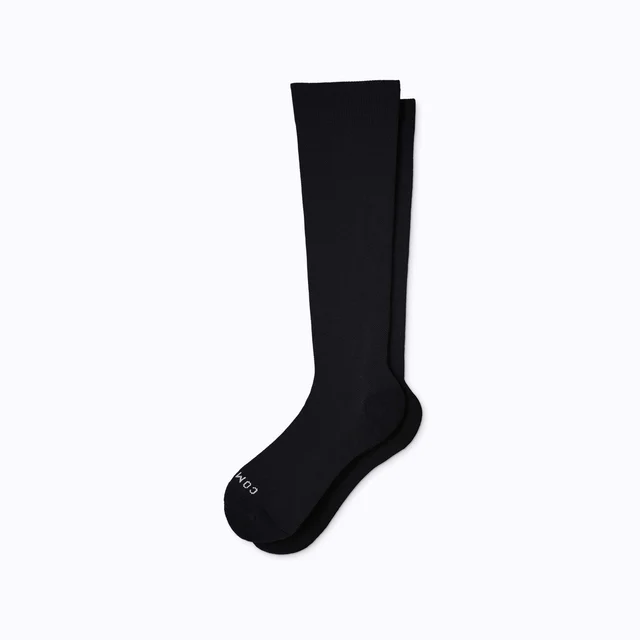
- Buy Comrad Knee-High Compression Socks (15-20 mmHg) True graduated 15-20 mmHg in a breathable everyday knit, which is exactly the level most travelers and standers actually need.
- Buy CEP The Run Compression Tall Socks 4.0 A firm, precisely graduated running sock sized by your actual calf measurement, built for training and recovery rather than the desk.
- It depends Sockwell Circulator Compression Socks (15-20 mmHg) A comfortable merino-blend graduated sock that shines for cool-weather and dress wear but is warmer and sized more loosely than the others.
- Skip Dr. Motion Copper-Infused Knee-High Compression Socks A budget copper-marketing sock at a very light 8-15 mmHg with no graduated profile, which is compression in name more than effect.
What actually matters
- Pressure level (mmHg) decides whether the sock addresses your problem. Pick the lowest level that does the job: light for mild fatigue, moderate for standing and travel, firm only when a professional says so.
- Graduated construction is the single quality tell. Firmest at the ankle, lighter up the calf; without it, the sock can act like a band around your leg instead of helping circulation.
- Fit method separates socks that work from ones that bunch or slide. Sizing by actual ankle and calf measurement is more reliable than generic shoe-size bands.
- Sock height should match your goal: knee-high covers the calf and handles most travel and standing needs; thigh-high and sleeves serve narrower cases.
- Material and breathability decide comfort by climate and use. Synthetics breathe and dry fast for heat and sport; merino-wool blends run warmer but regulate temperature and resist odor for cool weather and dress.
- Durability of compression matters because pressure fades. Look for socks reported to hold their squeeze through months of proper washing, and treat sliding or looseness as a replacement signal.
- Use case (athletic vs dress) shapes the knit and looks. A performance running knit, a casual everyday knit, and a dressier patterned sock are built for different days.
The specs, in plain English
Green flags vs red flags
Green flags
- A clearly stated mmHg level (and ideally a stated tier like light, moderate, or firm) right on the listing
- The word graduated stated explicitly, with pressure described as firmest at the ankle and easing up the leg
- Sizing based on ankle and calf measurements, or at least a size chart that uses your leg, not just shoe size
- Material and breathability described honestly for the intended climate (breathable synthetic for heat, merino blend for warmth)
- Care guidance that acknowledges compression fades, with washing instructions to protect the elastic fibers
Red flags
- A product called compression with no stated mmHg number anywhere
- An even, all-over squeeze with no mention of graduated design, or worse, tightest at the top
- Marketing built around copper infusion, magnets, or vague wellness claims instead of a validated pressure profile
- One-size-fits-all or only broad shoe-size bands, with no leg measurements referenced
- Firm 20-30 mmHg promoted as an everyday upgrade with no mention of consulting a professional
Who's who: the brands
- Comrad - Everyday knee-high socks at a moderate, true-graduated level, aimed squarely at travelers and people on their feet all day.
- CEP - Performance compression sized by actual calf circumference, built for runners who want firm, precisely fitted support and recovery.
- Sockwell - Merino-blend graduated socks with dressier patterns, favored for cool-weather and office wear by people who prefer natural fibers.
- Bombas - Comfort-forward everyday and moderate-compression socks with wide availability and a familiar, casual style.
- Dr. Motion - Budget, widely-stocked socks often sold on copper-infusion marketing at a light level, more comfort sock than serious compression.
How to read a listing without getting fooled
Start by hunting for two things on the listing, and treat their absence as a warning: a specific mmHg number and the word graduated. If a product is called a compression sock but never states its pressure, assume it's mild at best and marketing at worst. Next, ignore the hero features, copper, magnets, bamboo, and read the size chart: does it ask for your ankle and calf, or just your shoe size? Measurement-based sizing is a good sign. Then match material to your use: a breathable synthetic if you run hot or sweat, a merino blend if you want warmth and a dressier look. Finally, read the care instructions, because a maker who tells you to wash cool and skip the dryer understands that the compression is a wearing part, not a permanent feature. Colors, patterns, and mineral claims are the last thing to weigh, not the first.
How much should you spend?
You're mostly paying for honest, measured compression and durable elastic, not for logos or copper. The cheapest socks are often the trap: many budget pairs skip a stated mmHg and any graduated design, so they feel snug but do little of the actual work, and generic sizing means they can end up too loose to matter. Mid-range everyday socks are where the value sits for most people, delivering true graduated moderate compression in a comfortable knit that lasts. Spending up is genuinely worth it in two cases: performance socks sized to your exact calf for running and recovery, and premium materials like merino for cool-weather comfort. Beyond that, more money mostly buys style and brand, not better circulation. And remember every pair is a consumable, its compression fades over months, so factor in replacing them rather than paying once and expecting forever.
Questions, answered
Which mmHg level do I actually need?
For most people, moderate 15-20 mmHg is the everyday sweet spot: it covers flights, long shifts standing, and mild swelling. Light 8-15 mmHg is for gentle travel fatigue and everyday freshness. Firm 20-30 mmHg is a medical-leaning level most healthy people don't need. Pick the lowest level that addresses your problem, and step up only if a professional advises it. Higher isn't better; it's just more pressure.
Why does graduated compression matter so much?
Graduated means the sock is tightest at the ankle and gradually looser up the calf, which helps push blood and fluid back up toward the heart. A sock that squeezes evenly, or worst of all is tightest at the top, does little to move blood and can act like a band around your leg. Graduated construction, not color or copper, is the real quality tell, so look for it stated explicitly on the product.
How do I get the right size?
Fit by measurement, not shoe size or brand. Measure your ankle at its narrowest and your calf at its widest, then match those to the maker's size chart. Too tight can pinch and cut circulation, leaving a deep welt or numbness; too loose does essentially nothing. Socks that size by actual calf circumference tend to fit more predictably than those sold in broad shoe-size bands.
Is this medical advice, and are these a medical device?
This is general product information, not medical advice. Everyday compression socks are wellness products, not a diagnosis or treatment. If you have diabetes, peripheral artery disease, concerns about a deep vein thrombosis (DVT), or a doctor recommended a specific mmHg or medical-grade stocking, follow that guidance and consult a professional rather than self-prescribing a level from a guide or review.
Merino or synthetic, and does it change the compression?
The fiber doesn't change the mmHg; it changes comfort. Synthetics like nylon and elastane blends breathe and dry fast, which is better for heat, sweat, and sport. Merino-wool blends are soft, odor-resistant, and temperature-regulating but run warmer, which suits cool weather and dressier wear. Choose by your climate and use, not because one sounds fancier.
How long do compression socks last?
The elastic fibers that create the pressure wear out, so care matters. Wash regularly in cool or warm water, skip bleach and fabric softener, and air dry or tumble on low, since high heat degrades the stretch fastest. Owners report most quality pairs hold their squeeze for several months to about a year of regular wear. When a sock slides down or stops feeling snug, its compression is spent and it's time to replace it.
Or jump to the head-to-head: Comrad Knee-High Compression Socks (15-20 mmHg) vs CEP The Run Compression Tall Socks 4.0.