Explained
Climbing Shoes, Explained
After reading this you will be able to read any climbing shoe listing, work out what terrain it is built for, and judge whether it fits your feet and your current ability.
In this guide
Climbing shoes are sized, shaped and built unlike any other footwear you own, which is why buying your first pair feels like guesswork. The product pages are dense with terms like downturn, asymmetry, last and rubber compound, and almost none of it is explained. The thing that trips most people up is assuming the most aggressive, most expensive shoe is the best one, when in reality a shoe that hurts too much to wear for a full session will slow your progress rather than speed it.
The 30-second version
- Fit beats every spec on the page. Brands build shoes on different foot moulds, so a shoe that is legendary on someone else's foot can be unwearable on yours. Try before you buy where you can, and buy from somewhere with a generous exchange policy where you cannot.
- Match the shape to your terrain, not to your ambition. Flat and mildly downturned shoes suit slabs, vertical faces and long routes. Aggressively downturned shoes only pay off on steep, overhanging climbing, and they are miserable everywhere else.
- Stiffness and sensitivity are a trade, not a scale. A stiff shoe supports your foot on tiny edges and saves your calves on long routes. A soft shoe lets you feel and smear. No single pair gives you both, so decide which one your climbing needs.
- New climbers should buy rubber thickness, experienced climbers should buy stickiness. Thick rubber survives the scuffing and dragging that comes with learning footwork. Sticky compounds grip better but wear out fast, and you only notice the difference once your feet are precise.
- One good pair beats two mediocre ones. Buy a single versatile shoe you can actually wear, use it until you can name a specific thing it stops you doing, and only then buy a specialist second pair.
The products this guide is about
Our verdict on each, with the full reasoning on the companion review.
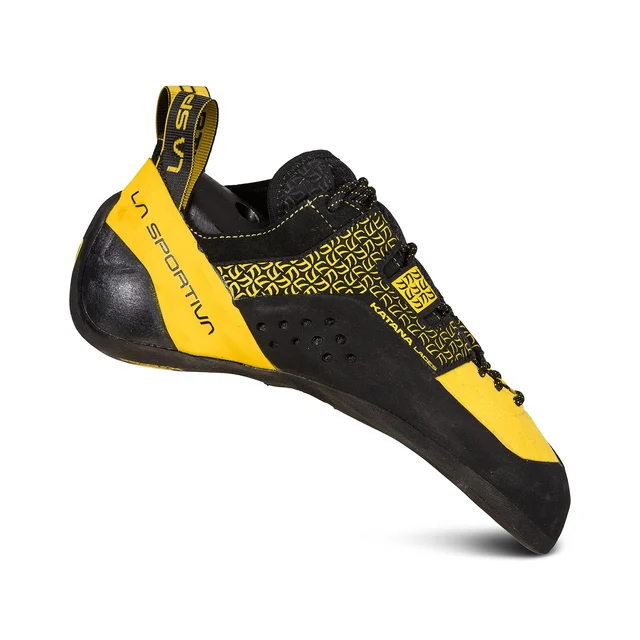
- Buy La Sportiva Katana Lace The most complete one-shoe answer for sport, trad and technical face climbing. Amazon
- Buy La Sportiva Tarantulace Still the best first pair of climbing shoes anyone can buy. Amazon
- It depends Scarpa Instinct VS Elite precision and heel hooking for steep terrain, if you can survive the break-in. Amazon
- Skip Black Diamond Momentum Comfortable and breathable, but the rubber and sole give up too much on the wall. Amazon
What actually matters
- Fit and foot volume. Length is the least important part of fit. What matters is whether your foot shape (narrow or wide, low or high instep, long or short big toe) matches the mould the shoe was built on. A shoe with dead air under your arch or painful pressure on one toe joint is the wrong shoe at any length.
- Profile and downturn. This is the single biggest clue to what a shoe is for. Flat shoes are comfortable and good on slabs and vertical rock. Downturned shoes pull your toes into a claw so you can pull on steep, overhanging holds, at the cost of comfort and crack performance.
- Midsole stiffness. The plastic or fibreglass layer under your foot decides whether the shoe holds a tiny edge or folds over it. Stiff supports; soft feels. Long routes and small edges reward stiff; smearing, volumes and modern gym holds reward soft.
- Rubber compound versus rubber thickness. Compound decides how much friction you get, thickness decides how long it lasts. Named compounds from established rubber makers are a reliable signal; a shoe that just says "high friction rubber" with no name is not.
- Closure system. Laces adjust across the whole foot, which matters if your shoe stretches, your feet swell on long days, or your foot volume is unusual. Velcro is fast, which matters if you take shoes off between every boulder problem. Slippers are the most sensitive and the least supportive.
- Upper material and how much it stretches. Unlined leather can relax by up to a full size, lined leather moves a little, and synthetic barely moves at all. This changes how you should size the shoe, not just how it feels on day one.
- Resole-ability. A shoe built with a full rubber rand and a replaceable sole can be rebuilt several times, which quietly makes an expensive shoe cheaper per year than repeatedly replacing a cheap one.
The specs, in plain English
Green flags vs red flags
Green flags
- A named rubber compound from an established rubber manufacturer, with the thickness stated, rather than a vague "sticky rubber" claim
- Half sizes offered across the range, and ideally a low-volume or women's version built on a different mould rather than just a smaller size in a different colour
- A full rubber rand and conventional construction, which means the shoe can be resoled several times
- Lace closure if you want one shoe for long days, because it takes up stretch and lets you loosen off between pitches
- A brand that publishes honest fit guidance about its lasts (narrow, high volume, low profile) instead of just "true to size"
- Bought from a shop with free exchanges, or better still one where you can walk around in three sizes before deciding
Red flags
- An aggressively downturned, high-asymmetry shoe being recommended as a first pair, which teaches you to avoid weighting your feet
- A thick sole marketed as sensitive, or a shoe that is neither stiff enough to edge nor soft enough to smear
- Unnamed proprietary rubber paired with owner reports that it feels slippery out of the box
- Sizing decided entirely from someone else's downsizing advice, when their foot and their model are both different from yours
- Buying the only size left in a clearance sale and hoping the stretch fixes it, especially with a synthetic upper that will not stretch
- Pain severe enough that you take the shoes off between every attempt, which almost always means too small rather than "not broken in yet"
- Glued-on soles with no real rand, which means the shoe is disposable rather than repairable
Who's who: the brands
- La Sportiva - Italian brand with the broadest range in climbing, from the perennial beginner favourite to elite performance shoes; known for precise, low-profile toes and strong edging.
- Scarpa - Another Italian mainstay, widely respected for high-performance shoes with excellent heel cups and rigid, precise forefeet; often accommodating for medium to slightly wider feet.
- Unparallel - Grew out of the American sticky-rubber tradition and is known for very grippy compounds and soft, sensitive shoes at prices that undercut the big Italian brands.
- Tenaya - Spanish brand with a reputation for unusually comfortable high-performance shoes, often chosen by climbers who find Italian lasts too narrow or too punishing.
- Evolv - American brand with a strong value range and a variety of lasts, including wider options; a common alternative for feet that do not fit the European brands.
- Black Diamond - Newer to footwear than to hardware; best known for comfortable, breathable shoes, such as the knit-tongue Momentum, aimed at gym and entry-level climbers.
How to read a listing without getting fooled
Read a climbing shoe listing in this order. First, the shape: flat, moderate or aggressive downturn, plus how asymmetric it is. That tells you the terrain the shoe was designed for, and it is not negotiable, so if it does not match your climbing you can stop reading. Second, the stiffness cues: a full-length stiff midsole means an edging shoe, a thin or partial midsole means a soft, sensitive shoe. Third, the rubber: look for a named compound and a stated thickness, and note whether the heel uses a different, softer compound than the sole, which is a sign the maker thought about heel hooking. Fourth, the upper: unlined leather will stretch meaningfully, lined leather a little, synthetic almost not at all, and that single fact should change what size you order. Treat marketing adjectives with suspicion. "Performance", "pro" and "technical" mean nothing on their own, and "comfortable" often means thick and dull. Ignore star ratings from strangers with different feet, but do read owner reports for the two things that transfer between people: whether the shoe runs large or small compared to street size, and whether it stretches. Finally, check the construction for a proper rubber rand, because that determines whether you are buying a shoe you can rebuild or a shoe you will throw away.
How much should you spend?
Cost in climbing shoes is driven by three things: the rubber compound and how much of it there is, how complex the construction is (rands, heel tension systems, multi-material uppers, hand lasting), and whether the shoe is built to be rebuilt. That is why the cheapest shoes tend to use durable rather than sticky rubber on simple flat lasts, while the priciest ones combine premium compounds with intricate downturned constructions. The value sweet spot for most people is a well-made, flat or moderately shaped shoe from an established brand near the lower end of the range: those shoes are comfortable enough to wear all session, tough enough to survive learning footwork, and good enough to carry you into intermediate grades. Spending up genuinely pays off in two situations. If you climb often, a resole-friendly premium shoe rebuilt two or three times can cost less per year than repeatedly replacing budget shoes, and its rubber will hold you on holds a cheap shoe slides off. If you are projecting at your limit on a specific style, the precision is worth it. Spending up is a waste in the opposite cases: a first pair, an occasional climber, or anyone buying a painful specialist shoe hoping it will drag their technique upward. It will not, and a shoe you avoid wearing is the most expensive shoe there is. The one place never to economise is fit, because a bargain in the wrong shape is money spent on something that will sit in a bag.
Questions, answered
How tight should climbing shoes be?
Snug everywhere with no empty space, toes flat or gently curled, and no sharp pressure point when you stand up on an edge. They should feel firm and slightly odd, not agonising. The old advice about brutal downsizing came from an era of thin, stretchy leather shoes used on hard outdoor face climbing; modern shoes are shaped better and most owners report climbing better in a size they can actually keep on for a full session. If you have to strip them between every attempt, you went too small.
What size should I order compared to my street shoes?
There is no reliable universal offset, which is why generic downsizing advice causes so many bad purchases. Brands build on different moulds and different models within the same brand fit differently. Get your feet measured in person if you possibly can, and if you are ordering online, buy from somewhere with free exchanges, order two or three sizes, and stand on a small edge in each before deciding. Then adjust for the upper: leave room for an unlined leather shoe to relax, and buy a synthetic shoe to fit on day one.
Do I wear socks with climbing shoes?
Usually no. Bare feet give you the direct feedback through the sole that the whole design is built around, and socks add a slippery layer that reduces control. The exceptions are practical ones: thin socks in cold weather on long routes, in shared rental shoes, or if you have skin problems or blisters during a break-in period. If you plan to wear socks regularly, size for them from the start.
How long does break-in take, and how much do shoes stretch?
It depends almost entirely on the upper. Unlined leather can relax by half a size to a full size over the first several sessions as it takes on sweat and moulds to your foot, which is one reason a lace closure helps you take up the slack. Lined leather moves a little. Synthetic uppers, which cover a lot of high-performance shoes, barely stretch at all, so what you feel in the shop is roughly what you get forever. A stiff, aggressive shoe can take weeks to stop feeling hostile, but that is the shoe softening, not lengthening.
When should I resole, and is it worth it?
Send them as soon as the sole is thin over the big toe and before you wear through into the rand, the rubber strip wrapping the toe. Sole-only repairs are cheap and preserve the shoe's shape; once the rand goes, the repair costs more and never restores the original fit as well. It is worth it on well-built shoes with plenty of life left in the upper, and generally not worth it on entry-level shoes with thin uppers that you are about to outgrow anyway.
Do I need more than one pair?
Not until you can name a specific thing your current shoes stop you doing. One versatile pair covers gym sessions, sport routes and trad at nearly any grade a recreational climber reaches. Most people who own three pairs bought the second and third to fix a problem that was really about technique. Once you are genuinely projecting on one style, such as steep bouldering or thin slabs, a second specialist pair starts to earn its place.
Or jump to the head-to-head: La Sportiva Katana Lace vs Scarpa Instinct VS.