Explained
Climbing Harnesses, Explained
After reading, you'll understand what the certification on the label guarantees, when a harness has to be retired, and which spec-sheet lines actually change how the harness works for you.
In this guide
Harness spec sheets look thin compared with most gear, and that hides how much information is there. Two lines decide almost everything: the standard and type printed on the label, and the date of manufacture stamped inside the waist belt. Around those sit a handful of details that change day to day use, like whether the leg loops adjust and how many gear loops there are. First time buyers usually shop on padding and colour and miss both of the lines that matter.
The 30-second version
- Type C is what you want, because that is the EN 12277 designation for an adult sit harness with a waist belt and leg loops.
- The lifespan clock starts at manufacture, not at purchase, and Petzl, Black Diamond and Edelrid all cap textile products at 10 years.
- A serious fall ends the harness, as does any damage to the tie-in points or belay loop, whatever the date on the label says.
- A wear indicator is a real feature, because a red thread appearing in the webbing is a far clearer signal than judging fraying by eye.
- Adjustable leg loops buy versatility, and they are the single spec that decides whether one harness can cover summer and winter.
The products this guide is about
Our verdict on each, with the full reasoning on the companion review.
- Buy Petzl Adjama The all-round trad and multi-pitch harness that adjusts at the legs and racks a serious amount of gear. Amazon
- Buy Black Diamond Momentum Harness The cheapest harness here that still gives you adjustable leg loops, four gear loops and a haul loop. Amazon
- It depends Edelrid Ace A light, breathable harness with five gear loops and a built-in red wear indicator, held back by fixed leg loops.
- Skip Black Diamond Zone Harness A premium seamless sport harness that weighs the same as Black Diamond's own budget model and adjusts less. Amazon
What actually matters
- EN 12277 type - this tells you what body the harness is built to hold. Type C sit harnesses are for adults in a sitting position, while Type A full body and Type B small body harnesses hold the torso too.
- Date of manufacture - it is printed on the label inside the waist belt as a month and year or encoded in a serial number. Every maker measures lifespan from this date, not from the day you paid for it.
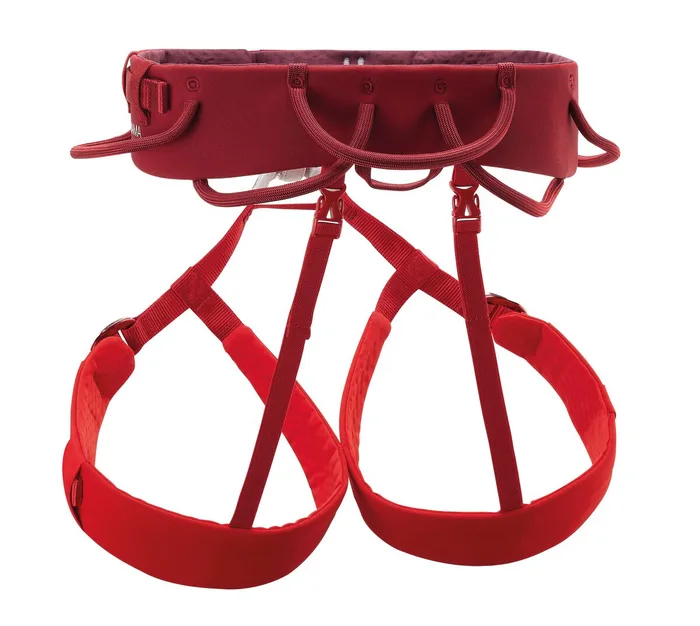
- Tie-in points - the two loops you thread the rope through. They take all the rope friction, they are usually covered by a sacrificial abrasion protector, and damage here retires the harness immediately.
- Belay loop - the single vertical loop between the tie-in points, where a locking carabiner and your belay device go. Petzl and Edelrid both instruct you to clip belay and rappel devices here rather than to the tie-in points.
- Leg loop adjustment - buckles let you change leg circumference for clothing and body changes. Without them you are locked to the circumference the size was cut for.
- Gear loops - the non load-bearing loops for racking. Edelrid's manual is explicit that they are for carrying equipment up to 5 kg and must never be used as tie-in points.
- Wear indicator - a coloured thread inside load-bearing webbing that becomes visible as abrasion wears the outer layer. When it shows, the maker's instruction is to stop using the harness.
The specs, in plain English
Green flags vs red flags
Green flags
- The label states EN 12277 and the type, with a CE mark and a four digit notified body number.
- The maker publishes a per-size weight table rather than one number for the whole range.
- Leg loops adjust with buckles, not just elastic risers.
- The tie-in points carry a visible abrasion protector, and better still a wear indicator.
- The instruction sheet is downloadable from the maker's own site and states the lifespan and retirement criteria.
Red flags
- No standard or type printed on the label, or a listing that just says climbing rated.
- A seller who cannot tell you the date of manufacture, or stock that has clearly sat for years.
- Any fraying, cut threads or holes in the tie-in webbing or belay loop on a shop or secondhand sample.
- A used harness with unknown history, which Petzl explicitly lists as grounds for retirement.
- Gear loops being described or used as attachment points for a person rather than for equipment.
Who's who: the brands
- Petzl - French maker with unusually detailed public documentation, including per-model technical notices and a written PPE inspection procedure for sport harnesses.
- Black Diamond - US maker whose harness range shares one instruction sheet certifying EN 12277 Type C, with a plainly worded 10 year lifespan rule.
- Edelrid - German maker known for building red wear indicator fibres into load-bearing webbing and for publishing a plain-language summary of EN 12277.
- Mammut - Swiss maker with a long-established climbing hardware line covering sport, alpine and mountaineering harnesses.
- Camp - Italian maker with a strong presence in lightweight alpine and ski mountaineering harnesses.
How to read a listing without getting fooled
Start at the bottom of the spec panel, not the top. Find the certification line and check it says EN 12277 with a type, because that is the only line that tells you the harness was tested to hold a body. Then find the weight, and check whether the maker publishes it per size or as one figure, since a single figure usually refers to a mid size and the largest size can be noticeably heavier. Next look for the words adjustable leg loops, because their absence is often only visible in the photographs. Count the gear loops and note whether a rear fifth loop or haul loop is counted separately. Finally, download the instruction sheet before you buy: it will tell you the stated lifespan, the retirement criteria, and whether the model has a wear indicator, none of which usually appear on the product listing.
How much should you spend?
Budget harnesses generally give you adjustable leg loops, four gear loops and a warranty of two or three years, which covers gym, top-rope and sport climbing without compromise. Mid-range buys you a fifth gear loop, better load spreading in the waist belt, per-size weight data and sometimes a wear indicator, which is what you want if you climb trad or multi-pitch. Premium usually buys weight savings and construction refinements aimed at hard redpointing or alpine speed, and it is the tier where you have to check carefully that you are actually getting something. A premium harness that weighs the same as a budget one and adjusts less is a worse buy at any price. Since every harness here meets the same standard, spending more never buys you a higher safety rating, only fit, features and weight.
Questions, answered
Can I buy a used climbing harness?
Petzl lists not knowing a product's full usage history as grounds for retirement, which effectively rules out buying used unless you know and trust the previous owner and the date of manufacture. You cannot see internal damage, chemical contamination or a previous hard fall by looking at a harness. The saving is small compared with the consequence. Buy new and record the date.
Do I tie the rope to the belay loop or the tie-in points?
Tie in through both tie-in points, which is what Petzl's instructions specify for their sit harnesses. The belay loop is where a locking carabiner with your belay or rappel device goes, and Edelrid's manual confirms devices and carabiners may be fastened directly to it. Which one you use for what is exactly the kind of thing to have checked by a qualified instructor rather than learned from an article.
Does a heavier harness mean a stronger one?
No. Every harness in this comparison meets the same EN 12277 Type C requirements, and the standard's strength tests are pass or fail rather than a rating you can compare between models. Extra weight goes into padding, gear loops, buckles and abrasion protection. A 274 g harness and a 385 g harness that both carry the same certification have both passed the same tests.
When should a harness be professionally inspected?
Petzl recommends a detailed inspection by a competent person at least once every 12 months, and more often if you use the harness intensively, on top of the check you do before every use. Edelrid requires an annual inspection by the manufacturer, a qualified person or an approved inspection body for commercial use. For recreational climbers the practical version is a careful look at the tie-in points, belay loop, buckles and safety stitching every time you put it on.
Or jump to the head-to-head: Petzl Adjama vs Black Diamond Momentum Harness.