Explained
Climbing Chalk, Explained
After reading, you'll understand what climbing chalk actually is, which of the four forms suits you, and how to tell a real difference from marketing.
In this guide
First-time buyers usually assume chalk is chalk and pick whatever is on the counter, then discover their gym will not let them use it. The second surprise is the price spread: two products with identical stated composition can differ several times over per gram. And the third is skin, because the thing that dries your hands is also the thing that cracks them. Getting those three right is most of the decision.
The 30-second version
- It is magnesium, not calcium, so climbing chalk is a different compound from the chalk in a classroom and works by absorbing moisture.
- Form factor is the real choice, because loose, block, ball and liquid all deliver the same mineral under very different rules.
- Gym policy often decides for you, and many facilities ask members to use a ball or liquid instead of loose powder.
- Liquid chalk is alcohol-based, which is why it cuts dust so effectively and why it dries skin enough that most people use it as a base layer.
- The friction evidence is mixed, so treat any brand claim of measurably better grip as unproven until someone publishes the test.
The products this guide is about
Our verdict on each, with the full reasoning on the companion review.
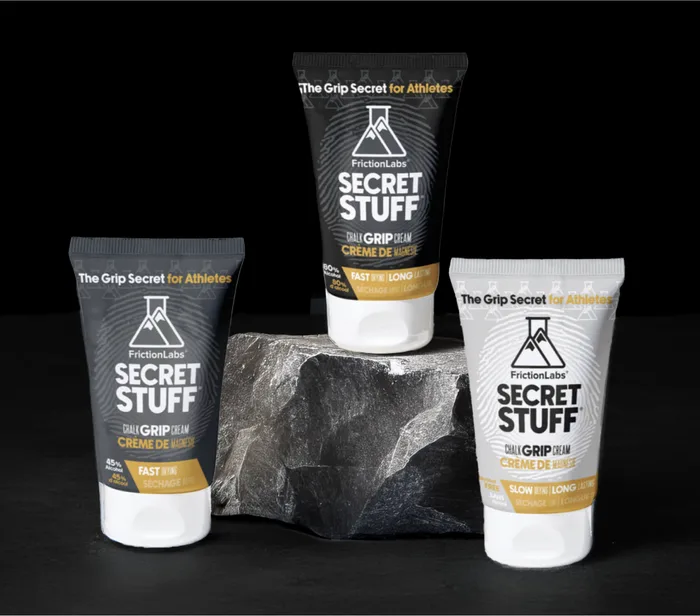
- Buy Friction Labs Secret Stuff Liquid Chalk The chalk that works under every gym policy we checked, and one of the few liquids that tells you exactly how much alcohol is in the tube. Amazon
- Buy Metolius Super Chalk The plain, well-documented magnesium carbonate that makes it hard to justify paying several times more for the same mineral. Amazon
- It depends Black Diamond Eco Gold Refillable Chalk Shot A refillable chalk ball that keeps your bag clean, as long as you are not buying it believing it protects the air.
- Skip Friction Labs Loose Chalk (Unicorn Dust, Gorilla Grip, Bam Bam) Pleasant chalk sold at a steep premium on purity claims the company has not published the test data for. Amazon
What actually matters
- Form factor - loose, block, ball or liquid is the single decision that determines where you can climb with it. Everything else, including brand, matters far less than this.
- Stated composition - the spec panel should say magnesium carbonate, ideally as a percentage. Brands that describe their chalk only as blended or engineered are asking you to take performance on faith.
- Alcohol content in liquid chalk - the carrier is usually isopropyl or ethyl alcohol, and the concentration tells you how aggressively it will dry your hands. Alcohol-free gels exist for sensitive skin.
- Package size - chalk is bought by weight and the cost per gram collapses in bulk. A bucket for home and a small bag for the pack is usually cheaper than repeatedly buying boutique boxes.
- Dust behaviour - loose powder, block chalk and chalk balls all put particles into gym air at similar rates in published measurements. Only the alcohol-suspension form measurably changed that.
- Texture or grind - chunky chalk lasts longer in a bag and feels grittier, fine powder coats faster. This is comfort and habit rather than a proven grip difference.
- Skin impact - chalk works by pulling moisture out of skin, so more is not better. If your fingertips are splitting, the fix is usually less chalk and more aftercare, not a different brand.
The specs, in plain English
Green flags vs red flags
Green flags
- The spec panel names magnesium carbonate, ideally with a percentage.
- The brand publishes package weight in both grams and ounces, and offers a bulk size.
- A liquid chalk states the alcohol type and concentration on the listing.
- There is an alcohol-free version available for people with cracked skin.
- Refillable packaging or a refillable ball rather than a sealed disposable one.
Red flags
- A loose powder marketed as dust-free.
- Purity or performance claims backed by testing the brand will not publish.
- No composition stated anywhere on the product page, only words like blended or engineered.
- A liquid chalk that never mentions what the carrier is.
- Grip claims attached to a specific grind, when the same brand elsewhere says grinds perform identically.
Who's who: the brands
- Friction Labs - A Colorado brand built on chalk purity and texture grading, with a liquid chalk line that is unusually specific about its alcohol content.
- Black Diamond - A mainstream climbing hardware brand whose current chalk line emphasises magnesium carbonate recovered as a desalination byproduct.
- Metolius - A long-running Oregon climbing company that sells plain 100 percent magnesium carbonate in everything from a pocket bag to a 12 lb box.
- Mammut - A Swiss mountain sports brand whose range includes climbing chalk in more than one form.
How to read a listing without getting fooled
Start at the bottom of the listing, not the top. Find the materials or spec panel and check that it says magnesium carbonate, then check the weight in grams so you can compare across brands whose bags are sized in ounces. Ignore adjectives like engineered, performance or premium, because none of them correspond to a measurable property, and note whether the brand states a country of origin and a package size at all. For liquid chalk, look for the carrier and its concentration, since that is the one number that changes how the product behaves on your skin. If a page makes a comparative claim about other brands, look for a link to the testing. When there is no link, treat the claim as advertising.
How much should you spend?
Budget tier buys plain loose powder or block chalk from an established climbing brand, usually with a straightforward composition on the panel, and it is where the bulk buckets live. Mid-range is mostly liquid chalk and refillable balls, where you are paying for the delivery method rather than a different mineral, and it is a reasonable place to spend if your gym restricts loose chalk. Premium tier is boutique loose chalk sold on purity and texture grading. The mineral inside is the same compound, so premium is defensible if you have tried the cheap stuff and genuinely prefer a specific grind, and hard to justify otherwise. Given how small the differences are between reputable brands, the best value move for most climbers is a mid-range liquid for gym days plus a budget bulk bag for everywhere else.
Questions, answered
How much chalk should I actually be using?
Less than most beginners use. Chalk works by absorbing moisture, so once your fingertips are dry, more powder just adds a layer between skin and rock and increases the dust everyone else breathes. A light coat, brushed off the holds afterwards, is the norm among experienced climbers. If you find yourself dipping every few moves, the problem is usually nerves or overheating rather than insufficient chalk.
Can I use gymnastics or weightlifting chalk for climbing?
Generally yes, because it is the same compound. Magnesium carbonate is used across climbing, gymnastics and weightlifting, and researchers measuring dust in sports halls found apparatus gymnastics produced concentrations comparable to indoor climbing. Grind and packaging differ, and some lifting chalk is sold in blocks that need crushing. Check the composition panel the same way you would for a climbing-branded bag.
Does chalk damage rock or upset land managers?
Chalk build-up on popular outdoor routes is a visual and access issue rather than a structural one, and several climbing areas have restrictions on chalk colour or use. Brushing holds after you climb is the standard etiquette and takes seconds. If you climb somewhere with a chalk restriction, check the local land manager's rules before you go rather than assuming a coloured chalk solves it.
What is the difference between a chalk ball and a chalk sock?
Mostly branding. Both are magnesium carbonate powder inside a permeable fabric pouch that releases chalk when squeezed, and different brands call the same object a ball, a sock or a shot. The real distinction is refillable versus sealed: a refillable one can be topped up from bulk powder and lasts for years, while a sealed one gets thrown away when it runs out.
Or jump to the head-to-head: Friction Labs Secret Stuff Liquid Chalk vs Metolius Super Chalk.