Explained
Ceiling Fans, Explained
After reading, you'll understand what actually makes a ceiling fan quiet, efficient and right-sized for your room, and which spec-sheet terms are worth paying for.
In this guide
Ceiling fans look simple, but the spec sheet hides the two things that decide whether you'll love or regret the purchase: how the motor is built and how well the fan is matched to your ceiling. Most buyers overpay for looks or under-buy on size, then live with a fan that hums, wobbles, or barely moves air. This guide translates the jargon so you can shop by what matters.
The 30-second version
- Motor type is the big fork in the road. DC motors run quieter, use less power, offer more speed steps and reverse instantly, while cheaper AC motors are louder and cruder, so the motor, not the badge, should drive your choice.
- Size the fan to the room, not the price. Blade span should roughly match room area; a fan that's too small just stirs the air near the ceiling while a well-sized one actually cools the people below.
- Ceiling height dictates the mount. Low (around 8-foot) ceilings need a hugger or flush mount for safe clearance, while taller ceilings want a downrod to drop the fan into the living zone where you feel it.
- Noise is the number-one regret. A quiet motor and a well-balanced blade set matter more day to day than any smart feature, so weigh real owner reports on hum and wobble before you buy.
- Smart control is convenience, not magic. App and voice control are genuinely handy, but a plain remote covers most single-room needs, and even good smart fans see the occasional app or firmware hiccup.
The products this guide is about
Our verdict on each, with the full reasoning on the companion review.
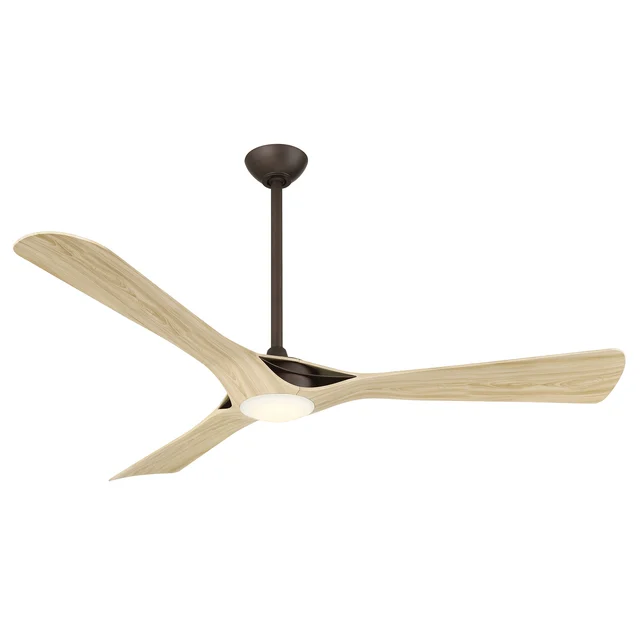
- Buy Minka-Aire Bridge 60" LED Smart Ceiling Fan (F668L) A sculptural three-blade DC fan that moves serious air quietly and folds into your smart home without drama. Amazon
- Buy Big Ass Fans Haiku L 52" The performance benchmark: very quiet, well balanced and efficient, if your budget can stretch to flagship. Amazon
- It depends Minka-Aire Hourglass 58" LED Smart Hugger Ceiling Fan (F468L) A low-profile DC hugger that's a lifesaver for 8-foot ceilings, if you can live with hugger-mount airflow. Amazon
- Skip Hunter Staten 52" Ceiling Fan A handsome industrial-cage fan that sells the farmhouse look, then hands you a pull-chain AC motor from another era.
What actually matters
- Motor type (DC vs AC) - DC motors are quieter, more efficient, offer finer speed control and reverse instantly; AC motors are cheaper but louder and less flexible. This single choice shapes how the fan feels every day.
- Blade span (size) - Measured tip to tip, span must suit the room; too small and the fan can't move enough air, too large in a small room and it feels overwhelming.
- Airflow - How much air the fan actually moves is what cools you; a big, well-designed blade set on an efficient motor beats a small fan spinning fast.
- Mount type and ceiling height - Downrod fans hang lower for standard and high ceilings; hugger (flush) fans sit tight for low ceilings but move less air. Match the mount to your ceiling before anything else.
- Noise and balance - Real-world hum and wobble are the top sources of buyer regret; a precision-balanced fan on a smooth motor stays quiet at every speed.
- Integrated light - Decide whether you need the fan's LED as a room's main light (look for bright and dimmable) or just gentle ambiance, because 'ambient' bulbs won't light a task.
- Controls - From a simple remote to full app-and-voice smart control, match the control style to how you actually live in the room.
The specs, in plain English
Green flags vs red flags
Green flags
- A DC motor listed in the specs, paired with several speed steps and a reverse function
- Blade span that matches your room size, with clear guidance on the ceiling heights it fits
- A remote, app or voice control included in the box rather than sold separately
- Owner reports that mention quiet operation and no wobble
- A dimmable integrated LED if you want the fan to double as the room's main light
- A stated location rating (damp or wet) if the fan is going anywhere near moisture
Red flags
- An AC motor with only a couple of fixed speeds when quiet, efficient airflow is the goal
- Pull-chain-only control with no remote or smart option, unless you truly don't mind reaching up
- A fan sold on looks alone with vague or missing airflow and motor details
- A hugger-mount fan being considered for a tall ceiling where a downrod would perform better
- A caged or decorative bulb marketed as lighting when you actually need real task light
- Repeated owner complaints about hum, wobble, or flaky app and firmware behavior
Who's who: the brands
- Minka-Aire - Design-led maker of quiet DC smart fans, from full-size downrod models to low-profile huggers, often with dimmable integrated LEDs.
- Big Ass Fans - Performance specialist known for balanced, very quiet, efficient fans at a flagship price.
- Hunter - Long-established brand with reassuringly solid builds and a wide style range, though many models still use traditional AC motors and pull chains.
- Hampton Bay - Value-focused house brand offering budget-friendly fans in mainstream styles, better for looks and price than peak performance.
- Fanimation - Style-forward maker spanning classic to modern designs, with a growing line of DC and smart-capable fans.
How to read a listing without getting fooled
Start at the motor line: if it says DC, you're looking at the quiet, efficient, fine-control tier; if it says AC, expect a louder fan with fewer speeds and a lower price. Next, check blade span against your room and confirm the mount type suits your ceiling height, because a beautiful fan on the wrong mount will disappoint. Treat marketing airflow claims with mild skepticism and lean on owner reports for the real story on noise and wobble. If a light is integrated, look for the words 'dimmable' and some sense of brightness, since a decorative or caged bulb is ambiance, not task lighting. Finally, read what's actually in the box: a fan that includes a remote or app control is worth more than one where those are extra.
How much should you spend?
Ceiling fan cost is driven mostly by the motor and the feature stack, not the size alone. Budget fans often mean an AC motor, pull-chain control and simpler lighting, which is fine for a style-first guest room but a compromise if you value quiet and efficiency. Stepping up buys a DC motor, more speeds, a remote or app, and usually a better integrated light, and for the room you actually live in, that's where the value sweet spot sits, because you feel the quiet and lower running cost every day. The very top tier adds sensing, auto modes and benchmark-level silence; it's worth it only if peak performance genuinely tops your list, since for most rooms a mid-to-upper fan delivers most of that experience for meaningfully less. Beware the trap of paying full-size money for a compromised format, like a hugger, when your ceiling doesn't require it.
Questions, answered
Is a DC-motor ceiling fan really worth paying more for?
For most rooms, yes. DC motors generally use less electricity, run quieter, offer more speed steps and reverse instantly, and they usually include a remote or app. Owner reports generally rate DC fans as quieter and smoother than comparable AC fans. The main trade-off is a higher upfront price, which you gradually earn back in comfort and running cost.
What size fan should I buy for my room?
As a rough guide, a roughly 52-inch fan suits typical bedrooms and living rooms, while a 60-inch model better covers large or open-plan spaces. Smaller rooms can use smaller spans. The goal is enough air movement to actually feel a breeze where you sit, not just to spin near the ceiling.
Do I need a smart fan, or is a remote enough?
A remote covers the basics for a single room. Smart control earns its place if you want voice commands, schedules, or to group the fan with lights and thermostats. Just know that even good smart fans see the occasional app or firmware hiccup, so treat it as a convenience layer rather than a flawless one.
What's the difference between a hugger and a downrod fan?
A hugger (or flush-mount) fan sits tight against the ceiling and is designed for low ceilings around 8 feet, keeping blades safely overhead. A downrod fan hangs lower on a pole and is used on standard and tall ceilings to bring the fan into the living zone. The trade-off is that a hugger moves less air than the same fan on a downrod, so only choose one when your ceiling height requires it.
Can I install one of these outdoors or in a bathroom?
Only fans rated for damp or wet locations should go in covered patios, porches or steamy bathrooms; most indoor fans are not. Always check the specific fan's location rating before installing. And because wiring and secure mounting are involved, have a licensed electrician handle the install if you're at all unsure.
Will a ceiling fan's built-in light replace my ceiling fixture?
Sometimes. A bright, dimmable integrated LED can serve as the main light in a small-to-medium room. But decorative or caged 'Edison' style bulbs are closer to mood lighting, so if you need to read or work in the room, look for a fan with a genuinely bright, dimmable light or plan to keep a lamp.
Or jump to the head-to-head: Minka-Aire Bridge 60" LED Smart Ceiling Fan (F668L) vs Big Ass Fans Haiku L 52".