Explained
Carry-On Luggage, Explained
After reading this, you'll be able to read any carry-on listing and know whether the bag will fit your airline, roll well, and survive years of travel.
In this guide
Hardside spinner carry-ons all look like the same polycarbonate box on four wheels, which is exactly why buying one is confusing - the differences that matter are hidden in shell quality, wheel hardware, true dimensions, and warranty fine print. The most common mistakes are trusting the size in the product name, judging durability by looks, and treating all 'polycarbonate' shells as equal. This guide decodes the jargon so you can tell a decade-long travel companion from a bag that dies at the airline sizer.
The 30-second version
- The size in the name is marketing, not a measurement - a "20-inch" bag can exceed 22 inches once you include wheels and handles, and airlines measure the whole bag.
- Wheels are the most common failure point, so dual-caster spinner wheels and a sturdy telescoping handle matter more to long-term happiness than any styling detail.
- Polycarbonate quality varies widely: thin budget shells and premium aerospace-grade shells share the same material name but behave very differently after a few years of overhead bins.
- Every hardside scuffs eventually, and cosmetic wear is almost never covered by warranty - textured finishes hide it, glossy ones show it.
- A lifetime functional warranty is the real durability signal: brands that commit to covering shells, zippers, wheels, and handles for years are betting their money on the bag lasting.
The products this guide is about
Our verdict on each, with the full reasoning on the companion review.
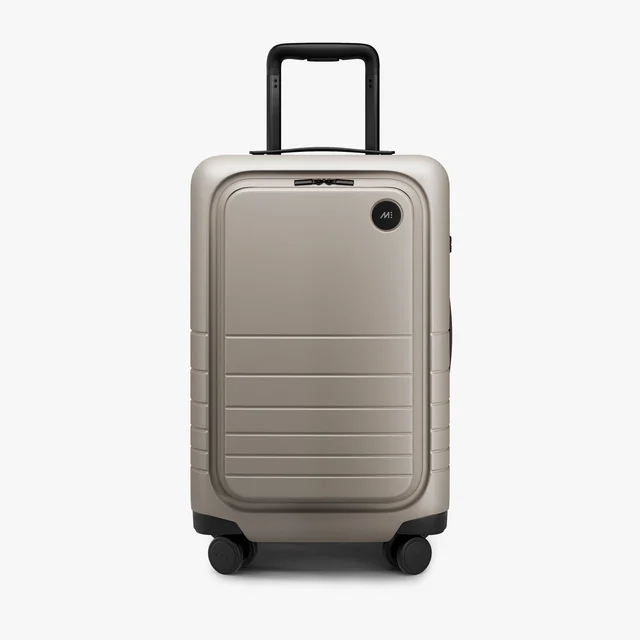
- Buy Monos Carry-On Pro The best overall blend of design, build quality, and everyday usability - the front pocket seals it. Amazon
- Buy Away The Carry-On The proven pick: buttery wheels, a smart compression interior, and years of owner-reported durability. Amazon
- It depends Travelpro Platinum Elite Hardside Carry-On Spinner A flight-crew-grade workhorse with real over-engineering - if you can live with the weight. Amazon
- Skip Samsonite Omni PC 20" Spinner A likeable budget bestseller built for occasional trips rather than frequent flying. Amazon
What actually matters
- True exterior dimensions - the number that decides whether your bag boards or gets gate-checked. Compare the full measurement including wheels and handles against your airline's published limit, not the size in the product name.
- Shell material and thickness - real polycarbonate flexes on impact and springs back, while cheaper ABS blends and thin shells crack. Thickness and grade matter as much as the material name.
- Wheel and handle hardware - owner reports show wheels and telescoping handles fail long before shells do. Dual-caster (doubled-up) spinner wheels and a multi-height handle with minimal wobble are the strongest predictors of a long life.
- Interior organization - compression pads, divided compartments, and closure panels determine how much you actually fit and whether the bag stays usable opened upright in a cramped hotel room.
- Quick-access design - a front pocket that fits a laptop changes how you move through security and work at the gate; without one, everything requires a full clamshell unzip on the floor.
- Weight - heavier over-built bags eat into hand-luggage weight allowances on airlines that weigh carry-ons, which is increasingly common outside the US majors.
- Warranty scope - lifetime coverage of functional parts (shell, zippers, wheels, handle) is the gold standard; limited warranties on budget bags often exclude exactly the parts that break.
The specs, in plain English
Green flags vs red flags
Green flags
- The listing publishes true exterior dimensions including wheels and handles, and they fit your airline's stated limit
- Dual-caster spinner wheels and a multi-height telescoping handle that owners describe as wobble-free years in
- Lifetime warranty explicitly covering shell, zippers, wheels, and handle - plus a generous trial or return window
- A textured shell finish, which hides the cosmetic scuffs every hardside eventually collects
- Long-term owner reports (not launch-week reviews) that still praise the wheels and zippers after years of trips
Red flags
- Size is only given as a marketing name like "20-inch" with no full exterior measurement - these bags often fail strict airline sizers
- Vague shell descriptions ("durable hard shell") that avoid naming the material or use thin ABS blends
- A limited warranty that excludes wheels, handles, or zippers - the parts most likely to break
- Owner reports of wobbly telescoping handles or wheels degrading within the first year
- An expandable bag pitched as extra everyday capacity, when expanded it exceeds carry-on limits
- Unusually heavy empty weight with no explanation - it silently eats your hand-luggage allowance on airlines that weigh bags
Who's who: the brands
- Monos - Direct-to-consumer premium brand known for polished design, aerospace-grade polycarbonate shells, airline-friendly sizing, and a laptop-friendly front-pocket model.
- Away - A direct-to-consumer brand that helped popularize the modern hardside spinner; best known for excellent wheels, clever compression interiors, and a strong long-term durability record.
- Travelpro - Built for flight crews - over-engineered, organization-heavy bags with reinforced corners and unusually generous warranties, at the cost of extra weight and utilitarian looks.
- Samsonite - The legacy giant with something at every price; its budget hardsides are light and likeable but built to a price, while its upper lines compete more seriously.
- Rimowa - The luxury benchmark, famous for grooved aluminum and premium polycarbonate cases - beautiful, repairable, and priced accordingly.
How to read a listing without getting fooled
Start with the dimensions, and ignore the size in the product name - find the full exterior measurement including wheels and handles, then compare it to your airline's published carry-on limit (budget and international carriers are stricter than the US majors). Next, pin down the shell: 'polycarbonate' is the word you want, and wariness is warranted when a listing says only 'durable hard shell' or leans on a blend. Check the wheels for the word 'dual' or 'double' - doubled-up spinner wheels are the durable kind. Read the warranty section like a contract: what parts are covered, for how long, and whether cosmetic damage is excluded (it almost always is). Finally, skip the launch-week reviews and look for owner reports from people a year or more in - wheels, handles, and zippers reveal their quality over time, not out of the box.
How much should you spend?
What drives cost in carry-ons is mostly invisible: shell thickness and grade, wheel and handle hardware, and the warranty behind them. Budget bags get you the same silhouette with thinner shells, narrower wheels, and limited coverage - a fine trade if you fly once or twice a year, and a false economy if you fly often, because wheels and handles are what fail first. The value sweet spot for regular travelers sits in the premium direct-to-consumer tier, where lifetime functional warranties and proven hardware mean the bag amortizes to very little per trip over a decade. Spending beyond that buys luxury materials and status more than durability. The real math is cost per trip, not sticker price: frequent flyers almost always come out ahead buying once and buying well.
Questions, answered
Will my carry-on actually fit in the airline sizer?
Only if its full exterior dimensions - wheels and handles included - fit your airline's published limit, which you should check before buying. US majors are relatively generous; budget and international carriers are tighter and more likely to enforce with a sizer at the gate. Bags that run large for their name, especially when expanded, are the ones that get gate-checked.
Hardside or softside - which should I buy?
Good polycarbonate hardsides resist crushing and shrug off rain; softsides absorb impacts, squeeze into tight overheads more forgivingly, and usually offer exterior pockets. Owner reports consistently show quality matters more than category: a well-built bag of either type outlasts a cheap one of either type. If you go hardside, accept that cosmetic scuffs are inevitable and pick a textured finish that hides them.
Are expensive carry-ons really worth it over a budget bestseller?
It depends entirely on how often you fly. Occasional travelers are often perfectly happy with a light budget bag. But owner reports often find that thin shells, wobbly handles, and less refined wheels don't hold up to frequent travel - so if you fly more than a few times a year, a premium bag with a lifetime functional warranty is usually cheaper per trip over its life.
What does a 'lifetime warranty' on luggage actually cover?
Terms vary by brand. Some cover functional damage such as cracked shells, broken zippers, and failed wheels and handles for the life of the bag, while others offer free repairs for a set number of years and paid support after that. It rarely covers cosmetic wear - scuffs, dents, scratches from normal handling - which is the most common complaint owners raise. A few brands go further and also cover repairs of airline-inflicted damage, which is worth seeking out if you fly constantly.
Is a front-pocket carry-on worth the trade-off?
If you work in transit, yes - pulling out a laptop, documents, or chargers without unzipping the whole clamshell on the floor is the biggest everyday convenience in modern carry-on design. The cost is a small loss of main-compartment space and extra structure in the lid. If your bag stays closed until the hotel, a standard clamshell gives you a slightly simpler, roomier interior.
Do spinner wheels break more easily than two-wheel rollers?
Exposed spinner wheels are more vulnerable to curbs and rough pavement than recessed roller wheels, which is why wheel quality is the spec to scrutinize. Dual-caster spinners from premium brands hold up well in long-term owner reports; narrow single wheels on budget bags are the ones that wear out. If your travel involves lots of cobblestones and gravel, a two-wheeler is the more rugged choice.
Or jump to the head-to-head: Monos Carry-On Pro vs Away The Carry-On.