Explained
Carpet Cleaner Machines, Explained
After reading this, you'll know exactly which type of carpet cleaner fits your messes and how to see through the spec-sheet marketing.
In this guide
A carpet cleaner machine sprays a water-and-solution mix into carpet, scrubs it with brushes, and vacuums the dirty water back out - that's the whole trick. What trips up first-time buyers is the split between full-size uprights and portable spot cleaners, plus a spec sheet full of terms like dual tanks, heatwave technology, and express dry that sound more mysterious than they are. Buy the wrong type and you'll own a heavy machine you never use; buy the right one and it earns its keep the first time a pet or a glass of wine meets your carpet.
The 30-second version
- Match the machine to the mess: whole-room refreshes need a full-size upright, while spills, pet accidents, stairs, and car seats are a job for a small portable spot cleaner.
- Suction matters more than spray: how completely a machine extracts dirty water determines both cleaning quality and how fast the carpet dries - soggy carpet invites mildew and re-soiling.
- Dry time is the spec that changes your life: machines with strong extraction or heated-air drying can make a room walkable sooner than an overnight wait.
- The cleanup ritual decides whether you'll actually use it: tanks and brushrolls that pop off and rinse under a tap keep a machine in rotation; fiddly ones end up in a closet.
- Long-term reliability separates the field: carpet cleaners live hard lives, so owner reports from six months in tell you more than any launch-day feature list.
The products this guide is about
Our verdict on each, with the full reasoning on the companion review.
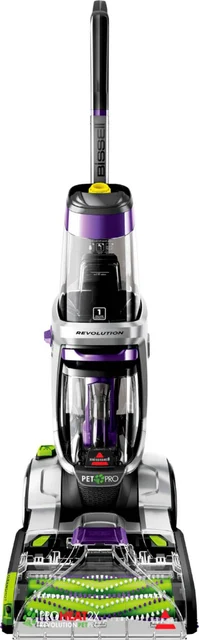
- Buy Bissell ProHeat 2X Revolution Pet Pro Plus The default full-size deep cleaner: strong suction, a pretreat wand that actually helps, and dry times that don't ruin your weekend. Amazon
- Buy Bissell Little Green ProHeat The beloved little spot cleaner that lifts stains a full-size machine is overkill for - and stores in a cabinet. Amazon
- It depends Tineco Carpet One Cruiser A feature-rich carpet cleaner with heated drying and a self-cleaning system, at a price that demands commitment. Amazon
- Skip Hoover SmartWash Pet Complete Automatic The automatic push-to-wash idea is genuinely clever, but owner reports of leaks, lost suction, and broken parts pile up too fast. Amazon
What actually matters
- Machine type - full-size uprights deep clean whole rooms; portable spot cleaners rescue localized messes fast. Buying the wrong type is the single most common regret owners report, so decide based on the messes you actually have.
- Extraction power - the suction that pulls dirty water back out of the carpet. It drives both how clean the carpet gets and how quickly it dries, and it's the spec that separates good machines from disappointing ones.
- Dry time - how long before the carpet is walkable again. Machines with express modes or heated-air drying can shorten the wait; weak extractors can leave it damp for a day.
- Tank capacity and design - bigger tanks mean fewer trips to the sink, and a dual-tank layout keeps clean solution separate from the extracted sludge so you are not scrubbing with dirty water.
- Loaded weight - water is heavy, and a full machine can weigh far more than its shipping weight suggests. If you have stairs, this matters more than almost any feature.
- Maintenance friction - after every session you'll empty the dirty tank and rinse the brushroll. Machines designed for easy teardown get used; machines that trap wet hair and grime get abandoned.
- Long-term durability - recurring owner complaints about leaking tanks, brittle fittings, and fading suction are the strongest warning available, because they only show up months after purchase.
The specs, in plain English
Green flags vs red flags
Green flags
- Independent testing places its stain and pet-mess removal at or near the top of its class
- A dual-tank design with tanks and brushroll covers that pop off and rinse under a tap
- An express or fast-dry mode with owner reports confirming carpet is walkable sooner
- A long cord and a long hose with upholstery tools, so stairs and furniture don't require re-plugging or a second machine
- Owner reviews that stay positive six months to a year in - the machine still suctions well and nothing has cracked
- A widely available supply of the brand's solution and replacement brushes, filters, and tanks
Red flags
- A recurring thread of owner reports about leaking tanks, brittle plastic fittings, or suction that fades after a handful of uses
- Marketing that leads with spray power or 'rows of brushes' while saying nothing concrete about extraction or dry time
- Tanks that look small relative to the machine's size - a promise of constant refill trips on any real job
- Pet-focused branding paired with owner reports of hair wrapping the brushroll and redepositing as wet clumps
- No stated loaded weight, or a machine notably heavy for its class if you have stairs
- Smart features (sensors, app connectivity) doing the selling on a machine whose basic cleaning reviews are mediocre
Who's who: the brands
- Bissell - The dominant name in home carpet cleaning - its full-size ProHeat uprights and the cult-favorite Little Green spot cleaner have the deepest owner track records in the category.
- Hoover - The other legacy American floor-care brand; known for approachable, automatic-style uprights, though recent models have drawn recurring owner complaints about durability.
- Tineco - A newer tech-forward brand pushing the category's premium end - heated-air drying and self-cleaning cycles at flagship prices.
- Rug Doctor - Famous for the rental machines at grocery stores; also sells heavy-duty home units built around aggressive extraction rather than convenience features.
- Shark - A major floor-care player better known for vacuums that has been expanding into carpet and hard-floor washing with convenience-focused designs.
How to read a listing without getting fooled
Start with the machine type, because everything else follows from it - an impressive-sounding upright is still the wrong buy if your messes are car seats and stair spots. Then look past the spray-side marketing (PSI-style claims, brush counts, 'rows of scrubbing power') to the extraction side: does the listing say anything concrete about suction, water recovery, or dry time? That's where cleaning performance actually lives. Treat 'heated cleaning' claims carefully - most machines maintain water temperature rather than heating it, which helps but isn't the steam cleaning the photos imply. Check the tank capacities and the loaded weight, not the shipping weight, and look at photos of how the tanks and brushroll come apart, because that teardown is your after-every-use ritual. Finally, sort the owner reviews to the critical end and scan for patterns: one leak complaint is bad luck, but the same leak described by dozens of owners is a design problem no feature list offsets.
How much should you spend?
What drives cost in this category is size and convenience, not raw cleaning ability: bigger tanks, heated-air drying, self-cleaning cycles, and app connectivity all stack onto the price. The value sweet spot is a mid-range full-size upright from an established brand - that's where you get top-tier stain removal, dual tanks, and a fast-dry mode without paying for smart features. Budget portable spot cleaners are the best money-to-usefulness ratio in the category and are often the smarter first purchase for renters and mostly-hard-floor homes. Spending flagship money buys real comforts - the fastest dry times and the least physical effort - but it costs much more than a strong conventional upright while cleaning only somewhat better, so it's justified mainly for households that deep clean frequently. Going too cheap on a full-size machine tends to backfire in weak extraction and short lifespans; also budget for an ongoing supply of the manufacturer's cleaning solution, which is a real recurring cost.
Questions, answered
Should I buy an upright carpet cleaner or a portable spot cleaner first?
Base it on the messes you actually have. Wall-to-wall carpet with pets or kids justifies a full-size upright, because periodic whole-room deep cleans are what keep carpet from aging badly. If your problems are mostly localized - spills, pet accidents, stairs, upholstery, car interiors - a portable spot cleaner handles them faster and stores in a cabinet. Many households eventually own one of each: the upright for seasonal deep cleans, the portable for the Tuesday-night incident.
Is a carpet cleaner machine the same as a steam cleaner?
No, and the marketing blurs this constantly. A carpet cleaner (also called a carpet shampooer or extractor) sprays warm water and solution, scrubs, and vacuums the liquid back out. A true steam cleaner uses vapor and is designed for hard surfaces, not carpet extraction. Even machines with 'heat' in the name are usually maintaining the temperature of your tap water rather than boiling anything - helpful for stain release, but not steam.
How long does carpet take to dry after cleaning?
Anywhere from under an hour to overnight, depending on the machine and how much water you lay down. Strong extraction is the biggest factor; express modes that apply less solution and heated-air drying shorten it further. Whatever machine you use, the golden rule is not to over-soak: laying down more solution than the machine can pull back out is the most common cause of slow drying, musty smells, and re-soiling.
Do I have to use the manufacturer's cleaning solution?
Practically, yes. Many manufacturers recommend their own low-sudsing formulas, so check your warranty terms, and those formulas exist for a real reason - ordinary detergents and homemade mixes can foam heavily, which may damage the pump and leave sticky residue that attracts dirt. Owners who improvise report exactly those problems. Treat solution as a recurring cost of ownership when you budget.
Is buying a machine better than renting one or hiring a professional?
They solve different problems. A truck-mounted professional service can extract more deeply than a home machine and may be worth booking now and then for heavily soiled carpet. An owned machine wins on response time - treating a pet accident within minutes instead of weeks is often the difference between a spot that lifts and a permanent stain. The pattern owners report working best is using their own machine for maintenance and emergencies between occasional professional cleans.
Can I use a carpet cleaner on upholstery and car seats?
Yes, with the right attachment - portable spot cleaners are the most natural fit because you can carry them to the car, and most full-size uprights include a hose and upholstery tools. Before wet cleaning any furniture, check the fabric's care tag: a W or WS code means water-based cleaning is safe, while S-coded or unmarked fabrics should not be wet cleaned.
Or jump to the head-to-head: Bissell ProHeat 2X Revolution Pet Pro Plus vs Bissell Little Green ProHeat.