Explained
Camping Tarps, Explained
After reading, you'll understand what denier, silnylon and millimetre ratings mean, and which blanks on a spec sheet should make you look elsewhere.
In this guide
Tarp listings use a lot of shorthand, and the same words mean different things from one maker to the next. A fabric might be called silnylon, ripstop, laminated or coated, with a rating in millimetres that may or may not be explained. Tie-out counts, seams and packed size are often missing. First-time buyers also confuse a utility tarp with a camping tarp. This guide covers the terms you will actually see and how to read them.
The 30-second version
- Denier is weight and toughness, so a lower number is lighter and a higher number is sturdier.
- A millimetre rating is only useful if the page states it, so treat 'waterproof' with no number as unproven.
- Tie-out count changes with size, so check the count for the size you are buying.
- Seam sealing is a real gap, and many pages leave it out, so a bottle of sealer is cheap insurance.
- Packed weight and size are the carry test, and a page that omits them is not selling a backpacking tarp.
The products this guide is about
Our verdict on each, with the full reasoning on the companion review.
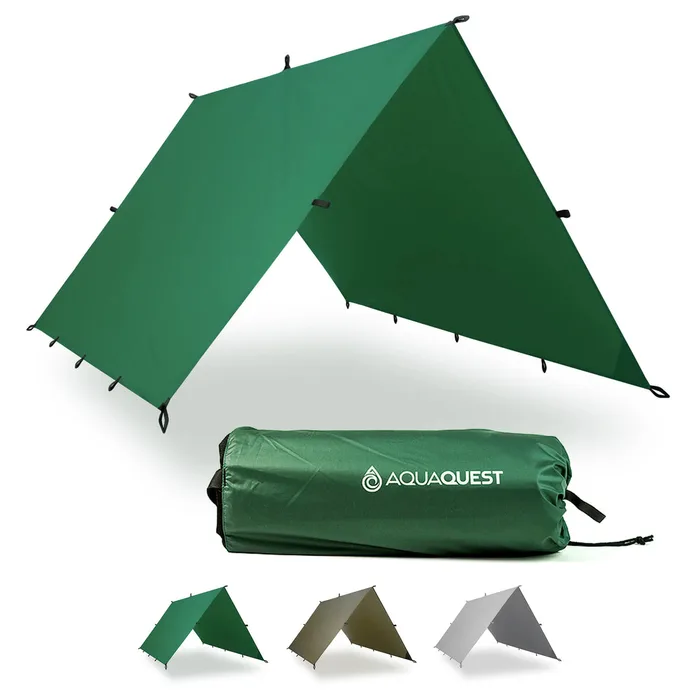
- Buy Aqua Quest Guide Ultralight Tarp A 40D ripstop nylon tarp with dual silicone and PU coating, a stated 5,000 mm rating and a published tie-out count for each size.
- Buy Sea to Summit Escapist Evo Tarp A very light Ultra-Sil LS tarp in Medium and Large with a stated packed size of 18 x 8 x 8 cm.
- It depends Grand Trunk Abrigo Rain Fly & Shelter A 9'6" square silnylon tarp with 16 guy points, made for covering a hammock.
- Skip Stansport Medium-Duty Rip-Stop Tarp A polyethylene rip-stop tarp sold in many sizes, with a maker page that leaves out the numbers a camper needs.
What actually matters
- Fabric and denier - These set how heavy and tough the tarp is. Fabrics like the 15D Ultra-Sil LS or 40D ripstop nylon trade durability for pack size.
- Coating - A silicone, PU or laminate layer is what makes the fabric shed water. Look for the page to name it.
- Waterproof rating - The number in millimetres lets you compare tarps. Pages that give none leave you guessing.
- Tie-out count - Points around the edge and across the panel set how many shapes you can pitch. More points give more options.
- Seams - Stitch holes can leak unless taped or sealed. Check what the maker says.
- Packed weight and size - This is what you carry. Compare the same coverage size across tarps.
- Coverage size - A tarp 9 or 10 feet square covers one or two people with a hammock or tent. A smaller sheet is a rain cover for one.
The specs, in plain English
Green flags vs red flags
Green flags
- The page states fabric, denier and coating together.
- A waterproof rating in millimetres is published.
- A tie-out count is given for each size.
- Packed weight and packed size are both listed.
- Seam taping or sealing is described.
Red flags
- The page says only 'waterproof' with no figure.
- No weight is stated.
- The listing uses a generic fabric name with no denier.
- Tie-outs are described as 'multiple' with no count.
- The product is sold mainly as a utility cover rather than a shelter.
Who's who: the brands
- Sea to Summit - Known for compact ultralight fabrics, such as the Ultra-Sil LS used in the Escapist Evo.
- Aqua Quest - Sells waterproof tarps in several sizes and weights, from the 40D Guide to the 70D Safari.
- Grand Trunk - A hammock gear maker whose Abrigo is sold as a rain fly and shelter.
- Kelty - Sells the Noah's Tarp line in 9, 12 and 16 sizes in polyester, with fully taped seams stated.
- Hilleberg - Makes tarps from its Kerlon fabrics, such as the Tarp 5 in Kerlon 1000.
How to read a listing without getting fooled
Start with the spec table, not the headline. Find the fabric and denier, then the coating, then a waterproof rating in millimetres. Next, find the weight and packed size for the exact size you plan to buy, since the line may cover several sizes with different numbers. Then find the tie-out count and whether the seams are taped. If more than a couple of these are blank, the maker is telling you something. Compare tarps at the same coverage size, because a small sheet always looks light next to a big one.
How much should you spend?
Camping tarps fall into three tiers. Budget polyethylene utility tarps are the cheapest but state the fewest specs and are not made to be carried. The mid-range holds documented nylon tarps with stated ratings, like the Guide and the Abrigo. The premium tier buys lighter, more compact fabrics such as Ultra-Sil LS. Paying more makes sense when pack weight matters to you, and paying less makes sense for fixed camp use.
Questions, answered
What size tarp do I need for one person?
A tarp around 9 to 10 feet square gives one person with a tent or hammock plenty of cover, and room for gear. A smaller sheet, such as 10 x 7, is lighter and fine for a solo ground sleeper in light weather. Aqua Quest lists coverage for each size, from 64 to 243 square feet. Go bigger if you want to cook or sit under it.
Is a silnylon tarp the same as a PU-coated tarp?
No. Silnylon is nylon impregnated with silicone, while PU-coated fabric has a polyurethane layer on one side. They can both be waterproof, but they age differently. Some tarps, like the Aqua Quest Guide, list both a silicone and a PU coating.
Will a tarp keep bugs out?
No. A tarp sheds rain and sun, but the sides are open. If bugs are a problem, you need a bug net or a tent. Sea to Summit sells a separate mesh bug shelter in the same tarp collection.
Can I use a hardware-store poly tarp for camping?
You can, for covering a woodpile or a ground cloth at a car camp. For a shelter you carry, you would want the weight, packed size and waterproof figure, and the Stansport page does not give them. A camping tarp from the sets above states more.
Or jump to the head-to-head: Aqua Quest Guide Ultralight Tarp vs Sea to Summit Escapist Evo Tarp.