

Outdoors & Fitness
The Best Camping Tarps: 4 Compared (and One to Skip)
We compared four current camping tarps on fabric and denier, stated waterproof rating, tie-out count, packed weight and size, and coating.
The short version
The Aqua Quest Guide is our overall pick because it is the only one here that states fabric, denier, coating, a waterproof rating and a tie-out count together, at a light packed weight. The Sea to Summit Escapist Evo is the premium buy: very light and very packable, though its page lists no waterproof rating or tie-out count. The Grand Trunk Abrigo is the hammock camper's tarp, with a stated rating and 16 guy points, but its 2,000 mm figure is the lowest of the three fabric tarps. The Stansport Medium-Duty Rip-Stop Tarp is the one to skip for camping, because its page gives no weight, no waterproof figure and no packed size. For hammock gear that pairs with these, see our hammock and strap reviews. Best for: the Guide if you want documented specs, the Escapist Evo if every ounce counts.
Our picks at a glance
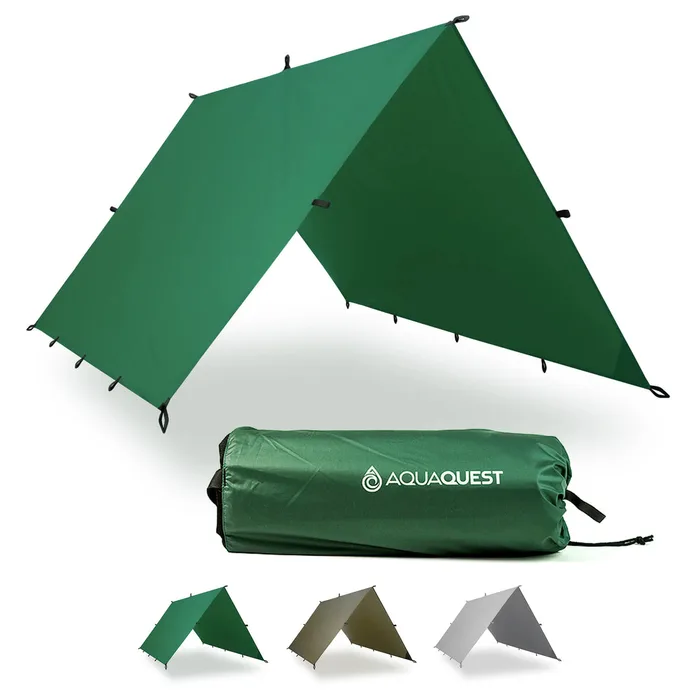
- Aqua Quest Guide Ultralight Tarp - Buy. A 40D ripstop nylon tarp with dual silicone and PU coating, a stated 5,000 mm rating and a published tie-out count for each size.
- Sea to Summit Escapist Evo Tarp - Buy. A very light Ultra-Sil LS tarp in Medium and Large with a stated packed size of 18 x 8 x 8 cm.
- Grand Trunk Abrigo Rain Fly & Shelter - It depends. A 9'6" square silnylon tarp with 16 guy points, made for covering a hammock.
- Stansport Medium-Duty Rip-Stop Tarp - Skip. A polyethylene rip-stop tarp sold in many sizes, with a maker page that leaves out the numbers a camper needs.
The verdict in 30 seconds
What mattered most
- Fabric
- Coating
- Stated waterproof rating
- Tie-out count
- Size compared
- Weight
A camping tarp is the simplest shelter you can carry, and also the easiest to buy wrong. Listings throw around fabric names, denier and millimetre ratings, and many leave out the numbers that decide whether it keeps you dry or fits in your pack. We compared four current tarps using only what the makers publish: Aqua Quest's Guide, Sea to Summit's Escapist Evo, Grand Trunk's Abrigo Rain Fly, and Stansport's Medium-Duty Rip-Stop Tarp. Two earn a clear buy, one suits a specific hammock camper, and one common big-box style poly tarp is hard to recommend for camping.
A 40D ripstop nylon tarp with dual silicone and PU coating, a stated 5,000 mm rating and a published tie-out count for each size.
Best for: Backpackers and hammock campers who want a light, well-documented rain tarp.
- The page states 40D ripstop nylon, silicone plus PU coating, and a 5,000 mm waterproof rating, so you can judge it before buying.
- The 10 x 10 size has 17 tie-outs and weighs 1.3 lb, with a stated packed size of 11.5 x 4.5 x 3 in.
- Sizes run from 10 x 7 to 20 x 13, and a stuff sack and lifetime warranty are listed.
- The page says only 'reinforced stitching' and gives no seam sealing details, so seal the seams yourself if you expect a storm.
- 40D nylon is thinner than the maker's own 70D Safari tarp, so it asks for more care around sharp bark and rocks.
- Some colors can sell out in some sizes.
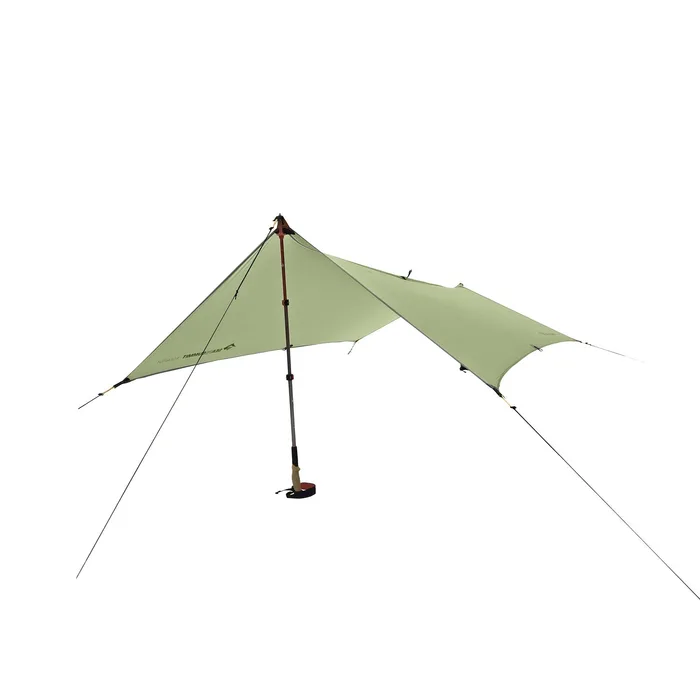
A very light Ultra-Sil LS tarp in Medium and Large with a stated packed size of 18 x 8 x 8 cm.
Best for: Ultralight hikers who pitch with trekking poles and want the smallest pack.
- The fabric is Ultra-Sil LS, 15D nylon with 30D polyester ripstop, with a Sil/PeU coating and a non-PFAS DWR finish.
- The Medium is 260 x 201 cm and weighs 348 g, packing to 18 x 8 x 8 cm.
- Reinforced tie-outs with adjustable line tensioners and bar tacks for trekking pole tips are listed.
- The page lists no waterproof rating in millimetres.
- The page gives no count of tie-out points and does not list seam treatment.
- The Medium covers a smaller area than a 10 x 10 tarp, and the maker's price is the highest of the four.
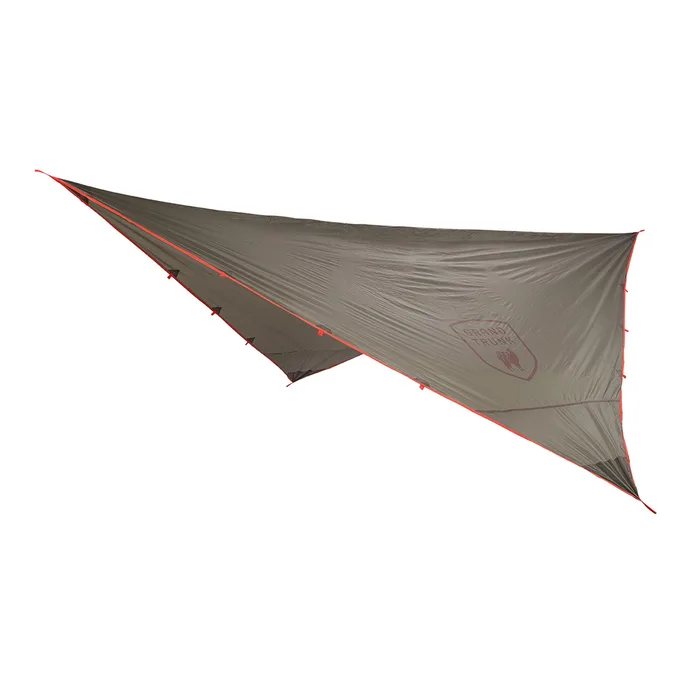
A 9'6" square silnylon tarp with 16 guy points, made for covering a hammock.
Best for: Hammock campers who want a ready-to-pitch kit with stakes and lines included.
- The page states 20D 400T silicone nylon, a DWR finish and a 2000 mm waterproof rating.
- It lists 16 reinforced guy-points, stitched and taped seams, and a 16 oz weight.
- Six aluminum stakes, guy lines and a stuff sack are included.
- Packed size is not listed.
- 2000 mm is the lowest stated rating among the fabric tarps here.
- It is sized and described as a hammock rain fly, so ground sleepers get less out of it.
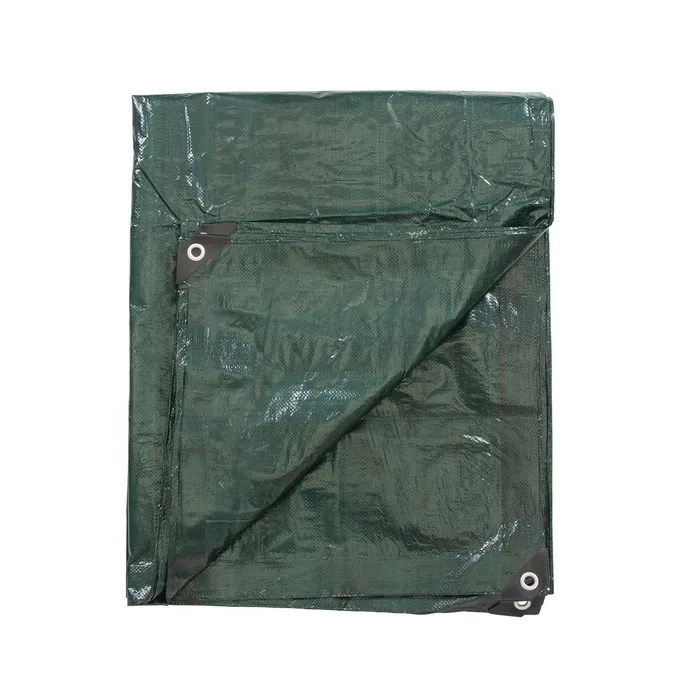
A polyethylene rip-stop tarp sold in many sizes, with a maker page that leaves out the numbers a camper needs.
Best for: Utility cover at a car camp or around the yard, not a carried shelter.
- It comes in many sizes, from 7 x 5 ft up to 30 x 20 ft.
- The page lists rope-reinforced edges, double-reinforced corners and grommets every 3 to 4 feet.
- It is the lowest-cost way to cover a woodpile, a car trunk or a ground cloth.
- No weight is stated, so you cannot compare it to a camping tarp.
- The page calls it 'waterproof' with no millimetre rating and says nothing about UV treatment.
- It is polyethylene laminated on both sides, 5 mil thick, with an 8 x 10 weave and no denier, which is a heavier, less packable construction than the nylon tarps here.
- No packed size and no tie-out total are given, only grommet spacing.
| Criteria | Aqua Quest Guide Ultralight Tarp Top pick | Sea to Summit Escapist Evo Tarp | Grand Trunk Abrigo Rain Fly & Shelter | Stansport Medium-Duty Rip-Stop Tarp |
|---|---|---|---|---|
| Verdict | Buy it | Buy it | It depends | Skip it |
| Best for | Backpackers and hammock campers who want a light, well-documented rain tarp. | Ultralight hikers who pitch with trekking poles and want the smallest pack. | Hammock campers who want a ready-to-pitch kit with stakes and lines included. | Utility cover at a car camp or around the yard, not a carried shelter. |
| Price tier | $$ · mid-range | $$$ · premium | $$ · mid-range | $ · budget |
| Fabric | 40D ripstop nylon | 15D nylon / 30D polyester ripstop | 20D 400T silicone nylon | Polyethylene rip-stop, 5 mil |
| Coating | Silicone and PU | Sil/PeU plus non-PFAS DWR | DWR | Laminated on both sides |
| Stated waterproof rating | 5,000 mm | Not listed | 2000 mm | Called waterproof, no figure |
| Tie-out count | 17 (10 x 10 size) | Not listed | 16 guy-points | Grommets every 3 to 4 ft |
| Size compared | 9'7" x 9'7" | 260 x 201 cm (Medium) | 9'6" x 9'6" | Many sizes, e.g. 10 x 12 cut |
| Weight | 1.3 lb | 348 g (Medium) | 16 oz | Not stated |
| Packed size | 11.5 x 4.5 x 3 in | 18 x 8 x 8 cm | Not listed | Not listed |
| Seams | Reinforced stitching, sealing not stated | Not listed | Stitched and taped | Not listed |
Which one is right for you?
- Backpackers and hammock campers who want a light, well-documented rain tarp. Buy it Aqua Quest Guide Ultralight Tarp
- Ultralight hikers who pitch with trekking poles and want the smallest pack. Buy it Sea to Summit Escapist Evo Tarp
- Hammock campers who want a ready-to-pitch kit with stakes and lines included. It depends Grand Trunk Abrigo Rain Fly & Shelter
- Utility cover at a car camp or around the yard, not a carried shelter. Skip it Stansport Medium-Duty Rip-Stop Tarp
How we judged the field
Five things matter in a camping tarp. Fabric and denier tell you weight and toughness: a 15D or 20D sheet packs tiny but wants careful pitching, while 40D and 70D cost weight for durability. The coating (silicone, PU, or a laminate) decides how it sheds water and how long that lasts. A stated waterproof rating in millimetres lets you compare one tarp to another. The tie-out count controls how many shapes you can pitch. Packed weight and size decide whether it travels with you.
The field splits into three groups: ultralight nylon tarps with documented specs, hammock-oriented rain flys, and cheap polyethylene utility tarps. We picked one clear leader from the first group, one premium option from the same group, one hammock-focused tarp, and one polyethylene tarp that shows what you get when the listing leaves the specs out. Every number below comes from the maker’s own page, and where a page leaves a spec blank we say so rather than guess.
The Guide is the tarp in this group that tells you the most about itself. Aqua Quest states 40D ripstop nylon, a dual silicone and PU coating and a 5,000 mm waterproof rating, which is the highest figure stated by any fabric tarp here. The 10 x 10 size has 17 tie-outs, weighs 1.3 lb and packs to 11.5 x 4.5 x 3 in, and the same page lists sizes from 10 x 7 to 20 x 13 with their own counts and weights. Tie-outs are grosgrain webbing, the corners have dual-layer supports, and a stuff sack and lifetime warranty are listed. The weak spot is seams: the page says only reinforced stitching and gives no sealing details, so plan on sealing the ridge seam before a long trip. At 40D it is a step thinner than Aqua Quest’s own 70D Safari, which weighs 1.7 lb in the same size, so you trade some toughness for the lighter pack. It is the one to buy if you want to read the spec sheet and know what you are getting.
The Escapist Evo is the tarp for people who count grams. Sea to Summit lists Ultra-Sil LS, a 15D nylon with 30D polyester ripstop, with a Sil/PeU coating and a non-PFAS DWR finish. The Medium is 260 x 201 cm, weighs 348 g, and packs to 18 x 8 x 8 cm, and the Large is 320 x 290 cm at 499 g. Reinforced tie-outs with adjustable line tensioners are listed, along with bar tacks for trekking pole tips, which fits a pole-supported pitch. The gaps matter, though. The page gives no waterproof rating, no tie-out count and no seam details, so you are relying on the brand’s reputation for coated fabric. The Medium also covers well under a 10 x 10 sheet, so choose the Large if you want room for two or for a hammock. It is the best choice for a solo hiker who values pack size above all.
The Abrigo is built for hammocks, and it states more than many tarps do. Grand Trunk lists 20D 400T silicone nylon with a DWR finish, a 2000 mm waterproof rating, 16 reinforced guy-points, and stitched and taped seams. It measures 9’6” square, weighs 16 oz and ships with six aluminum stakes, guy lines and a stuff sack, so you can pitch it out of the bag. The trade-offs are small but real. The page gives no packed size, and 2000 mm is the lowest stated rating among the fabric tarps in this group. It is also described as a rain fly and shelter for hammocks, so a ground sleeper wanting a low, wide pitch has a better choice in the Guide. If you already own a hammock and straps (see our reviews of those) and want one box that covers the rain question, this fits.
The Stansport Medium-Duty Rip-Stop Tarp is the kind of poly tarp you see everywhere, and it is a poor camping choice because of what its maker leaves out. The page calls it durable rip-stop polyethylene laminated on both sides, 5 mil thick, with an 8 x 10 weave, rope-reinforced edges and grommets every 3 to 4 feet. It says waterproof but gives no millimetre figure, and it states no weight, no UV treatment, no packed size and no denier. Laminated polyethylene is a different build from the nylon tarps here, and the missing weight means you cannot work out what it adds to a pack. It comes in many sizes, which makes it handy for covering a woodpile or a car camp kitchen. For a shelter you carry, spend the extra on one that publishes its numbers. It is for utility cover, not backpacking.
Aqua Quest Guide Ultralight Tarp vs Sea to Summit Escapist Evo Tarp: which should you buy?
The Guide and the Escapist Evo split on what you value. The Guide gives you a documented 5,000 mm rating, 17 tie-outs and a 1.3 lb weight for a 9’7” square sheet. The Escapist Evo Medium weighs 348 g and packs to 18 x 8 x 8 cm, but the sheet is 260 x 201 cm and its page lists no rating or tie-out count. The Guide covers a much larger area, about 92 square feet in the 10 x 10 size, and it tells you what it is made of.
Pick the Guide if you want the numbers, a bigger covered area, or a hammock or group pitch. Pick the Escapist Evo if you hike solo, pitch with trekking poles, and your pack space is the limit. If you are on the fence, the Guide’s stated specs make it the safer first tarp.
What to look for
- Denier: Lower numbers like 15D to 20D are lighter and pack smaller, while 40D to 70D handle abrasion better. Match it to how rough your campsites are.
- Waterproof rating: A stated millimetre figure lets you compare tarps. Be wary of a page that only says ‘waterproof’.
- Coating: Silicone, PU, and laminates behave differently over years of use. The best listings name the coating and any DWR finish.
- Tie-out count: Check it for your size, not the line’s headline number, since counts vary by size.
- Seams: Look for taped or sealed seams, or plan to seal the ridge seam yourself.
- Packed weight and size: If either is missing, you cannot judge the tarp for carrying.
Our final take
Buy the Aqua Quest Guide if you want a camping tarp whose page tells you the fabric, coating, rating, tie-out count and weight. Buy the Sea to Summit Escapist Evo if packed size and weight come first and you accept that the page leaves out the rating. Consider the Grand Trunk Abrigo if a hammock is your main use and you want stakes and lines in the box. Skip the Stansport polyethylene tarp for anything you carry, because the maker’s page does not give you the numbers to judge it. Check each page’s spec table before you pay, and treat blanks as a reason to look elsewhere.
Questions, answered
What waterproof rating does a camping tarp need?
The numbers on these pages run from 2000 mm for the Abrigo to 5,000 mm for the Guide, and both are described as rain shelters by their makers. Higher numbers mean the fabric resists more water pressure before it leaks, which matters most where the tarp is pulled tight or someone presses against it. A tarp pitched taut overhead sees less pressure than a tent floor. If a page gives no number at all, as the Stansport and Sea to Summit pages do, you cannot compare it on that spec, so look at the coating and seam notes instead.
Is silnylon or a polyethylene tarp better for backpacking?
For carrying, the nylon tarps here win clearly because they publish a weight and pack small. The Guide is 1.3 lb in the 10 x 10 size, and the Escapist Evo Medium is 348 g. The Stansport polyethylene tarp states no weight, so it cannot be compared. Polyethylene suits a car camp or tool cover where weight is irrelevant.
How many tie-outs should a tarp have?
More points let you pitch more shapes, such as an A-frame, a lean-to or a flat sheet low to the ground. The Guide lists 17 on its 10 x 10 size and the Abrigo lists 16. Check the count for the size you are buying, because Aqua Quest's counts vary by size. If a page gives no count, you cannot tell how flexible the pitch will be.
Do I need to seal the seams on a tarp?
It depends on the tarp. Grand Trunk states the Abrigo has stitched and taped seams, and Kelty states its Noah's Tarps are fully taped. Aqua Quest and Sea to Summit do not state seam sealing on the pages we checked, so a bottle of seam sealer is a cheap precaution for the ridge seam. Do it before a trip rather than in the rain.
Can I use a tarp as a hammock rain fly?
Yes, and that is a common pairing. A square tarp around 9 to 10 feet on a side covers a typical hammock with room to spare, and the Abrigo is sold specifically for this. Pitch it on a ridgeline above the hammock and keep the edges low in wind. Our hammock and strap reviews cover the suspension side of the setup.
Deciding between the top two? See our head-to-head: Aqua Quest Guide Ultralight Tarp vs Sea to Summit Escapist Evo Tarp.
More Outdoors & Fitness reviews
 The Best Carry-On Luggage: 4 Compared (and One to Skip)
  The Best Chainsaw Chaps: 4 Compared (and One to Skip)
  The Best Chainsaws for Homeowners: 4 Compared (and One to Skip)
  The Best Checked Luggage: 4 Large Suitcases Compared (and One to Skip)
  The Best Climbing Chalk: 4 Compared (and One to Skip)
  The Best Climbing Harnesses: 4 Compared (and One to Skip)