Explained
Camping Stoves, Explained
After reading, you will understand the main camping-stove types, the specs that actually matter, and how to match a stove to how you travel and cook.
In this guide
Camping stoves are not one product but several, each built for a different job: a tiny burner that screws onto a fuel canister for the backcountry, an integrated system designed to boil water fast, or a heavy two-burner that cooks like a home range at a campsite. The mistake most first-time buyers make is picking on price or looks instead of matching the stove to how they actually travel. Once you know the trade-offs between boiling and cooking, weight and power, this becomes an easy decision.
The 30-second version
- There is no single best stove, only the best stove for how you travel: canister stoves for carrying on your back, two-burner propane stoves for driving in and cooking for a group.
- Boiling and cooking are different skills. Integrated systems boil water fastest but simmer poorly, while wide-burner tabletop stoves cook real food but are heavy and bulky.
- Wind is the hidden efficiency killer. Recessed burners, fold-up panels, or an integrated cozy make a large difference in how fast and reliably a stove cooks outdoors.
- Weight matters only when you carry it. Grams and packed size are critical on your back and nearly irrelevant when the stove rides in your car.
- Simple, proven designs last. The fewer moving parts a stove has, the less there is to break, which is why minimalist burners earn strong long-term reliability reports.
The products this guide is about
Our verdict on each, with the full reasoning on the companion review.
- Buy Jetboil Flash 1.0L Fast Boil System The fastest, most foolproof way to turn a canister into boiling water on the trail. Amazon
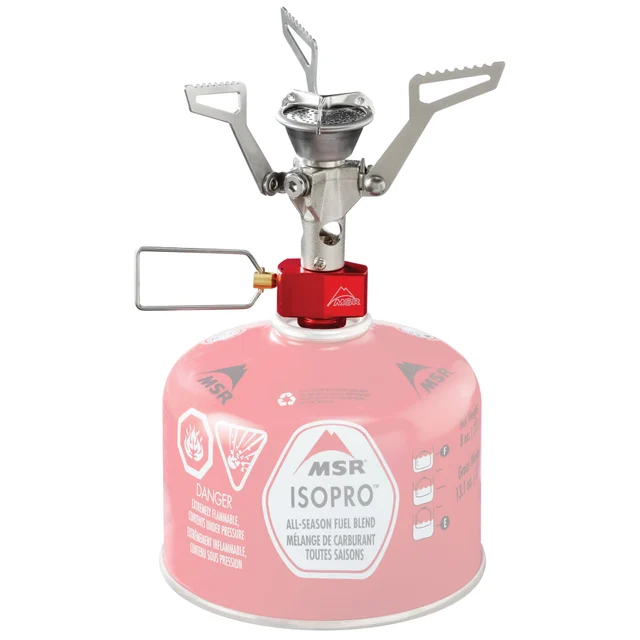
- Buy MSR PocketRocket 2 A tiny, dirt-simple screw-on burner that has become the default ultralight workhorse. Amazon
- It depends Camp Chef Everest 2X A powerhouse two-burner that cooks like a home range, if you can carry and feed it. Amazon
- Skip Coleman Classic Propane 2-Burner Stove The cheap, ubiquitous car-camp stove that gets the job done but leaves you wanting. Amazon
What actually matters
- Stove type determines almost everything else. A screw-on canister burner, an integrated canister system, and a two-burner tabletop stove are built for genuinely different trips, so choose the category before you compare individual models.
- Boil speed vs. simmer control is the core trade-off. Stoves optimized for a fast rolling boil rarely hold a low, even flame, so decide whether you mostly rehydrate meals or actually cook.
- Wind resistance drives real-world efficiency. An exposed burner in a breeze can take far longer and burn more fuel than its calm-weather numbers suggest, so shielding matters as much as raw output.
- Weight and packed size decide backcountry suitability. On foot, a stove that folds to pocket size and works with cookware you already own is worth far more than extra features.
- Fuel type and availability affect both convenience and running cost. Confirm you can readily buy the canister or propane your stove needs where you are headed.
- Igniter and pressure regulator are convenience-and-consistency features. A built-in igniter saves fumbling with a lighter, and a regulator holds output steadier in cold and wind.
- Long-term durability separates a stove you keep for a decade from one you replace. Aggregated owner reports over multiple seasons are the most honest guide here.
The specs, in plain English
Green flags vs red flags
Green flags
- The stove type genuinely matches your trip: light and packable for the backcountry, powerful and stable for the campsite.
- A pressure regulator is included if you expect cold or windy conditions.
- The design is simple with few things to break, and owner reports span multiple seasons of reliable use.
- For cooking, the stove offers a wide burner and credible low-flame simmer control, not just a fast boil.
- It works with standard cookware or fuel you can buy easily, rather than locking you into a proprietary system you cannot replace.
Red flags
- You are buying a fast-boil integrated system but plan to cook actual meals with sauces or eggs.
- The stove has thin, flimsy wind panels and no regulator, yet you camp in exposed or breezy places.
- A low price hides a dated, flimsy build and weak low-end flame that scorches food.
- The stove is tall and top-heavy on a narrow base with no included stabilizer for uneven ground.
- Fuel for the stove is hard to find or expensive where you actually travel.
Who's who: the brands
- Jetboil - Known for integrated canister systems that boil water fast and pack into themselves; the go-to for backpackers who mostly rehydrate meals.
- MSR - Respected maker of lightweight, durable backpacking stoves, from minimalist screw-on burners to more weatherproof regulated designs.
- Camp Chef - Specializes in powerful two-burner and tabletop stoves for serious car-camp cooking, such as the twin 20,000 BTU Everest 2X.
- Coleman - The long-standing, widely available name in affordable propane car-camping stoves; ubiquitous and cheap, though builds can feel dated.
How to read a listing without getting fooled
When you read a stove listing, start by identifying the true category, since marketing photos can blur the line between a backpacking burner and a campsite range. Treat a headline boil time as a best-case, calm-weather figure and mentally discount it for wind, cold, and a fuller pot. A big output number looks impressive but means little without a matching heat exchanger or wind shielding, so weigh those together rather than chasing the highest figure. Check what is genuinely included versus sold separately, such as a stabilizer tripod, wind panels, or an igniter, and note whether the stove locks you into proprietary pots or works with cookware you own. Finally, scan aggregated owner reports for patterns over several seasons, especially around simmering, wind performance, and igniter longevity, because those recurring themes tell you more than any single spec.
How much should you spend?
How much to spend follows the job, not the label. For backcountry use, a simple screw-on burner delivers most of what an ultralight traveler needs for very little, and it is often the smartest value in the whole category; paying more here mostly buys an integrated pot, a regulator for cold weather, or a built-in igniter, which are worth it if you camp often or in harsh conditions. For car camping, mid-range two-burner stoves tend to hit the sweet spot, offering real simmer control and sturdier wind protection that the cheapest models lack. The bargain-bin tabletop stoves can be a false economy: they heat a pot fine but frustrate anyone who wants to actually cook, and a flimsy build often means replacing them sooner. Premium campsite stoves earn their cost only for people who cook seriously or for groups; occasional campers rarely need that much stove.
Questions, answered
What is the difference between canister stoves and propane car-camping stoves?
Backpacking stoves screw onto small sealed canisters of pressurized isobutane and propane, which are compact and light enough to carry. Tabletop stoves run on larger, heavier propane cylinders that cost less per meal but are far too bulky to backpack with. Choose canister stoves when you carry everything on your back, and propane stoves when you drive to the site.
Can camping stoves actually cook meals, or only boil water?
It depends entirely on the design. Integrated fast-boil systems are optimized for a rolling boil and simmer poorly, so they suit dehydrated meals, coffee, and tea. A simple screw-on burner handles basic cooking but offers limited fine flame control. For genuine cooking with sauces and eggs, a two-burner tabletop stove gives you the surface area and low-end control that real cooking needs.
Do I need a windscreen?
Wind is the single biggest drain on stove efficiency, so some form of shielding helps almost every stove. Integrated systems partly shield the pot, and better tabletop stoves build in recessed burners and fold-up panels. Exposed burners benefit most from a windbreak. Important safety note: never fully enclose a canister stove with a windscreen, because trapped heat can dangerously overheat the fuel canister.
Which stove should I pick for backpacking versus car camping?
For backpacking, weight and packed size dominate, so a tiny screw-on burner or a compact integrated system is the right tool. For car camping, where you can carry weight and often cook for a group, a two-burner tabletop stove is far more practical because it gives you real cooking surface and stability.
Are camping stoves safe to use inside a tent or enclosed space?
No. All fuel-burning stoves produce carbon monoxide and should only be operated outdoors in well-ventilated areas, never inside a tent, vehicle, or closed shelter. Keep the stove on a stable, level surface away from flammable material, and let canisters and burners cool before packing. This is general product information; always follow the manufacturer's safety instructions for your specific model.
Or jump to the head-to-head: MSR PocketRocket 2 vs Jetboil Flash 1.0L Fast Boil System.