

Outdoors & Fitness
The Best Camping Stoves: 4 Compared (and One to Skip)
We compared four current camping stoves across boil speed, simmer control, wind resistance, portability, and price to match each to a trip.
The short version
Camping stoves are tools for different jobs, so the right pick depends on how you travel and cook. The Jetboil Flash is the fastest, most foolproof water-boiler for backpackers who mostly rehydrate meals. The MSR PocketRocket 2 is the most versatile all-rounder: tiny, cheap, reliable, and happy with any pot. The Camp Chef Everest 2X is a genuine camp kitchen for drive-in cooks who want power and control, though it is heavy, thirsty, and premium-priced. The Coleman Classic is inexpensive and everywhere, but weak simmering, thin wind protection, and a dated build make it hard to recommend over the alternatives. Best for: most people are best served by the MSR PocketRocket 2 for the backcountry and the Camp Chef Everest 2X for the campsite.
Our picks at a glance
- Jetboil Flash 1.0L Fast Boil System - Buy. The fastest, most foolproof way to turn a canister into boiling water on the trail.
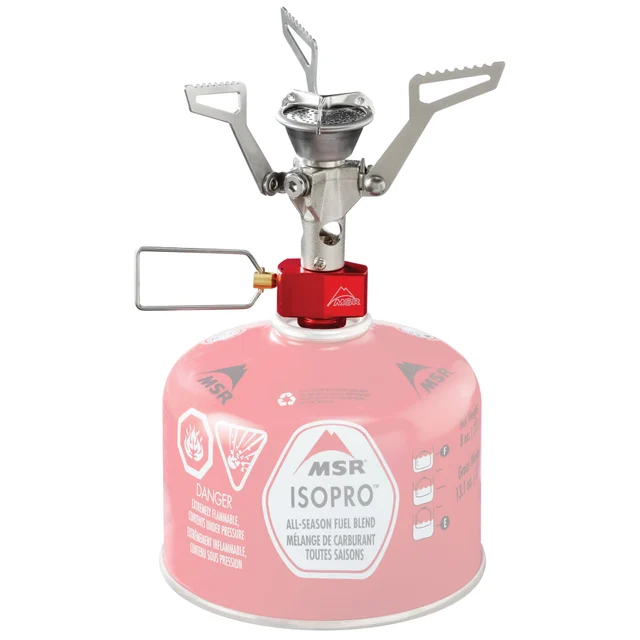
- MSR PocketRocket 2 - Buy. A tiny, dirt-simple screw-on burner that has become the default ultralight workhorse.
- Camp Chef Everest 2X - It depends. A powerhouse two-burner that cooks like a home range, if you can carry and feed it.
- Coleman Classic Propane 2-Burner Stove - Skip. The cheap, ubiquitous car-camp stove that gets the job done but leaves you wanting.
The verdict in 30 seconds
What mattered most
- Stove type
- Best use
- Boil speed
- Simmer / real cooking
- Wind resistance
- Portability
Camping stoves split into distinct jobs: an integrated canister system that boils water fast, an ultralight screw-on burner for the backcountry, and a burly two-burner for cooking real meals at a car-camp table. We lined up four current 2026 models across those roles. Two earn a clear buy, one depends on how you cook, and one is a value pick we would steer most people away from.
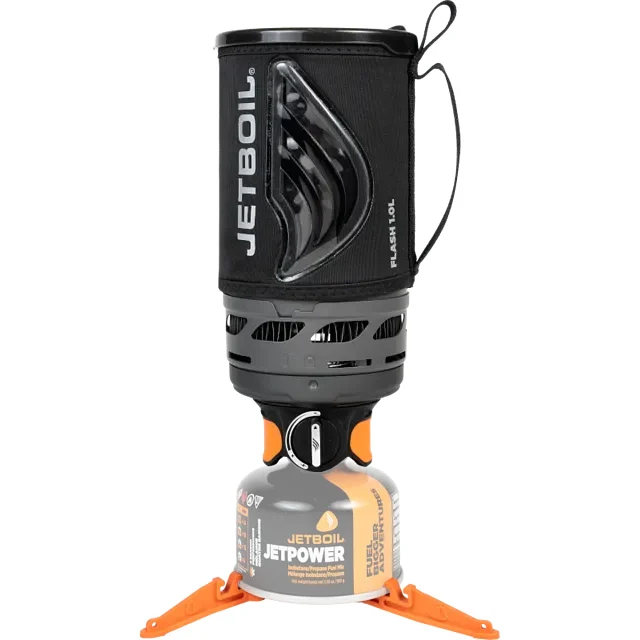
The fastest, most foolproof way to turn a canister into boiling water on the trail.
Best for: Solo and duo backpackers who mostly rehydrate meals and want water hot in minutes.
- Integrated FluxRing heat exchanger and insulated cup boil water fast, and independent testing places it among the quickest
- Push-button igniter and a color-changing heat indicator make it beginner-friendly
- Burner, canister stabilizer, and lid nest inside the insulated 1L cup for tidy packing
- Built for boiling, not cooking; simmering and pan-frying are awkward
- Tall, top-heavy footprint on the narrow canister base needs the included tripod on uneven ground
A tiny, dirt-simple screw-on burner that has become the default ultralight workhorse.
Best for: Weight-conscious backpackers who want a versatile, affordable burner that pairs with their own cookware.
- Weighs under 3 ounces and folds down small enough to disappear inside a mug or pot
- Works with any pot, so you are not locked into a proprietary system
- Owner reports over many years point to excellent long-term reliability with almost nothing to break
- No built-in igniter, so you must carry a lighter or matches
- No pressure regulator; the exposed burner loses ground in wind and cold versus regulated stoves
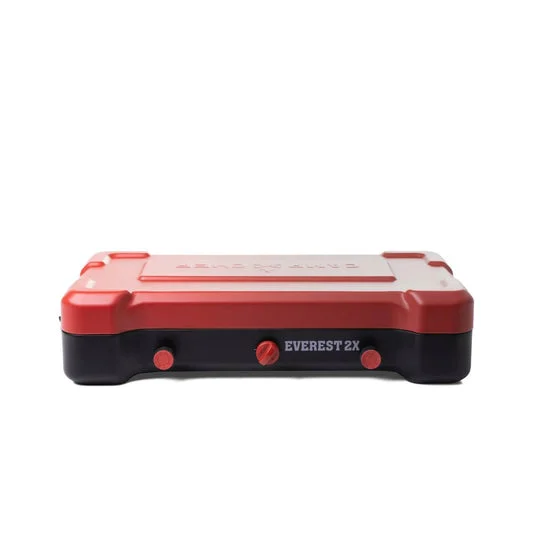
A powerhouse two-burner that cooks like a home range, if you can carry and feed it.
Best for: Serious camp cooks and larger groups who drive to the site and want to actually cook, not just boil.
- Two high-output burners give it standout raw power, and independent testing rates its wind resistance and simmer control among the best in the class
- Two 20,000 BTU burners, matchless ignition, and 215 square inches of cook space
- Rugged build that owners report survives repeated seasons
- Heavy and bulky; this is strictly a car-camping and basecamp stove
- High output burns through propane quickly, so groups and multi-day trips need extra fuel
- Premium price is hard to justify for occasional cooks
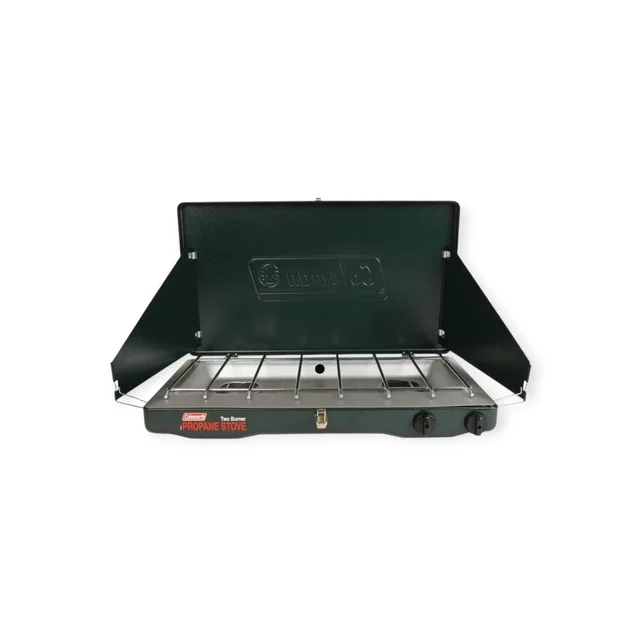
The cheap, ubiquitous car-camp stove that gets the job done but leaves you wanting.
Best for: Occasional, budget-first campers who only need to heat a pot or pan a few times a year.
- Very affordable and sold nearly everywhere, so replacements and parts are easy
- Simple, familiar operation that most campers already know
- Side wind panels offer basic breeze protection
- Modest total output and weak low-end mean owners frequently report poor simmering and scorched spots
- Wind panels are thin and the flame struggles in real gusts
- Thin sheet-metal build feels dated next to sturdier modern rivals
| Criteria | Jetboil Flash 1.0L Fast Boil System | MSR PocketRocket 2 Top pick | Camp Chef Everest 2X | Coleman Classic Propane 2-Burner Stove |
|---|---|---|---|---|
| Verdict | Buy it | Buy it | It depends | Skip it |
| Best for | Solo and duo backpackers who mostly rehydrate meals and want water hot in minutes. | Weight-conscious backpackers who want a versatile, affordable burner that pairs with their own cookware. | Serious camp cooks and larger groups who drive to the site and want to actually cook, not just boil. | Occasional, budget-first campers who only need to heat a pot or pan a few times a year. |
| Price tier | $$ · mid-range | $ · budget | $$$ · premium | $ · budget |
| Stove type | Integrated canister system | Screw-on canister burner | Two-burner tabletop | Two-burner tabletop |
| Best use | Solo/duo backpacking | Ultralight backpacking | Car camping / basecamp | Occasional car camping |
| Boil speed | Excellent | Very good | Good | Fair |
| Simmer / real cooking | Poor | Fair | Excellent | Poor |
| Wind resistance | Good (cozy shields pot) | Fair (exposed burner) | Excellent | Fair |
| Portability | Excellent (nests together) | Excellent (pocket-size) | Poor (car-camp size) | Poor (car-camp size) |
| Fuel | Isobutane/propane canister | Isobutane/propane canister | Propane cylinder | Propane cylinder |
| Price tier | $$ · mid-range | $ · budget | $$$ · premium | $ · budget |
Which one is right for you?
- Solo and duo backpackers who mostly rehydrate meals and want water hot in minutes. Buy it Jetboil Flash 1.0L Fast Boil System
- Weight-conscious backpackers who want a versatile, affordable burner that pairs with their own cookware. Buy it MSR PocketRocket 2
- Serious camp cooks and larger groups who drive to the site and want to actually cook, not just boil. It depends Camp Chef Everest 2X
- Occasional, budget-first campers who only need to heat a pot or pan a few times a year. Skip it Coleman Classic Propane 2-Burner Stove
How we judged the field
We do not run our own lab. Instead, we synthesize independent testing, long-term expert reviews, and aggregated owner reports to figure out which stoves earn their place. Because a stove is a tool for a specific job, we deliberately compared four different types rather than pretending one design wins for everyone. The criteria that mattered most were boil speed, simmer and real-cooking ability, wind resistance, packed weight and size, fuel type and efficiency, and long-term durability. We weighted each of those differently depending on whether a stove is meant for the backcountry or the campsite, and we flagged where a low price hides real compromises.
Jetboil Flash 1.0L Fast Boil System
Buy itThe Flash is the stove to beat when the only question is how fast you can get water hot. Its integrated FluxRing heat exchanger and insulated cup let it boil water fast, and independent testing repeatedly places it near the top for speed and fuel economy. The push-button igniter and color-changing heat indicator make it genuinely beginner-proof, and the whole system nests into itself for clean packing. The trade-off is that it is built to boil, not to cook: fine simmering is awkward, and the tall profile on a narrow canister wants the included stabilizer tripod on uneven ground. For backpackers who live on rehydrated meals and hot drinks, none of that matters much, and it earns a confident buy.
MSR PocketRocket 2
Buy itThe PocketRocket 2 is the most versatile stove in this comparison and our overall pick. It weighs under three ounces, folds down small enough to vanish inside a mug, and screws onto any standard canister, so you are never locked into a proprietary pot. Owner reports spanning years point to excellent reliability, which makes sense given how little there is to break. It skips an igniter, so you carry a lighter, and the exposed burner gives up some ground to regulated stoves in wind and cold. Those are minor concessions for a burner this light, this affordable, and this dependable, and it works with cookware you already own.
Camp Chef Everest 2X
It dependsThe Everest 2X is a camp kitchen rather than a backpacking stove. Its two high-output burners give it standout raw power, and independent testing rates its wind resistance and simmer control among the best in its class, with two 20,000 BTU burners and 215 square inches of cook space. Owners praise it as a stove that survives seasons of abuse. The catch is honest: it is heavy and bulky, it drinks propane when run hard, and it sits at a premium price. If you drive to your site and want to cook real food for a group, it is superb. If you camp occasionally or count grams, it is far more stove than you need, which is why it lands on depends.
Coleman Classic Propane 2-Burner Stove
Skip itThe Coleman Classic is the stove almost everyone has seen: cheap, familiar, and stocked nearly everywhere, with simple controls and side wind panels. For heating a pot of water a few times a year it is fine. But owner reports and independent testing keep surfacing the same limits: modest output and a weak low end make simmering frustrating and prone to scorching, the thin panels struggle in real gusts, and the sheet-metal build feels dated next to sturdier rivals. Because better-cooking and more durable options exist, we steer most buyers away from it unless budget is the only consideration.
MSR PocketRocket 2 vs Jetboil Flash: which should you buy?
These are the two strongest picks, and they answer different questions. The Jetboil Flash wins on pure boiling: it is faster, more wind-sheltered around the pot, and effortless for anyone who mostly adds hot water to a meal pouch. The MSR PocketRocket 2 wins on versatility and value: it is lighter, cheaper, pairs with any pot you own, and adapts from a solo trip to cooking a simple meal. Choose the Flash if speed and convenience are everything and you rarely cook. Choose the PocketRocket 2 if you want one flexible, reliable burner that does more for less money, which is why it is our overall pick.
What to look for
- Match the stove to the trip: canister stoves for backpacking, two-burner propane stoves for driving in and cooking for a group.
- Boil speed versus simmer: integrated systems boil fastest but simmer poorly; wide burners cook real food but are heavy.
- Wind resistance: recessed burners, panels, or an integrated cozy make a large difference in efficiency and cook time.
- Weight and packed size: critical on your back, nearly irrelevant in the car.
- Fuel type and availability: confirm you can readily buy the canister or propane your stove needs.
- Igniter and regulator: a built-in igniter adds convenience; a pressure regulator holds output in cold and wind.
- Durability: owner reports over multiple seasons are the best guide to whether a stove lasts.
Our final take
There is no single best camping stove, only the best stove for how you travel and cook. For the backcountry, the MSR PocketRocket 2 is the smart default: light, affordable, reliable, and endlessly versatile, with the Jetboil Flash the better choice when boiling water fast is all you care about. For the campsite, the Camp Chef Everest 2X is a genuine outdoor kitchen worth its weight and price if you cook seriously, while the Coleman Classic is best left on the shelf unless the lowest possible price outranks everything else. Buy for the job in front of you and any of the top three will serve you well for years.
Questions, answered
What is the difference between canister stoves and propane car-camping stoves?
Backpacking stoves like the Jetboil Flash and MSR PocketRocket 2 screw onto small sealed canisters of pressurized isobutane and propane, which are compact and light. Tabletop stoves like the Camp Chef Everest 2X and Coleman Classic run on larger, heavier refillable or disposable propane cylinders that are cheaper per meal but far bulkier. Choose canister stoves when you carry everything on your back and propane stoves when you drive to the site.
Can these stoves actually cook meals, or only boil water?
It varies widely. The Jetboil Flash is optimized for a fast rolling boil and simmers poorly, so it suits dehydrated meals, coffee, and tea. The MSR PocketRocket 2 handles simple cooking, and MSR says its flame turns down to a simmer, though a small burner concentrates the heat. For genuine cooking with sauces and eggs, a two-burner like the Camp Chef Everest 2X gives you the surface area and low-end control that reviewers consistently praise.
Which stove should I pick for backpacking versus car camping?
For backpacking, weight and packed size dominate, so the MSR PocketRocket 2 or the integrated Jetboil Flash are the right tools. For car camping, where you can carry weight and want to cook for a group, a two-burner tabletop stove such as the Camp Chef Everest 2X or Coleman Classic is far more practical.
Do I need a windscreen?
Wind is the single biggest drain on stove efficiency. Integrated systems like the Jetboil partly shield the pot, and many two-burner tabletop stoves add side wind panels. Exposed burners like the MSR PocketRocket 2 benefit most from a windbreak. Never fully enclose a canister stove, however, because trapped heat can dangerously overheat the fuel canister.
Are camping stoves safe to use inside a tent or enclosed space?
No. All fuel-burning stoves produce carbon monoxide and should only be operated outdoors in well-ventilated areas, never inside a tent, vehicle, or closed shelter. Keep stoves on a stable, level surface away from flammable material, and let canisters and burners cool before packing. This is general product information; always follow the manufacturer's safety instructions for your specific model.
Deciding between the top two? See our head-to-head: MSR PocketRocket 2 vs Jetboil Flash 1.0L Fast Boil System.
More Outdoors & Fitness reviews
 The Best Camping Tables: 4 Compared (and One to Skip)
  The Best Camping Tarps: 4 Compared (and One to Skip)
  The Best Carry-On Luggage: 4 Compared (and One to Skip)
  The Best Chainsaw Chaps: 4 Compared (and One to Skip)
  The Best Chainsaws for Homeowners: 4 Compared (and One to Skip)
  The Best Checked Luggage: 4 Large Suitcases Compared (and One to Skip)