Explained
Camping Quilts, Explained
After reading this you'll understand what a camping quilt actually is, why it saves weight, and how to read a spec sheet so you don't end up shivering.
In this guide
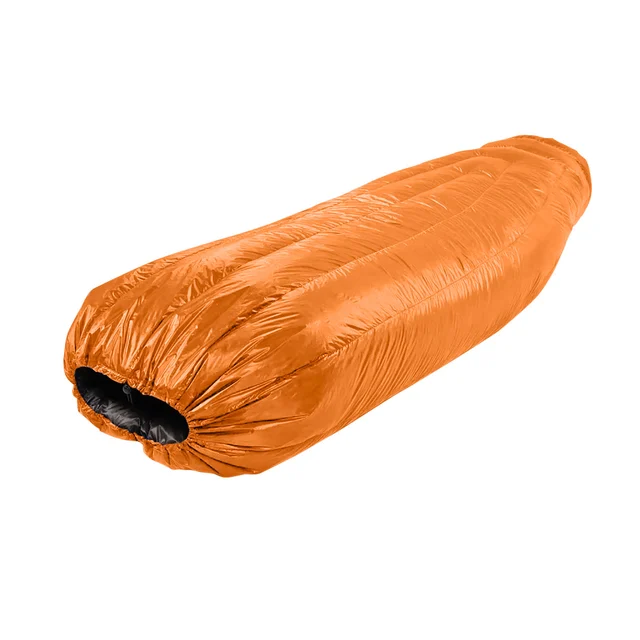
A camping quilt is a backpacking blanket with no back to it: it drops the insulation you'd otherwise crush flat under your body and leans on your sleeping pad to keep the ground's cold out. That saves real weight and pack space, but it changes what you have to shop for. The two things that trip up first-time buyers are believing the temperature rating is a comfort number (it isn't) and forgetting that a quilt is only half a sleep system, the pad underneath is the other half.
The 30-second version
- A quilt is a bag with the back cut off. the insulation under a sleeping bag gets crushed flat and stops working, so a quilt deletes it and relies on your pad instead, which is where the weight savings come from.
- Temperature ratings are survival numbers, not comfort numbers. so a quilt "rated" to a temperature is closer to the point you'd merely survive; size the rating well below the coldest night you actually expect.
- Your pad matters as much as the quilt. because there's no insulation under you, a warm quilt over a thin pad still sleeps cold, so match pad R-value to the conditions before you spend up on down.
- Drafts, not fill, are what usually make quilts cold. a draft collar at the neck, a footbox that closes, and pad straps that seal the edges are the details that separate a warm quilt from a shivery one.
- Quilts reward calm sleepers. if you sleep fairly still they're lighter and smaller than a bag; if you thrash around, gaps open along your sides and a bag may serve you better.
The products this guide is about
Our verdict on each, with the full reasoning on the companion review.
- Buy Enlightened Equipment Revelation The customizable thru-hiker default: dial in temperature, width, and fill, then trust it for years.
- Buy Hammock Gear Economy Burrow 20° Nearly the whole boutique-quilt experience for a lot less, using duck down instead of goose.
- It depends Sea to Summit Ember Down Quilt A polished, warm quilt from a big brand, but you pay premium money and hand back some of the weight savings.
- Skip Paria Outdoor Products Thermodown 30 Quilt A cheap way into down quilts, but the missing draft collar and optimistic rating leave cold sleepers shivering.
What actually matters
- Fill type and fill power decide warmth for the weight you carry. Down (measured by fill power, like 850 or 950) lofts more and packs smaller than synthetic; the higher the number, the more warmth per ounce. Synthetic weighs more but keeps working when damp.
- Temperature rating honesty is the whole game. A published rating is typically a limit or survival number, not the temperature you'll sleep comfortably at, so treat it as a ceiling and buy colder than your expected lows.
- Draft collar is the strip of insulation that seals around your neck. Without one, warm air pumps out the top every time you move, which is why a "quilt" that lacks one drafts cold the moment the night dips toward its rating.
- Footbox design (closed vs open) determines whether your feet stay in a warm pocket. A sewn or zippered closed footbox is warmest; an open one that unzips flat turns the quilt into a summer blanket but can leak heat on cold nights.
- Pad-attachment system is what seals the quilt's open back to your sleeping pad. Adjustable straps that cinch the edges down close the side gaps where most drafts sneak in; skip them and the quilt drafts every time you roll.
- Pad R-value is the insulation rating of what's underneath you, and with a quilt it does half the work. Aim for roughly R-4 or higher for freezing nights; a thin pad is the most common reason people feel cold under a good quilt.
- Sizing (width and length) decides whether the quilt tucks under your body or leaves gaps. Too narrow and you can't seal the sides; restless and broad-shouldered sleepers especially want extra width.
The specs, in plain English
Green flags vs red flags
Green flags
- A draft collar is included or offered as an option, and the footbox actually closes
- Adjustable pad straps that clearly seal the quilt's edges to your pad
- Down fill power is stated plainly (for example 850 or 950), or a good reason given for synthetic
- The listing is honest that the temperature rating is a limit, and suggests sizing colder
- Width and length options (or a genuinely roomy cut) so the quilt tucks under you
- Guidance to pair the quilt with an adequately insulated pad for the conditions
Red flags
- No draft collar and no way to add one, yet the quilt is sold for cold nights
- No pad-attachment system, so the quilt can't be sealed against side drafts
- A cold-sounding rating with no mention that it's a survival limit, not comfort
- Fill power or fill type left vague or unstated ("premium down" with no number)
- One fixed, narrow size with no width option for broader or restless sleepers
- Very large baffle chambers with no way to redistribute down that pools at the edges
Who's who: the brands
- Enlightened Equipment - Cottage maker known for made-to-order quilts where you pick temperature, size, and fill; a thru-hiker default for warmth-to-weight.
- Hammock Gear - Cottage brand offering full-featured customizable quilts, including value duck-down models that undercut goose-down rivals.
- Sea to Summit - Mainstream outdoor brand with polished, widely stocked down quilts and easy returns, at a premium price.
- Paria Outdoor Products - Budget-focused brand that makes cheap entry-level down quilts; fine for warm nights but often light on draft features.
- Katabatic Gear - Cottage maker with a strong reputation for draft-sealing pad-attachment systems and high-quality down.
- Nunatak - Long-running boutique maker of premium custom quilts favored by weight-focused ultralight backpackers.
How to read a listing without getting fooled
Read a quilt listing back-to-front from the warmth details, not the headline number. Start by treating the temperature rating as a limit: whatever it says, assume you'll want it comfortable at a temperature well warmer, and for real freezing nights look for a rating 10 to 20 degrees below your expected low. Next find the fill: a stated fill power (850, 950) plus down or synthetic tells you the warmth-to-weight; vague phrases like "premium fill" with no number are a dodge. Then hunt for the three draft features, a draft collar, a closable footbox, and pad straps, because a quilt missing them will draft no matter how much down it has. Finally, check sizing and remember what the listing won't say: the quilt is only half the system, so whatever pad you own (and its R-value) decides whether you actually sleep warm.
How much should you spend?
Spend based on how cold and how far you go, not on brand shine. The value sweet spot for most people is a full-featured quilt with a real draft collar, a closable footbox, and pad straps, in honest down of decent fill power; that's what keeps you warm and it's worth paying up from the cheapest options to get it. Going further up the range buys higher fill power (lighter and smaller for the same warmth), made-to-order sizing, and premium goose down; that's money well spent for frequent backpackers counting every ounce, and overkill for occasional summer campers. Swapping goose down for duck down is a legitimate way to get almost the same experience for less. The one place not to save is the missing-features bargain: a cheap "quilt" with no draft collar or pad attachment costs you warmth on exactly the nights you needed it. And budget for the pad too, because a warm quilt over a thin pad is money half wasted.
Questions, answered
Is a quilt really warm enough for freezing nights?
It can be, if you match it honestly. Temperature ratings are usually survival or limit numbers, so for genuine freezing nights choose a quilt rated 10 to 20 degrees below your expected low. Just as important, a quilt has no insulation underneath you, so pair it with an insulated pad (roughly R-4 or higher for freezing) and keep the pad straps cinched to block drafts.
Quilt or sleeping bag, which should I get?
A quilt trades the crushed-flat insulation on a bag's underside for reliance on your pad, saving real weight and pack volume. That makes quilts great for calm sleepers and less ideal if you toss and turn, because gaps can open along your sides and let in drafts. If you sleep fairly still and want a lighter, smaller kit, a quilt wins; if you thrash around or want zero fuss, a bag is more forgiving.
What sleeping pad R-value do I need with a quilt?
Because a quilt gives essentially no insulation between you and the ground, the pad does half the work. For summer and mild three-season use an R-value around 2 to 3 is usually fine; for nights near or below freezing aim for roughly R-4 or higher. If you're cold on the ground, no amount of quilt on top fully fixes it, so upgrade the pad first.
Down or synthetic quilt?
Down gives the best warmth-to-weight and packs smallest, which is why most backpacking quilts use it; higher fill power (say 850 or 950) means more warmth for less weight. Synthetic is cheaper and keeps more of its warmth when damp, at the cost of extra weight and bulk. For dry-climate weight-counters, down is the usual choice; for wet trips or a tighter budget, synthetic is a reasonable trade.
How do I stop a quilt from drafting?
Start with the pad straps: run them so the quilt edges seal against your pad, which closes the side gaps that cause most drafts. A draft collar around the neck and a closable footbox make a big difference on cold nights, so favor quilts that have or offer them. Sizing matters too, since a quilt that's too narrow won't tuck under you, and a light insulated hoody can stand in for a missing collar in a pinch.
Why does a quilt weigh less than a sleeping bag?
Because it deletes the insulation on the underside. When you lie on a sleeping bag, your body weight crushes the bottom insulation flat, so it stops trapping much heat anyway. A quilt drops that dead weight and hands the job to your sleeping pad instead, which is why it packs smaller and carries lighter for the same top-side warmth.
Or jump to the head-to-head: Enlightened Equipment Revelation vs Hammock Gear Economy Burrow 20°.