Explained
Bike Radars, Explained
After reading, you'll understand how a bike radar works, where its alerts show up, and how to read range, beam width, lumens and runtime claims.
In this guide
Most first-time buyers assume every bike radar works the same and that the biggest numbers win. In practice the alerts can depend on which computer, watch or phone you own, and some radars need a bike computer to show anything at all. Headline lumens and runtimes are often quoted for modes you would never ride in. And the radar only warns you about traffic; it does not make drivers give you room.
The 30-second version
- Check where alerts appear first, because some radars show alerts in a phone app and others need an ANT+ radar-compatible computer or watch.
- Read range and beam width together, since a long-range radar with a narrow beam can still miss a car coming around a bend.
- Day flash lumens are the useful brightness figure, and the headline lumen number may not match any selectable mode.
- Judge battery life by the mode you will use, ideally with the radar switched on, not by the longest number on the box.
- A radar is an early warning, not a substitute for looking back, a mirror or good lights front and rear.
The products this guide is about
Our verdict on each, with the full reasoning on the companion review.
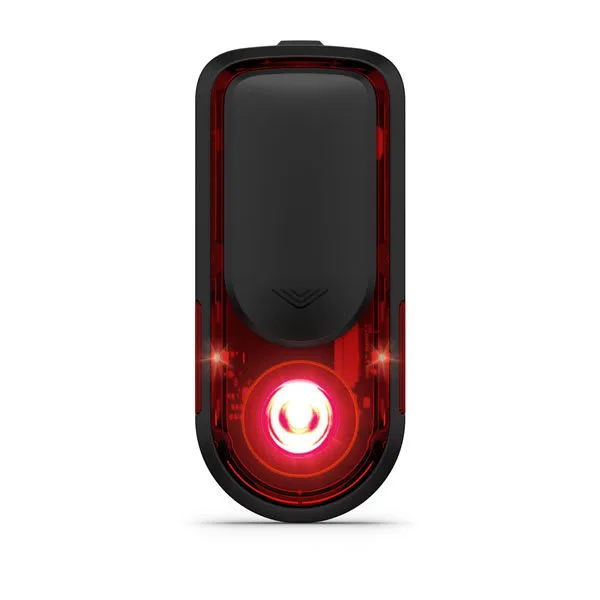
- Buy Garmin Varia RearVue 820 Garmin's newest radar tail light, with a 60 degree beam, vehicle size and lane-change alerts, a brake light and the longest day-flash runtime here.
- Buy Magicshine SEEMEE R300 A budget radar light with a 140 meter range, ANT+ alerts on the main bike computer brands, phone alerts in its own app and a full runtime table.
- It depends Trek CarBack Radar The longest stated range here at 240 meters and a 90 lumen day flash, held back by a battery Trek only describes as 7+ hours.
- Skip Wahoo TRACKR RADAR Priced close to Garmin's flagship but dimmer, shorter-ranged, and unable to show radar alerts on a phone.
What actually matters
- Detection range - The farthest distance at which the maker says the radar picks up a vehicle. More range means earlier warning on fast roads, but it is a best-case figure.
- Beam width - How wide the radar looks behind you, in degrees. A wider beam keeps tracking vehicles on bends and in the next lane.
- Alert display - Alerts show on a bike computer, a watch, a phone app or a mix. If you do not own a computer, a radar without phone alerts is close to useless.
- Day flash brightness - The flashing daytime mode is the one drivers notice most in daylight. Compare lumens in this mode rather than the headline figure.
- Runtime by mode - Battery life changes a lot between steady, flash and radar-only modes. A per-mode table, ideally with the radar on, is the only reliable guide.
- Smart features - Brake lights, lane-change alerts and vehicle size estimates add useful context. Some only work with the maker's own computers or app.
- Mount and weight - The unit sits on the seatpost, so the mount has to suit round, aero or D-shaped posts. Weight differences of 20 to 30 g matter less than a secure mount.
The specs, in plain English
Green flags vs red flags
Green flags
- A per-mode runtime table that lists radar-on figures.
- A stated beam width alongside the detection range.
- Phone alerts in the maker's app as well as ANT+ support for computers.
- A radar-only mode for long rides.
- Mount wedges or shims for round, aero and D-shaped seatposts.
Red flags
- A headline lumen figure that does not appear in any listed mode.
- A battery claim quoted for a dim eco mode with the radar off.
- No beam width or detection angle published.
- Fine print saying the app is for setup only and alerts need a bike computer.
- Compatibility described only as a percentage of devices, with no list.
Who's who: the brands
- Garmin - Its Varia line set the template for bike radar, and its newest models add vehicle size, lane-change alerts and a brake light.
- Magicshine - A lighting specialist that sells radar tail lights for less and publishes detailed runtime tables.
- Trek - The bike maker's CarBack radar claims the longest range in this group and pairs with the Trek Accessory app.
- Wahoo - Known for ELEMNT bike computers; its TRACKR RADAR is built around ANT+ head-unit alerts.
- Bryton - A bike computer brand whose Gardia R300L radar adds a brake light and claims 190 meters of range.
How to read a listing without getting fooled
Start with the alert section, not the range. Find out exactly which devices show alerts, and whether the maker's phone app shows them while you ride or only handles setup. Then read range and beam width together, and look for a per-mode lumen and runtime table. If a maker lists only one runtime, assume it is for the most economical mode. Check the brightest selectable mode against the headline lumen figure, since they sometimes differ. Finally, check the water rating, the weight and what mounts come in the box, and note the warranty length, which ranges from 1 to 2 years among the models covered here.
How much should you spend?
Budget radar lights now cover the essentials: ANT+ alerts, phone alerts in some cases, a bright day flash and a usable runtime table. Mid-range models tend to add longer stated range or stronger daytime brightness, while premium units add wider beams, vehicle classification, brake lights and longer battery life. Paying premium only makes sense if the spec sheet shows clear gains over a budget model in range, beam width, runtime or alert detail. A premium price on a radar that is dimmer or shorter-ranged than a budget one is a sign to look elsewhere.
Questions, answered
Is a bike radar the same as a car radar detector?
No. A bike radar sends out its own radar signal to detect vehicles approaching from behind and warns you. A car radar detector listens for police speed radar. They share a word and little else.
Can I use a bike radar at night?
Yes. The radar works the same in the dark, and the tail light has dimmer night modes so it does not dazzle drivers. Check the night mode lumens, since some models drop as low as 5 lumens after dark.
Will the radar's flashing modes be legal where I ride?
Rules on flashing bike lights vary by country. Wahoo, for example, says its brake light and quick-alert features should not be enabled in France and Norway, and that the TRACKR RADAR is not sold in Germany because of flashing light rules. Check local regulations if you ride abroad.
Do I still need a mirror if I have a radar?
A mirror is still useful. Radar tells you something is closing, while a mirror shows you what it is and where it is in the lane. Many riders use both, plus a quick look over the shoulder before moving out.
Or jump to the head-to-head: Garmin Varia RearVue 820 vs Magicshine SEEMEE R300.