Explained
Bike Repair Stands, Explained
After reading, you'll understand which repair stand numbers are real limits and which are marketing headline figures.
In this guide
Repair stands are usually chosen on height and price and then regretted over the clamp. The spec sheets contain two numbers that sound like the same thing and are not, and the bigger, friendlier one is not the one that governs whether your bike fits. Add a weight capacity that used to be irrelevant and became important the moment e-bikes arrived, and you have the whole decision in three figures.
The 30-second version
- Tube diameter is the real limit, not the clamp opening printed beside it.
- Weight capacity is qualified, usually assuming the bike is centred below the clamp.
- Clamp action is the upgrade, and it is often the only difference between two stands.
- Carbon frames want the seatpost, or a stand that holds the fork and bottom bracket instead.
- Folded size drives usage, because a stand that is awkward to store comes out less.
The products this guide is about
Our verdict on each, with the full reasoning on the companion review.
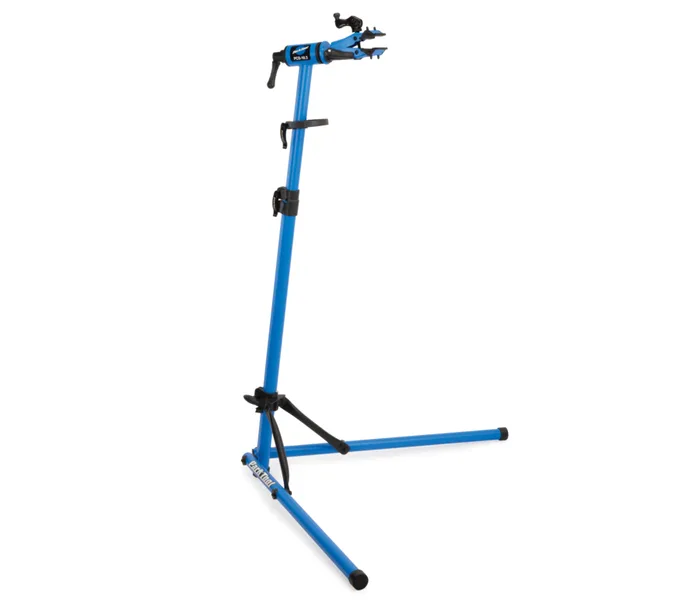
- Buy Park Tool PCS-10.3 Deluxe Home Mechanic Repair Stand The home stand with the widest published tube range here, and the clamp that makes it quick to use.
- Buy Feedback Sports Pro Mechanic Bike Repair Stand Lighter and taller than the Park Tool, with a ratcheting clamp head and a 3-year warranty.
- It depends Park Tool PCS-9.3 Home Mechanic Repair Stand The same published capacity, height and weight as the PCS-10.3, with a simpler clamp and a lower price.
- Skip Feedback Sports Sport Mechanic 2.0 Bike Repair Stand A well-made stand whose published round tube limit rules out a lot of the bikes people now own.
What actually matters
- Maximum round tube diameter - the largest frame tube the maker says the clamp will hold. This is the number that excludes frames, and it is frequently smaller than the clamp opening on the same page.
- Clamp opening - how far the jaws physically part. It is a headline figure and it tells you less than the tube diameter, because a clamp can open wider than it can safely grip.
- Weight capacity - the rated load, almost always with a condition attached about where that weight sits. Long or loaded bikes put the load outside those conditions.
- Height range - the lowest and highest the clamp goes. The top figure matters for drivetrain work at eye level; the bottom figure matters if you are short or working seated.
- Clamp action - cam, ratchet or screw. It changes nothing about what the stand holds and everything about how tedious it is to hold it.
- Replaceable jaw covers - the soft covers that contact the frame. They wear out, and a stand that sells them separately stays usable instead of marking frames.
- Folded dimensions - the size when collapsed. It is the difference between a stand that lives behind a door and one that gets dismantled after every job.
The specs, in plain English
Green flags vs red flags
Green flags
- Maximum round tube diameter is published as its own figure, not just clamp opening
- Aero or non-round tube compatibility is stated explicitly
- The weight capacity comes with a stated condition about load placement
- Jaw covers are sold as replacement parts
- A published warranty length
Red flags
- Only a clamp opening figure, with no tube diameter anywhere
- A capacity number with no qualification about where the weight sits
- A stand sold for e-bikes with a capacity figure below 30 kg
- No folded dimensions, when storage is half the decision
- Jaw covers described as part of the clamp rather than as a replaceable part
Who's who: the brands
- Park Tool - Heavier steel home stands, the widest published tube ranges, and clamps built around adjustment.
- Feedback Sports - Lighter aluminium-legged stands with ratcheting clamp heads and a published warranty.
- Topeak - Known for compact and portable stands aimed at riders who travel with a bike.
- Unior - A workshop tool maker whose stands are built for shop use rather than home storage.
How to read a listing without getting fooled
Find the clamp section first and look for two numbers, not one. If the page gives only a clamp opening, treat it as an unknown rather than a generous figure, because the tube limit can be a full inch smaller. Then find the capacity and read the sentence attached to it, since the condition about load placement is where a long or loaded bike falls outside the rating. Height range tells you whether the stand suits your back. Folded dimensions tell you whether it will still be in use next year. Clamp mechanism is last, because it changes the experience rather than the capability, and it is often the only thing separating two stands from the same maker.
How much should you spend?
Budget stands generally save money on the clamp and the mast, and the visible symptom is a narrower published tube range or a capacity figure that suits light road bikes only. Mid-range is where most home stands sit, and within that tier the money usually buys a faster clamp rather than more capacity, which is exactly why two stands from one maker can share a spec sheet and differ in price. Premium adds lighter materials, longer height ranges and published warranties, which is worth paying for if the stand travels. Flagship territory means powered lifts and shop-grade construction, aimed at people servicing several bikes a day.
Questions, answered
Can I use a repair stand on a carbon frame?
Clamp the seatpost rather than the frame where you can, and only if the post is alloy. Frame makers generally warn against clamping carbon tubes because the load concentrates on a thin wall. A stand's published tube range does not override that warning.
Are stands that clamp the frame worse than fork-mount stands?
They are different tools. Clamp stands hold the bike higher and let the wheels spin freely, which suits drivetrain work. Fork-mount stands hold the bike by the front axle and bottom bracket, avoiding frame contact entirely, which suits carbon frames and washing.
Does the stand need to be rated for my e-bike?
Check the actual bike weight against the rating and read the condition attached. Full-power e-bikes often sit between 20 and 30 kg, which is within most published capacities, but a long bike with a loaded rack can place weight outside the stated assumption.
How much height range do I really need?
Enough to bring the bottom bracket roughly to your waist and the bars near your chest. Most stands here cover about 99 to 170 cm across their range, which suits most adults, but if you are unusually tall or short the top and bottom figures are worth comparing rather than assuming.
Or jump to the head-to-head: Park Tool PCS-10.3 Deluxe Home Mechanic Repair Stand vs Feedback Sports Pro Mechanic Bike Repair Stand.