

Cycling
The Best Bike Radars: 4 Compared (and One to Skip)
Four radar tail lights compared on detection range, beam width, daylight brightness, battery life by mode and whether alerts work without a bike computer.
The short version
The Garmin Varia RearVue 820 is the best bike radar here: 175 meters of range, a 60 degree beam that Garmin says can tell vehicle size and lane changes, a brake light and up to 24 hours in day flash. The Magicshine SEEMEE R300 is the value pick, with 140 meters of range, ANT+ alerts on Garmin, Wahoo and Hammerhead computers, phone alerts in its own app and a 2-year warranty for far less money. Trek's CarBack Radar suits daytime road riders who want the longest stated range (240 meters) and a 90 lumen day flash, as long as their rides fit inside its 7+ hour battery claim. Skip the Wahoo TRACKR RADAR: it costs nearly as much as the Garmin, its brightest mode is 53 lumens, its range is 150 meters, and Wahoo says its app is only for firmware and light settings, so you need an ANT+ radar-compatible computer or watch to see alerts. Best for: road and gravel riders on shared roads who want earlier warning of traffic from behind.
Our picks at a glance
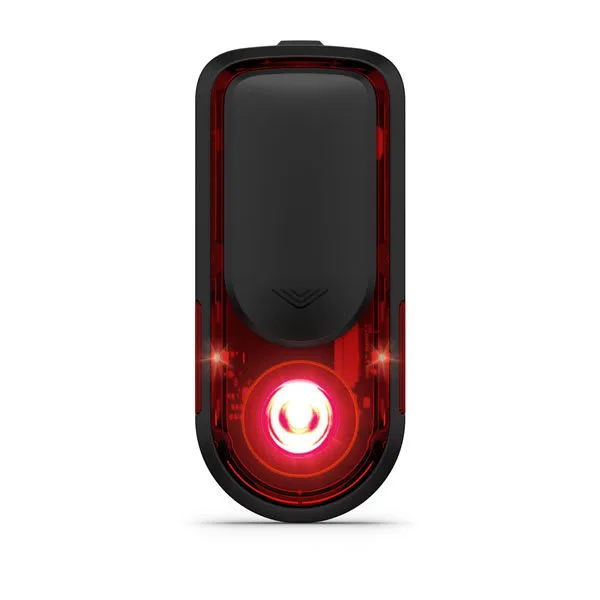
- Garmin Varia RearVue 820 - Buy. Garmin's newest radar tail light, with a 60 degree beam, vehicle size and lane-change alerts, a brake light and the longest day-flash runtime here.
- Magicshine SEEMEE R300 - Buy. A budget radar light with a 140 meter range, ANT+ alerts on the main bike computer brands, phone alerts in its own app and a full runtime table.
- Trek CarBack Radar - It depends. The longest stated range here at 240 meters and a 90 lumen day flash, held back by a battery Trek only describes as 7+ hours.
- Wahoo TRACKR RADAR - Skip. Priced close to Garmin's flagship but dimmer, shorter-ranged, and unable to show radar alerts on a phone.
The verdict in 30 seconds
What mattered most
- Stated detection range
- Radar beam width
- Brightest listed mode
- Day-flash runtime
- Radar-only mode
- Alerts on a phone while riding
A bike radar is a tail light with a small rear-facing radar that warns you, on a bike computer, watch or phone, when a vehicle is closing from behind. The spec sheets look alike until you read them line by line: range runs from 140 to 240 meters, the brightest daytime flash ranges from 53 to 100 lumens, and one of these four will not show alerts on a phone at all. We picked Garmin's new flagship, a budget Magicshine that undercuts it, Trek's long-range CarBack and Wahoo's TRACKR RADAR, and compared them only on what each maker publishes.
Garmin's newest radar tail light, with a 60 degree beam, vehicle size and lane-change alerts, a brake light and the longest day-flash runtime here.
Best for: Riders who want the most complete radar package and already use, or plan to use, a Garmin Edge, Garmin watch or the Varia app.
- Garmin lists a 175 meter detection range and a 60 degree beam, wider than the 35 to 40 degree beams quoted elsewhere in this group.
- Threat classification uses speed, vehicle size and lateral range, so a compatible Edge computer or the Varia app can show small, medium or large vehicles and lane changes.
- Battery life is listed as 24 hours in day flash, 15 in peloton, 10 in solid or night flash and 30 in radar-only mode.
- It is the most expensive radar in this comparison.
- Its brightest mode is 100 lumens in day flash, the same peak that Magicshine lists for a budget price.
- The size and lane-change alerts need the latest compatible Edge computers or the Varia app, so older head units may only show basic alerts.
- At 90 g it is light, but the seat rail mount kit is sold separately if your seatpost is crowded.
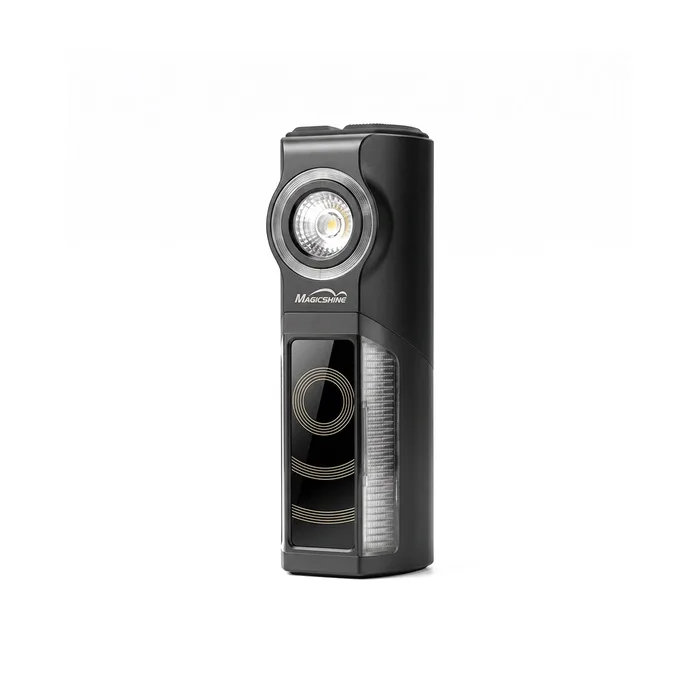
A budget radar light with a 140 meter range, ANT+ alerts on the main bike computer brands, phone alerts in its own app and a full runtime table.
Best for: Riders who want working radar alerts on a head unit or phone without paying flagship money.
- Magicshine says it works with Garmin, Wahoo and Hammerhead computers over ANT+, and its app gives real-time rearview alerts over Bluetooth.
- It publishes runtimes for every mode with radar on and off, including 16 h 12 min in day flash and 26 h 18 min in radar-only mode.
- The 2-year warranty is twice the 1-year cover that Wahoo and Bryton list.
- The 300 lumen headline does not appear in the mode table, where the brightest mode is a 100 lumen day flash.
- The 100 hour runtime claim is for a 0/3/3/10 lumen eco flash with the radar switched off.
- At 113 g it is the heaviest unit here, and the IPX6 rating is one step below the IPX7 of the other three.
- The horizontal detection angle is 35 degrees, against 60 for the Garmin.
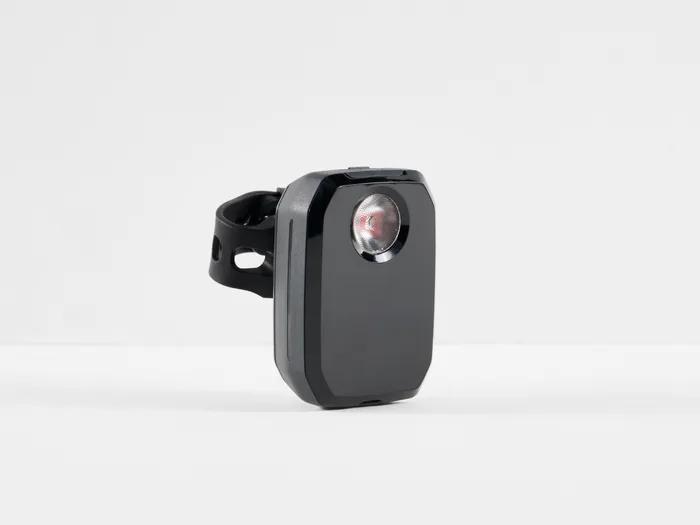
The longest stated range here at 240 meters and a 90 lumen day flash, held back by a battery Trek only describes as 7+ hours.
Best for: Daytime road riders on rides of a few hours who value early warning and a bright day flash over runtime.
- Trek states detection of rear-approaching vehicles from up to 240 meters, the longest figure in this group.
- The day flash is 90 lumens and Trek says the light is visible from up to 2 km in daylight.
- The Trek Accessory app shows a vehicle's approach and passing distance on your phone, and fuel gauge LEDs show battery level at a glance.
- Trek gives one battery figure, 7+ hours, and no runtime per mode.
- The night modes are listed at 5 lumens, far below the 40 lumen night flash Garmin lists.
- Trek does not publish a beam width or a radar-only mode.
- Charging takes 4 hours from its 2000 mAh battery.
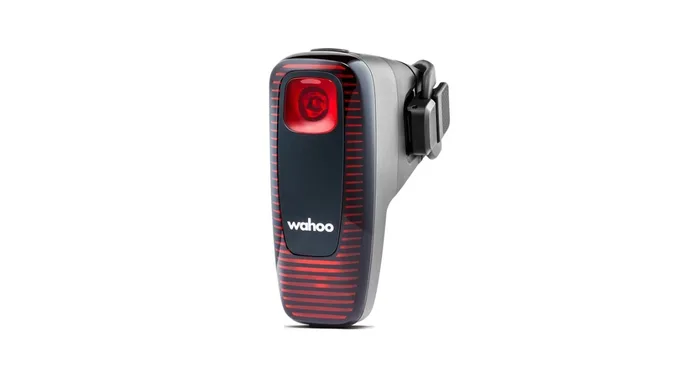
Priced close to Garmin's flagship but dimmer, shorter-ranged, and unable to show radar alerts on a phone.
Best for: Only riders already on a Wahoo ELEMNT who find it discounted well below the Magicshine price.
- Wahoo lists ANT+ plus up to three simultaneous Bluetooth connections, and it pairs cleanly with ELEMNT computers.
- A brake light, quick-alert flash and battery saver mode can be switched on in the Wahoo app.
- It ships with three mount wedges (round/aero, D-shape and flat) and two strap lengths.
- Wahoo's support page says the app is used only for firmware and light modes, and an ANT+ radar-compatible computer is required for normal use.
- Its brightest mode is a 53 lumen high flash, roughly half the day flash of the Garmin and the Magicshine.
- Detection range is 150 meters with a 35 degree beam, behind the Garmin and the Trek on both counts.
- Runtime tops out at 10 hours in high steady and 15 in high flash, and the warranty is 1 year.
| Criteria | Garmin Varia RearVue 820 Top pick | Magicshine SEEMEE R300 | Trek CarBack Radar | Wahoo TRACKR RADAR |
|---|---|---|---|---|
| Verdict | Buy it | Buy it | It depends | Skip it |
| Best for | Riders who want the most complete radar package and already use, or plan to use, a Garmin Edge, Garmin watch or the Varia app. | Riders who want working radar alerts on a head unit or phone without paying flagship money. | Daytime road riders on rides of a few hours who value early warning and a bright day flash over runtime. | Only riders already on a Wahoo ELEMNT who find it discounted well below the Magicshine price. |
| Price tier | $$$ · premium | $ · budget | $$ · mid-range | $$$ · premium |
| Stated detection range | 175 m | 140 m | 240 m | 150 m |
| Radar beam width | 60° | 35° horizontal, 45° vertical | Not published | 35° |
| Brightest listed mode | 100 lm day flash | 100 lm day flash (300 lm headline) | 90 lm day flash | 53 lm high flash |
| Day-flash runtime | 24 h | 16 h 12 min with radar on | Not published per mode (7+ h overall) | 15 h in high flash |
| Radar-only mode | Yes, 30 h | Yes, 26 h 18 min | Not listed | Not listed |
| Alerts on a phone while riding | Yes, Varia app | Yes, Magicshine app | Yes, Trek Accessory app | No, app is for setup only |
| Brake light | Yes | Not listed | Not listed | Yes, off by default |
| Weight and water rating | 90 g, IPX7 | 113 g, IPX6 | 87 g, IPX7 | 99 g, IPX7 |
Which one is right for you?
- Riders who want the most complete radar package and already use, or plan to use, a Garmin Edge, Garmin watch or the Varia app. Buy it Garmin Varia RearVue 820
- Riders who want working radar alerts on a head unit or phone without paying flagship money. Buy it Magicshine SEEMEE R300
- Daytime road riders on rides of a few hours who value early warning and a bright day flash over runtime. It depends Trek CarBack Radar
- Only riders already on a Wahoo ELEMNT who find it discounted well below the Magicshine price. Skip it Wahoo TRACKR RADAR
How we judged the field
Five things separate one bike radar from another. Detection range and beam width decide how early and how wide the radar sees, and a wider beam matters on bends. Where the alerts appear decides whether you need a bike computer at all, since some radars work with a phone app and some do not. Daytime brightness matters because the light half of the unit is what drivers actually see, and lumens in day flash are the useful number. Battery life by mode matters because headline runtimes usually quote the dimmest setting, and a radar that dies mid-ride gives no warning at all.
The field splits into Garmin’s Varia line, which set the template, and a growing group of lights from Magicshine, Trek, Wahoo and Bryton that speak the same ANT+ radar language. We chose Garmin’s newest flagship as the benchmark, Magicshine as the budget alternative because it publishes a full runtime table, Trek for its 240 meter claim, and Wahoo because its price puts it next to the Garmin while its spec sheet does not. Bryton’s Gardia R300L was considered, but its US store publishes no lumen figure for the light, so it could not be compared on brightness.
The Varia RearVue 820 is Garmin’s newest radar tail light and the one the others are measured against. Garmin lists a 175 meter detection range and a 60 degree beam, the widest of the four, and says the radar classifies threats by speed, vehicle size and lateral position. On the latest compatible Edge computers or in the Varia app, that means you can see whether a small or large vehicle is coming and whether it is moving over. The light has a brake mode that flashes when you slow, a 100 lumen day flash and a 40 lumen night flash, with custom patterns in the app. Battery life is the best here: 24 hours in day flash, 15 in peloton, 10 in solid and 30 in radar-only. It weighs 90 g and is rated IPX7. The trade-off is price: it costs the most of the four, and its richest alerts depend on staying inside Garmin’s ecosystem. If you already ride with an Edge or a Garmin watch, this is the radar to buy.
The SEEMEE R300 is the value pick because it covers the core job well and documents itself better than most. Magicshine lists a 140 meter range, a 35 degree horizontal and 45 degree vertical detection angle, tracking of up to 8 vehicles, and ANT+ alerts on Garmin, Wahoo and Hammerhead computers. Its own app adds real-time rearview alerts over Bluetooth, so a phone can serve as the display. The runtime table is unusually complete: day flash at 100 lumens runs 16 h 12 min with radar on, high steady at 50 lumens runs 8 hours, and radar-only runs 26 h 18 min. Read it before trusting the box, though. The 300 lumen headline does not appear in any listed mode, and the 100 hour figure is a 10 lumen eco flash with the radar off. It is also the heaviest unit here at 113 g, and IPX6 rather than IPX7. The 2-year warranty helps. It suits riders who want dependable alerts for far less money.
Trek’s CarBack Radar makes the boldest range claim here: rear-approaching vehicles detected from up to 240 meters, with alerts on most cycling GPS computers and approach and passing distance shown in the Trek Accessory app. The light leans hard toward daytime use, with a 90 lumen day flash that Trek says is visible from up to 2 km, a 25 lumen day steady, and 5 lumen night steady and night flash modes. It is compact at 70 by 50 by 25 mm and 87 g, IPX7 rated, and its fuel gauge LEDs make the battery state easy to read. That battery is the catch. Trek publishes only a single 7+ hour figure from a 2000 mAh cell, with no runtime per mode and a 4 hour charge, and it does not list a beam width or a radar-only mode. For a two to four hour road ride in daylight it is a strong choice. For long days, night commutes or bikepacking, the Garmin or Magicshine is the safer bet.
Wahoo’s TRACKR RADAR is a capable light that is priced against the wrong rivals. It costs nearly as much as the Garmin RearVue 820 yet its brightest mode is a 53 lumen high flash, its stated range is 150 meters and its beam is 35 degrees. The biggest limit is in Wahoo’s own support page: the Wahoo app is used only for firmware updates and light modes, and normal use needs an ANT+ radar-compatible cycling computer or watch. Garmin, Magicshine and Trek all list phone apps that show alerts while you ride. Runtime is also modest, up to 10 hours in high steady and 15 in high flash, and the warranty is 1 year. There is good engineering here, including a brake light, a quick-alert flash, three mount wedges and two strap lengths, and it pairs cleanly with ELEMNT computers. But for less money the Magicshine is brighter and works with a phone, and for a little more the Garmin is better in every listed spec. Skip it unless it is deeply discounted and you already own an ELEMNT.
Garmin Varia RearVue 820 vs Magicshine SEEMEE R300: which should you buy?
The Garmin RearVue 820 and the Magicshine SEEMEE R300 do the same basic job: a radar warns you through a bike computer or phone, and a tail light gets brighter when it matters. Both list a 100 lumen day flash. The gap is in the radar and the battery. Garmin’s 175 meter range and 60 degree beam beat Magicshine’s 140 meters and 35 degrees, and Garmin adds vehicle size, lane-change and brake light features that Magicshine does not list. Garmin also runs longer in day flash, 24 hours against 16 h 12 min with the radar on.
Choose the Garmin if you ride an Edge or Garmin watch, ride long days, or ride roads with lots of bends where a wider beam earns its keep. Choose the Magicshine if you want reliable alerts on any ANT+ computer or a phone, ride a few hours at a time, and would rather keep the difference for a good front light. Both are clear upgrades over riding without one.
What to look for
- Where alerts appear: confirm the radar shows alerts on a phone if you do not own a bike computer, because at least one popular model does not.
- Range and beam width together: a long range with a narrow beam can miss cars on bends, so compare both numbers rather than range alone.
- Day flash lumens: the brightest daytime mode is what drivers see, and the headline lumen figure is not always a mode you can select.
- Runtime with the radar on: look for a per-mode table and ignore headline figures quoted with the radar off.
- A radar-only mode: it lets you keep alerts running on long rides after you switch to a separate, brighter tail light or when you want to save battery.
- Mount fit: check that the included wedges or shims match your seatpost shape, round, aero or D-shaped, before you buy.
Our final take
For most riders the Garmin Varia RearVue 820 is the radar to get: it sees farther and wider than everything here except Trek’s range claim, explains what is coming in more detail, and runs the longest in day flash. If the price stings, the Magicshine SEEMEE R300 delivers the core function, alerts on an ANT+ computer or a phone plus a bright day flash, for a budget price and a 2-year warranty. Trek’s CarBack is a good fit for short daylight road rides. Avoid the Wahoo TRACKR RADAR at full price, because it asks premium money for a dimmer light, a shorter range and no phone alerts. Pair any of them with a mirror and a front light from our other guides.
Questions, answered
Do I need a bike computer to use a bike radar?
It depends on the model. Garmin, Magicshine and Trek all list a phone app that shows approaching vehicles, so a phone on the bars can stand in for a head unit. Wahoo's support page says its app only handles firmware and light modes, and that normal use needs an ANT+ radar-compatible computer or watch. If you ride without a computer, check this line before buying. A phone also uses more battery than a head unit, so long rides favor a dedicated computer.
Will a Magicshine or Wahoo radar show alerts on my Garmin Edge?
Magicshine says the SEEMEE R300 works with Garmin, Wahoo and Hammerhead computers over ANT+. Wahoo says the TRACKR RADAR works with ANT+ radar-compatible computers and watches. In practice you get the basic alert, a dot or bar showing an approaching vehicle. Extras like Garmin's vehicle size and lane-change display are tied to Garmin's own radar and compatible Edge units, so a third-party radar will not unlock them.
Is the older Garmin Varia RTL515 still worth buying?
Garmin still sells it, and it is a solid radar, but the numbers show its age. Garmin lists 140 meters of range, a 40 degree beam, a 65 lumen day flash and 16 hours in day flash. The RearVue 820 moves those to 175 meters, 60 degrees, 100 lumens and 24 hours, and adds a brake light. If the RTL515 is heavily discounted it still does the core job, but the Magicshine matches its range and beats its day flash for less.
How far away does a bike radar really see cars?
The range on the box is a maximum under good conditions, not a guarantee for every vehicle. Magicshine, for example, says the R300 detects targets closing at 5 to 100 km/h, so a car creeping up at nearly your speed may not register until late. Bends, hills and other riders behind you can also shorten useful range. Treat any radar as an early warning that adds to your own shoulder checks and a mirror, not a replacement for them.
How long does a bike radar battery last?
It depends heavily on light mode, and headline figures usually quote the dimmest one. Magicshine's 100 hour claim is for a low-power eco flash with the radar off; with the radar on, day flash runs 16 h 12 min. Garmin lists 24 hours in day flash and 10 in solid. Trek only says 7+ hours. Pick by the runtime of the mode you will actually use, which for daytime riding is usually day flash.
Deciding between the top two? See our head-to-head: Garmin Varia RearVue 820 vs Magicshine SEEMEE R300.
More Cycling reviews
 The Best Bike Repair Stands: 4 Compared (and One to Skip)
  The Best Bike Saddle Bags: 4 Compared (and One to Skip)
  The Best Bike Saddles: 4 Compared (and One to Skip)
  The Best Bike Seat Packs: 4 Compared (and One to Skip)
 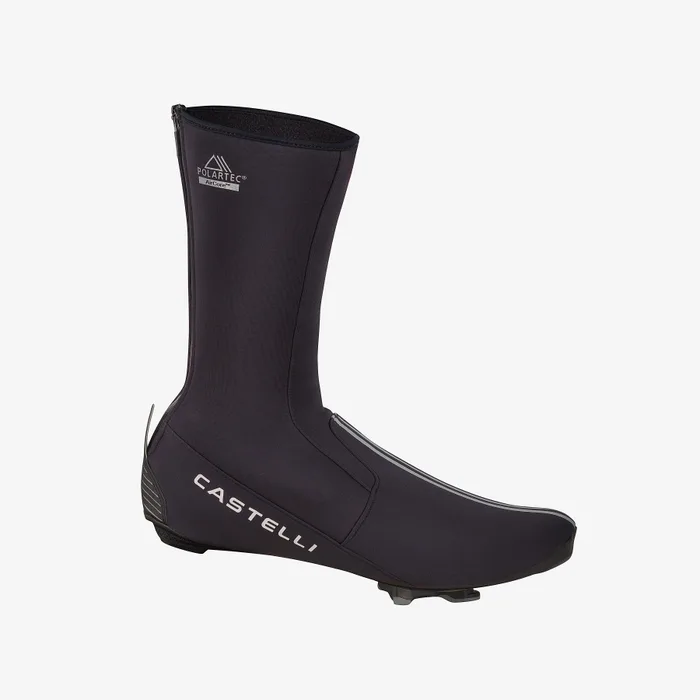 The Best Bike Shoe Covers: 4 Compared (and One to Skip)
  The Best Bike Tire Sealants: 4 Compared (and One to Skip)