

Outdoors & Fitness
The Best Bike Saddles: 4 Compared (and One to Skip)
We compared these four on the numbers their makers actually publish: width, length, weight, rail options and, where it exists, the sit-bone range the saddle was designed around.
The short version
The WTB Silverado is the pick for most riders, because WTB publishes a sit-bone range for every model and size, and the Medium at 142mm covers 101 to 130mm of sit-bone width, which is where most adults land. The Terry Butterfly Century is the one to buy if pressure on soft tissue is your problem, since it carries the widest cutaway in the Butterfly line plus a Poron XRD layer under the foam at a stated 268 grams. The Brooks B17 suits a specific rider: it is a tensioned leather hammock specified for a 60 degree upright position, and at a stated 520 grams and 175mm wide it asks for patience and care. Skip the WTB Comfort unless you are the rider it was drawn for, because WTB specifies it for sit bones of 155mm and up, which is a step beyond the top of their own normal ladder. Note that the Brooks at 175mm is wider than the Comfort at 174mm, which is the clearest proof that width alone decides nothing. Measure your sit bones before you spend anything. Best for: riders who want to buy by measurement instead of by the look of the padding.
Our picks at a glance
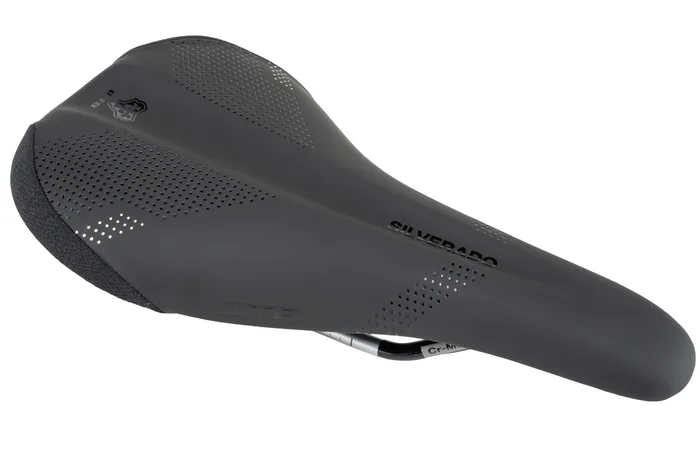
- WTB Silverado - Buy. A slim, flat-platform saddle sold with a published sit-bone range for each width, which is the rarest and most useful thing on any saddle page.
- Terry Butterfly Century Saddle - Buy. The cutaway pick, with the largest centre relief in its line and a shock-absorbing layer that lets the foam be thinner rather than deeper.
- Brooks England B17 - It depends. A tensioned leather hammock specified for a 60 degree upright position, which is a real answer for touring and the wrong answer for a low race fit.
- WTB Comfort - Skip. A deeply padded cruiser saddle that WTB specifies for sit bones of 155mm and up, which is a size beyond the top of their own normal ladder.
The verdict in 30 seconds
What mattered most
- Stated width
- Stated length
- Stated weight
- Sit-bone range published
- How the maker sizes it
- Top and shell
A saddle is the one component you cannot judge from a photograph, and the industry knows it. Some brands publish a sit-bone range in millimetres for every model and size. Others publish a riding angle in degrees and nothing about your anatomy at all. Those are two different sizing languages measuring two different things, and a width number means very little until you know which language the saddle was designed in. We picked four saddles that sit in different languages and read what each maker states.
A slim, flat-platform saddle sold with a published sit-bone range for each width, which is the rarest and most useful thing on any saddle page.
Best for: Riders who have measured their sit bones and want a saddle whose maker publishes the range it was designed to fit.
- WTB states a sit-bone range per size: 69 to 101mm for the 135mm Narrow, 101 to 130mm for the 142mm Medium.
- Five rail choices, from a 310 gram steel version up to a stated 181 gram carbon one in Medium.
- A long, tapered nose and flatter top give you room to move fore and aft as the terrain changes.
- Stated 280mm length and 142mm Medium width put it in the mainstream of road, gravel and trail fit.
- Padding is tuned for performance, so the flat platform feels firm if you ride fully upright.
- No centre cutout, so it does nothing specific for soft-tissue pressure.
- Only two widths, which leaves riders above 130mm of sit-bone width shopping elsewhere in the range.
- The microfiber cover is durable but scuffs visibly on a tip-over.
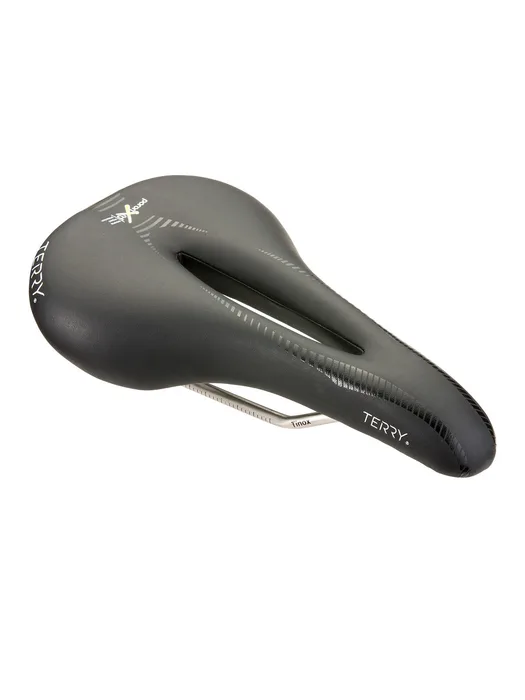
The cutaway pick, with the largest centre relief in its line and a shock-absorbing layer that lets the foam be thinner rather than deeper.
Best for: Riders whose problem is numbness or soft-tissue pressure rather than sit-bone ache, in an endurance or slightly forward position.
- Terry states 262mm by 152mm and 268 grams, so the dimensions are on the page rather than implied.
- A Poron XRD layer sits between the base and the foam, which is how the saddle stays low profile without going hard.
- Widest cutaway in the Butterfly line, aimed squarely at soft-tissue pressure.
- Seamless Fibra-tek cover, which is there to reduce chafing at high cadence.
- Ti-316 rails and hand assembly in Italy.
- Sold as a women's model, which puts off riders who would fit it.
- Terry publishes no sit-bone range, so the width has to be matched by measurement on your side.
- One colour and one rail spec, so there is no lighter or cheaper version of the same shape.
- A large cutaway concentrates load on the two support platforms, which is unforgiving if the width is wrong.
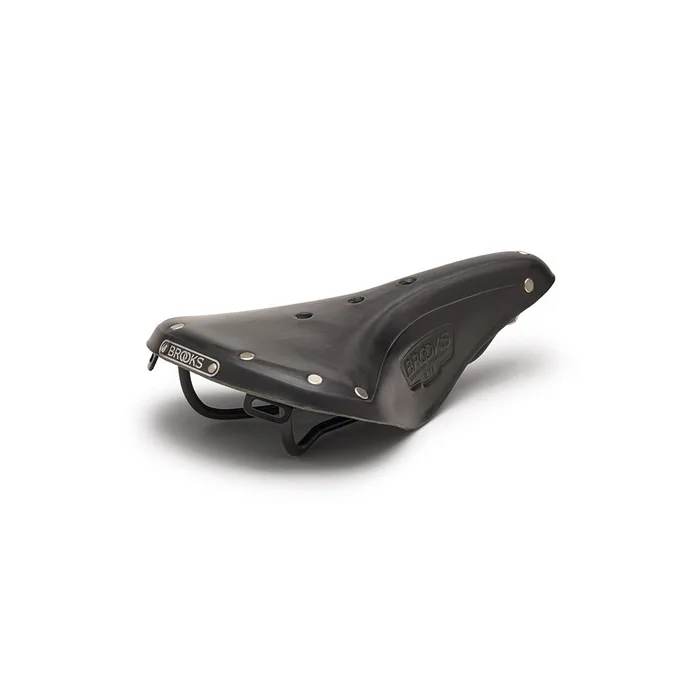
A tensioned leather hammock specified for a 60 degree upright position, which is a real answer for touring and the wrong answer for a low race fit.
Best for: Upright commuting and touring riders who want a saddle that adapts to them and are willing to maintain leather.
- Brooks states 275mm by 175mm, 65mm high and 520 grams, so you can check it against your frame and post.
- The leather is a suspended top that flexes with each pedal stroke instead of compressing like foam.
- Vegetable-tanned leather moulds to the individual rider over time, which is why the model has lasted more than a century.
- Steel rivets and undercarriage make it repairable in a way a bonded foam saddle is not.
- At a stated 520 grams it is the heaviest here by a wide margin.
- Brooks specifies it for a 60 degree riding angle, so a low, forward position puts load in the wrong place.
- Leather needs a break-in period and ongoing care, and it does not enjoy being left out in the rain.
- No cutout and no published sit-bone range, so fit is judged by posture rather than measurement.
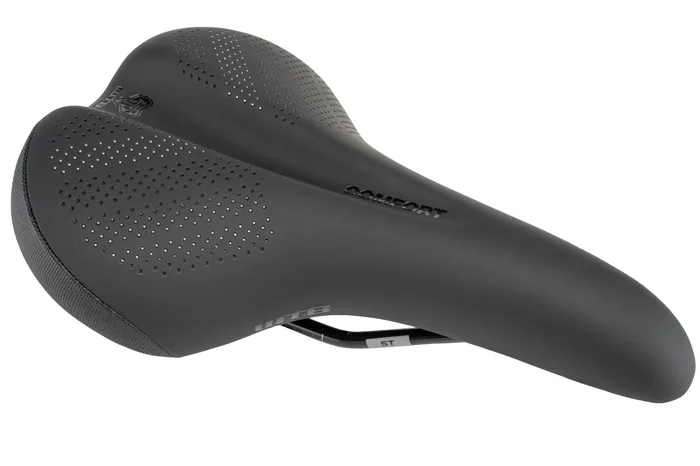
A deeply padded cruiser saddle that WTB specifies for sit bones of 155mm and up, which is a size beyond the top of their own normal ladder.
Best for: Short upright leisure rides by a rider whose measured sit-bone width is genuinely at the top of the scale.
- WTB publishes its sit-bone range like every other model in the line, so you can tell before buying whether it fits you.
- Extra-thick padding and a 174mm platform genuinely suit the rider it was drawn for.
- The same flex-tuned shell and microfiber cover as the rest of the range.
- The stated sit-bone range starts at 155mm, while the Medium sizes across WTB's line cover 101 to 130mm and the Koda Wide covers 131 to 155mm.
- Steel rails only, at a stated 390 grams.
- WTB lists the use case as urban and describes it as the saddle on their own employee cruiser fleet, not as a general comfort upgrade.
- Deep foam under sit bones that do not reach the support platforms transfers load to soft tissue, which is the opposite of the intent.
| Criteria | Silverado | Butterfly Century Saddle | B17 | Comfort |
|---|---|---|---|---|
| Verdict | Buy it | Buy it | It depends | Skip it |
| Best for | Riders who have measured their sit bones and want a saddle whose maker publishes the range it was designed to fit. | Riders whose problem is numbness or soft-tissue pressure rather than sit-bone ache, in an endurance or slightly forward position. | Upright commuting and touring riders who want a saddle that adapts to them and are willing to maintain leather. | Short upright leisure rides by a rider whose measured sit-bone width is genuinely at the top of the scale. |
| Price tier | $$ · mid-range | $$$ · premium | $$$ · premium | $ · budget |
| Stated width | 142mm (Medium); 135mm (Narrow) | 152mm | 175mm | 174mm (Extra Wide) |
| Stated length | 280mm | 262mm | 275mm | 270mm |
| Stated weight | 270g cromoly, 310g steel, 204g titanium, 181g carbon (Medium) | 268g | 520g | 390g |
| Sit-bone range published | 101 to 130mm (Medium); 69 to 101mm (Narrow) | Not published | Not published | 155mm and up |
| How the maker sizes it | Sit-bone width in millimetres | Anatomy and cutaway size | Riding angle, stated as 60 degrees | Sit-bone width in millimetres |
| Top and shell | Microfiber over a flex-tuned shell with HLX padding | Fibra-tek over gel and a Poron XRD layer | Tensioned vegetable-tanned leather on a steel frame | Microfiber over a flex-tuned shell with extra-thick padding |
| Centre cutout | None | Widest in the Butterfly line | None | None |
| Rail options | Steel, cromoly, stainless, titanium, carbon | Ti-316 | Steel | Steel |
| Stated use | Adventure road, gravel, cross country, trail, enduro | Endurance and slightly forward road | Commuting, gravel, road and touring at 60 degrees | Urban and leisure |
Which one is right for you?
- Riders who have measured their sit bones and want a saddle whose maker publishes the range it was designed to fit. Buy it WTB Silverado
- Riders whose problem is numbness or soft-tissue pressure rather than sit-bone ache, in an endurance or slightly forward position. Buy it Terry Butterfly Century Saddle
- Upright commuting and touring riders who want a saddle that adapts to them and are willing to maintain leather. It depends Brooks England B17
- Short upright leisure rides by a rider whose measured sit-bone width is genuinely at the top of the scale. Skip it WTB Comfort
How we judged the field
Five things decide a saddle, and only some of them get published. The first is width relative to your sit bones, which is the one number that determines whether your weight lands on bone or on soft tissue. The second is the sizing language the maker uses, because a brand that publishes a sit-bone range is telling you something checkable while a brand that publishes a riding angle is telling you about posture instead. The third is what the top is made of and how it deflects, since a tensioned leather hammock, foam over a nylon shell and foam over a shock-absorbing layer all behave differently under the same load. The fourth is whether there is a cutout, which addresses a different symptom from width. The fifth is stated weight and rail material, which decide what you can fit and what you pay.
The field splits along the sizing language, so we took saddles from both sides of it. WTB publishes a sit-bone range for every model and every width, which let us use two saddles from the same catalogue as the clearest available evidence: the Silverado Medium is specified for 101 to 130mm, the Koda Wide for 131 to 155mm, and the Comfort for 155mm and up. That ladder is the argument, and it comes from one maker’s own pages rather than from comparing across brands that measure differently. Against it we set Terry, which sizes by anatomy and cutaway and publishes exact dimensions but no sit-bone figure, and Brooks, which sizes by riding angle and publishes a 60 degree specification and nothing about sit bones at all.
WTB Silverado - buy
The Silverado is the saddle we would put under most people, and the reason is on the page rather than under the cover. WTB states a sit-bone range for each width: 69 to 101mm for the 135mm Narrow, 101 to 130mm for the 142mm Medium. Measure yourself on a piece of cardboard and you can pick the right one without sitting on either. The shape is a long, tapered nose and a flat platform, which gives you room to shift fore and aft as the gradient changes, and WTB offers it on five rail materials, from a 310 gram steel version to a stated 181 gram carbon one in Medium. That range means one shape can follow you from a commuter to a gravel bike. The compromise is that the padding is tuned for riding rather than sitting, so a fully upright position will find it firm, and there is no cutout, so it does nothing specific about numbness. For a rider who knows their number and wants a saddle matched to it, this is the straightforward answer.
Terry Butterfly Century Saddle - buy
The Butterfly Century is the one to buy when the problem is in the middle. Terry states 262mm by 152mm and 268 grams, and builds it around the widest cutaway in the Butterfly line, which is the feature that addresses soft-tissue pressure directly. The interesting engineering is underneath: a Poron XRD layer sits between the base and the foam, absorbing shock so that the foam can be thinner rather than deeper. A thinner saddle that still cushions is easier to pedal around, which is the whole point of an endurance shape. The cover is seamless Fibra-tek, chosen to cut chafing at high cadence, and the rails are ti-316. What it does not give you is a published sit-bone range, so the 152mm width has to be matched by your own measurement, and there is only one rail spec and one colour, so there is no lighter or cheaper version of the shape. It is sold as a women’s model, which is a shape description more than a restriction.
Brooks England B17 - it depends
The B17 is the most interesting saddle here and the one with the narrowest correct audience. It is not foam over a shell. It is a piece of vegetable-tanned leather tensioned between a steel frame, so it works as a hammock that flexes with each pedal stroke and gradually takes the shape of the rider sitting on it. Brooks states 275mm by 175mm, 65mm high and 520 grams, and it specifies the saddle for a 60 degree riding position, which is the crucial line on the page and the one most buyers skip. At 60 degrees your weight sits back on the wide rear of the hammock, which is what the design expects. Lower and further forward, you load the nose of a saddle that was never drawn for it. The other costs are real: it is heaviest here by a long way, it needs a break-in period before it feels like yours, and leather resents repeated soakings. Buy it for upright touring and commuting and it will outlast several foam saddles.
WTB Comfort - skip
The Comfort is a competent saddle that most people should not buy, and WTB tells you so in their own spec table. The stated sit-bone range is 155mm and up. For scale, the Medium widths across WTB’s line cover 101 to 130mm and the Koda Wide covers 131 to 155mm, so the Comfort begins where the normal ladder ends. WTB also lists its use as urban and describes it as the saddle on their own employee cruiser fleet, which is a fair description of a deeply padded 174mm platform on steel rails at a stated 390 grams. The failure mode when you buy it anyway is specific: if your sit bones do not reach the wide supporting platforms, your weight ends up carried by the deep foam in the middle, which is exactly the soft-tissue loading you were trying to escape. The lesson is not that wide padding is bad. The Brooks B17 is 175mm wide, a millimetre wider, and is a touring classic. The lesson is that the range is the spec, not the width.
WTB Silverado vs Terry Butterfly Century Saddle: which should you buy?
The Silverado and the Butterfly Century are the two to choose between, and the choice is decided by which symptom you have rather than by which saddle is better. If after an hour you ache on the bones themselves, that is a width and support problem, and the Silverado is the saddle that lets you solve it by measurement: WTB publishes 101 to 130mm for the Medium, so you can check your number against the product before you commit. If instead you get numbness or pressure in the middle, width will not fix it, and the Butterfly Century is built around the largest cutaway in its line for precisely that reason.
The secondary differences follow from that. The Silverado is a platform you can buy across five rail materials and carry between bikes, which matters if you own more than one. The Butterfly Century is one specification, but it is the lighter of the two in like-for-like terms at a stated 268 grams and its Poron XRD layer lets it cushion without getting tall. Position matters too: the Silverado’s long flat top rewards a rider who moves around, while the Butterfly is drawn for an endurance or slightly forward posture and does not want to be ridden bolt upright. Measure first, identify the symptom second, and the decision makes itself.
What to look for
- Measure before you shop: sit on corrugated cardboard with your feet up, find the two dimples, measure centre to centre and add 20 to 30mm for how you actually sit.
- Look for a published sit-bone range: WTB prints one for every model and width, and it is the only spec that connects a saddle to your body rather than to an average.
- Check which language the page is written in: a riding angle in degrees, as Brooks uses for the B17, is telling you about posture and says nothing about your width.
- Treat width as a result, not a target: the B17 at 175mm and the WTB Comfort at 174mm are a millimetre apart and built for completely different riders.
- Separate your symptom from the feature: ache on the bones is a width and support question, numbness in the middle is a cutout question, and the fixes do not substitute for one another.
- Read the stated weight on the page, not the shipping weight: Terry lists the Butterfly Century at 268 grams while the store’s shipping data says 312, and the page is the one describing the product.
Our final take
Saddles are the component people buy by eye and then replace twice, and the reason is that the most important number is usually missing from the listing. Where a maker publishes a sit-bone range, use it: the WTB Silverado in the right width is a straightforward, well-specified answer for most riders. Where a maker publishes a cutaway and exact dimensions instead, as Terry does, match the width yourself and buy for the symptom you actually have. Where a maker publishes a riding angle, as Brooks does for the B17, take that seriously, because a 60 degree saddle on a low road position is a mismatch no amount of leather will fix. And when a spec sheet tells you a saddle is for sit bones of 155mm and up, believe it.
Questions, answered
How do I measure my sit bones at home?
Sit firmly on a piece of corrugated cardboard or a sheet of kitchen foil laid over carpet, with your feet raised so your weight goes through your seat. Stand up and you will see two dimples. Measure centre to centre of those dimples in millimetres, then add roughly 20 to 30mm to allow for soft tissue and the way you sit when pedalling. That figure is what a brand like WTB is referring to when it lists a sit-bone range, and it is the single number that turns saddle shopping from guesswork into matching. Do it twice, because the first attempt is usually too light to leave clear marks.
Does a wider saddle mean more comfort?
No, and the four saddles here show why. The Brooks B17 is 175mm wide and is a touring classic. The WTB Comfort is 174mm wide and is specified for sit bones of 155mm and up, which is beyond the top of WTB's regular range. Nearly identical widths, completely different intents. What matters is whether your sit bones land on the supporting part of the saddle, and whether the top under them flexes, cushions or stays rigid. A wide saddle that is too wide for you pushes load into soft tissue and rubs the inside of your thighs.
Do I need a cutout?
A cutout helps if your symptom is numbness or pressure in the middle rather than ache on the bones. That is what the Terry Butterfly Century is built around, with the largest relief channel in its line. The trade is that removing material from the middle concentrates your weight on the two platforms either side, so the width has to be right or the cutout makes things worse. If your complaint is soreness on the bones themselves after an hour, the fix is usually width and padding density instead. Try to identify which symptom you actually have before shopping for the feature.
Does a leather saddle really need breaking in?
Brooks builds the B17 as a tensioned leather top rather than foam over a shell, and a new one is firm because the hide has not yet taken your shape. It softens and forms two shallow depressions where your sit bones load it, and that process takes a while and a fair number of rides. It also asks for care, since leather does not like being repeatedly soaked and dried. The upside is that once formed, it is shaped to you rather than to an average, and the steel frame and rivets mean it can be re-tensioned and kept going. It is a long-term relationship rather than a purchase.
Should I buy a saddle sold as a women's model?
Treat the label as a hint about the shape rather than a rule about who may buy it. Terry sells the Butterfly Century under a women's heading, and what that actually describes is a shorter, wider platform with a large central cutaway, which suits a wider sit-bone spacing and an upright to slightly forward position. Plenty of riders fit that description regardless of how the product is categorised, and plenty of others do not. Measure first, then shop by width and cutout, and ignore which part of the catalogue the saddle sits in.
Deciding between the top two? See our head-to-head: WTB Silverado vs Terry Butterfly Century Saddle.
More Outdoors & Fitness reviews
 The Best Bike Tire Sealants: 4 Compared (and One to Skip)
  The Best Binoculars: 4 Compared (and One to Skip)
  The Best Camp Cooksets: 4 Compared (and One to Skip)
  The Best Camp Mugs: 4 Compared (and One to Skip)
  The Best Camp Pillows: 4 Compared (and One to Skip)
  The Best Camp Showers: 4 Compared (and One to Skip)