Explained
Car Bike Racks, Explained
After reading this you'll know which rack type fits your car and bikes, and how to read the weight and fit specs so you don't buy the wrong one.
In this guide
Car bike racks come in three families: hitch racks that carry bikes low behind the car, roof racks that lift them overhead, and trunk racks that strap on with no receiver or crossbars. The right one depends less on brand and more on your car, how heavy your bikes are, and whether an e-bike is in the mix. What trips people up is buying on price and discovering their rack can't fit their hitch, hold their bike's weight, or clear their garage.
The 30-second version
- The rack type is the biggest decision. hitch racks are the most stable and e-bike friendly, roof racks keep the rear clear, and trunk racks are the cheapest and most flexible but the least secure.
- Weight, not brand, is the deciding spec. check the per-bike weight limit against your heaviest bike, because e-bikes and downhill bikes routinely blow past trunk- and roof-rack ratings.
- Wheel-clamp designs beat frame-contact designs. clamping the wheel avoids scratching carbon frames and cuts sway, which is why premium racks have moved away from hanging bikes by the frame.
- Fit is a hard gate, not a nice-to-have. hitch racks need the right receiver size and class, roof racks need crossbars, and trunk racks vary by the shape of your trunk and spoiler.
- Security is worth paying for. integrated bike and hitch locks deter the grab-and-go theft that happens at trailheads and rest stops.
The products this guide is about
Our verdict on each, with the full reasoning on the companion review.
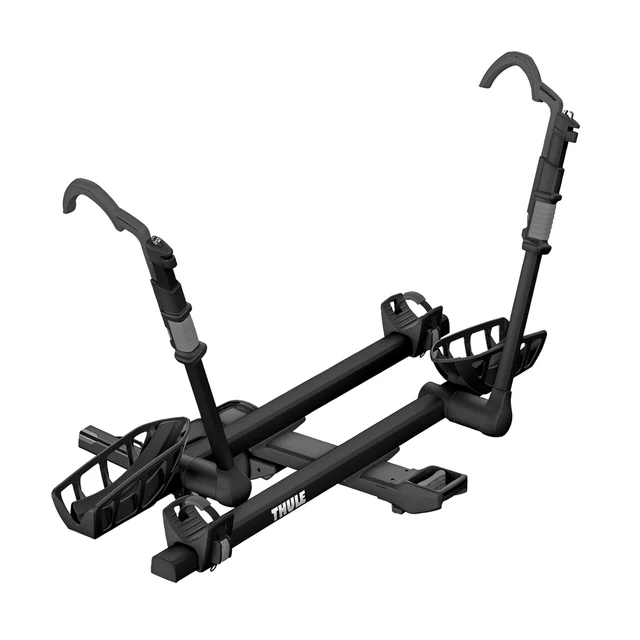
- Buy Thule T2 Pro XTR 2-Bike Hitch Rack A tool-free, frame-free hitch platform that carries heavy and electric bikes without breaking a sweat. Amazon
- Buy Yakima HighRoad Upright Roof Rack The cleanest roof mount going: a torque-limited wheel clamp that never touches your frame. Amazon
- It depends Thule Gateway Pro 3 Trunk Rack A well-built strap-on for people with no hitch and no crossbars, within honest limits. Amazon
- Skip Allen Sports Deluxe 2-Bike Trunk Rack Cheap and light, but the sway, strap slippage, and frame contact make it hard to recommend. Amazon
What actually matters
- Mount type decides everything downstream, from stability to whether you can still open your trunk, so pick the family before you compare models.
- Weight capacity matters most because a rack that can't safely carry your heaviest bike is the wrong rack, no matter how good it looks; always read the per-bike figure, not just the total.
- Frame contact vs. wheel clamp affects both your frame's finish and how much the load sways at highway speed; wheel clamps are gentler and steadier.
- Fitment (receiver size and class, crossbars, or trunk shape) is a pass/fail check you must do before buying, not after.
- Rear-of-car access determines whether you can reach the trunk with bikes loaded; tilting hitch racks win here, trunk racks block it entirely.
- Security (built-in or add-on locks) protects both the bikes and the rack itself when you step away from the car.
- Loading effort is the daily-life factor people underrate; an overhead roof lift is fine for a light road bike and miserable for a heavy e-bike.
The specs, in plain English
Green flags vs red flags
Green flags
- A stated per-bike weight limit that comfortably exceeds your heaviest bike
- Wheel-clamp or front-wheel mounting that never touches the frame
- A clear e-bike rating (and a loading ramp option) if you own or plan to own one
- Integrated locks for both the bikes and the rack-to-hitch connection
- A tilt or fold-down mechanism that keeps trunk access when loaded
- Tool-free installation that tightens firmly with no wobble in the receiver
Red flags
- Only a total capacity listed with no per-bike figure
- Hangs bikes by the frame with no top-tube adapter for step-through or full-suspension bikes
- No locks and no anchor point for a safety strap
- Vague or missing fitment info (receiver size, class, or vehicle compatibility)
- Owner reports of straps loosening or bikes swaying at highway speed
- Marketed as e-bike capable without a stated weight rating to back it up
Who's who: the brands
- Thule - Premium Swedish brand known for stable platform hitch racks and well-built trunk racks with strong lock and e-bike options.
- Yakima - Long-running rack specialist known for clean roof and hitch systems with quick, repeatable wheel-clamp loading.
- Allen Sports - Value-focused maker of light, inexpensive strap-on trunk racks; fine for rare short trips, weak on security and weight capacity.
- Kuat - Design-forward hitch-rack maker known for easy-loading platforms and integrated locks at a premium price.
- Saris - US brand offering a wide range from budget trunk racks to sturdy hitch platforms, with several e-bike-rated options.
- RockyMounts - Enthusiast-oriented brand focused on hitch platforms with tool-free tightening and frame-free wheel clamps.
How to read a listing without getting fooled
Start with the fitment line, not the marketing. A rack listing will state a receiver size and hitch class (or 'requires crossbars', or a vehicle-fit list); if that doesn't match your car, nothing else matters. Next find the per-bike weight limit, which is easy to miss because sellers love to headline the total capacity instead; divide and sanity-check it against your heaviest bike. Treat 'e-bike compatible' as a claim to verify: look for an actual weight rating and a loading ramp, not just the phrase. Check whether the rack clamps the wheel or hangs the frame, since that tells you about both sway and whether your carbon or step-through frame needs an adapter. Finally, note the security and access features, tilt/fold-down and integrated locks, which separate a rack you'll enjoy from one you'll fight with.
How much should you spend?
Spend based on how often you haul and how heavy your bikes are, not on brand prestige. If you carry bikes a few times a year on standard frames and have no hitch, a mid-tier strap-on trunk rack is honest value and there's little reason to reach higher. The picture flips the moment weight or frequency climbs: for e-bikes, heavy full-suspension rigs, or weekly trips, a platform hitch rack is where the money is well spent, because stability, a real per-bike weight rating, and frame-free clamping are exactly what the cheaper tiers cut. The bargain end is a false economy for anything beyond occasional short hops, where sway, strap slippage, and no locks undercut confidence at highway speed. Roof racks sit in the premium middle but carry a hidden ongoing cost in fuel economy and the need for crossbars. The sweet spot for most serious buyers is a well-built hitch platform sized to their heaviest bike rather than the cheapest rack that technically fits.
Questions, answered
How much weight can a bike rack hold, and how many bikes?
Every rack lists two numbers that matter: a per-bike weight limit and a total capacity. Most standard bikes run roughly the weight of a large suitcase, so a typical two-bike rack is fine for them, but e-bikes and heavy downhill bikes can each weigh as much as two normal bikes and blow past trunk- and roof-rack limits fast. Always check the per-bike figure, not just the total, and remember that adding bikes also increases the leverage on your hitch or trunk. When in doubt, size up to a hitch platform rated for the heaviest bike you own.
Which racks actually work with e-bikes?
Realistically, platform hitch racks are the only type built for e-bike weight, and even then only the ones with a stated e-bike rating. The reason is simple: roof racks require lifting the bike overhead, which is unsafe with a heavy e-bike, and most strap-on trunk racks are not rated for that weight at all. If an e-bike is in your present or future, buy a hitch rack with a clear e-bike rating, use a loading ramp if one is offered so you're not deadlifting the bike onto the tray, and stay under its per-bike limit.
What does 'don't exceed your hitch class' mean?
Tow hitches are graded by class (roughly Class I through Class IV) and by receiver size, usually a 1.25-inch or 2-inch opening. Each class has a maximum tongue weight, which is the downward load the hitch can safely carry, and a loaded bike rack counts toward it. A 2-inch, higher-class receiver is what you want for heavy or multiple bikes; a light 1.25-inch Class I hitch may cap you at one or two lighter bikes. Check the sticker on your hitch or your vehicle manual, add up the rack plus every bike, and stay under the rated tongue weight.
How do I make sure the bikes and straps are actually secure?
Before every trip, tighten each wheel clamp or frame cradle until there's no wobble, then physically shake the loaded rack; nothing should shift. On strap-on trunk racks, confirm all upper and lower hooks are seated on solid metal (not glass or a spoiler) and re-tighten the straps, because webbing stretches and loosens as you drive. Add a safety strap or bungee where the maker provides an anchor point, and pull over to re-check everything after the first few miles and again after any rough road. Use the rack's locks or a cable lock so a bike can't bounce loose or walk off at a rest stop.
Roof, hitch, or trunk: which type is safest for my bikes and car?
Hitch platforms are generally the most stable and the kindest to frames because they clamp the wheels and sit low, though they need a receiver and can be heavy. Roof racks keep the rear of the car clear and never touch the frame, but they add height (mind garages, height bars, and drive-thrus), cut fuel economy, and force an overhead lift. Trunk racks are the cheapest and most flexible since they need no hitch or crossbars, but they hang bikes by the frame, can sway, and block trunk access. This is general product information to help you choose a category, not vehicle-specific advice; always confirm fitment and weight limits against your car's and rack's own documentation.
Do I need locks and a safety strap, or is that overkill?
For anything beyond your own driveway, they're worth it. Integrated bike locks and a hitch lock deter the opportunistic theft that happens when you leave the car at a trailhead or rest stop, and a safety strap on an anchor point is cheap insurance against a mount that works loose on a long, rough drive. If a rack offers no locks and no anchor point at all, treat that as a sign it's built for occasional light-duty use only.
Or jump to the head-to-head: Thule T2 Pro XTR 2-Bike Hitch Rack vs Yakima HighRoad Upright Roof Rack.