Explained
Bassinets, Explained
After reading, you'll understand what separates a genuinely helpful bassinet from an overbuilt one, and know which features are worth paying for.
In this guide
A bassinet is a small, short-term bed for a newborn's first several months, usually kept right beside your bed. The category runs from a simple bedside nest to a motorized crib that rocks and shushes the baby on its own, and the biggest source of confusion is that these very different products all get called 'bassinets.' Most first-time buyers overpay for motion or smart features before they know whether their baby even needs them.
The 30-second version
- Bassinets are short-lived buys. so most babies outgrow them in a few months, which changes how much any feature is really worth.
- Responsive motion and preset motion are not the same thing. one reacts to your fussing baby, the other just runs a fixed pattern on a timer.
- Bedside access is the feature you'll use most. because swivels, drop-down walls, and matching height save you dozens of reaches every night.
- Safe sleep is non-negotiable and largely standardized. so a firm flat surface, the model's own mattress, and a bare sleep space matter more than any bell or whistle.
- Renting can right-size an expensive bassinet. since you only need it briefly, a rental sometimes beats buying the priciest models outright.
The products this guide is about
Our verdict on each, with the full reasoning on the companion review.
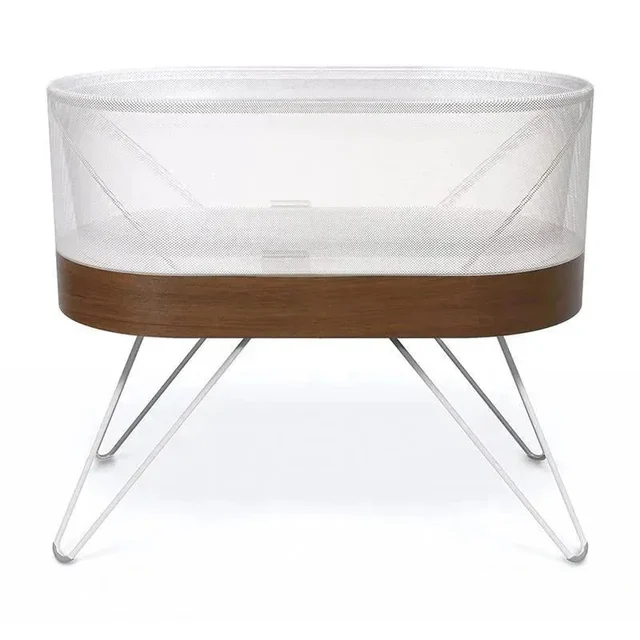
- Buy Happiest Baby SNOO Smart Sleeper The only bassinet that actively rocks and shushes your baby back to sleep before you're fully awake.
- Buy HALO BassiNest Swivel Sleeper 3.0 The bedside access champ: it swivels over your mattress and drops a wall so you barely have to move. Amazon
- It depends HALO BassiNest Soothing Swivel Sleeper 3.0 Two vibration levels and four sounds added to the HALO swivel, a fixed soothing set whose payoff depends on your baby.
- Skip Chicco Close to You 3-in-1 Bedside Bassinet A versatile bedside-crib-changer combo that does a lot of things adequately and none of them exceptionally. Amazon
What actually matters
- Soothing capability - whether the bassinet actively helps your baby sleep, and if motorized, whether that motion responds to the baby or just runs a preset pattern. This is the single biggest price driver and the feature owners either swear by or shrug at.
- Bedside access - swivels, lowering sidewalls, and a height range that matches your bed frame determine how easy night feeds and lift-outs are. You'll reach into it dozens of times a night, so ergonomics here pay off more than almost anything else.
- Safe-sleep design - a firm, flat mattress, breathable sides, and no soft padding are what actually keep a newborn safe. Confirm the maker states it follows current safe-sleep guidance, and be wary of any bassinet that adds cushiony extras.
- Sound-machine level - built-in white-noise features can be loud close to a newborn. Check what the maker says about volume, and keep it low regardless of the model.
- Weight and mobility limits - bassinets cap out early, typically around the point a baby can push up or roll. This limit, not the baby's age, tells you how long you'll actually use it.
- Footprint and bed fit - wide floor bases and roll-around designs need clearance and can fit poorly against short or low beds. Measure your space before committing.
- Portability and versatility - some units convert to a daytime nest or a changing station. Handy for small homes, but a do-everything unit often does each job less well than a focused pick.
The specs, in plain English
Green flags vs red flags
Green flags
- A firm, flat mattress and breathable sides that meet current safe-sleep guidance
- A height range and, ideally, a swivel or drop-down wall that genuinely matches your bed for easy access
- A clearly stated weight and mobility limit so you know exactly when to stop using it
- A rental option on the priciest motorized models, sizing the cost to the few months you'll use it
- A sound machine you can run at low volume
Red flags
- Any padding, pillows, bumpers, or an inclined sleep surface added for 'comfort'
- Marketing that blurs preset motion and responsive soothing so you can't tell which you're paying for
- A wide floor base or roll-around footprint that won't clear or tuck against your bed
- A built-in sound machine with no easy way to keep the volume down
- Cumbersome mode conversions on a do-everything unit that undercut the core sleeping job
- No stated weight or mobility limit, or vague guidance on when to stop using it
Who's who: the brands
- Happiest Baby - Maker of the SNOO, the flagship responsive smart bassinet that rocks and shushes on cue; also offers it as a rental with a 6-month minimum.
- HALO - Known for the BassiNest line of swivel bedside sleepers built around easy night-feed access; the base model has no motor, while the Soothing and Connected variants add vibration, sounds or auto-soothing.
- Chicco - A mainstream juvenile-gear brand whose bedside bassinets emphasize versatility, like combined sleeper-and-changer units.
How to read a listing without getting fooled
Start by figuring out which kind of bassinet a listing is really describing, because the word covers everything from a static bedside nest to a motorized soother. When you see 'motion' or 'soothing,' pin down whether it's responsive (reacts to the baby's cries) or preset (a fixed pattern) - this is the difference that justifies a big price gap, and marketing often blurs it. Treat safe-sleep features as a baseline to confirm, not a selling point: a firm flat mattress and breathable sides should be present on anything worth buying. Check the weight and mobility limit early, since it tells you the real lifespan. If there's a built-in sound machine, look for any note on how loud it runs and whether you can keep it low. Finally, sanity-check the footprint and height range against your own bed before anything else convinces you.
How much should you spend?
Think of a bassinet as a short-term rental of your baby's first few months, and let that frame the spend. The value sweet spot for most families is a well-designed bedside sleeper with good access and airflow but no motor, because it does the core job well without paying for features many babies don't need. Spending more makes sense in one specific case: a baby who genuinely fights sleep, where responsive motorized soothing can be transformative - and even then, renting one of the priciest models often matches the cost to the brief window you'll use it. Spending up for preset motion is more of a gamble, since you can't confirm it works for your baby until they're in it. And a cheap unit that skimps on safe-sleep basics or bedside access is a false economy. Match the money to your baby's actual sleep needs and your bed's layout, not to the longest spec list.
Questions, answered
Is an expensive smart bassinet worth it, or is a simple bedside one enough?
It depends on your baby and budget. A responsive motorized bassinet can be a lifesaver for a newborn who fights sleep, and renting keeps its cost proportional to the few months you'll use it. But many babies sleep just fine in a well-designed non-powered bedside sleeper, which delivers the access and airflow that matter most for far less. If you're unsure, a good bedside model is the safer default.
What's the difference between responsive motion and preset motion?
Responsive motion means the bassinet detects fussing and automatically ramps up its rocking and white noise to settle the baby, adapting in real time. Preset motion just plays a fixed sway or vibration pattern on a timer, whether the baby needs it or not. Responsive soothing is the feature that can reliably buy back sleep; preset motion soothes some babies and does nothing for others, so pay attention to which one a product actually offers.
How do I keep my baby safe in any bassinet?
This is general product information, not medical advice, so always follow your pediatrician, the manufacturer's instructions, and AAP safe-sleep guidance. The core rules are consistent across bassinets: place the baby on their back on a firm, flat surface, use only the mattress and fitted sheet made for that model, and keep the sleep space completely clear of loose bedding, pillows, bumpers, and soft toys. Stop using the bassinet once your baby reaches the model's stated weight limit or starts pushing up on hands and knees.
How long can my baby use a bassinet?
Most bassinets are meant for the first several months and cap out around 20 pounds or once the baby can push up or roll, whichever comes first. Some responsive models, such as the SNOO, are rated up to 6 months of age or hands-and-knees, while combination units with a changing station stay useful past the bassinet stage. Always go by the specific model's weight and mobility limits rather than the baby's age alone.
Why does the bassinet's sound machine matter?
Many bassinets include a built-in white-noise feature, and loud, prolonged noise close to a newborn's ears is a real concern. Check what the maker says about volume limits and keep the volume low regardless of which one you own.
Can I rent a bassinet instead of buying one?
Sometimes. The priciest responsive smart bassinets are sometimes available as rentals, which is the most sensible route for their flagship cost given how briefly you'll use one. Most simpler bedside and preset-motion models are purchase-only from major sellers, though a healthy secondhand market exists - just make sure any used unit still meets current safe-sleep standards and uses its original mattress.
Or jump to the head-to-head: Happiest Baby SNOO Smart Sleeper vs HALO BassiNest Swivel Sleeper 3.0.