Explained
Handlebar Tape, Explained
After reading, you'll understand how thickness trades against bar feel, what each material does over a season, and what needs to be in the box.
In this guide
Bar tape is sold on colour and bought on hope. Underneath the swatches there are three or four numbers that predict whether your hands will be comfortable at hour four, and most listings publish one of them at best. Knowing which to demand makes the choice quick.
The 30-second version
- Thickness is the comfort number, and it trades directly against how connected the bar feels.
- Length per roll decides your overlap, and cotton sold by the single roll is the usual budgeting mistake.
- Adhesive backing forgives technique, while silicone and cotton rely entirely on tension.
- Materials fail differently, foam packs flat, microfibre wears at the hoods, silicone tears, cotton stains.
- Plugs and finishing tape are part of the product, and a tape that does not mention them usually omits them.
The products this guide is about
Our verdict on each, with the full reasoning on the companion review.
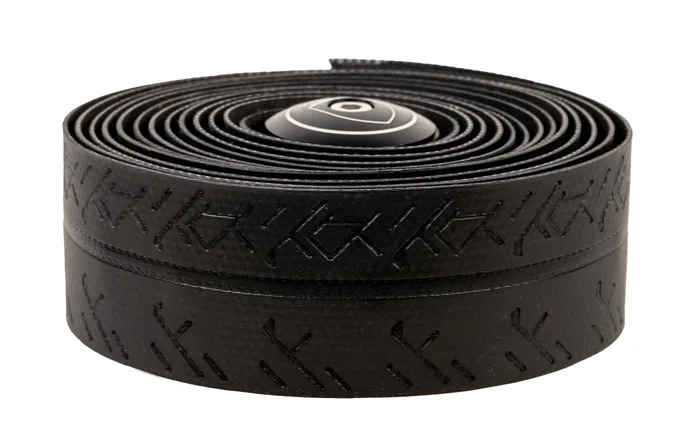
- Buy SILCA Nastro Piloti Bar Tape The most completely specified tape here, with the parts for a clean wrap in the box.
- Buy fizik Comfortfeel 3.5mm Classic The thickest tape fizik makes, and the right amount of cushioning for most real roads.
- It depends Wolf Tooth Supple Bar Tape 5mm of solid silicone, 40mm wide, aimed squarely at gravel punishment.
- Skip Velox Tressostar Cotton Handlebar Tape Genuinely lovely traditional cloth tape, with no padding and a roll count that catches people out.
What actually matters
- Thickness - how much material sits between your hand and the bar, from around 1.85mm on SILCA's Nastro Piloti to 5mm on Wolf Tooth's Supple. More damps vibration and enlarges the grip; less gives a direct feel and suits smaller hands.
- Length per roll - how much overlap you can afford. SILCA states 230cm per roll and Wolf Tooth 152cm with two rolls per package, and running short mid-drop is the common failure.
- Width - how many turns it takes to cover the bar. Wolf Tooth's 40mm against a typical 30mm means fewer wraps and more coverage per turn.
- Material - foam compresses over time, microfibre resists abrasion and wears first at the hoods, silicone stays put and resists packing out, cotton offers no cushioning at all.
- Adhesive backing - a strip along the back of the tape that holds each turn in place while you work. SILCA uses a 3M adhesive; silicone and cotton have none.
- Included hardware - bar plugs and finishing tape. SILCA supplies expanding aluminium plugs and adhesive finishing tape; cotton supplies nothing.
- Butterfly or clamp cover - the piece that fills the gap behind the brake lever clamp. Either the maker supplies a shaped one or you cut an offcut and hope it sits flat.
The specs, in plain English
Green flags vs red flags
Green flags
- A thickness in millimetres is stated.
- Roll length is given, along with how many rolls are in the package.
- Bar plugs and finishing tape are named as included.
- The material is named rather than described as a proprietary compound.
- The maker gives wrapping guidance, including any limit on stretching.
Red flags
- Colour options are the only specification on the page.
- Price appears to be low until you notice it is per single roll.
- No mention of plugs or finishing tape on a tape sold as a complete kit.
- Cushioning claimed with no thickness attached.
- A width that is never stated, on a tape sold as extra wide.
Who's who: the brands
- SILCA - Premium tools and consumables brand whose Nastro tapes use a multi-layer laminate and ship with alloy plugs, adhesive finishing tape and a butterfly clamp cover.
- fizik - Italian saddle and tape maker whose Racefeel and Comfortfeel ranges cover 2mm to 3.5mm with a leather-like microfibre surface.
- Wolf Tooth - Minnesota component brand whose Supple tapes are solid silicone at 5mm and 40mm wide, aimed at gravel.
- Velo Orange - Classic and touring parts specialist, selling traditional Tressostar cotton alongside modern rubber and foam tapes.
- Lizard Skins - Long-running tape maker offering DSP tapes in several thicknesses, widely fitted on road and gravel bikes.
How to read a listing without getting fooled
Find the thickness first and treat its absence as the answer to whether the listing is worth reading. Then look for a roll length and a roll count in the same sentence, because that pairing is what tells you whether you can wrap with generous overlap or will be rationing near the top of the bar. Check the material name next, and match it to how you expect the tape to fail: if you have worn through tape at the hoods, microfibre is the fix; if you have flattened it under your palms, silicone is. Look for bar plugs and finishing tape in the included items, since replacing either separately costs more than the difference between two tapes. Finally, read any wrapping instructions the maker gives, because a tape with a stated stretch limit, as Wolf Tooth has, is telling you something useful about how it behaves in your hands.
How much should you spend?
Bar tape spans budget to premium and, unusually, the budget end is not automatically a compromise. Cheap foam tape works and is genuinely disposable, which suits a bike whose tape gets wrecked every winter. The mid-range buys a microfibre surface that survives two seasons looking respectable, and it is where most riders should shop. Premium tape buys engineered multi-layer construction, an adhesive backing, alloy plugs, a shaped clamp cover and in one case a crash replacement policy, and on a bike you are building deliberately that package is worth it. The genuine trap is cotton, which looks cheapest per roll and is not, because most bars need two rolls and many riders use three or four, with plugs, finishing twine and shellac all bought separately on top.
Questions, answered
Which direction should I wrap?
Start at the bar end and work up toward the stem, wrapping so that the pressure of your hands tightens the tape rather than unwinding it. On the drops that means wrapping from the outside inward as you look at the bar end. Keep tension even, overlap by about a third to a half depending on how much cushioning you want, and leave a small tail at the bar end to tuck in before the plug goes on.
Can I reuse bar tape after taking it off?
Rarely, and it depends on the material. Adhesive-backed tape stretches and the adhesive picks up dirt, so it almost never goes back on cleanly. Silicone and cotton have a better chance because they have no adhesive, though silicone has usually been stretched near its limit and cotton will have taken on the shape of the bar. In practice tape is a consumable and the sensible plan is to replace it rather than salvage it.
Does thicker tape help with numb hands?
Usually yes, and it is the cheapest thing to try first. Numbness comes from sustained pressure on the nerves crossing the base of the palm, and thicker tape spreads that pressure over more area while damping the vibration that makes it worse. Going from 2mm to 3.5mm is a noticeable change. If numbness persists, the next things to look at are bar position and reach, glove padding, and whether you are supporting too much weight on your hands.
Do I need gel pads under the tape?
Less often than you would think, particularly if you have chosen a thicker tape. Gel strips laid along the tops and drops add cushioning in the specific places your hands rest, which is useful with thin tape on a bike you cannot otherwise change. With a 3.5mm or 5mm tape they mostly add bulk and make a tidy wrap harder. Try the thicker tape on its own first.
Or jump to the head-to-head: SILCA Nastro Piloti Bar Tape vs fizik Comfortfeel 3.5mm Classic.