

Audio
The Best Vinyl Record Storage: 4 Compared (and One to Skip)
We judged crates, cubes, stands and shelving on the things that actually protect records: published load ratings, real internal dimensions, fixed dividers, and whether the unit can be anchored.
The short version
The Atocha Design Record Stand is the best of these if you are keeping a collection for decades: six fixed bins, a stated 300 LPs, and a solid birch plywood core under the load. The IKEA KALLAX shelving unit is the value pick and the reason most collections live in cubes, though IKEA rates each shelf at 13 kg while a cube packed solid with LPs works out heavier than that, and IKEA prints a tipping hazard warning that you should take literally. The Line Phono Turntable Stand is the one that depends: it is the neatest way to get a turntable, an amp and 200 records into a small footprint, and it publishes the strongest load figure here, but 200 is a hard ceiling. Skip the Crosley Vinyl Record Storage Crate as a storage plan; it is a fine carrying box and a poor shelf, with no dividers and a stacking habit that buries the bottom crate. Whatever you buy, records stand upright, supported, never stacked flat. Best for: anyone whose collection has outgrown the floor and who wants it to still be flat and unscuffed in twenty years.
Our picks at a glance
- Atocha Design Record Stand - Buy. A purpose built six bin record stand with published per bin capacity and a plywood core chosen for the load.
- IKEA KALLAX Shelving Unit, 77x147 cm - Buy. The cube shelf the whole hobby defaults to, for good geometric reasons, with one load figure you should know about.
- Line Phono Turntable Stand + Vinyl Record Storage - It depends. Turntable, gear shelf and 200 records in a footprint smaller than a nightstand, with the best published load rating in this group.
- Crosley Vinyl Record Storage Crate - Skip. A good looking carrying box that a lot of people mistakenly buy in multiples as a storage system.
The verdict in 30 seconds
What mattered most
- Stated LP capacity
- Published load rating
- Fixed dividers
- Footprint (W x D)
- Height
- Core material
Records are the rare collectible where the storage furniture is a preservation decision, not a decorating one. The Library of Congress is blunt about it: store discs upright on edge, on shelving sturdy enough for the weight, with immovable dividers that support the whole face of the sleeve. Almost nothing sold as record storage meets all three, and the numbers that would tell you are usually missing from the listing. We picked four units that a lot of people actually buy, checked the maker's own published specs, and worked out what a full load really weighs.
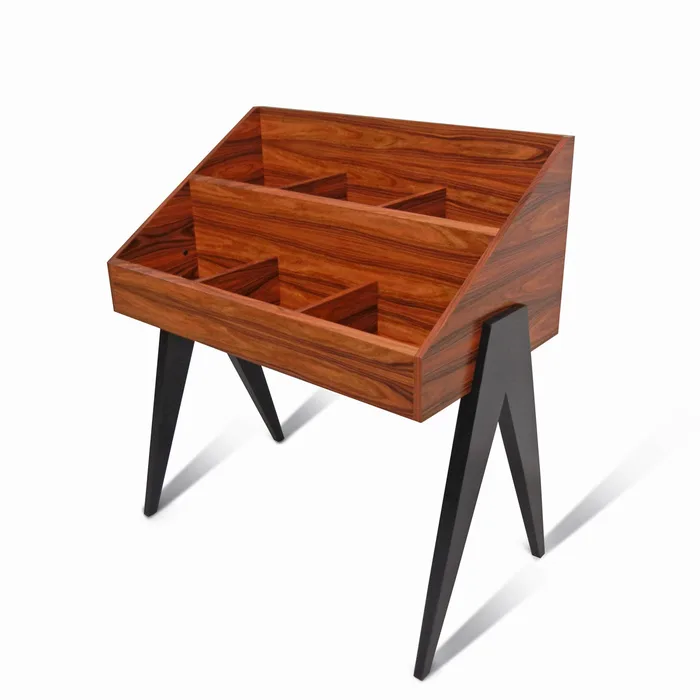
A purpose built six bin record stand with published per bin capacity and a plywood core chosen for the load.
Best for: A collector with 200 to 300 records who wants an open, browsable stand that will still be flat in twenty years.
- Six fixed bins with a stated 50 LPs each, 300 records total.
- Bases are solid birch hardwood core plywood with a hardwood veneer top layer, which is the construction that matters under vinyl.
- Records sit face forward at browsing height, so you flip covers instead of reading spines.
- Made to order with an approximately six week lead time, so it is not a same week fix.
- Bins are wide enough that a half full one lets records lean unless you add a filler block behind them.
- Atocha does not publish a weight rating for the stand, only a capacity in LPs.
- The premium tier here is a serious step up from cube shelving.
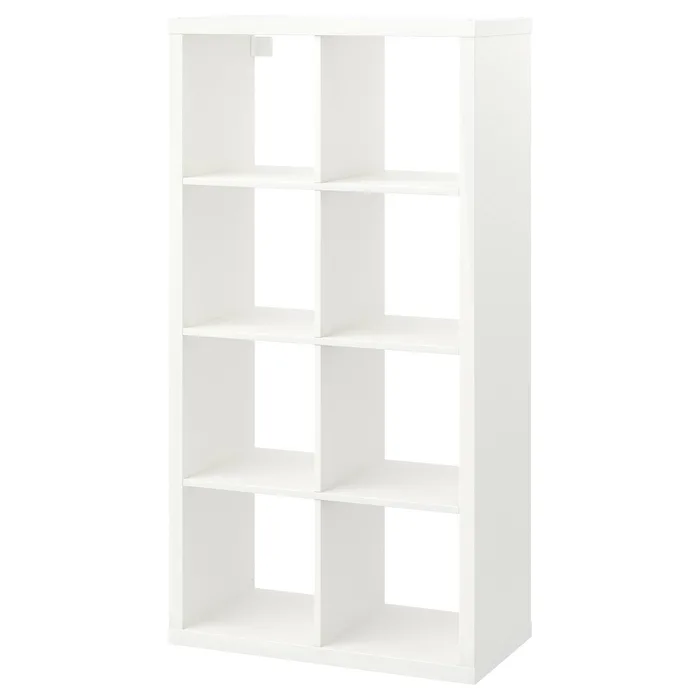
The cube shelf the whole hobby defaults to, for good geometric reasons, with one load figure you should know about.
Best for: Almost anyone building a first real storage wall who will anchor it and not cram every cube to the edge.
- Each opening is 33 cm square, the size IKEA's own KALLAX inserts are built to, which clears an LP jacket with room to get fingers in.
- Eight cubes in a 76.5 by 39 by 146.5 cm unit, and it can stand upright or lie down as a low sideboard.
- Doors, drawers and shelf inserts drop in later if you want part of the collection closed off.
- IKEA rates each shelf at 13 kg, about 29 pounds, and a cube packed solid with LPs is heavier than that.
- IKEA prints a tipping hazard warning and states the unit must be securely anchored.
- Particleboard and fibreboard with honeycomb paper filling, not a plywood or hardwood core.
- IKEA publishes no LP capacity at all, so every number you see quoted for it comes from somewhere else.
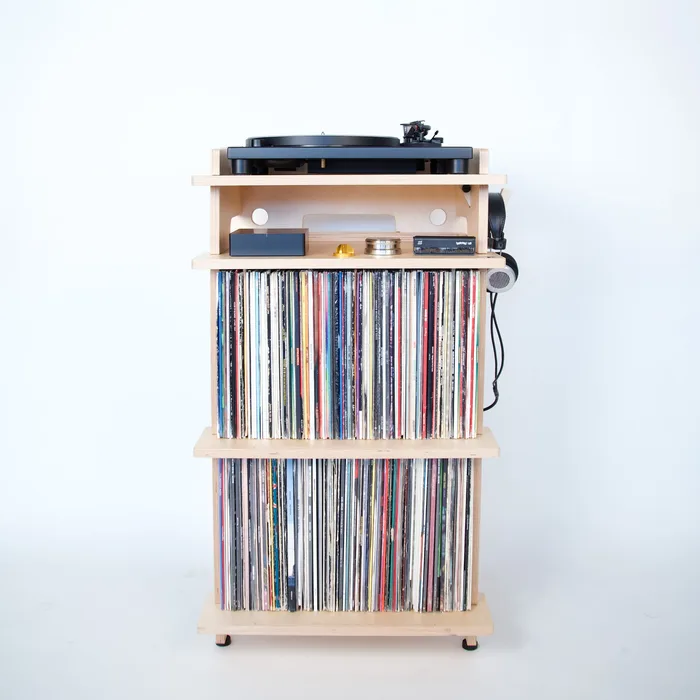
Turntable, gear shelf and 200 records in a footprint smaller than a nightstand, with the best published load rating in this group.
Best for: Someone setting up a first proper listening corner who wants the turntable and the records in one tidy piece.
- Line Phono states roughly 100 pounds of capacity per shelf, comfortably above what a shelf of records weighs.
- Holds a stated 200 records plus most turntables, in a 21.6 by 17.5 inch footprint.
- Standard height is 39.5 inches with a 5 inch accessories shelf; the extra height version is 41.5 inches with a 7 inch shelf for an integrated amp.
- Two hundred LPs is a hard ceiling and a fast growing collection will hit it.
- No internal dividers, so a partly filled shelf lets records lean.
- Open shelves leave the top edges of your sleeves exposed to dust.
- At 42 to 46 pounds empty, depending on version, it is not a piece you move around casually.
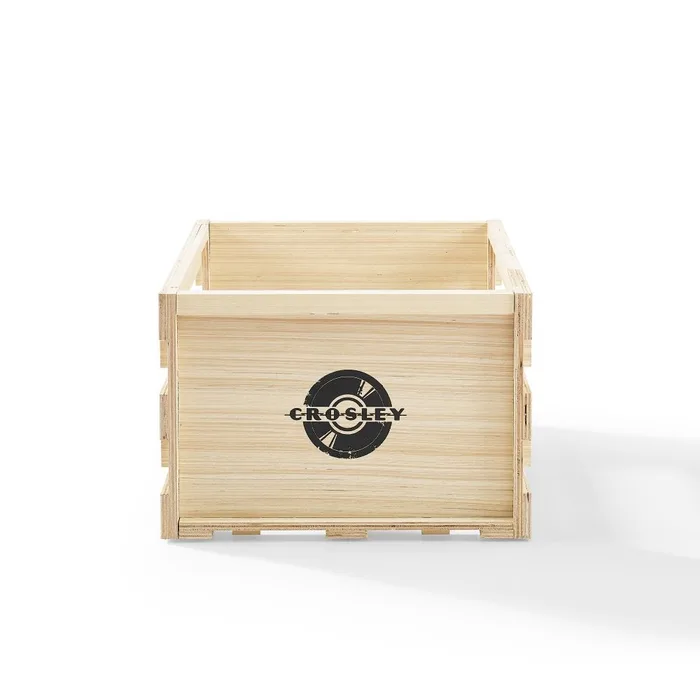
A good looking carrying box that a lot of people mistakenly buy in multiples as a storage system.
Best for: Carrying a small selection of records out of the house, not storing a collection at home.
- Solid wood with integrated carry handles and no tools needed to assemble.
- Crosley states it holds up to 75 LPs, which is a sensible amount to carry in one hand each side.
- Genuinely useful if you take records to a friend's place or a gig.
- No internal dividers, so anything short of a full crate lets the stack slump to one side.
- The Library of Congress calls for sturdy, immovable dividers every 4 to 6 inches supporting the whole face of the disc, which a crate cannot do.
- Seventy five LPs is a real lift, and crates get stacked, which makes the bottom one unreachable.
- Crosley does not publish a weight rating for it.
| Criteria | Record Stand Top pick | KALLAX Shelving Unit, 77x147 cm | Turntable Stand + Vinyl Record Storage | Vinyl Record Storage Crate |
|---|---|---|---|---|
| Verdict | Buy it | Buy it | It depends | Skip it |
| Best for | A collector with 200 to 300 records who wants an open, browsable stand that will still be flat in twenty years. | Almost anyone building a first real storage wall who will anchor it and not cram every cube to the edge. | Someone setting up a first proper listening corner who wants the turntable and the records in one tidy piece. | Carrying a small selection of records out of the house, not storing a collection at home. |
| Price tier | $$$ · premium | $ · budget | $$ · mid-range | $ · budget |
| Stated LP capacity | 300 LPs (6 bins, 50 each) | Not published by IKEA | 200 LPs | Up to 75 LPs |
| Published load rating | Not published | 13 kg (about 29 lb) per shelf | About 100 lb per shelf | Not published |
| Fixed dividers | Yes, 6 bins | Cube walls every 33 cm, no sub dividers | None | None |
| Footprint (W x D) | 43 3/4 x 24 in | 76.5 x 39 cm (30 x 15 in) | 21.6 x 17.5 in | 18.25 x 14.25 in |
| Height | 47 in | 146.5 cm (58 in) | 39.5 in, or 41.5 in extra height | 9.75 in |
| Core material | Solid birch hardwood core plywood, hardwood veneer, walnut legs | Particleboard, fibreboard, honeycomb paper filling | Furniture grade MDF or 13 ply birch | Solid wood |
| Anchoring | Low freestanding stand | IKEA warns tipping hazard, must be securely anchored | Freestanding, 42 to 46 lb empty | Not applicable |
| Turntable shelf | No, ledge for now playing sleeve | No | Yes, plus accessories shelf | No |
Which one is right for you?
- A collector with 200 to 300 records who wants an open, browsable stand that will still be flat in twenty years. Buy it Atocha Design Record Stand
- Almost anyone building a first real storage wall who will anchor it and not cram every cube to the edge. Buy it IKEA KALLAX Shelving Unit, 77x147 cm
- Someone setting up a first proper listening corner who wants the turntable and the records in one tidy piece. It depends Line Phono Turntable Stand + Vinyl Record Storage
- Carrying a small selection of records out of the house, not storing a collection at home. Skip it Crosley Vinyl Record Storage Crate
How we judged the field
Five things decide whether record storage is any good. First, orientation and support: the Library of Congress tells you to store discs upright on edge and to use sturdy, immovable dividers every 4 to 6 inches that support the entire face of the disc in its sleeve, because unsupported records lean and leaning records warp. Second, the load rating, which almost nobody checks. The same guidance puts grooved discs at 35 or more pounds per shelf foot and warns that all formats concentrate weight on the centreline of a shelf, which can cause some shelving to collapse. Third, real internal dimensions, because a 12 inch record in its jacket needs meaningfully more than 12 inches of clear space. Fourth, stated capacity and what it assumes, since a collection in poly outer sleeves fits far fewer albums per foot than a collection in bare paper. Fifth, tip over risk, because a loaded unit is heavy and front weighted.
The field splits three ways. There is purpose built record furniture with divided bins and published capacities, which is where the money goes. There is general cube shelving that happens to fit an LP, which is where the hobby actually lives. And there are crates, which are carrying boxes that get sold as furniture. We took one strong example of each plus a hybrid, and we deliberately included the piece everyone already owns rather than pretending KALLAX does not exist. We only used numbers the maker publishes on its own page, and where a maker publishes nothing, we say so rather than filling the gap.
Atocha Design Record Stand
Buy itAtocha builds this one to order in upstate New York and publishes the numbers you actually need: 43 3/4 inches wide, 47 inches tall, 24 inches deep, six bins, 50 LPs per bin for a stated 300 records. Records face forward so you flip covers rather than squint at spines, which is the whole point of a stand rather than a shelf. The bases are solid birch hardwood core plywood with a hardwood veneer top layer, and that is the part that matters when you are asking a horizontal surface to carry vinyl for decades. Walnut legs bolt on with the supplied hex wrench, and a groove in the top ledge holds the sleeve of whatever is playing. Two honest limits. Three hundred is a ceiling, not a starting point. And the bins are wide enough that a half empty one lets records lean, so keep a filler block handy. For someone who browses their collection daily and intends to keep it.
IKEA KALLAX Shelving Unit, 77x147 cm
Buy itKALLAX is the default because the geometry happens to work. The openings are 33 cm square, the same size IKEA’s own KALLAX inserts are built to, and that clears an LP jacket with enough room left to get fingers in. The 77 by 147 cm unit gives you eight cubes, takes doors and drawers later, and works standing up or lying down as a low sideboard. Now the part the hobby glosses over. IKEA rates each KALLAX shelf at 13 kg, about 29 pounds. The Library of Congress figures grooved discs at 35 or more pounds per shelf foot, and a 33 cm opening is a shade over a foot, so a cube packed solid lands near 38 pounds. People run them that way and mostly get away with it, but it is above the published number, so leave slack in each cube instead of cramming. IKEA also prints a tipping hazard warning and says the unit must be securely anchored, which at this weight is not a formality. Still the best value in the category by a wide margin.
Line Phono Turntable Stand + Vinyl Record Storage
It dependsThe Line Phono stand solves a different problem: turntable, gear and records in one 21.6 by 17.5 inch footprint. Standard height is 39.5 inches with a 5 inch accessories shelf, and the extra height version goes to 41.5 inches with a 7 inch shelf that will take most integrated amps. Line Phono states 200 records and roughly 100 pounds of capacity per shelf, which is by a distance the strongest published load figure in this group and the reason a full shelf of vinyl is a non issue here. It is made in the USA from furniture grade MDF or 13 ply birch, with adjustable steel and rubber feet for levelling and cable management built in, and it weighs 42 to 46 pounds empty, depending on version, so it stays where you put it. The catch is the ceiling. Two hundred records is a year or two of steady buying, there are no dividers, and open shelves let dust settle on the top edges of your sleeves. Right answer if your turntable is currently on a side table; wrong one if you already own 500 albums.
Crosley Vinyl Record Storage Crate
Skip itThe Crosley crate is solid wood, needs no tools, has integrated carry handles, and Crosley states it holds up to 75 LPs. It is genuinely appealing and it is the wrong buy for most of the people who buy it. Seventy five records is a real lift on two hand holds. More to the point, the crate has no internal dividers at all, so anything short of completely full means the stack slumps to one side and stays there. The Library of Congress specifically asks for sturdy, immovable dividers every 4 to 6 inches that support the entire face of the disc in its sleeve, and an open box is the opposite of that. Then the scaling problem: a growing collection means more crates, crates get stacked, and the bottom crate becomes unreachable, so you quietly stop playing what is in it. Buy one if you actually carry records out of the house. Do not buy four and call it a storage system.
Sources
Specs in this review come from these pages.
- Library of Congress, Care, Handling, and Storage of Audio Visual Materials (loc.gov)
- IKEA KALLAX shelving unit, 77x147 cm (802.758.87) product page (ikea.com)
- IKEA KALLAX insert with door, 33x33 cm (202.781.67) product page (ikea.com)
- Atocha Design Record Stand product page (atochadesign.com)
- Line Phono Turntable Stand + Vinyl Record Storage product page (linephono.com)
- Crosley Vinyl Record Storage Crate (AC1050A) product page (crosleyradio.com)
Atocha Design Record Stand vs IKEA KALLAX Shelving Unit, 77x147 cm: which should you buy?
The Atocha stand and a KALLAX are not really competing on price, so decide on how you use records rather than what you can spend. The Atocha is a browsing instrument. Six fixed bins mean the records inside each one hold each other up, the open bins put covers face forward at browsing height, and the published 300 LP figure is the full capacity. That combination is what makes people dig through their own collection again instead of replaying the same forty albums at the front of a cube. KALLAX is a wall of storage. It holds far more per pound spent, it takes inserts and doors as your needs change, and it is available this afternoon rather than in six weeks.
The deciding question is how big your collection is going to get and whether you will actually anchor the thing. If you are hovering around 200 to 300 records and that number is stable, the Atocha is the better long term object and the one that treats the records properly without any effort from you. If you are at 400 and climbing, or you move house often, or you want closed storage later, KALLAX wins on flexibility, provided you anchor it to the wall and stop short of packing every opening solid. One more practical split: the Atocha sits low and wide, so tip over is not much of a concern, while a 147 cm KALLAX loaded with vinyl absolutely is if there are small children around.
What to look for
- Published load rating: Find the maker’s stated weight per shelf and compare it against the Library of Congress figure of 35 or more pounds per shelf foot before you trust a capacity claim.
- Fixed dividers: Immovable dividers that support the whole face of the sleeve are what stop records leaning, and the Library of Congress asks for them every 4 to 6 inches.
- Clear internal width: A 12 inch record in its jacket needs more than 12 inches, so check the actual opening dimension rather than assuming a cube marketed for records will fit one.
- What the capacity assumes: Ask whether a stated LP count is bare paper sleeves or sleeved records, because outer sleeves cost you a real number of albums per foot.
- Anchoring hardware and instructions: Tall units loaded with vinyl are front heavy, and a maker that prints a tipping hazard warning is telling you the anchor is part of the product.
- Shelf construction, not just the finish: A plywood or solid core carries a concentrated centre load far better than particleboard with paper filling, and sag is permanent once it starts.
Our final take
Vinyl storage is one of the few purchases where the preservation rules are simple and published: upright on edge, supported across the face of the sleeve, on shelving that can genuinely take the weight. The Atocha Record Stand is the only unit here that does all three without you thinking about it, and it is priced accordingly. KALLAX is what most people should buy, and it works fine as long as you anchor it and leave a little slack in each cube rather than treating 13 kg as a suggestion. The Line Phono stand is the right first piece if you are building a listening corner rather than a library. The Crosley crate is a good box for carrying records and a poor plan for keeping them.
Questions, answered
Do records really have to stand upright, or can I stack a few flat?
Upright, on edge, is the standard answer from preservation people. The Library of Congress guidance for audio visual materials says to store all formats upright, with discs and reels on edge. The reason is that a flat stack puts the full weight of everything above onto the lowest record, which is how you get warping and the pressed ring you see on old sleeves. Leaning is the other half of the problem: a record held at an angle for years takes a set. A short stack for an afternoon is not going to destroy anything, but there is no version of flat stacking that is good for the record long term.
How many records actually fit in an IKEA KALLAX cube?
IKEA does not publish an LP capacity for KALLAX, so treat every number you see quoted as someone else's estimate. What IKEA does publish is more useful: the shelf is rated for 13 kg, about 29 pounds. The Library of Congress puts grooved discs at 35 or more pounds per shelf foot, and a KALLAX opening is 33 cm, a shade over a foot, so a cube packed edge to edge with LPs works out around 38 pounds. Plenty of people run them packed anyway, but it is over the rated figure, and it is also the point at which you cannot get a record out without dragging its neighbours. Leave a hand's width of slack per cube.
Do I need to anchor record storage to the wall?
For anything tall, yes, and IKEA says so itself: the KALLAX product page carries a tipping hazard warning and states the unit must be securely anchored with screws and plugs suited to your wall. Records make this worse than the average bookshelf because the load is heavy, concentrated low to mid height, and sits well forward on the shelf. If there are small children in the house, treat it as mandatory rather than a suggestion. Low, wide stands like the Atocha are a different case because their centre of gravity is close to the floor. If you rent and cannot drill, put the mass on a low unit rather than a tall one.
Do poly outer sleeves change how much I can fit?
Noticeably, yes. An outer sleeve adds thickness to every single record, and across a shelf foot that adds up to a meaningful number of lost albums. Anti static inner sleeves do the same thing on a smaller scale. The Library of Congress recommends replacing paper record sleeves with high density polyethylene inner sleeves, and notes that some thin ones can sit inside the original paper sleeve if you want to keep the original. So plan capacity around your actual sleeving, not the maker's bare sleeve figure, and assume a sleeved collection needs more linear space than the listing implies. If a maker does not say which assumption their number uses, treat it as the optimistic one.
Can I store 7 inch singles in with my LPs?
Better not to. The Library of Congress guidance says not to store grooved discs of different diameters together. A 7 inch sitting between 12 inch jackets gets no edge support along most of its height, and the LPs on either side of it lose support too, which is exactly the leaning problem you are trying to avoid. Give singles their own bin, box or shelf sized for them. Several makers sell dedicated 7 inch bins or drawers for this reason. If you only own a handful, a small dedicated box on a shelf is fine.
Deciding between the top two? See our head-to-head: Atocha Design Record Stand vs IKEA KALLAX Shelving Unit, 77x147 cm.
More Audio reviews
 The Best Wired In-Ear Monitors: 4 Compared (and One to Skip)
  The Best Wireless Microphones: 4 Compared (and One to Skip)
  The Best XLR Microphone Cables: 4 Compared (and One to Skip)
  The Best XLR Microphones: 4 Compared (and One to Skip)
  The Best Speaker Stands: 4 Compared (and One to Skip)
  The Best Acoustic Guitars for Beginners: 4 Compared (and One to Skip)