

Audio & Headphones
The Best USB Microphones for Podcasting and Streaming
We compared four current USB microphones for podcasting and streaming to find which reject room noise, which need a treated space, and the popular pick to skip.
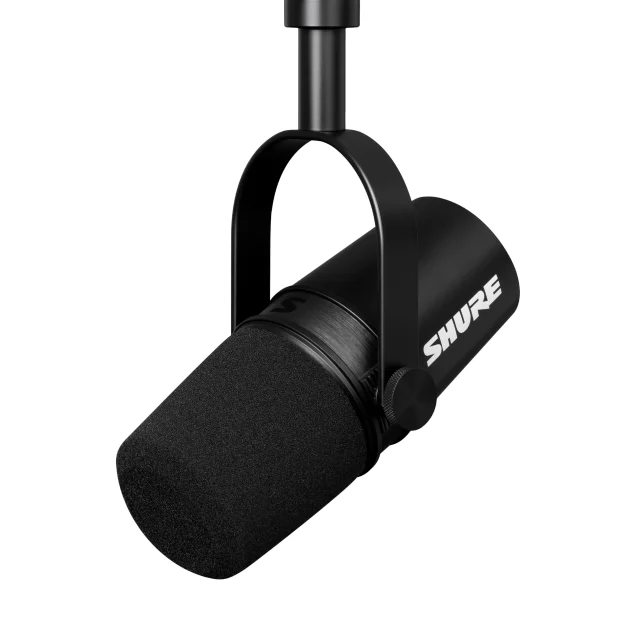
The short version
For most podcasters and streamers the Shure MV7+ is the pick: its dynamic capsule rejects the room noise that plagues untreated spaces, and it carries both USB-C and XLR outputs. The Rode NT-USB+ is the runner-up for quieter rooms, ready to record with onboard processing, a pop filter, and a desktop stand in the box. The HyperX QuadCast 2 works for streamers wanting fast controls. Skip the Blue Yeti unless your room is already treated and quiet.
Our picks at a glance
- Shure MV7+ - Buy. A hybrid dynamic mic that keeps an untreated room out of your recording.
- Rode NT-USB+ - Buy. A studio condenser that arrives ready to record, processing and all.
- HyperX QuadCast 2 - It depends. A streaming-first condenser with fast controls and desk lighting.
- Logitech Blue Yeti - Skip. The popular default that floods an untreated room straight into your track.
The verdict in 30 seconds
What mattered most
- Capsule type
- Room-noise rejection
- Outputs
- Onboard processing
- Live controls
- Best fit
Most USB microphone guides bury the one detail that actually decides your sound: capsule type. A dynamic capsule ignores an untreated room, while a condenser hears everything in it. We synthesised independent expert testing and pooled owner feedback on four models still sold in 2026 to sort the genuinely useful from the merely popular.
A hybrid dynamic mic that keeps an untreated room out of your recording.
Best for: Podcasters and streamers recording in an untreated room who want one mic that grows with them.
- Dynamic capsule rejects most background noise in bare, untreated rooms
- Hybrid USB-C and XLR outputs give it a real upgrade path
- Onboard denoiser, auto-level mode, and digital pop filter do useful work
- Costs more than most USB microphones
- DSP can over-smooth a voice if you lean on it
- Needs close, on-axis positioning to sound its best
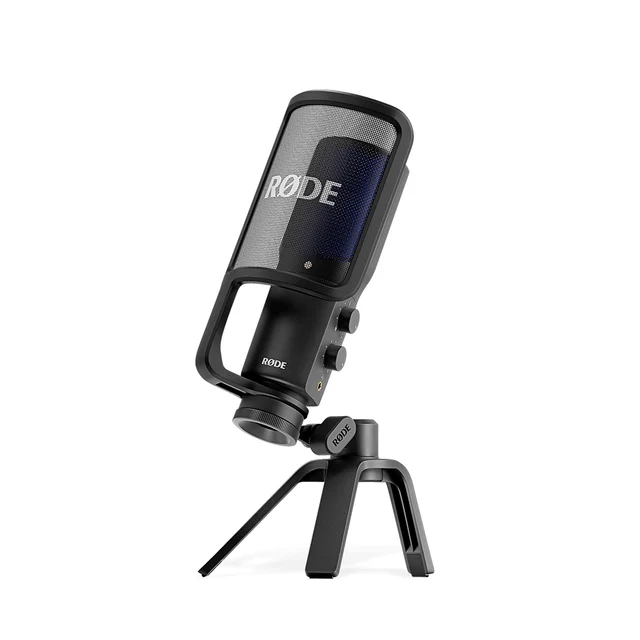
A studio condenser that arrives ready to record, processing and all.
Best for: Creators in a reasonably quiet room who want a polished sound with no extra gear to buy.
- Onboard APHEX processing (compressor, noise gate, Aural Exciter, Big Bottom)
- Ships with a detachable pop filter and a desktop stand
- Zero-latency headphone output with its own mix control
- Condenser capsule still captures more room than a dynamic
- USB only, so there is no XLR path later
- Fine-tuning the processing needs a Rode app
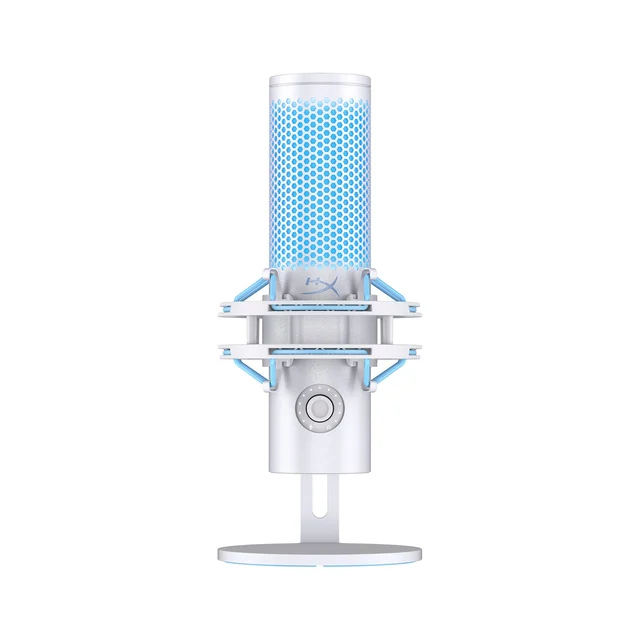
A streaming-first condenser with fast controls and desk lighting.
Best for: Streamers who want plug-and-play controls and lighting on the desk.
- Tap-to-mute sensor and a status light are genuinely useful while live
- Included detachable shock mount and desk stand
- 24-bit/96kHz recording with an all-metal build
- Condenser capsule needs a quiet room
- Four polar patterns mostly tempt solo users into worse-sounding modes
- Gaming-forward look and lighting will not suit every desk
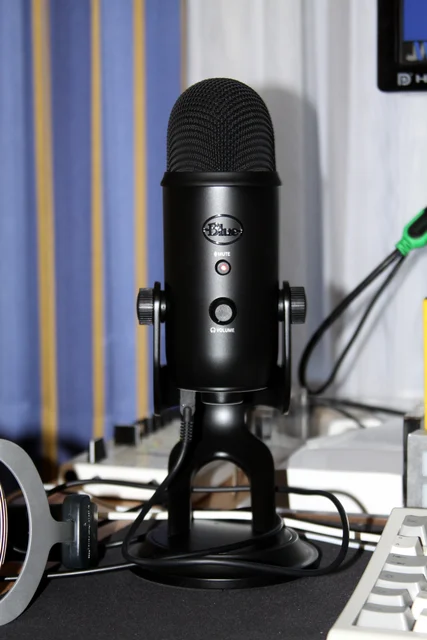
The popular default that floods an untreated room straight into your track.
Best for: Only a quiet, treated room where you sit close and mind your positioning.
- Four polar patterns for different recording setups
- Familiar, widely supported, and simple to plug in
- Side-address condenser captures the whole room
- No onboard noise gate or DSP to tame its sensitivity
- People instinctively talk into the top and end up off-axis
| Criteria | Shure MV7+ Top pick | Rode NT-USB+ | HyperX QuadCast 2 | Blue Yeti |
|---|---|---|---|---|
| Verdict | Buy it | Buy it | It depends | Skip it |
| Best for | Podcasters and streamers recording in an untreated room who want one mic that grows with them. | Creators in a reasonably quiet room who want a polished sound with no extra gear to buy. | Streamers who want plug-and-play controls and lighting on the desk. | Only a quiet, treated room where you sit close and mind your positioning. |
| Price tier | $$$ · premium | $$ · mid-range | $$ · mid-range | $$ · mid-range |
| Capsule type | Dynamic | Condenser | Condenser | Side-address condenser |
| Room-noise rejection | Excellent | Fair | Fair | Poor |
| Outputs | USB-C + XLR | USB-C | USB-C | USB only |
| Onboard processing | Denoiser + auto-level | APHEX suite + noise gate | None (gain only) | None onboard (Blue VO!CE in software) |
| Live controls | LED touch panel + mute | Headphone volume + mix | Tap-to-mute + control knob | Mute + gain/pattern dials |
| Best fit | Untreated-room podcasting | Ready-to-record studio | Streaming with lighting | Quiet treated room only |
Which one is right for you?
- Podcasters and streamers recording in an untreated room who want one mic that grows with them. Buy it Shure MV7+
- Creators in a reasonably quiet room who want a polished sound with no extra gear to buy. Buy it Rode NT-USB+
- Streamers who want plug-and-play controls and lighting on the desk. It depends HyperX QuadCast 2
- Only a quiet, treated room where you sit close and mind your positioning. Skip it Logitech Blue Yeti
How we judged the field
RBE does not run a lab. We read independent expert testing and pooled owner feedback across retailers and forums, then weighed the patterns that came up again and again: how much room noise a mic drags in, how it sounds without hours of editing, and whether the onboard controls actually help while you record. USB microphones live or die on one thing most spec sheets bury, which is capsule type. A dynamic capsule ignores most of an untreated room; a condenser hears everything, including your keyboard, your chair, and the street outside. That single distinction shaped this entire guide. We limited the field to models still in production in 2026, then looked for genuine day-to-day usefulness rather than headline features. Three earned a recommendation. One extremely popular mic did not, and we explain why below.
Shure MV7+
Buy itThe MV7+ is the mic we would hand most people, and the reason is its dynamic capsule. Where the other three here are condensers that soak up the room, the MV7+ stays focused on the voice a few inches away, which is a real advantage if you record in a bedroom, a home office, or anywhere with bare walls. It is a hybrid, carrying both USB-C and XLR outputs, so you can start plug-and-play and later move it onto an audio interface without buying a new mic. Onboard DSP adds a denoiser, an auto-level mode, and a digital pop filter, and a customisable LED touch panel handles muting. What we liked more than anything is how little the room intrudes on a raw recording. What we liked less is the price, which sits above most USB mics, and DSP that can over-smooth a voice if you lean on it. Use it close, keep the processing light, and it is hard to beat.
Rode NT-USB+
Buy itThe NT-USB+ is the runner-up and the pick for anyone who wants a finished sound with no external gear. It is a studio condenser with onboard APHEX processing, meaning a compressor, a noise gate, an Aural Exciter, and Big Bottom all run inside the mic, and it ships with a detachable pop filter and a desktop stand, so you can record within minutes of opening the box. The zero-latency headphone output with its own mix control is a detail owners consistently appreciate. What we liked more is that out-of-the-box readiness; few USB mics need so little added to them. What we liked less is the trade-off baked into any condenser: even with the noise gate working, it captures more of a live room than the MV7+ does, and it is USB only, so there is no XLR path later. In a reasonably quiet space it sounds excellent.
HyperX QuadCast 2
It dependsThe QuadCast 2 is built for streamers, and judged on that job it does well. The tap-to-mute sensor on top is faster than reaching for a switch, the status light tells you at a glance whether you are live, and the redesigned detachable shock mount and included stand mean nothing else is required to start. It records at 24-bit/96kHz and offers four polar patterns through a single multifunction knob. What we liked more is the live-use design: mute, gain, monitoring, and lighting are all within a finger’s reach. What we liked less is that it is a condenser with the same room-noise caveat, and the four patterns mostly tempt solo users into modes that sound worse than plain cardioid. The gaming-forward look and lighting will not suit every desk. For streaming it is a sound choice; for a quiet spoken-word podcast, the dynamic MV7+ makes more sense.
Blue Yeti
Skip itThe Yeti is the default many first-time buyers reach for, and it is the one we would steer most of them away from. The problem is not build quality but physics: it is a side-address condenser, so you speak into the side, not the top, and a lot of owners get that wrong and end up sounding distant. Worse, the condenser capsule is highly sensitive and there is no onboard noise gate or DSP to tame it, so in an untreated room it captures keystrokes, desk knocks, HVAC hum, and whatever is happening outside. The multi-pattern flexibility and familiar, widely supported design are the parts we liked. What we liked less is the everyday result: recordings that need more cleanup than a beginner expects. In a quiet, treated room with close, correct positioning it can sound fine, but that is a lot of conditions for a mic sold as simple. Most people will be happier elsewhere.
Shure MV7+ vs Rode NT-USB+: which should you buy?
These are the two we recommend most, and the choice comes down to your room. The MV7+ is the safer pick if your space is untreated or unpredictable, because its dynamic capsule forgives bare walls, shared rooms, and background hum, and the dual USB-C and XLR outputs mean it will still be useful years from now. The NT-USB+ is the better value if your room is already quiet, because its onboard APHEX processing and bundled pop filter and desktop stand deliver a polished, ready-to-post sound with nothing else to buy. Put simply: choose the MV7+ for flexibility and noise rejection, choose the NT-USB+ for a complete, quieter-room package that costs less.
What to look for
Start with your room, not the mic. If you cannot control noise, a dynamic mic like the MV7+ will save you hours of editing. If your space is quiet, a good condenser rewards you with more detail. Next, decide whether you want a future upgrade path: only the MV7+ here offers XLR alongside USB. Then look at onboard processing, since a built-in noise gate or denoiser does real work that beginners otherwise struggle to replicate in software. Finally, weigh the controls you will touch live, such as a mute you can hit without a clatter and a headphone output for zero-latency monitoring. Ignore polar-pattern counts unless you genuinely record interviews in the room; for solo work, plain cardioid is what you want, and extra patterns are mostly a distraction.
Our final take
For most podcasters and streamers, the Shure MV7+ is the mic to get, because its dynamic capsule handles the untreated rooms real people record in and its USB-C and XLR outputs mean you will not outgrow it. The Rode NT-USB+ is the value runner-up for quieter spaces, arriving ready to record with strong onboard processing. The HyperX QuadCast 2 suits streamers who want fast controls and lighting. The Blue Yeti, despite its popularity, is the one to skip unless you already have a treated, quiet room and are willing to mind your positioning.
Questions, answered
Do I need a dynamic or condenser USB mic?
Choose a dynamic mic if your room is untreated or noisy, since it ignores most background sound; the Shure MV7+ is our pick. Choose a condenser like the Rode NT-USB+ only if your space is quiet, where it rewards you with more detail.
Why not just buy the Blue Yeti?
The Yeti is a side-address condenser with no onboard noise gate, so in an untreated room it captures keystrokes, hum, and desk knocks, and many owners speak into the wrong side. It can sound fine in a quiet, treated space, but most people record somewhere noisier.
Does USB or XLR matter for a podcast mic?
For solo creators, USB is enough and simpler. XLR matters only if you plan to add an audio interface or mixer later. The Shure MV7+ carries both, so you can start on USB and switch to XLR without replacing the microphone.
Will a USB mic remove background noise on its own?
Partly. Mics with onboard processing, like the MV7+ denoiser or the NT-USB+ noise gate, reduce steady background sound, but no mic erases a loud room. The bigger factor is capsule type and how close you sit; a dynamic capsule at a few inches helps most.
Which USB mic is best for streaming specifically?
The HyperX QuadCast 2 suits streaming, with a tap-to-mute sensor, a status light, and desk-friendly controls and lighting. The Shure MV7+ still sounds better in an untreated room, so if audio quality outranks flashy controls, it remains the stronger overall choice.
Deciding between the top two? See our head-to-head: Shure MV7+ vs Rode NT-USB+.
More Audio & Headphones reviews
 The Best Vinyl Record Storage: 4 Compared (and One to Skip)
  The Best Wired In-Ear Monitors: 4 Compared (and One to Skip)
  The Best Wireless Microphones: 4 Compared (and One to Skip)
  The Best XLR Microphone Cables: 4 Compared (and One to Skip)
  The Best XLR Microphones: 4 Compared (and One to Skip)
  The Best Speaker Stands: 4 Compared (and One to Skip)