

Audio & Headphones
Best Turntables of 2026: Value, Sound, and One to Skip
We compared four turntables sold in 2026 - a value belt drive, a versatile direct drive, an audiophile step-up, and one popular suitcase player to skip.
The short version
For most listeners, the Fluance RT81 is the sensible pick: a belt drive with an upgradeable cartridge, adjustable tracking, and a switchable preamp, so it sounds clean and treats records gently. The Audio-Technica AT-LP120XUSB is the more versatile runner-up, adding USB recording and 78 RPM. Spend more and the Pro-Ject Debut EVO 2 pulls ahead on sound, if you add a phono stage. Skip the Crosley Cruiser Plus; with no adjustable tracking force, owners report added groove wear.
Our picks at a glance
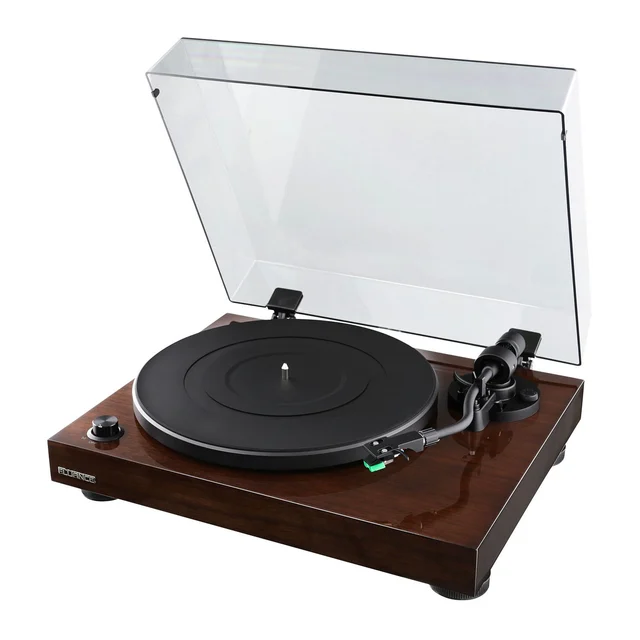
- Fluance RT81 - Buy. A belt-drive deck that spends its budget on the parts that shape sound rather than on gadgets.
- Audio-Technica AT-LP120XUSB - Buy. A direct-drive workhorse with a switchable preamp and USB out for people who want to do more than listen.
- Pro-Ject Debut EVO 2 - Buy. The step-up pick, with a carbon tonearm and an Ortofon-built cartridge aimed at sound quality over features.
- Crosley Cruiser Plus - Skip. A charming suitcase player with no adjustable counterweight or anti-skate, so tracking force cannot be set for record care.
The verdict in 30 seconds
What mattered most
- Drive type
- Cartridge
- Built-in preamp
- Anti-skate & counterweight
- Speeds
- USB / Bluetooth
Vinyl is easy to romanticize and easy to get wrong. The gap between a turntable that protects your records and one that slowly sands them down comes down to a few unglamorous parts: the cartridge, the tonearm, and how carefully the deck controls tracking force. We compared four models sold in 2026 across those fundamentals, including one crowd-pleaser we think most people should walk past.
A belt-drive deck that spends its budget on the parts that shape sound rather than on gadgets.
Best for: Listeners who mainly want to sit and play LPs with clean, quiet sound.
- Isolated belt drive and a heavy MDF plinth keep motor noise out of quiet passages
- Adjustable counterweight and anti-skate, plus a switchable built-in preamp
- Plays only 33 and 45 RPM, with no USB recording
- High-gloss plinth marks easily and the dust cover needs clearance
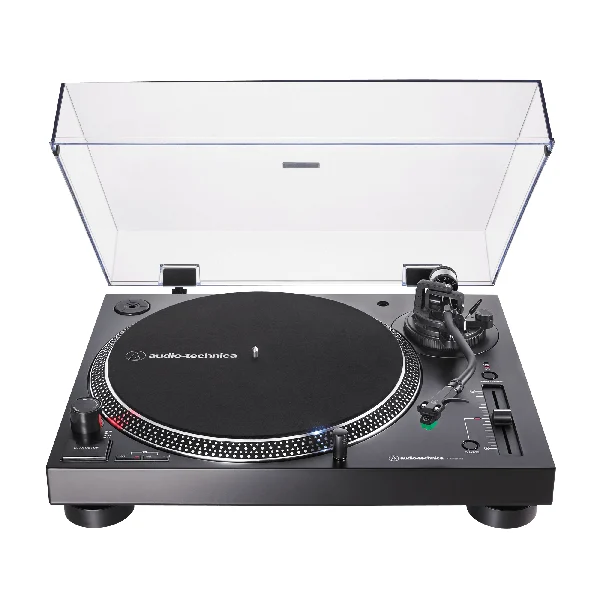
A direct-drive workhorse with a switchable preamp and USB out for people who want to do more than listen.
Best for: People who want to digitize records or feed any input, including 78s.
- Direct-drive DC motor with selectable pitch and a 33/45/78 speed range
- USB output and a switchable phono/line preamp connect to almost any setup
- S-shaped tonearm and club styling invite DJ abuse it is not really built for
- Heavier, busier deck can pass through more motor rumble than a good belt drive
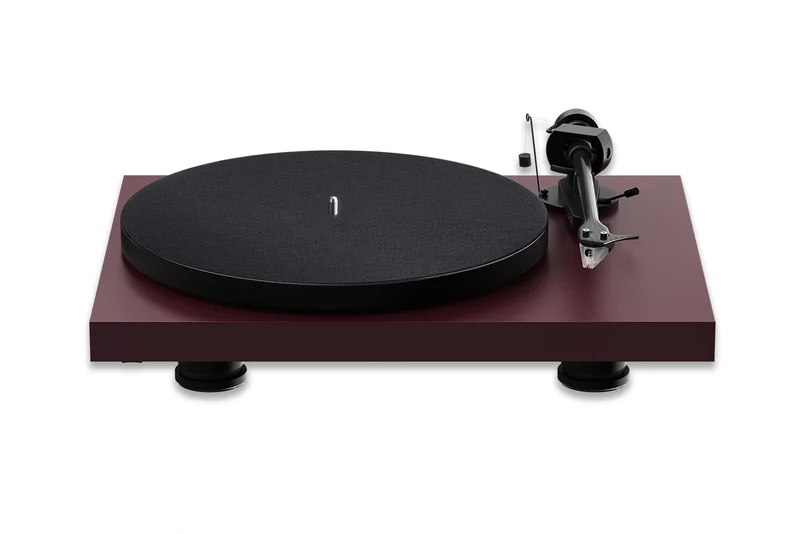
The step-up pick, with a carbon tonearm and an Ortofon-built cartridge aimed at sound quality over features.
Best for: Buyers ready to spend more and add a phono stage for the best sound here.
- One-piece carbon-fibre tonearm and a Pick it MM EVO cartridge co-developed with Ortofon
- Electronic speed change and a damped heavy platter for steadier pitch
- No built-in preamp, so it needs a separate phono stage or a receiver with one
- No USB, and setup rewards patience
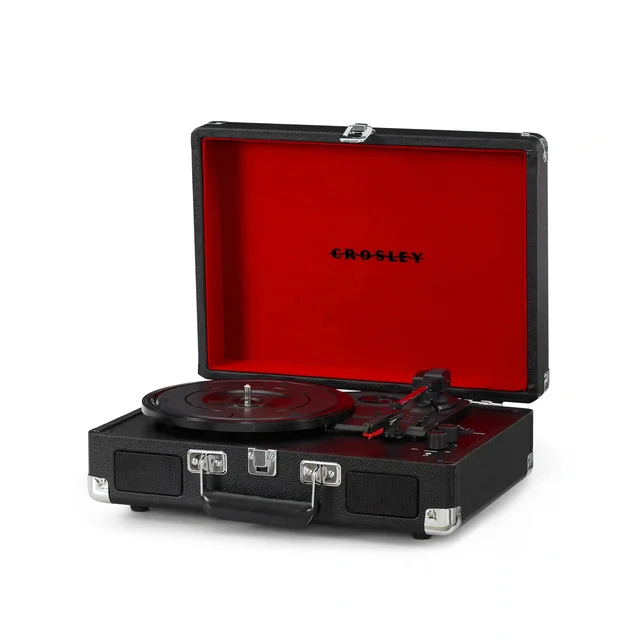
A charming suitcase player with no adjustable counterweight or anti-skate, so tracking force cannot be set for record care.
Best for: Decor, or a gift for someone who will not play records they care about.
- Self-contained with built-in speakers and Bluetooth in and out
- Portable and inexpensive
- Basic cartridge with no adjustable tracking force, which owners link to added groove wear
- No adjustable counterweight or anti-skate is listed, and the speakers share the case with the platter
| Criteria | Fluance RT81 Top pick | Audio-Technica AT-LP120XUSB | Pro-Ject Debut EVO 2 | Crosley Cruiser Plus |
|---|---|---|---|---|
| Verdict | Buy it | Buy it | Buy it | Skip it |
| Best for | Listeners who mainly want to sit and play LPs with clean, quiet sound. | People who want to digitize records or feed any input, including 78s. | Buyers ready to spend more and add a phono stage for the best sound here. | Decor, or a gift for someone who will not play records they care about. |
| Price tier | $$ · mid-range | $$ · mid-range | $$$ · premium | $ · budget |
| Drive type | Belt drive | Direct drive | Belt drive | Belt drive (compact) |
| Cartridge | Audio-Technica MM, elliptical (upgradeable) | AT-VM95E MM, elliptical (upgradeable) | Pick it MM EVO, elliptical (upgradeable) | Basic, replacement needle only |
| Built-in preamp | Yes, switchable | Yes, switchable | No, needs phono stage | Yes, basic |
| Anti-skate & counterweight | Yes, both | Yes, both | Yes, both | None listed |
| Speeds | 33 / 45 | 33 / 45 / 78 | 33 / 45 | 33 / 45 / 78 |
| USB / Bluetooth | None | USB recording | None | Bluetooth in/out |
Which one is right for you?
- Listeners who mainly want to sit and play LPs with clean, quiet sound. Buy it Fluance RT81
- People who want to digitize records or feed any input, including 78s. Buy it Audio-Technica AT-LP120XUSB
- Buyers ready to spend more and add a phono stage for the best sound here. Buy it Pro-Ject Debut EVO 2
- Decor, or a gift for someone who will not play records they care about. Skip it Crosley Cruiser Plus
How we judged the field
Real Buyer Experiences does not run a lab. Instead, we read across independent expert write-ups and long-term owner reports, then look for the points where they agree and, more tellingly, where they disagree. For turntables, four things decide whether a deck is worth owning: how gently it treats your records, how clean it sounds, whether the cartridge and tonearm can be improved later, and how easily it connects to gear you already have. Price matters too, but only in context; a cheap player that wears out records is not a bargain.
We limited the field to models sold new in 2026, so nothing here is a discontinued unit you would have to hunt down secondhand. We also kept one popular player in the group on purpose, as a warning rather than a recommendation. The result is three decks we would happily live with and one we would steer friends away from.
Fluance RT81
Buy itThe RT81 is the deck we point most people toward first. It is a belt-drive design, which keeps the motor physically separated from the platter and out of the quiet moments in a record. The medium-density fibreboard plinth adds mass that helps damp vibration, and the package includes the parts that actually protect vinyl: an adjustable counterweight, anti-skate, and an upgradeable Audio-Technica moving-magnet cartridge with an elliptical stylus.
What owners tend to like most is the switchable built-in preamp. Turn it on and the RT81 drives any line input; turn it off and you can route the signal through a better external phono stage later. What comes up as a negative is the feature list around the edges. There is no 78 RPM speed and no USB output, so archivists and shellac collectors are not the target. The high-gloss finish shows fingerprints, and the tall dust cover needs room. None of that changes the core point: for calm, quiet listening, this is a lot of turntable for the tier.
Audio-Technica AT-LP120XUSB
Buy itThe AT-LP120XUSB is the flexible one. It uses a direct-drive DC motor, so the platter reaches speed at once and holds it steadily, and it covers 33, 45, and 78 RPM. It ships with the well-regarded AT-VM95E cartridge, adds selectable pitch control, and includes a switchable phono/line preamp, so it works with any amplifier or powered speaker.
The feature many buyers single out is the USB output. Paired with free software, it turns records into digital files without extra hardware, which makes it the obvious choice for anyone digitizing a collection. What we like less is what the S-shaped tonearm and club styling invite: this deck often gets bought for scratching and back-cueing it was never really built to survive, and its busier, heavier construction can let a touch more motor rumble through than a well-isolated belt drive. Used as a home listening deck that can also record, though, it is hard to fault.
Pro-Ject Debut EVO 2
Buy itThe Debut EVO 2 is the step-up, aimed squarely at sound rather than gadgets. Pro-Ject describes its 8.6-inch one-piece carbon tonearm as super stiff but lightweight, the heavy 1.7 kg die-cast aluminium platter carries TPE damping, and speed changes electronically at the press of a button. The Pick it MM EVO cartridge, with an elliptical stylus, was developed with Ortofon.
Owners consistently praise how composed it sounds. The catch, and the reason it is not for everyone, is that it has no built-in preamp; you need a receiver with a phono input or a separate phono stage, which adds cost and a box. There is also no USB, and it asks a little patience during setup. If you are ready to spend more and build a small system around it, it repays the effort. If you want to plug in and forget, the two decks above make more sense.
Crosley Cruiser Plus
Skip itThe Cruiser Plus is the one to avoid, and it is common enough that it earns a place here as a caution. As an object it is appealing: a self-contained suitcase with built-in speakers and Bluetooth in and out, light enough to carry between rooms. The problem is what it does to records. Crosley lists no adjustable counterweight or anti-skate, so tracking force cannot be set the way a balanced arm allows. Owners repeatedly describe added groove wear, and some report skipping at volume, although Crosley says it has isolated the internal speakers to reduce vibration.
You cannot meaningfully upgrade any of this; Crosley sells replacement needles, not a better cartridge path. As a display piece or a gift for someone who will only spin records they do not care about, it is harmless enough. For anyone building a collection, the long-term cost to your vinyl is the wrong kind of saving.
Fluance RT81 vs Audio-Technica AT-LP120XUSB: which should you buy?
These two sit close in tier and often on the same shortlist, so the choice comes down to how you listen. The Fluance RT81 is the better pure-listening deck. Its belt drive and heavier plinth keep noise low, and without the DJ-style tonearm there is less temptation to treat it roughly. If you mostly want to sit down, drop the needle, and hear a quiet background, the RT81 is the more focused tool.
The Audio-Technica AT-LP120XUSB earns its place when you need to do more. It records to a computer over USB, plays 78s, and its direct-drive platter is handy if you ever cue by hand. It is also the safer pick if your audio system is uncertain, because the built-in preamp and standard outputs connect to almost anything. You give up a little quietness compared with a good belt drive, and you inherit a deck that looks like a club fixture. For most home listeners we lean toward the RT81; for flexibility and archiving, the Audio-Technica wins.
What to look for
Start with record safety, because it is the one factor you cannot fix later. Any deck you consider should have an adjustable counterweight and anti-skate so tracking force can be set correctly; that single feature separates the three decks we recommend from the suitcase player we do not.
Next, match connectivity to your system. If you are plugging into powered speakers or a receiver without a phono input, a switchable built-in preamp saves money and clutter, which is why the Fluance and Audio-Technica are easy recommendations. If you own or plan to buy a phono stage, the preamp-free Pro-Ject opens up better sound.
Then weigh the extras that actually apply to you. USB output matters only if you plan to digitize; 78 RPM matters only if you own shellac. Finally, remember the upgrade path. A standard-mount cartridge means you can improve the sound later with a better stylus, so a modest deck can grow with you rather than capping out.
Our final take
For most people, the Fluance RT81 is the turntable to buy: it protects records, sounds clean, and connects to anything, without asking for extra gear. The Audio-Technica AT-LP120XUSB is the versatile runner-up, and the one to choose if you want to record vinyl or play 78s. The Pro-Ject Debut EVO 2 is the reward for spending more and adding a phono stage. And whatever you do, keep the Crosley Cruiser Plus as decor, not as the player for records you value.
Questions, answered
Do cheap suitcase turntables really damage records?
Yes, over time. Players like the Crosley Cruiser Plus use a basic cartridge with no adjustable counterweight or anti-skate, so tracking force cannot be set to a cartridge's specification. Owners report that repeated plays add wear that a balanced deck with an adjustable counterweight would largely avoid.
Do I need a separate preamp?
Only sometimes. The Fluance RT81 and Audio-Technica AT-LP120XUSB have switchable built-in preamps, so they connect to any input. The Pro-Ject Debut EVO 2 has none, meaning you need a receiver with a phono stage or a standalone phono preamp between the turntable and amplifier.
Belt drive or direct drive - which is better?
Neither wins outright. Belt drive, as on the Fluance and Pro-Ject, isolates motor vibration for quieter listening. Direct drive, as on the Audio-Technica, reaches speed instantly and holds it under a hand, which suits cueing. For pure home listening, belt drive has a small edge.
Can I upgrade the cartridge later?
On the good decks, yes. The Fluance, Audio-Technica, and Pro-Ject all use standard-mount cartridges you can swap for better styli as budget allows. Suitcase players like the Crosley take only a replacement needle of the same type, so there is no meaningful upgrade path.
Which turntable is best for digitizing vinyl?
The Audio-Technica AT-LP120XUSB. Its USB output sends audio straight to a computer, and free recording software handles the capture. It also plays 78 RPM records, which the Fluance and Pro-Ject here do not, making it the most flexible choice for archiving an older or mixed collection.
Deciding between the top two? See our head-to-head: Fluance RT81 vs Audio-Technica AT-LP120XUSB.
More Audio & Headphones reviews
 The Best Ukuleles: 4 Compared (and One to Skip)
  The Best USB Microphones for Podcasting and Streaming
  The Best Vinyl Record Storage: 4 Compared (and One to Skip)
  The Best Wired In-Ear Monitors: 4 Compared (and One to Skip)
  The Best Wireless Microphones: 4 Compared (and One to Skip)
  The Best XLR Microphone Cables: 4 Compared (and One to Skip)