

Tools & DIY
The Best Torque Screwdrivers: 4 Compared (and One to Skip)
Four torque screwdrivers compared on the mechanism that actually stops the fastener, whether the stated accuracy is a percentage of your setting or a fixed number of inch-pounds, and what each maker puts in writing about calibration.
The short version
Buy the CDI Torque Products 401SM first. Its cam-over clutch disengages at the set torque so it cannot keep loading the fastener, it states accuracy as plus or minus 6 percent of the indicated value rather than a fixed number, and it ships individually serialized with a NIST traceable certificate. The Wiha 28418 SoftFinish TorqueVario-S is the versatile second pick, covering 0.8 to 5.0 Nm with a serialized certificate, plus or minus 6 percent, and a maker claim of 5,000 cycles, though it is a click type that signals rather than stops. Fix It Sticks Small Torque Limiters suit someone with one fixed number to hit, at plus or minus 6 percent and a claimed 20,000 cycles, but each unit is one value and you supply the driver. Skip the Wheeler F.A.T. Wrench: its own instruction sheet states plus or minus 2 in-lb up to 40 in-lb, which is roughly a tenth of the value at the 18 to 20 in-lb scope base setting Wheeler itself publishes. Read the accuracy line before the range line, because a percentage of full scale and a fixed inch-pound figure are not the same promise. And check that the accuracy claim covers the bottom of the scale, because several do not. Best for: anyone tightening optics, electronics, electrical terminals or carbon parts where the spec is printed in inch-pounds or newton-metres and guessing is not an option.
Our picks at a glance
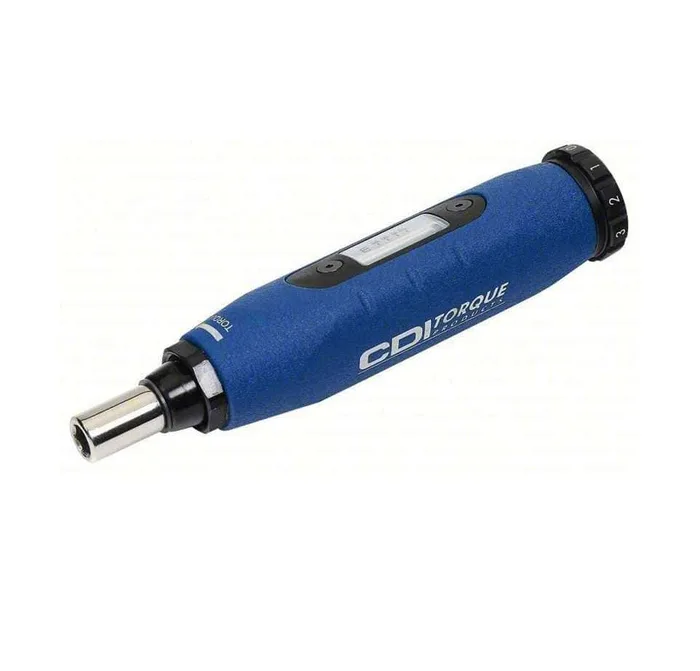
- CDI Torque Products 401SM Micro-Adjustable Torque Screwdriver - Buy. A cam-over clutch that disengages at the set torque, with accuracy stated as a percentage of the indicated value and a serialized certificate in the box.
- Wiha 28418 SoftFinish TorqueVario-S 0.8 to 5.0 Nm - Buy. A serialized, certificated adjustable driver covering 0.8 to 5.0 Nm with a 1/4 inch bit adapter, for people whose torque specs arrive in newton-metres.
- Fix It Sticks Small Torque Limiters - It depends. A preset slip limiter with one fixed value per unit, which is either exactly what you need or completely the wrong shape of tool.
- Wheeler F.A.T. Wrench - Skip. Its own instruction sheet states accuracy as a fixed plus or minus 2 in-lb below 40 in-lb, which is a much wider band than it sounds at the settings this tool is sold for.
The verdict in 30 seconds
What mattered most
- Limiting mechanism
- Torque range and steps
- Stated accuracy
- Range the accuracy claim covers
- Standards the maker cites
- Calibration certificate
A torque screwdriver works in a range where a percentage error is a very small absolute number, and that changes which specs matter. At 20 in-lb, six percent is 1.2 in-lb; on a wrench set to 100 ft-lb, the same six percent is 6 ft-lb. That sounds like the screwdriver has the easier job, until you meet a driver whose maker states accuracy as a fixed number of inch-pounds instead of a percentage of the setting, at which point the arithmetic runs the other way and the tool is loosest exactly where you need it most. We also cared about the mechanism, because a cam-over or slip driver physically cannot pass more torque once it releases, while a click driver only tells you to stop. If you want the general torque-tool ground, including ISO 6789 calibration certificates and drive sizes, that is covered in [our torque wrench comparison](/best-torque-wrenches) and [torque wrenches, explained](/explained/torque-wrenches); this piece stays on what is different about screwdrivers.
A cam-over clutch that disengages at the set torque, with accuracy stated as a percentage of the indicated value and a serialized certificate in the box.
Best for: Anyone who wants a torque screwdriver that is a measuring instrument first, with a document tying its accuracy to a serial number.
- Cam-over torque limiting clutch: once it releases, continuing to turn does not pass more torque to the screw.
- Accuracy stated as plus or minus 6 percent of the indicated value, clockwise, which scales with your setting instead of being a fixed number.
- Individually serialized and supplied with a matching certificate of calibration traceable to NIST.
- Universal 1/4 inch hex bit holder with a rare earth magnet, so it takes ordinary insert bits rather than a proprietary blade.
- Automatic lock in the counterclockwise direction, so it doubles as a normal driver for removal without loading the mechanism.
- The accuracy claim is scoped to 20 to 100 percent of full scale, so nothing below 8 in-lb on this model is covered by it.
- Inch-pound scale only on the SM version; if your specs are metric you want the cN.m variant instead.
- CDI's own literature cites ASME B107.14M and ISO 6789, and ASME has since folded B107.14 into B107.300, so the cited edition is behind.
- It is a full sized handle, awkward inside a laptop or a small enclosure.
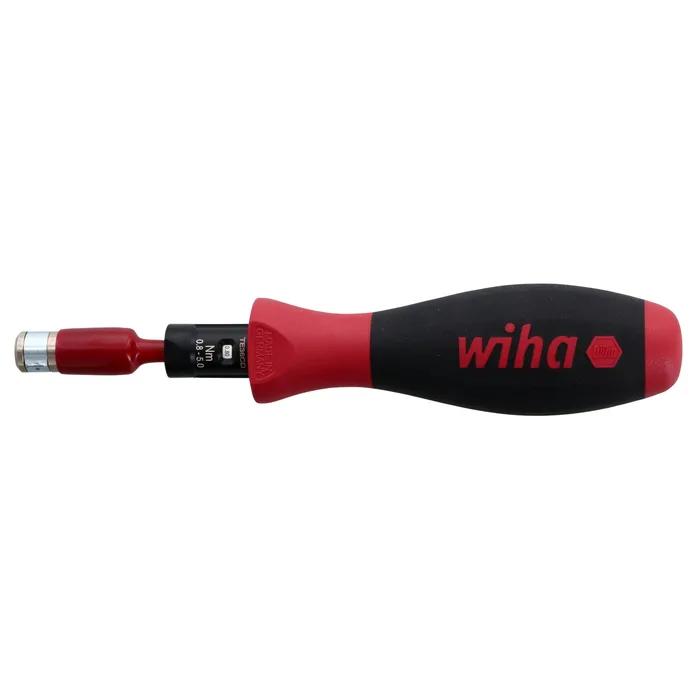
A serialized, certificated adjustable driver covering 0.8 to 5.0 Nm with a 1/4 inch bit adapter, for people whose torque specs arrive in newton-metres.
Best for: Electronics, electrical and bicycle work where specs are quoted in newton-metres and you want a certificate with a serial number on it.
- Plus or minus 6 percent accuracy tolerance, with a certificate of calibration and a laser calibrated scale marked and serialized for traceability.
- Wiha states the tool meets ASME B107.14m, EN ISO 6789 and BS EN 26789, which is more standards detail than most makers publish.
- Accuracy guaranteed to 5,000 cycles, which matches the default recalibration interval in ISO 6789-2:2017.
- 0.8 to 5.0 Nm is roughly 7 to 44 in-lb, a band that covers bicycle stems, optics rings and most small electrical terminals.
- Ships with a 1/4 inch bit adapter and also takes Wiha Torque Control blades, so it works with ordinary insert bits or a dedicated blade.
- It is a click type: it makes an audible and perceptible click and resets, but nothing stops you applying more torque after the click.
- The setting is changed with a separate adjustment tool rather than a knob, which suits a bench and not a jacket pocket.
- The scale is newton-metres only, so an inch-pound spec has to be converted before you set it.
- The enclosed mechanism that makes it durable also means field adjustment and inspection are limited to what the window scale shows.
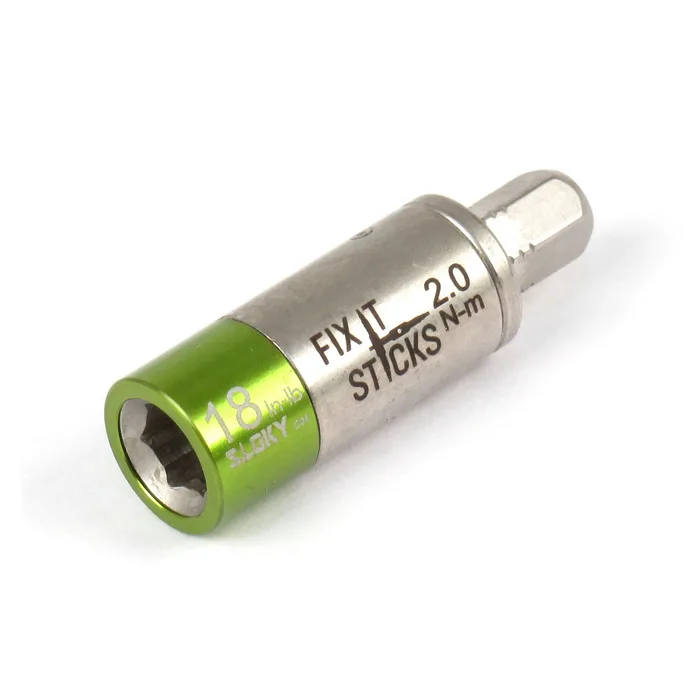
A preset slip limiter with one fixed value per unit, which is either exactly what you need or completely the wrong shape of tool.
Best for: Someone with one or two fixed numbers to hit, such as scope ring screws or a carbon seatpost clamp, who wants the cheapest way to hit them correctly.
- Plus or minus 6 percent accuracy with a claimed 20,000 cycles of accuracy retention on the small limiters.
- Nothing to set and nothing to misread, which removes the most common way people get torque wrong.
- Slips with an audible click and stops tightening if you keep turning, so it limits rather than merely signals.
- Accepts any standard 1/4 inch bit and fits any standard 1/4 inch driver, so it rides along with tools you already own.
- Sold in selected values from 4 to 55 in-lb plus 1 to 6 Nm variants, so you can often match a published spec closely.
- One torque value per unit, so covering a range of fasteners means buying several separate limiters.
- No scale and no display, so you cannot verify what value you are holding beyond the number engraved on it.
- You supply the handle, and a limiter is not usable on its own.
- The larger 60 to 140 in-lb limiters are rated for 5,000 cycles rather than 20,000, and the 140 in-lb unit is plus or minus 10 percent rather than 6.
- Fix It Sticks publishes no conformance to ISO 6789 or ASME B107.300 and no serialized certificate.
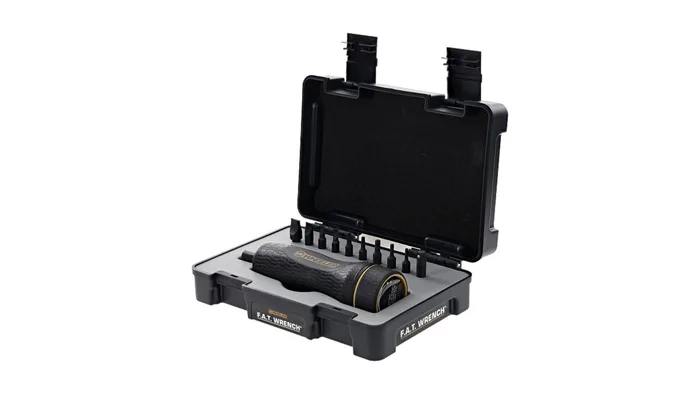
Its own instruction sheet states accuracy as a fixed plus or minus 2 in-lb below 40 in-lb, which is a much wider band than it sounds at the settings this tool is sold for.
Best for: Almost nobody. If the whole reason you are buying is a printed optics torque spec, buy a tool whose accuracy claim is a percentage of that spec.
- A complete kit: driver, nine bits, a square drive adapter and a case, with a standard 1/4 inch hex drive tip.
- Simple pull and turn adjustment with a positive lock, so the setting will not drift while you work.
- Wheeler publishes a torque table for common optics screw sizes in the same instruction sheet, which is more application guidance than most makers give.
- Widely stocked and easy to buy, and it is genuinely better than tightening scope screws by feel.
- Wheeler's usage and care sheet, instruction number 1011823, states the tool is designed for plus or minus 2 in-lb accuracy up to 40 in-lb and plus or minus 5 percent above it.
- A fixed 2 in-lb band is about a tenth of the value at the 18 to 20 in-lb Wheeler itself recommends for scope base screws, and a fifth of the value at the 10 in-lb bottom of its own scale.
- The scale steps in 5 in-lb increments, so several published optics specs cannot be set exactly and you round to the nearest mark.
- No published conformance to ISO 6789 or ASME B107.300, and no serialized certificate of calibration for your individual tool.
- It is a click and clutch design by Wheeler's own description, so it signals the setting rather than refusing to exceed it.
| Criteria | 401SM Micro-Adjustable Torque Screwdriver Top pick | 28418 SoftFinish TorqueVario-S 0.8 to 5.0 Nm | Small Torque Limiters | F.A.T. Wrench |
|---|---|---|---|---|
| Verdict | Buy it | Buy it | It depends | Skip it |
| Best for | Anyone who wants a torque screwdriver that is a measuring instrument first, with a document tying its accuracy to a serial number. | Electronics, electrical and bicycle work where specs are quoted in newton-metres and you want a certificate with a serial number on it. | Someone with one or two fixed numbers to hit, such as scope ring screws or a carbon seatpost clamp, who wants the cheapest way to hit them correctly. | Almost nobody. If the whole reason you are buying is a printed optics torque spec, buy a tool whose accuracy claim is a percentage of that spec. |
| Price tier | $$$ · premium | $$ · mid-range | $ · budget | $$ · mid-range |
| Limiting mechanism | Cam-over clutch, disengages at the setting | Click and reset, signals the setting | Preset slip clutch, ratchets at the value | Click and clutch, signals the setting |
| Torque range and steps | 5 to 40 in-lb, 0.5 in-lb increments | 0.8 to 5.0 Nm, about 7 to 44 in-lb | 4 to 55 in-lb, one fixed value per unit | 10 to 65 in-lb, 5 in-lb increments |
| Stated accuracy | Plus or minus 6 percent of indicated value, clockwise | Plus or minus 6 percent | Plus or minus 6 percent | Plus or minus 2 in-lb to 40 in-lb, then 5 percent |
| Range the accuracy claim covers | 20 to 100 percent of full scale | Not separately stated | The single engraved value | Whole scale, but as a fixed in-lb band below 40 |
| Standards the maker cites | ASME B107.14M and ISO 6789 | ASME B107.14m, EN ISO 6789, BS EN 26789 | None published | None published |
| Calibration certificate | Serialized, traceable to NIST | Serialized, certificate included | Not published | Not published |
| Accuracy life claim | Not published | 5,000 cycles | 20,000 cycles on small limiters | Not published |
| Bit interface | 1/4 inch hex holder, rare earth magnet | 1/4 inch bit adapter plus Wiha blade system | Takes 1/4 inch bits, fits 1/4 inch drivers | 1/4 inch hex drive tip, magnetized |
| Price tier | $$$ · premium | $$ · mid-range | $ · budget | $$ · mid-range |
Which one is right for you?
- Anyone who wants a torque screwdriver that is a measuring instrument first, with a document tying its accuracy to a serial number. Buy it CDI Torque Products 401SM Micro-Adjustable Torque Screwdriver
- Electronics, electrical and bicycle work where specs are quoted in newton-metres and you want a certificate with a serial number on it. Buy it Wiha 28418 SoftFinish TorqueVario-S 0.8 to 5.0 Nm
- Someone with one or two fixed numbers to hit, such as scope ring screws or a carbon seatpost clamp, who wants the cheapest way to hit them correctly. It depends Fix It Sticks Small Torque Limiters
- Almost nobody. If the whole reason you are buying is a printed optics torque spec, buy a tool whose accuracy claim is a percentage of that spec. Skip it Wheeler F.A.T. Wrench
How we judged the field
Five things decided this. First, how the accuracy is expressed, because a percentage of the indicated value scales with your setting while a fixed number of inch-pounds does not, and the difference is the whole story at the bottom of a small scale. Second, what range that accuracy claim actually covers, since CDI scopes its plus or minus 6 percent to the top 80 percent of full scale and says so, which is more honest than a bare percentage across an unstated span. Third, the limiting mechanism, because a cam-over or slip clutch disengages when it releases while a click type only signals. Fourth, whether the maker ties a document to your individual tool: a serialized certificate of calibration is a checkable promise, and inspection authorities on electrical jobs ask to see exactly that. Fifth, the bit interface, since a driver that takes ordinary 1/4 inch insert bits fits a spec sheet that names a Torx or hex size, and one that needs proprietary blades does not.
The field splits three ways and we took one from each, plus the one most people actually buy. Adjustable graduated drivers with a scale give you a range and a document, and CDI and Wiha are the clearest examples with published numbers. Preset limiters have no scale at all and hit one value, which is either exactly right or useless, so Fix It Sticks earns a conditional rather than a straight recommendation. Indicating drivers with a dial or display measure rather than limit, which is a different job and mostly a bench job. The Wheeler F.A.T. Wrench is the volume seller in this category and it is the one we argue against, entirely from its own published specification. General torque-tool background, including what ISO 6789 calibration certificates contain and how drive sizes map to jobs, sits in our torque wrench comparison rather than being repeated here.
CDI Torque Products 401SM Micro-Adjustable Torque Screwdriver
Buy itThe 401SM is the closest thing here to a laboratory instrument you can put in a tool roll. CDI states accuracy as plus or minus 6 percent of the indicated value, clockwise, from 20 to 100 percent of full scale, which is a specific and checkable claim rather than a bare number. It arrives individually serialized with a matching certificate of calibration traceable to NIST, and CDI’s own repair manual spells out the verification procedure, with readings taken at 20, 60 and 100 percent of scale. The mechanism is a cam-over torque limiting clutch: at the setting it disengages, and turning further does nothing to the screw. The universal 1/4 inch hex bit holder with a rare earth magnet takes ordinary insert bits, and the head locks automatically counterclockwise so you can back a screw out without loading the clutch. Below 8 in-lb you are outside the range the accuracy claim covers, the SM scale is inch-pound only, and it is too big for the inside of a laptop. Buy it if you want the number in writing and a tool that refuses rather than warns.
Wiha 28418 SoftFinish TorqueVario-S 0.8 to 5.0 Nm
Buy itThe Wiha 28418 covers 0.8 to 5.0 Nm, which is roughly 7 to 44 in-lb, and it is the pick if your torque specs arrive in metric. Wiha states plus or minus 6 percent, marks each tool with a serial number, includes a certificate of calibration, and lists conformance to ASME B107.14m, EN ISO 6789 and BS EN 26789, which is unusually specific for a consumer-reachable tool. Accuracy is guaranteed to 5,000 cycles, the same figure ISO 6789-2:2017 uses as a default recalibration interval, so the claim and the standard line up. It ships with a 1/4 inch bit adapter and also accepts Wiha Torque Control blades. The trade-off is the mechanism and the workflow. This is a click type: it gives an audible and perceptible click and resets for the next cycle, but the drive stays engaged, so a heavy hand can carry on past the setting. Changing the value needs the supplied adjustment tool rather than a thumb knob, which is fine at a bench and a nuisance in a wheel well. For electrical, electronics and bicycle work in newton-metres, it is the sensible buy.
Fix It Sticks Small Torque Limiters
It dependsFix It Sticks limiters solve the problem by deleting the adjustment. Each unit is a single engraved value, sold in selected values from 4 to 55 in-lb plus 1 to 6 Nm variants, rated plus or minus 6 percent, and claimed to hold that accuracy for 20,000 cycles on the small units. It slips with an audible click and stops tightening if you keep turning, so it limits rather than merely signalling, and it accepts any standard 1/4 inch bit while fitting any standard 1/4 inch driver. For a person whose problem is one printed number, this is close to unimprovable: nothing to set, nothing to misread, and it rides in a range bag or a saddle pack. It becomes a poor answer the moment you have several different specs, because covering them means buying several limiters and keeping track of which is which. There is no scale, no display, no published ISO 6789 or ASME conformance, and no serialized certificate, and the larger 60 to 140 in-lb units drop to 5,000 cycles with the 140 in-lb model at plus or minus 10 percent. Right tool, narrow job.
Wheeler F.A.T. Wrench
Skip itThe F.A.T. Wrench is the tool most people buy for optics work, and its own paperwork is the reason to look elsewhere. Wheeler’s usage and care sheet, instruction number 1011823, states that the tool is designed for plus or minus 2 in-lb accuracy up to 40 in-lb and plus or minus 5 percent above it. That is a fixed band, not a percentage of your setting, so it does not shrink as the setting does. Run it against Wheeler’s own torque table in the same document: the 18 to 20 in-lb they publish for 6-32 scope base screws is served with a tolerance of about a tenth of the value, and at the 10 in-lb bottom of the scale the band is a fifth. The scale also steps in 5 in-lb increments, so you round to the nearest mark rather than setting the printed spec. Wheeler describes the tool as click and clutch style, and publishes no ISO 6789 or ASME B107.300 conformance and no serialized certificate. It is not badly made. It is specified in the wrong currency for the job it is sold to do.
Sources
Specs in this review come from these pages.
- ISO 6789-1:2017, Hand torque tools, Part 1: design and quality conformance testing (iso.org)
- ISO 6789-2:2017, Hand torque tools, Part 2: calibration and measurement uncertainty (iso.org)
- ASME B107.300, Hand Torque Tools and Torque Testers (asme.org)
- NEMA Technical Bulletin 120, Using Torque Tools for Terminating Building Wire (nema.org)
- CDI Torque Screwdriver Repair and Calibration Manual (cditorque.com)
- Wiha 28418 SoftFinish TorqueVario-S product page (wihatools.com)
CDI Torque Products 401SM Micro-Adjustable Torque Screwdriver vs Wiha 28418 SoftFinish TorqueVario-S 0.8 to 5.0 Nm: which should you buy?
These two are not really rivals so much as two answers to what units your work is written in. The CDI 401SM is inch-pound, 5 to 40 in-lb in half pound steps, and it is the one to buy if you work from American specs: optics manufacturers, firearm accessory makers and a lot of electrical equipment print inch-pounds. The Wiha 28418 is newton-metres, 0.8 to 5.0 Nm, which is what bicycle components, European electrical gear and most electronics assembly documentation use. Both state plus or minus 6 percent. Both are serialized and ship with a certificate. Converting between them is easy on paper and a genuine source of error at the bench, so match the tool to the paperwork rather than doing arithmetic every time.
Where they genuinely differ is what happens at the setting. The CDI cams over: the clutch disengages and the fastener stops receiving torque no matter what you do next. The Wiha clicks and resets, which is a clear signal but leaves the drive connected. If you are the only user and you have a light hand, that distinction rarely bites. If the tool gets shared, or if you are working on threads in aluminium or plastic where the failure is permanent, the cam-over is worth the extra outlay. The other tiebreaker is reach: the Wiha accepts a blade as well as a bit, which can reach places a stubby bit holder cannot.
What to look for
- Accuracy as a percentage, not a fixed figure: plus or minus 6 percent of the setting shrinks as you turn the setting down, while plus or minus 2 in-lb stays 2 in-lb and becomes a fifth of the value at 10 in-lb.
- The span the accuracy claim covers: CDI states 20 to 100 percent of full scale outright, which tells you the bottom of the dial is not covered; a maker who states nothing has told you nothing.
- The mechanism, in the maker’s own words: cam-over and slip designs disengage and stop passing torque, click and break designs signal and stay engaged, and indicating drivers only measure.
- A serialized certificate of calibration: a document naming your tool’s serial number is what an inspector asks for on an electrical job, and it is the difference between a claim and a record.
- The units printed on the scale: buy the tool in the units your specs are written in, because converting inch-pounds to newton-metres at the bench is where expensive mistakes happen.
- A 1/4 inch hex bit interface: insert bits are cheap, replaceable and available in every drive type, while a proprietary blade system ties you to one catalogue.
- A published cycle or interval claim: ISO 6789-2:2017 defaults to 12 months or 5,000 cycles, and a maker who names a number is telling you when to stop trusting the tool.
Our final take
The spec that separates a real torque screwdriver from a gadget is how the maker writes the accuracy line. A percentage of the indicated value scales with the job; a fixed number of inch-pounds quietly gets worse as the fastener gets smaller, which is the direction this whole category runs in. The CDI 401SM says 6 percent of the indicated value, names the span that covers, and adds a cam-over clutch that refuses rather than warns, which is why it wins. The Wiha 28418 says the same 6 percent with a serialized certificate and a metric scale, and it is the better buy if your specs are in newton-metres. Fix It Sticks limiters are the cheapest correct answer to a single printed number. Skip the Wheeler, and match the tool’s units to your paperwork.
Questions, answered
I already own a torque wrench. Do I need a torque screwdriver too?
Very likely, if you work on anything small. Many half inch drive wrenches do not read below about 40 ft-lb, and a three eighths wrench often stops around 10 ft-lb, which is 120 in-lb. Optics rings, circuit board standoffs, breaker terminals and carbon bicycle parts live between about 4 and 60 in-lb, an order of magnitude below that. Shape matters as much as range: a breaker lug screw sits at the bottom of a narrow slot in an enclosure, and there is no way to get a ratchet head onto it. We cover drive sizes and range selection for wrenches in [our torque wrench comparison](/best-torque-wrenches).
Does a cam-over driver actually protect the fastener better than a click driver?
Yes, and the difference is real. A cam-over or slip clutch disengages the handle from the output when the setting is reached, so continuing to turn just ratchets and passes no further torque. A click or break type gives you an audible and felt signal and then resets, but the drive stays connected, so if you keep pushing you keep tightening. If you are working on soft or expensive parts, or handing the tool to someone who has not used one, the cam-over is the safer design.
How often does a torque screwdriver need recalibrating?
ISO 6789-2:2017 gives a default of 12 months or 5,000 cycles, whichever comes first, for users who do not run their own control procedure. Cycles matter more than the calendar for a tool in daily use, and the calendar matters more for one that lives in a drawer. Makers publish their own numbers against that frame: Wiha guarantees accuracy on the TorqueVario-S to 5,000 cycles, while Fix It Sticks claims 20,000 cycles on its small limiters and 5,000 on the large ones. Recalibrate sooner if you drop it, if it got used to loosen something, or if the release starts feeling vague.
Should I wind a torque screwdriver back to its lowest setting before storing it?
Only some of them, and you should check rather than assume. This advice is carried over from click wrenches and it is not universal for screwdrivers. Wheeler states it plainly for the F.A.T. Wrench, warning that leaving it at a high setting for long periods may damage the internal mechanism and instructing you to return it to the lowest setting after use. Wiha and CDI do not publish the same instruction for their adjustable screwdrivers in the material we could find, and it does not apply at all to preset limiters or to indicating drivers, which have no spring to leave preloaded. Read the sheet that came with your tool; if it says to wind down, wind down, and never force it below the lowest marked value.
Inch-pounds, newton-metres, centinewton-metres: how do I avoid a costly conversion mistake?
Buy the tool in the units your specs are written in, because that removes the error entirely. One newton-metre is about 8.85 inch-pounds, and one centinewton-metre is a hundredth of a newton-metre, so a 260 cN.m spec is 2.6 Nm or about 23 in-lb. The dangerous confusion is inch-pounds against foot-pounds: a 20 in-lb screw torqued to 20 ft-lb gets twelve times its rated load, which will strip or snap it. CDI sells the same tool with either an inch-pound or a metric scale, and Wiha's is metric only. Check the scale unit printed on the barrel before you set anything.
Deciding between the top two? See our head-to-head: CDI Torque Products 401SM Micro-Adjustable Torque Screwdriver vs Wiha 28418 SoftFinish TorqueVario-S 0.8 to 5.0 Nm.
More Tools & DIY reviews
 The Best Utility Knives: 4 Compared (and One to Skip)
  The Best Welding Gloves: 4 Compared (and One to Skip)
  The Best Auto-Darkening Welding Helmets: 4 Compared (and One to Skip)
  The Best Welding Jackets: 4 Compared (and One to Skip)
  The Best Wet/Dry Shop Vacuums for Garages: 4 Compared (and One to Skip)
  The Best Wire Strippers: 4 Compared (and One to Skip)