

Baby & Family
The Best Telescopes: 4 Compared (and One to Skip)
We compared Celestron's StarSense Explorer 114mm, Sky-Watcher's Heritage 130, Celestron's Travel Scope 50 and the PowerSeeker 70 on aperture, mount, ease of use and beginner reality.
The short version
The Celestron StarSense Explorer 114 is the telescope gift to buy: a 114mm tabletop Dob whose app finds objects for you at $380. The Sky-Watcher Heritage 130 is the purist pick - more aperture, no app, $269. The Travel Scope 50 is the cheap portable it-depends at $80. Skip the PowerSeeker 70 - the wobbly-magnification trap that ends in a closet.
Our picks at a glance
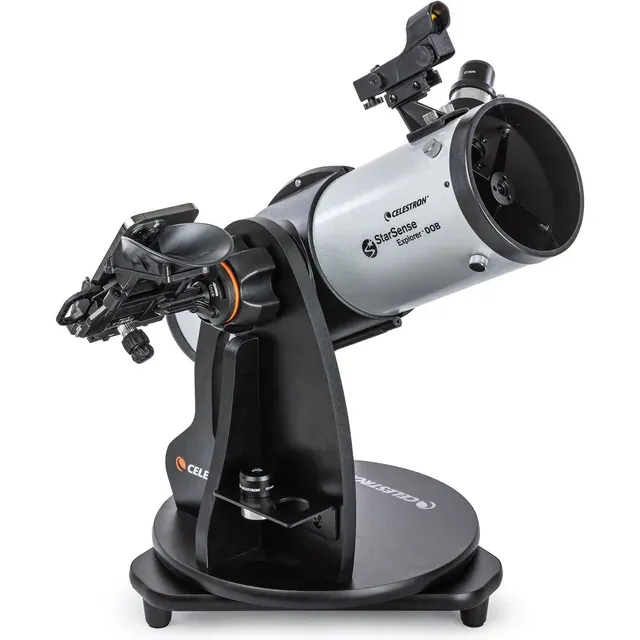
- Celestron StarSense Explorer 114mm Tabletop Dobsonian - Buy. A 114mm tabletop Dobsonian that uses your phone to actually find objects - the beginner scope that works, for $380.
- Sky-Watcher Heritage 130 Tabletop Dobsonian - Buy. A 130mm collapsible-tabletop Dobsonian - more aperture than the Celestron for $269, no app needed.
- Celestron Travel Scope 50 - It depends. A 50mm grab-and-go refractor with backpack - the cheap, genuinely portable kid scope for $80.
- Celestron PowerSeeker 70AZ - Skip. The department-store telescope every astronomer warns about - a 70mm refractor on a wobbly mount that frustrates beginners.
The verdict in 30 seconds
What mattered most
- Aperture
- Mount
- Finding objects
- Portability
- Best targets
- Price class
A telescope is the gift that gets used on one clear night a year - unless it's the right one. The difference between a scope that shows Saturn's rings and one that shows wobble is aperture and a stable mount, not the magnification printed on the box. We compared two tabletop Dobsonians, a grab-and-go travel scope and the department-store trap every astronomer warns about.
A 114mm tabletop Dobsonian that uses your phone to actually find objects - the beginner scope that works, for $380.
Best for: The first real telescope gift - a scope that finds things for you so the first night ends in wonder, not frustration.
- StarSense app navigation: dock your phone and the app reads the sky, then arrows guide you to targets - the find problem solved for beginners.
- 114mm parabolic mirror in a compact tabletop Dob - real aperture that shows Saturn's rings and Jupiter's moons.
- Tabletop Dobsonian mount - rock-steady, no wobbly tripod, intuitive point-and-push aiming.
- The beginner-friendly design it's marketed as - unlike most "easy" scopes, the app-guided finding actually works.
- $380 is a real gift price - the serious pick, not a stocking stuffer.
- Needs a table or level surface - it's a tabletop scope, not a stand-alone one.
- Phone-dependent - the StarSense magic needs your smartphone docked, so it's less ideal for a phone-free kid.
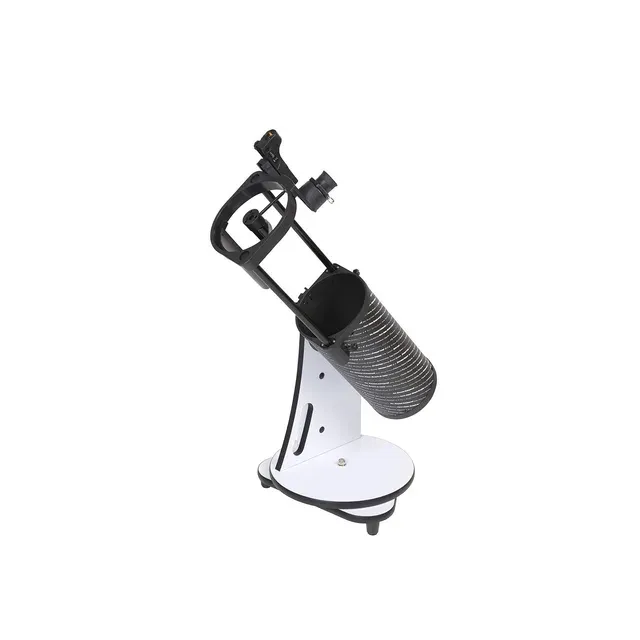
A 130mm collapsible-tabletop Dobsonian - more aperture than the Celestron for $269, no app needed.
Best for: A beginner who wants max aperture per dollar and will learn to star-hop - the purist's tabletop scope.
- 130mm parabolic mirror - more light-gathering than the 114mm Celestron for $110 less.
- Collapsible tube design - the whole scope packs small for a 130mm, genuinely portable.
- Tabletop Dobsonian mount - stable, simple, dead-intuitive aiming.
- $269 - the best aperture-per-dollar in the lineup.
- No finder help - you aim by the dot sight and star-hopping; beginners find less on their own than with the StarSense app.
- Tabletop mount needs a surface - same caveat as the Celestron.
- Collapsible tube needs collimation checks - a bit more user-maintenance.
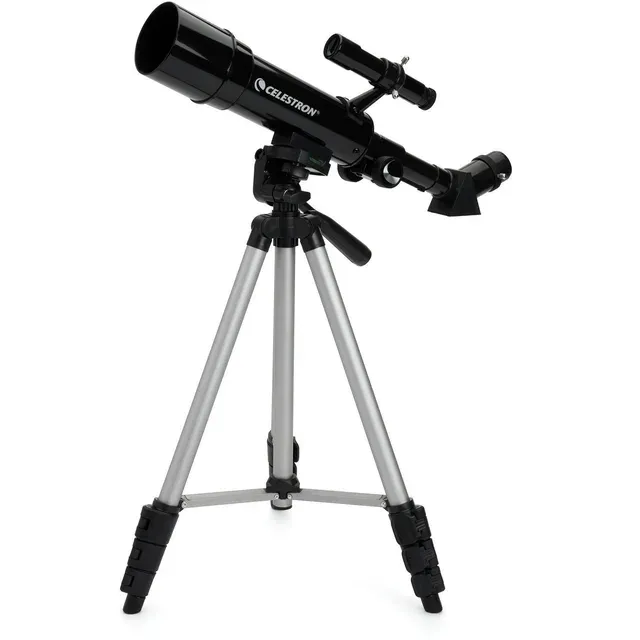
A 50mm grab-and-go refractor with backpack - the cheap, genuinely portable kid scope for $80.
Best for: A kid's first scope or a travel scope - moon, planets and daytime spotting in a backpack, not deep-sky chasing.
- $80 with backpack included - the genuinely portable scope for a kid or a camping trip.
- 50mm refractor shows the moon's craters, Jupiter's moons and bright clusters - real first views.
- Doubles as a daytime spotting scope with erect-image diagonal - more usable than a night-only scope.
- Sets up in minutes - the low-friction first scope.
- 50mm is small - dim deep-sky views; this is a moon-and-planets scope, not a galaxy machine.
- Lightweight tripod wobbles - the price of portability.
- Included eyepieces are basic - the starter glass a serious user replaces.
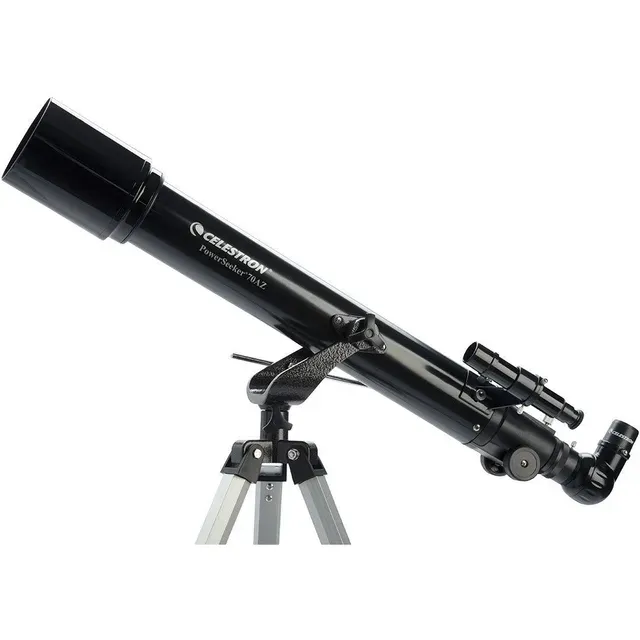
The department-store telescope every astronomer warns about - a 70mm refractor on a wobbly mount that frustrates beginners.
Best for: Nobody, honestly - the same $125 buys a better scope or goes toward the StarSense or Heritage. The gift telescope trap.
- $125 and Celestron-branded - a known name at a gift-friendly price.
- 70mm refractor does show the moon and Jupiter's moons when it holds still.
- The mount is the problem - a light, shaky alt-az that wobbles at the magnification the box promises.
- High-magnification claims the optics can't deliver - the classic "675x!" trap that sets beginners up to fail.
- 5x24 finderscope is nearly useless - the part beginners rely on most is the weakest.
- The astronomy community's canonical "hobby killer" - the scope bought as a first gift that ends in a closet.
| Criteria | Celestron StarSense Explorer 114mm Tabletop Dobsonian Top pick | Sky-Watcher Heritage 130 Tabletop Dobsonian | Celestron Travel Scope 50 | Celestron PowerSeeker 70AZ |
|---|---|---|---|---|
| Verdict | Buy it | Buy it | It depends | Skip it |
| Best for | The first real telescope gift - a scope that finds things for you so the first night ends in wonder, not frustration. | A beginner who wants max aperture per dollar and will learn to star-hop - the purist's tabletop scope. | A kid's first scope or a travel scope - moon, planets and daytime spotting in a backpack, not deep-sky chasing. | Nobody, honestly - the same $125 buys a better scope or goes toward the StarSense or Heritage. The gift telescope trap. |
| Price tier | $$$ · premium | $$$ · premium | $ · budget | $$ · mid-range |
| Aperture | 114mm reflector | 130mm reflector | 50mm refractor | 70mm refractor |
| Mount | Tabletop Dobsonian | Tabletop Dobsonian | Lightweight tripod | Wobbly alt-az |
| Finding objects | StarSense phone app | Manual star-hopping | Point and hope | 5x24 finder (poor) |
| Portability | Tabletop compact | Collapsible, very portable | Backpack portable | Bulky for its capability |
| Best targets | Planets + deep sky | Planets + deep sky | Moon, planets, daytime | Moon (when stable) |
| Price class | $380 | $269 | $80 | $125 |
| Beginner reality | Easiest to use | Needs some learning | Easy but limited | Frustrating |
Which one is right for you?
- The first real telescope gift - a scope that finds things for you so the first night ends in wonder, not frustration. Buy it Celestron StarSense Explorer 114mm Tabletop Dobsonian
- A beginner who wants max aperture per dollar and will learn to star-hop - the purist's tabletop scope. Buy it Sky-Watcher Heritage 130 Tabletop Dobsonian
- A kid's first scope or a travel scope - moon, planets and daytime spotting in a backpack, not deep-sky chasing. It depends Celestron Travel Scope 50
- Nobody, honestly - the same $125 buys a better scope or goes toward the StarSense or Heritage. The gift telescope trap. Skip it Celestron PowerSeeker 70AZ
How we judged the field
A gift telescope lives or dies on one thing: whether the recipient can actually find and see something. The category’s trap is the cheap refractor promising huge magnification on a mount too wobbly to use it. We compared two tabletop Dobsonians (the real beginner format), a portable travel scope and the notorious PowerSeeker on aperture, mount and beginner reality.
The StarSense Explorer solves the beginner’s real problem - finding things. Dock a phone in the mount and the app reads the sky, then arrows walk you to a target. It’s a 114mm parabolic reflector on a rock-steady tabletop Dobsonian base - real aperture that shows Saturn’s rings sharply.
It’s $380 and needs a table and a docked phone, so it’s the serious pick, not a casual toy. But it works: the app-guided finding delivers what every “easy scope” promises. For a first real telescope gift, it’s the one that ends in wonder rather than frustration.
The Heritage 130 trades the app for aperture: a 130mm collapsible Dobsonian for $269 - more light-gathering than the Celestron for $110 less.
It’s the purist’s pick. No guided finding - you star-hop with a dot sight - so a raw beginner finds less on their own than with the StarSense. But the 130mm mirror, collapsible tube and dead-simple mount make it the best aperture per dollar and genuinely portable. For a beginner who’ll learn the sky, it wins on optics.
The Travel Scope is the honest budget pick: a 50mm refractor in a backpack for $80. It shows the moon’s craters, Jupiter’s moons and doubles as a daytime spotter.
Whether it’s right depends on expectations. For a kid’s first taste or a camping scope, it delivers real views cheaply and it travels. But 50mm is small - dim galaxies are beyond it, the tripod wobbles and the eyepieces are basic. It’s a moon-and-planets starter, not a deep-sky scope. Buy it knowing it’s a taste, not the meal.
The PowerSeeker is astronomy’s famous trap: a 70mm refractor on a light, wobbly alt-azimuth mount, sold at a gift-friendly $125 with box copy promising views it can’t deliver.
The mount is the killer - at any real magnification it shakes too much to focus. The 5x24 finder is nearly useless, so beginners can’t locate targets. And the “high magnification” claim the box implies is optical fiction on 70mm. It’s the scope bought as a first gift that ends up in a closet - the reason communities beg gift-givers to buy a tabletop Dob instead.
StarSense 114 vs Heritage 130: which should you buy?
Both are tabletop Dobsonians. The StarSense 114 adds phone-guided object finding at $380; the Heritage 130 gives you more aperture for $269 with manual aiming.
Buy the StarSense for a true beginner - the finding is the value. Buy the Heritage if they’ll learn to star-hop - the extra aperture shows more.
What to look for
- Aperture over magnification: the box’s “675x!” claim means nothing; the mirror/lens diameter is the real spec. More aperture = more to see.
- The mount is half the scope: a wobbly tripod ruins good optics. Tabletop Dobsonians are the stable beginner format.
- Finding is the hard part: scopes don’t aim themselves - the StarSense app solves it, or you learn to star-hop. A bad finder makes a scope useless.
- Tabletop needs a table: the small Dobs are grab-and-go but want a level surface.
- Buy for what they’ll see: moon and planets are easy; galaxies need aperture and dark skies.
- Skip the $100-200 wobble zone: it buys department-store scopes that frustrate; go to $250+ for a real Dob or stay under $100 for an honest travel scope.
Our final take
The Celestron StarSense Explorer 114 is the telescope gift to buy - a 114mm Dob that finds objects for you at $380. The Sky-Watcher Heritage 130 is the aperture-first purist pick at $269. The Travel Scope 50 is the honest cheap starter at $80. Skip the PowerSeeker 70 - the wobbly-magnification trap that ends up in a closet. Spend real money on aperture and a stable mount, and give a scope that gets used.
Questions, answered
What telescope should a beginner buy?
A tabletop Dobsonian - the Celestron StarSense Explorer or Sky-Watcher Heritage. Dobsonian mounts are stable and intuitive, and the StarSense app solves the "I can't find anything" problem that kills most first scopes. Skip cheap refractors on wobbly mounts - they promise magnification and deliver frustration.
What does aperture mean and why does it matter?
Aperture is the mirror/lens diameter - the light bucket. Bigger aperture means brighter, sharper views and the ability to see dimmer objects. 114mm shows Saturn's rings and bright deep-sky objects; 50mm is limited to the moon and planets. Magnification claims on the box are marketing - aperture is the real spec.
Is a Dobsonian or refractor better for a kid?
A tabletop Dobsonian. A cheap refractor on a wobbly tripod frustrates a kid fast - nothing stays still long enough to look at. A tabletop Dob is rock-steady, and the point-and-push aiming is intuitive. The StarSense version adds phone-guided finding for kids who'd otherwise give up.
How much should a gift telescope cost?
$250-400 buys a real beginner scope (Heritage 130, StarSense 114) that shows planets and deep sky. Under $100 buys a travel scope - fine for the moon and a kid's first taste. The $100-200 mid-zone is the trap - it buys the wobbly-mount scopes that disappoint.
Can a telescope see planets?
Yes - any real scope shows Jupiter's moons and Saturn's rings; a 114mm+ scope shows them sharply. Mars shows its ice cap and dark markings under good seeing. The moon is spectacular in even a $80 travel scope. What a small scope won't show is galaxies and faint deep-sky objects - that needs aperture and dark skies.
Deciding between the top two? See our head-to-head: Celestron StarSense Explorer 114mm Tabletop Dobsonian vs Sky-Watcher Heritage 130 Tabletop Dobsonian.
More Baby & Family reviews
 The Best Toddler Beds: 4 Compared (and One to Skip)
  The Best Toddler Plates: 4 Compared (and One to Skip)
  The Best Toddler and First Walker Shoes: 4 Compared (and One to Skip)
  The Best Toddler Step Stools and Kitchen Helper Towers: 4 Compared (and One to Skip)
  The Best Toddler Tricycles: 4 Compared (and One to Skip)
  The Best Toddler Utensils: 4 Compared (and One to Skip)