

Tech & Gadgets
The Best Surge Protectors: 4 Compared (and One to Skip)
We compared four current surge protectors on real protection, data-line coverage, fail-safe shutoff, and warranty to find which actually guards your gear.
The short version
For most people, the Tripp Lite Protect It! TLP1208SAT is the surge protector to buy: it combines a solid joule rating, coax/phone/Ethernet line protection, and a fail-safe that shuts the unit off once its protection is spent instead of quietly leaving your gear exposed. The APC SurgeArrest P11VNT3 is the value pick, protecting all three power modes with a lifetime equipment guarantee. Belkin's BE112230-08 posts the highest headline joule number and plenty of outlets, but skips the fail-safe shutoff and carries a shorter product warranty, so it depends on whether you value raw rating over end-of-life safety. The Anker 351 is a lovely charging strip with USB-C, but its low joule rating and short warranty make it a poor dedicated surge protector. Higher joules alone do not make one unit safer than another. Best for: protecting a computer or home-theater stack, the Tripp Lite TLP1208SAT is the safest all-round choice.
Our picks at a glance
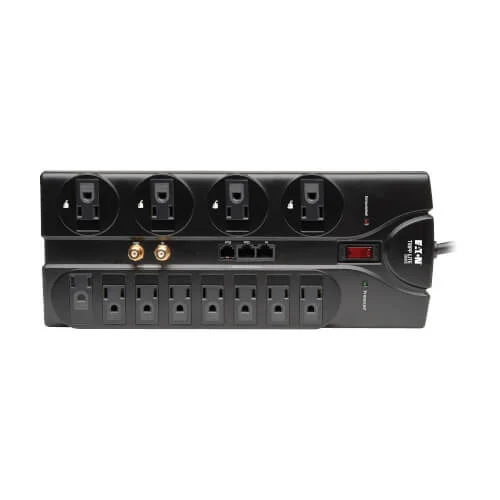
- Tripp Lite (Eaton) Tripp Lite Protect It! TLP1208SAT - Buy. The most complete package: strong protection, full data-line coverage, and a fail-safe shutoff that turns the unit off once it can no longer protect.
- APC (Schneider Electric) APC SurgeArrest Performance P11VNT3 - Buy. A proven, widely trusted performer that protects all three power modes and backs it with a lifetime equipment guarantee.
- Belkin 12-Outlet SurgeMaster BE112230-08 - It depends. The highest joule rating of the group and plenty of block-spaced outlets, but a shorter product warranty and no fail-safe shutoff.
- Anker 351 Power Strip - Skip. A great modern charging strip with USB-C, but its low joule rating and short warranty make it a weak choice as a dedicated surge protector.
The verdict in 30 seconds
What mattered most
- Surge-energy rating (joules)
- Outlets and layout
- Data-line protection
- Fail-safe auto-shutoff
- Connected-equipment warranty
- USB charging
A surge protector is cheap insurance for expensive electronics, but the joule number printed on the box tells only part of the story. We synthesized independent testing and owner reports to weigh four current models from APC, Belkin, Anker, and Tripp Lite on what really matters: how they clamp a surge, whether they protect data lines, and whether they fail safe when worn out. Two earn a clear buy, one is a conditional pick, and one is better thought of as a charging strip than a serious surge protector.
The most complete package: strong protection, full data-line coverage, and a fail-safe shutoff that turns the unit off once it can no longer protect.
Best for: Home-theater and desktop setups that want dependable protection with data-line jacks and a genuine end-of-life shutoff.
- Fail-safe auto-shutoff cuts power when surge protection is exhausted, rather than silently becoming a plain power strip
- Twelve outlets plus coax, phone (RJ11), and Ethernet (RJ45) line protection in one housing
- Diagnostic LEDs and a lifetime connected-equipment guarantee reflect confidence in the design
- Joule rating is mid-pack rather than the highest in this group
- No USB charging ports for phones or tablets
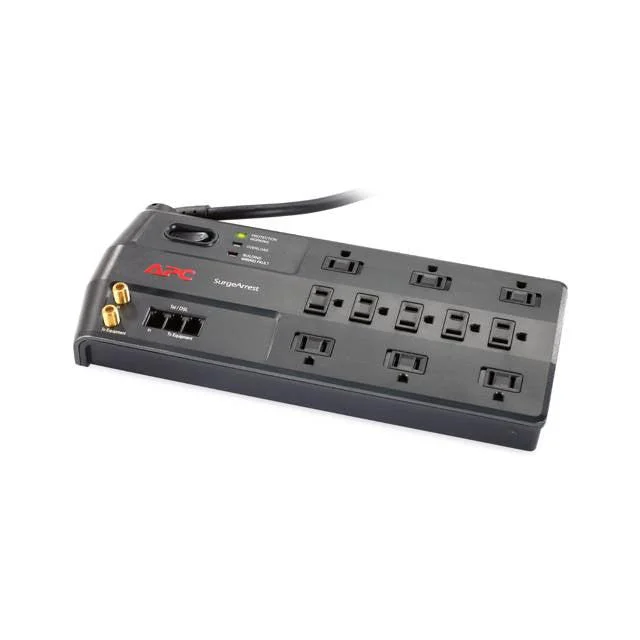
A proven, widely trusted performer that protects all three power modes and backs it with a lifetime equipment guarantee.
Best for: Value-focused buyers who want a dependable, well-reviewed protector for a computer or entertainment center.
- Protects all three power modes (line-neutral, line-ground, neutral-ground), which many cheaper units skip
- Eleven outlets with several spaced for bulky transformer plugs, plus coax, phone, and Ethernet jacks
- Long-standing reputation in owner reports for durability and a lifetime connected-equipment policy
- No fail-safe that removes power once protection wears out; status is shown only via indicator lights
- No USB charging ports
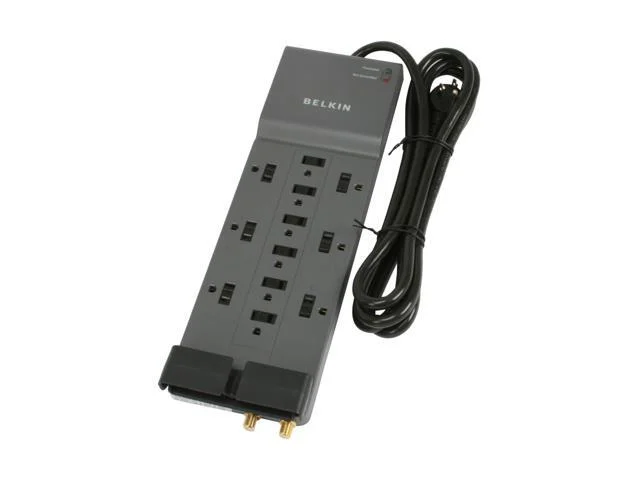
The highest joule rating of the group and plenty of block-spaced outlets, but a shorter product warranty and no fail-safe shutoff.
Best for: Buyers who prioritize the biggest headline joule number and lots of adapter-friendly outlets over end-of-life safety features.
- Highest surge-energy rating in this comparison, with a large connected-equipment warranty
- Twelve outlets, six of them spaced to fit large adapters, plus coax and phone protection
- Eight-foot cord and a space-saving right-angle plug suit behind-furniture placement
- No fail-safe auto-shutoff, so a worn unit can keep passing power unprotected
- Owner reports note the built-in cable clip can get in the way
- Shorter product warranty than the lifetime-guaranteed rivals here
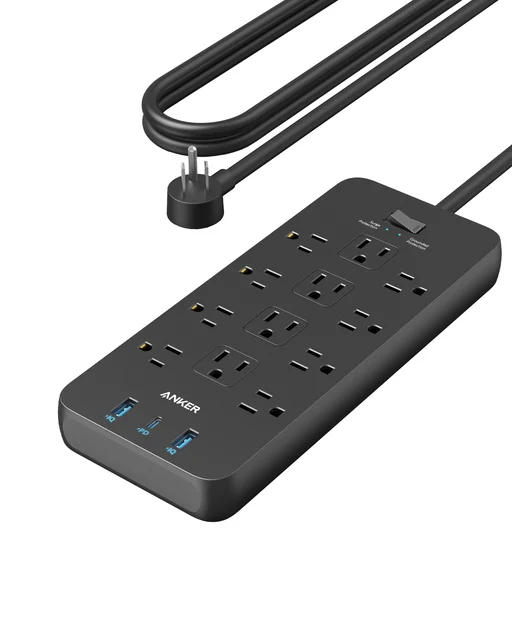
A great modern charging strip with USB-C, but its low joule rating and short warranty make it a weak choice as a dedicated surge protector.
Best for: A tidy desk or nightstand that mostly needs outlets and USB charging, not heavy-duty surge defense for costly gear.
- Built-in USB-C and two USB-A ports charge phones and tablets without a wall adapter
- Twelve outlets with generous spacing and keyhole slots for under-desk mounting
- Very popular in owner reports for everyday convenience and build quality
- Lowest surge-energy rating in this group, aimed more at everyday spikes than serious protection
- Short product warranty compared with the lifetime-backed protectors here
- No coax, phone, or Ethernet line protection
| Criteria | Tripp Lite Protect It! TLP1208SAT Top pick | APC SurgeArrest Performance P11VNT3 | Belkin 12-Outlet SurgeMaster BE112230-08 | Anker 351 Power Strip |
|---|---|---|---|---|
| Verdict | Buy it | Buy it | It depends | Skip it |
| Best for | Home-theater and desktop setups that want dependable protection with data-line jacks and a genuine end-of-life shutoff. | Value-focused buyers who want a dependable, well-reviewed protector for a computer or entertainment center. | Buyers who prioritize the biggest headline joule number and lots of adapter-friendly outlets over end-of-life safety features. | A tidy desk or nightstand that mostly needs outlets and USB charging, not heavy-duty surge defense for costly gear. |
| Price tier | $$ · mid-range | $ · budget | $$ · mid-range | $$ · mid-range |
| Surge-energy rating (joules) | Mid - solid for its class | High | Highest in this group | Lowest in this group |
| Outlets and layout | 12, home-theater friendly | 11, several spaced for adapters | 12, 6 block-spaced | 12, widely spaced |
| Data-line protection | Coax, phone, Ethernet | Coax, phone, Ethernet | Coax and phone | None |
| Fail-safe auto-shutoff | Yes - cuts power at end of life | No - indicator lights only | No | Overload shutoff, not surge end-of-life |
| Connected-equipment warranty | Lifetime, very high coverage | Lifetime | Multi-year, high coverage | Lifetime dollar coverage, short product warranty |
| USB charging | None | None | None | USB-C plus two USB-A |
| Price tier | $$ · mid-range | $ · budget | $$ · mid-range | $$ · mid-range |
Which one is right for you?
- Home-theater and desktop setups that want dependable protection with data-line jacks and a genuine end-of-life shutoff. Buy it Tripp Lite (Eaton) Tripp Lite Protect It! TLP1208SAT
- Value-focused buyers who want a dependable, well-reviewed protector for a computer or entertainment center. Buy it APC (Schneider Electric) APC SurgeArrest Performance P11VNT3
- Buyers who prioritize the biggest headline joule number and lots of adapter-friendly outlets over end-of-life safety features. It depends Belkin 12-Outlet SurgeMaster BE112230-08
- A tidy desk or nightstand that mostly needs outlets and USB charging, not heavy-duty surge defense for costly gear. Skip it Anker 351 Power Strip
How we judged the field
We do not run our own electrical lab. Instead, we synthesized published independent testing, manufacturer specifications, and aggregated owner reports to compare these four surge protectors on the factors that actually determine whether your electronics survive a spike. Four criteria carried the most weight:
- Real protection, not just joules. The headline joule rating measures total lifetime energy capacity, but clamping voltage (how tightly the unit holds the line during a surge) and whether it protects all three power modes matter just as much. Independent testing consistently shows that a high joule number does not guarantee a safer outcome.
- Fail-safe behavior. A protector’s absorbing components wear out. The best designs cut power once protection is spent; lesser ones silently keep passing unprotected power, which owners often discover only after damage occurs.
- Data-line coverage. Surges travel along coax, phone, and Ethernet lines, not just the AC cord. Built-in jacks for these lines close a common gap.
- Warranty and track record. A meaningful connected-equipment guarantee and a strong reputation in owner reports signal that a maker stands behind the design.
Tripp Lite Protect It! TLP1208SAT - buy
This is the most complete surge protector in the group. It offers twelve outlets, an eight-foot cord with a space-saving right-angle plug, and dedicated coax, phone, and Ethernet jacks so surges arriving over data lines are handled too. Its standout feature is a fail-safe design: reviewers and the manufacturer note that once the unit can no longer protect, it shuts off rather than degrading into an ordinary power strip. Diagnostic LEDs make its status legible at a glance, and it is backed by a lifetime connected-equipment guarantee. Its joule rating sits in the middle of this group rather than at the top, but paired with tight, dependable protection and the shutoff feature, that trade is easy to accept.
APC SurgeArrest Performance P11VNT3 - buy
The P11VNT3 is a long-running favorite that earns its place on value and consistency. It protects all three power modes (line-neutral, line-ground, and neutral-ground), a detail cheaper units frequently omit, and includes coax, phone, and Ethernet protection across eleven outlets, several of them spaced for bulky transformer plugs. Owner reports repeatedly praise its durability, and it carries a lifetime connected-equipment policy. It lacks a fail-safe that removes power at end of life, relying instead on indicator lights, so you must watch those lights and replace the unit when they change. For the price tier, it remains one of the safest picks available.
Belkin 12-Outlet SurgeMaster BE112230-08 - it depends
Belkin’s twelve-outlet model posts the highest joule rating in this comparison and pairs it with a large connected-equipment warranty, six adapter-friendly block-spaced outlets, coax and phone protection, and an eight-foot cord with a right-angle plug. If you shop primarily on the headline joule number and outlet count, it is attractive. The caveats are real, though: it does not offer a fail-safe auto-shutoff, so a worn unit can keep passing unprotected power; its product warranty is shorter than the lifetime-guaranteed rivals here; and owner reports mention the built-in cable clip getting in the way. Whether it is right for you depends on how much you weigh raw rating against end-of-life safety.
Anker 351 Power Strip - skip
The Anker 351 is an excellent modern charging strip, with a USB-C port, two USB-A ports, twelve well-spaced outlets, and keyhole slots for under-desk mounting. It is deservedly popular. As a dedicated surge protector, however, it is the weakest choice here: its surge-energy rating is the lowest in the group, it has no coax, phone, or Ethernet protection, and its product warranty is short. Its overload shutoff protects against too many devices drawing power, but that is not the same as a surge end-of-life shutoff. If your goal is protecting a valuable computer or home-theater stack, look elsewhere; if you mainly want tidy outlets and built-in charging, it is fine for that job.
Tripp Lite TLP1208SAT vs APC P11VNT3: which should you buy?
Both are dependable, data-line-equipped protectors with lifetime equipment guarantees, so you will be well served either way. The deciding factor is the fail-safe shutoff. The Tripp Lite TLP1208SAT cuts power once its protection is exhausted, removing the biggest hidden risk of surge protectors, that they quietly stop protecting while still delivering power. The APC P11VNT3 counters with all-three-mode protection and a lower price tier, but it relies on you to monitor its status lights and replace it in time. Choose the Tripp Lite if you want the most hands-off safety and full data-line coverage in one unit; choose the APC if you want proven, comprehensive protection at the lowest cost and are comfortable checking its indicator lights periodically.
What to look for
- A fail-safe shutoff. Prefer models that cut power once protection is spent, rather than silently reverting to an unprotected power strip.
- Clamping voltage and mode coverage, not just joules. Tighter clamping and protection of all three power modes matter as much as the headline joule rating.
- Data-line jacks if you need them. Coax, phone, and Ethernet protection close a path surges can otherwise take to your gear.
- A meaningful connected-equipment warranty. A lifetime guarantee signals the maker’s confidence and gives you recourse.
- Enough well-spaced outlets and a long cord. Block-spaced outlets fit bulky adapters, and a long cord lets you plug directly into the wall instead of daisy-chaining.
- Replacement discipline. Whichever you buy, plan to replace it every few years or after any major surge event.
Our final take
Surge protectors are inexpensive relative to what they guard, so the right question is not “which is cheapest” but “which will still be protecting my gear in a few years.” The Tripp Lite Protect It! TLP1208SAT answers that best, combining solid all-round protection, full data-line coverage, and a fail-safe shutoff that most rivals lack. The APC SurgeArrest P11VNT3 is the value runner-up and a genuinely safe choice. Belkin’s BE112230-08 is worth considering if you specifically want the highest joule rating and the most outlets, provided you accept its lack of a shutoff. The Anker 351 is a fine charging strip but a poor dedicated protector. Above all, remember that a big joule number is not a guarantee of safety, and that any protector eventually wears out and needs replacing.
Questions, answered
Do surge protectors wear out and need replacing?
Yes. The internal components that absorb surges (metal oxide varistors) degrade a little with every spike they clamp, and eventually stop protecting. Many units keep passing power after that point without warning, which is why a model with a fail-safe shutoff or a clear protection-status light is valuable. As a rule of thumb, replace a well-used protector every few years, or immediately after it has taken a large hit such as a nearby lightning strike.
Is a higher joule rating always better?
Not by itself. Joules describe how much total energy a protector can absorb over its life, but they say nothing about how tightly it clamps voltage during a surge or whether it fails safe when exhausted. A unit with a huge joule number but a loose clamping voltage and no shutoff can be less protective in practice than a mid-rated model that clamps tightly and cuts power at end of life. Treat joules as one factor among several, not the whole story.
Do I actually need the coax, phone, and Ethernet jacks?
Only if a surge could reach your equipment along those lines. Cable and satellite coax and telephone lines can carry surges into a TV, modem, or router, so routing them through the protector adds a layer of defense. If your internet and TV arrive over fiber or you have no coax or landline, those jacks add little, and a model without them is fine.
Can I daisy-chain surge protectors or plug one into an extension cord?
No. Chaining protectors or running one off a light-duty extension cord can overload the wiring, defeat the protection, and create a fire risk; it also voids most connected-equipment warranties. Plug each surge protector directly into a wall outlet, and choose a model with a long enough cord to reach where you need it.
What is the difference between a power strip, a surge protector, and a UPS?
A plain power strip only splits one outlet into several and offers no protection. A surge protector adds circuitry that diverts voltage spikes away from your devices. A UPS (uninterruptible power supply) goes further, adding a battery that keeps equipment running through brief outages and lets you shut down safely. All four products here are surge protectors; if you also need ride-through power for a desktop or network gear, consider a UPS instead.
Deciding between the top two? See our head-to-head: Tripp Lite Protect It! TLP1208SAT vs APC SurgeArrest Performance P11VNT3.
More Tech & Gadgets reviews
 The Best Tape Measures: 4 Compared (and One to Skip)
  The Best Thermal Imaging Cameras: 4 Compared (and One to Skip)
  The Best Thermal Paste: 4 Compared (and One to Skip)
  The Best Thunderbolt Docks: 4 Compared (and One to Skip)
  The Best Torque Screwdrivers: 4 Compared (and One to Skip)
  The Best Ultrawide Monitors: 4 Compared (and One to Skip)