

Tech & Gadgets
The Best Thermal Imaging Cameras: 4 Compared (and One to Skip)
We compared four current thermal cameras on image detail, refresh speed, measurement accuracy, form factor and real-world value.
The short version
Most people are best served by a camera that clips onto their phone rather than a standalone unit. The InfiRay P2 Pro is our overall pick: sharp images, a fast 25Hz refresh, a pocketable metal body and a macro lens that makes it superb for electronics. The Seek Thermal Nano 300 wins if you want the highest native resolution and a wide view for home, HVAC and building work. The Topdon TC002C Duo is the value play for USB-C phone owners who want strong results for less, and the standalone Hti-Xintai HT-A1 is the one to skip because its sensor and software lag behind cameras that cost about the same. Best for: DIYers, home inspectors and tinkerers who want an accurate, sharp thermal view without paying professional-tool prices.
The verdict in 30 seconds
What mattered most
- Native IR resolution
- Refresh rate
- Form factor
- Temperature range
- Thermal sensitivity
- Standout feature
Thermal cameras have quietly gotten good and cheap, and most of the best ones now clip onto the phone already in your pocket. We weighed four current models on the things that actually matter: how sharp the image is, how fast it refreshes, how trustworthy the temperature readings are, and whether you need a phone at all. Two earn a clear buy, one is a smart budget pick with a catch, and one popular all-in-one is easy to skip.
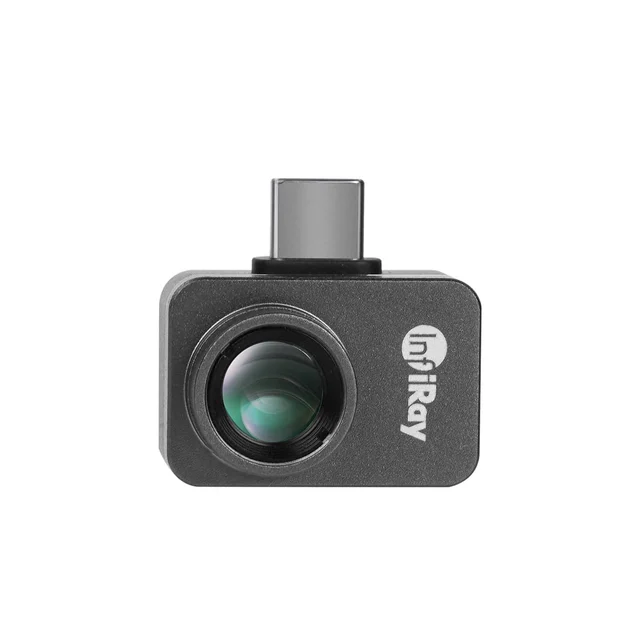
A thumb-sized 256x192 camera that punches far above its size, with a macro lens no rival matches.
Best for: Hobbyists, makers and electronics/PCB troubleshooters who want the best image-per-dollar in a keychain-sized package.
- Excellent detail and clean images for a sensor this small
- Included magnetic macro lens is unique — great for circuit boards and fine electronics
- Genuinely pocketable 9g all-metal body with a fast 25Hz refresh
- Mature app with plenty of palettes and on-image measurement tools
- No screen of its own — it is useless without a compatible phone
- The tiny magnetic macro lens is easy to misplace
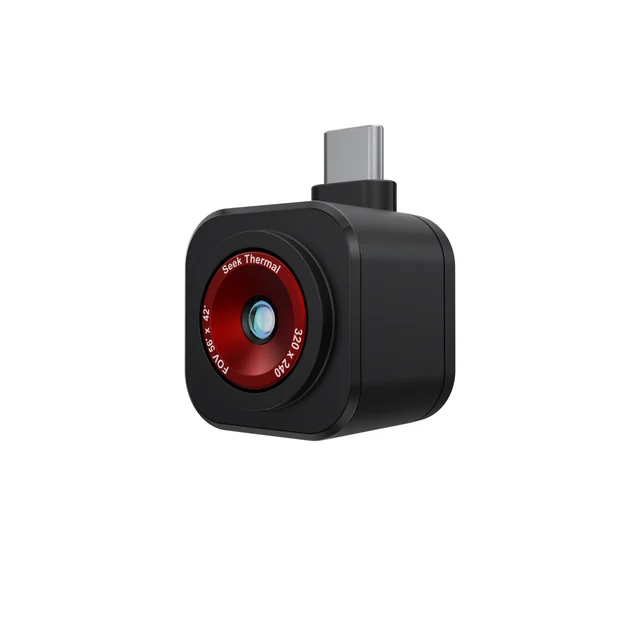
The highest native resolution and widest view of the group, ideal for scanning whole rooms and buildings.
Best for: Home inspectors, HVAC techs and anyone chasing insulation gaps, drafts or moisture across large surfaces.
- True 320x240 sensor — the sharpest native resolution here
- Wide field of view takes in a whole wall or ceiling at once
- Fast 25Hz refresh and strong thermal sensitivity for spotting subtle differences
- USB-C and Lightning versions cover modern iPhones and Android phones
- Temperature range tops out lower than the others, so it is not for very hot targets
- No macro lens and no built-in screen
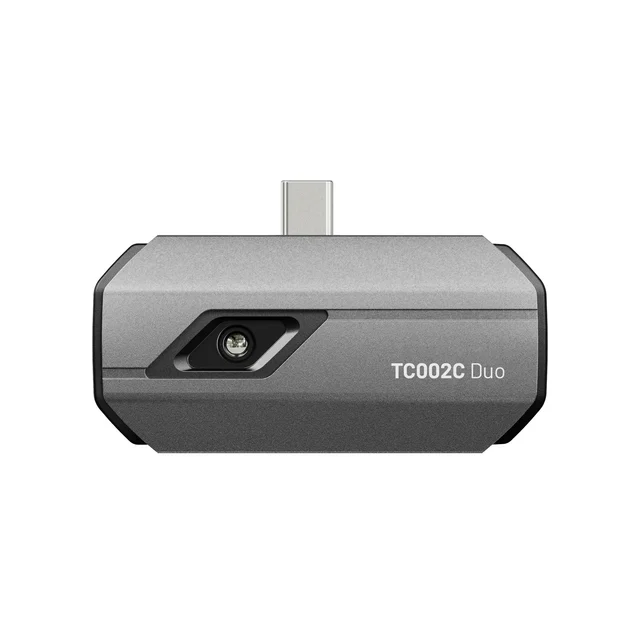
A capable 256x192 camera at the lowest price here — great value if your phone has USB-C.
Best for: First-time buyers on a tight budget with a USB-C phone who want solid results without overspending.
- Same class of 256x192 sensor as pricier rivals for noticeably less money
- Single USB-C plug works across Android, USB-C iPhones and Windows
- Compact all-metal build with a 25Hz refresh
- Image processing and app polish trail the InfiRay
- No macro lens, and older Lightning iPhones need an adapter
- Advertised super-resolution is upscaling, not extra real detail
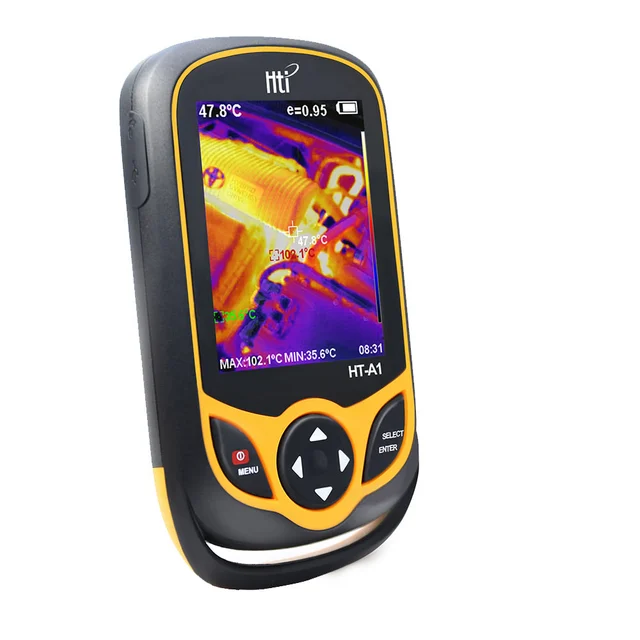
A standalone camera with its own screen, but the sensor and software feel a generation behind for the money.
Best for: Only someone who flatly refuses to use a phone and insists on an all-in-one screen — most people get more for the same outlay elsewhere.
- Fully standalone — built-in screen and battery, no phone required
- Simple point-and-shoot operation with physical buttons
- Lowest native resolution here, and owners report a sluggish, choppy refresh
- Dated interface and limited measurement tools versus the phone-based cameras
- Costs about the same as sharper attach cameras that run rings around it
- Charges over old micro-USB
| Criteria | InfiRay P2 Pro Top pick | Seek Thermal Nano 300 | Topdon TC002C Duo | Hti-Xintai HT-A1 |
|---|---|---|---|---|
| Verdict | Buy it | Buy it | It depends | Skip it |
| Best for | Hobbyists, makers and electronics/PCB troubleshooters who want the best image-per-dollar in a keychain-sized package. | Home inspectors, HVAC techs and anyone chasing insulation gaps, drafts or moisture across large surfaces. | First-time buyers on a tight budget with a USB-C phone who want solid results without overspending. | Only someone who flatly refuses to use a phone and insists on an all-in-one screen — most people get more for the same outlay elsewhere. |
| Price tier | $$ · mid-range | $$ · mid-range | $ · budget | $$ · mid-range |
| Native IR resolution | 256 x 192 | 320 x 240 (highest) | 256 x 192 | 220 x 160 (lowest) |
| Refresh rate | 25 Hz | 25 Hz | 25 Hz | Slow (owners report choppiness) |
| Form factor | Phone attach (USB-C / Lightning) | Phone attach (USB-C / Lightning) | Phone attach (USB-C) | Standalone with screen + battery |
| Temperature range | Widest (very hot to sub-zero) | Narrower (not for very hot targets) | Wide | Narrower |
| Thermal sensitivity | Strong (~40 mK) | Best (under 35 mK) | Strong (~40 mK) | Weakest of the group |
| Standout feature | Included macro lens for electronics | Highest detail + wide field of view | Broad USB-C compatibility at low cost | Works with no phone at all |
| Best use | Electronics, PCBs, DIY | Home, HVAC, building envelope | Budget all-rounder | Grab-and-go standalone |
| Price tier | $$ · mid-range | $$ · mid-range | $ · budget | $$ · mid-range |
Which one is right for you?
- Hobbyists, makers and electronics/PCB troubleshooters who want the best image-per-dollar in a keychain-sized package. Buy it Xinfrared (InfiRay) InfiRay P2 Pro
- Home inspectors, HVAC techs and anyone chasing insulation gaps, drafts or moisture across large surfaces. Buy it Seek Thermal Nano 300
- First-time buyers on a tight budget with a USB-C phone who want solid results without overspending. It depends Topdon TC002C Duo
- Only someone who flatly refuses to use a phone and insists on an all-in-one screen — most people get more for the same outlay elsewhere. Skip it Hti-Xintai HT-A1
How we judged the field
We do not run our own thermal lab. Instead we synthesize independent testing, expert teardowns and a large volume of owner reports, then weigh the criteria that decide whether a thermal camera earns its keep. Four things mattered most. First, native sensor resolution — the real pixel count, not the inflated ‘super-resolution’ figure printed on the box. Second, refresh rate, because a laggy image is miserable to aim. Third, measurement trustworthiness, since a camera that reads temperatures loosely is only good for pretty pictures. And fourth, form factor and value: whether it clips to a phone or stands alone, and whether the price matches what you get. We deliberately included a standalone unit alongside the phone-attach cameras so the trade-off is clear.
InfiRay P2 Pro — buy
The P2 Pro is the one we would hand most people first. Its 256 x 192 sensor produces clean, detailed images that reviewers consistently rate at the top of this class, and the 25Hz refresh keeps the picture fluid as you pan around. The all-metal body weighs about as much as a coin, so it disappears into a pocket. The standout is the included magnetic macro lens: snap it on and you can resolve individual components on a circuit board, something no rival here offers out of the box. Owner reports praise the app’s palette choice and measurement tools. The obvious catch is that it has no screen of its own and lives or dies by your phone — and that little macro lens is easy to lose. Neither is a dealbreaker for the image quality on offer.
Seek Thermal Nano 300 — buy
Where the InfiRay wins on detail-per-dollar, the Nano 300 wins on outright resolution and coverage. Its 320 x 240 sensor is the sharpest native panel in this comparison, and a wide field of view lets it take in an entire wall, ceiling or HVAC unit in a single frame — exactly what you want when hunting insulation gaps or moisture. It refreshes at a quick 25Hz and its thermal sensitivity is the best of the group, so subtle temperature differences stand out. The compromises are a lower maximum temperature range, which makes it a poor match for very hot industrial targets, and the lack of a macro lens. For building, home and HVAC work, it is the more capable tool.
Topdon TC002C Duo — it depends
The TC002C Duo is the value story. It uses the same class of 256 x 192 sensor as pricier cameras and refreshes at 25Hz, yet sits at the bottom of the price range here. A single USB-C plug works across Android phones, USB-C iPhones and even Windows, which makes it a flexible first thermal camera. So why ‘it depends’? Its image processing and app polish trail the InfiRay in side-by-side owner comparisons, there is no macro lens, and older Lightning iPhones need an adapter. Its headline super-resolution number is upscaling rather than extra real detail. If your budget is firm and your phone has USB-C, it is a smart buy; if you can stretch a little, the InfiRay is the nicer tool to live with.
Hti-Xintai HT-A1 — skip
The HT-A1 is tempting on paper: a self-contained camera with its own 3.2-inch screen and battery, so there is nothing to plug in. In practice it is the weakest pick here. Its 220 x 160 sensor is the lowest resolution of the group, and owners repeatedly describe a sluggish, choppy refresh and a dated menu system with limited measurement tools. It still charges over old micro-USB. The real problem is price: it costs roughly the same as attach cameras that deliver sharper images, faster refresh and far better software. Standalone convenience is its only genuine advantage, and for most buyers that is not worth the drop in everything else.
InfiRay P2 Pro vs Seek Thermal Nano 300: which should you buy?
These are the two cameras worth agonizing over, and the right answer comes down to what you point them at. The InfiRay P2 Pro is the more versatile all-rounder: smaller, with a wider temperature range that copes with very hot targets, and that unique macro lens makes it the clear choice for electronics, PCBs and close-up diagnostic work. The Seek Thermal Nano 300 counters with a genuinely higher-resolution 320 x 240 sensor and a wider field of view, which pays off when you are scanning large surfaces — walls, ceilings, ductwork — and want to resolve fine detail across the whole scene. Choose the P2 Pro for portability, hot targets and tinkering; choose the Nano 300 for home inspection, HVAC and building-envelope work where field of view and raw detail win. Both are cameras you will be happy with.
What to look for
- Native resolution, not marketing pixels. A real 256 x 192 or 320 x 240 sensor matters far more than an inflated ‘super-resolution’ number.
- Refresh rate. Aim for a fast refresh; a laggy image is hard to aim and frustrating to use.
- The right connector. Match USB-C or Lightning to your actual phone, and remember older iPhones may need an adapter.
- Temperature range. Make sure the camera covers the hottest and coldest targets you care about.
- Attach vs standalone. Phone-attach cameras give you a bigger screen and better software; standalone units trade that away for not needing a phone.
- Extras that earn their place. A macro lens, wide field of view or strong app can matter more day-to-day than a spec-sheet bragging point.
Our final take
Thermal imaging has crossed the line from professional luxury to something any curious homeowner or maker can justify, and the best value is overwhelmingly in cameras that clip onto the phone you already own. The InfiRay P2 Pro is our overall pick for its blend of sharp images, speed, pocketability and that clever macro lens. The Seek Thermal Nano 300 is the one to buy when resolution and field of view matter most. Budget-focused USB-C phone owners will be well served by the Topdon TC002C Duo. And the standalone Hti-Xintai HT-A1 is the easy skip: convenient in theory, but outclassed by cameras that cost about the same. Buy for the way you will actually use it, match the connector to your phone, and you will wonder how you troubleshot anything without one.
Questions, answered
Do I need a special phone to use these cameras?
For the three attach models, yes — they draw power and display through your phone. Check the connector: the Topdon TC002C Duo uses USB-C (Android, USB-C iPhones and Windows), while the InfiRay P2 Pro and Seek Nano 300 come in both USB-C and Lightning versions, so match the plug to your device. The Hti-Xintai HT-A1 is the exception: it has its own screen and battery and needs no phone at all.
How much resolution do I actually need?
For most home, electrical and HVAC tasks a 256 x 192 sensor like the InfiRay P2 Pro or Topdon is plenty. Step up to the 320 x 240 Seek Nano 300 if you scan large surfaces and want to resolve finer detail across a whole scene. Be wary of big 'super-resolution' pixel numbers on the box — that is usually software upscaling, not real added detail from the sensor.
Is a standalone camera better than one that plugs into my phone?
It depends on your workflow. A standalone unit like the HT-A1 is convenient because there is nothing to connect, but at this price point the phone-based cameras pack sharper sensors, faster refresh and far more capable apps. Your phone also gives you a big, bright screen and easy sharing. Unless you specifically need to leave your phone in your pocket, an attach camera generally gets you more.
Can these measure exact temperatures accurately?
They give useful, repeatable readings, but treat them as a guide rather than a lab instrument. Accuracy is affected by distance, angle and especially emissivity — shiny metal surfaces in particular fool every thermal camera. Independent testing and owner reports suggest the InfiRay and Seek are the more dependable of this group for spot measurements, but confirm anything critical with a contact thermometer.
Will a thermal camera drain my phone or struggle in the cold?
Attach cameras do draw some battery, though a short inspection session barely dents a modern phone. For outdoor winter work, note that each camera has a stated operating range; the InfiRay P2 Pro reads the hottest targets, while the Seek and Hti models top out lower. If you routinely work in extreme heat or cold, check the specific range before buying.
More Tech & Gadgets reviews
 The Best Ultrawide Monitors: 4 Compared (and One to Skip)
  The Best UPS Battery Backups: 4 Compared (and One to Skip)
  The Best USB-C Hubs and Docks for Laptops in 2026
  The Best USB Flash Drives: 4 Compared (and One to Skip)
  The Best Video Doorbells in 2026 (and the One to Skip)
  The Best VR Headsets: 4 Compared (and One to Skip)