

Tech & Gadgets
The Best Smart Glasses Without a Display: 7 Compared (and One to Skip)
We compared seven camera-and-audio AI glasses, the kind with no screen in the lens, on capture quality, hands-free AI, battery, fit and everyday wearability.
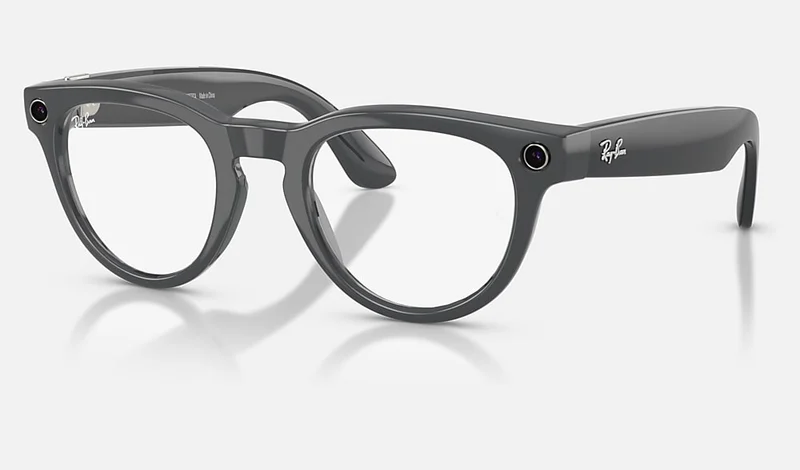
The short version
Camera-and-audio AI glasses are useful in 2026, and Meta's platform still runs the most polished of them. The Ray-Ban Meta (Gen 2) is the pick for most people, pairing strong hands-free AI and voice-triggered capture with frames that look normal. Athletes should step up to the rugged, IP67 Oakley Meta Vanguard for its secure fit and the longest battery of the Meta glasses. The Oakley Meta HSTN offers the same Meta brains in a bigger frame, so it comes down to looks and fit. The Rokid AI Glasses Style is the strongest non-Meta option on paper: a 38.5 g frame, a 12MP camera with 3K video, ChatGPT and Gemini, and the widest prescription range here, though it is only IPX4. The HTC VIVE Eagle adds Gemini or GPT, live translation and IP54 in Pantos or square frames, but full AI features need a subscription after the trial. The Mentra Live is an open-SDK camera pair aimed at developers and frontline teams rather than everyday style. Skip the Solos AirGo Vision: photo-only capture and weaker AI keep it behind. Best for: stylish, hands-free photo and AI help for everyday life, with the Ray-Ban Meta (Gen 2) as the safest buy.
Our picks at a glance
- Ray-Ban x Meta Ray-Ban Meta (Gen 2) - Buy. The best all-round camera-and-AI glasses, in frames you'll actually want to wear.
- Oakley x Meta Oakley Meta Vanguard - Buy. The same Meta smarts in a rugged, sweat-proof wrap built for running and riding.
- Oakley x Meta Oakley Meta HSTN - It depends. Meta's proven brains in a bold, oversized Oakley lifestyle frame.
- Rokid AI Glasses Style - It depends. The lightest camera glasses here, with ChatGPT and Gemini and the widest prescription range, outside Meta's ecosystem.
- HTC VIVE Eagle - It depends. Gemini or GPT, live translation and privacy safeguards in two frame shapes, with full AI tied to a subscription.
- Mentra Live - It depends. Open-SDK camera glasses aimed at developers and frontline teams, not at style-first buyers.
- Solos AirGo Vision - Skip. The tempting non-Meta alternative that still lags on the things that matter.
The verdict in 30 seconds
What mattered most
- Camera & video
- Hands-free AI
- Audio & calls
- Battery life
- Durability & fit
- Everyday style
Smart glasses finally do something useful in 2026: snap a photo, take a call, and answer a question hands-free without pulling out your phone. Meta's ecosystem dominates the good options, but there are meaningful differences in fit, ruggedness and price, and a growing set of non-Meta rivals from Rokid, HTC and Mentra that let you pick your own AI model or build your own apps, plus one heavily-marketed alternative that still isn't ready. Here are two clear buys, the it-depends picks worth knowing, and one to skip.
The best all-round camera-and-AI glasses, in frames you'll actually want to wear.
Best for: Most people who want stylish everyday glasses that capture moments and answer questions hands-free.
- Best-in-class hands-free assistant: ask a question, capture a photo or start a call by voice
- Genuinely stylish Ray-Ban frames that pass as ordinary sunglasses
- Second-gen jump to sharper video and noticeably longer battery over the first generation
- Huge choice of frame shapes, colors and prescription lenses
- No in-lens display: this is audio, camera and AI only
- Low-light photos still look soft and noisy
- You're locked into a Meta account and app
Own the Ray-Ban x Meta Ray-Ban Meta (Gen 2)? Tell us how it held up.
Thanks. Counted, and shown once enough owners have weighed in.

The same Meta smarts in a rugged, sweat-proof wrap built for running and riding.
Best for: Cyclists, runners and outdoor athletes who want durable POV capture plus coaching audio.
- IP67 dust-and-water rating and a secure wraparound fit that stays put during activity
- Center-mounted camera captures level, first-person POV footage
- Longest real-world battery of the Meta glasses, with the case adding more
- Wind-tuned microphones and tie-ins with popular fitness apps
- Aggressive sport shield styling is a lot of face and won't suit everyone
- The priciest option here
- Same no-display limitation as the rest
Own the Oakley x Meta Oakley Meta Vanguard? Tell us how it held up.
Thanks. Counted, and shown once enough owners have weighed in.

Meta's proven brains in a bold, oversized Oakley lifestyle frame.
Best for: Buyers who specifically want the bigger, bolder Oakley look and don't mind paying more for it.
- Runs the exact same camera and hands-free AI platform as Ray-Ban Meta
- Larger, bolder fit that suits wider faces and sportier tastes
- A sportier-casual look than the classic Ray-Ban shapes
- Heavier and typically pricier than Ray-Ban Meta for identical features
- Chunky styling divides opinion
- No display, and the low-light camera limits carry over
Own the Oakley x Meta Oakley Meta HSTN? Tell us how it held up.
Thanks. Counted, and shown once enough owners have weighed in.
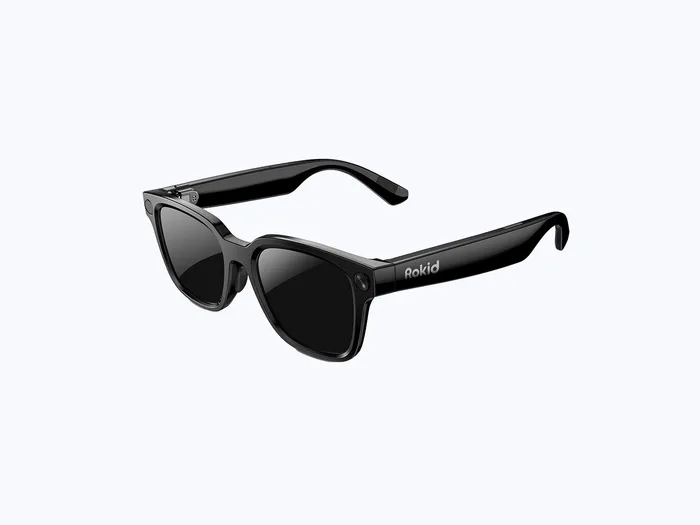
The lightest camera glasses here, with ChatGPT and Gemini and the widest prescription range, outside Meta's ecosystem.
Best for: Prescription wearers who want light camera glasses and a choice of AI model without a Meta account.
- Rokid lists the frame at 38.5 g without prescription lenses, with a 12MP Sony IMX681 camera that records up to 3K at 30 fps.
- Supports ChatGPT and Gemini, with a 'Hi Rokid' wake word, dual directional open-ear speakers and a 4-microphone array.
- Prescription support from -15.00D to +15.00D, plus progressive, photochromic, polarized and tinted lens options, and up to 12 hours of typical use.
- Rated only IPX4, well short of the Vanguard's IP67 for sweat and rain.
- Video recording is capped at 10 minutes per clip.
- A smaller app ecosystem than Meta's, with a 1-year limited warranty.
Own the Rokid AI Glasses Style? Tell us how it held up.
Thanks. Counted, and shown once enough owners have weighed in.
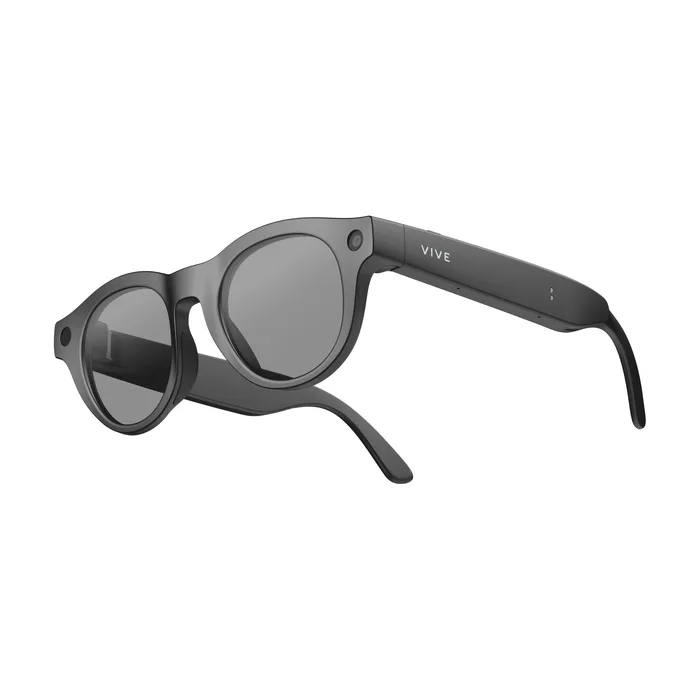
Gemini or GPT, live translation and privacy safeguards in two frame shapes, with full AI tied to a subscription.
Best for: Travelers who want translation and a choice of AI model, and accept a subscription for the full feature set.
- HTC lists a 12MP ultra-wide camera with 3K capture, a flashing recording LED, and a camera that disables when the glasses come off or the LED is covered.
- Supports Google Gemini or OpenAI GPT depending on region, with image, listening and conversation translation modes.
- IP54 dust and splash resistance, a weight from 48.5 g, and a 1 to 50 percent recharge in 10 minutes.
- HTC states full access to its AI features requires the VIVE AI Pro subscription, after a 24-month free trial of VIVE AI Plus.
- Battery is quoted as up to 4.5 hours of continuous music playback, a shorter headline figure than Rokid's.
- Prescription lenses go through participating optical partners after an in-store evaluation.
Own the HTC VIVE Eagle? Tell us how it held up.
Thanks. Counted, and shown once enough owners have weighed in.
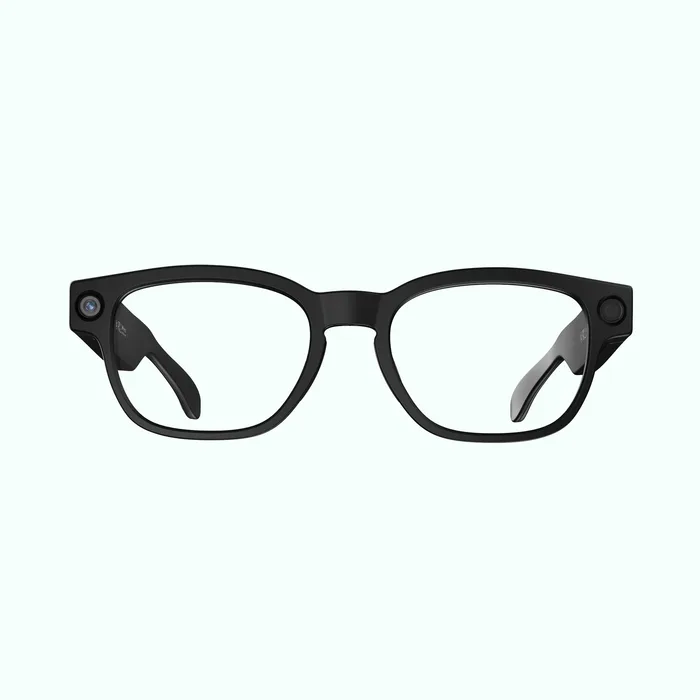
Open-SDK camera glasses aimed at developers and frontline teams, not at style-first buyers.
Best for: Developers and field teams who want programmable POV camera glasses for remote support or custom apps.
- Runs MentraOS with a full open SDK, so developers can build their own camera and AI apps.
- Mentra lists 1080p video, 3264 x 2448 photos and a 119 degree landscape field of view, with stereo speakers and 3 microphones.
- Quoted at 8+ hours of mixed use, and it can run from a USB-C battery pack via the Infinity Cable for longer shifts.
- Video tops out at 1080p, below the 3K of the Meta, Rokid and HTC glasses.
- No water or dust rating is published, and the 43 g frame comes only in black or transparent.
- Mentra markets it for enterprise and frontline work, so consumer app polish is not the focus.
Own the Mentra Live? Tell us how it held up.
Thanks. Counted, and shown once enough owners have weighed in.

The tempting non-Meta alternative that still lags on the things that matter.
Best for: Tinkerers set on a non-Meta, multi-model option who accept the trade-offs; most people are better served elsewhere.
- Not tied to Meta, with a choice of AI models such as ChatGPT and Gemini
- Swappable frame fronts let you change the look
- Lighter on the wallet than the premium Meta options
- Photos only, since Solos lists no video recording, and detail and low-light quality noticeably behind the Meta glasses
- Owners report slower, less consistent AI responses and weaker call pickup
- Smaller app ecosystem, slower updates, and build quality that feels less premium
Own the Solos AirGo Vision? Tell us how it held up.
Thanks. Counted, and shown once enough owners have weighed in.
| Criteria | Ray-Ban Meta (Gen 2) Top pick Buy it Buy | Oakley Meta Vanguard Buy it Buy | Oakley Meta HSTN It depends Buy | AI Glasses Style It depends Buy | VIVE Eagle It depends Buy | Mentra Live It depends Buy | Solos AirGo Vision Skip it Buy |
|---|---|---|---|---|---|---|---|
| Best for | Most people who want stylish everyday glasses that capture moments and answer questions hands-free. | Cyclists, runners and outdoor athletes who want durable POV capture plus coaching audio. | Buyers who specifically want the bigger, bolder Oakley look and don't mind paying more for it. | Prescription wearers who want light camera glasses and a choice of AI model without a Meta account. | Travelers who want translation and a choice of AI model, and accept a subscription for the full feature set. | Developers and field teams who want programmable POV camera glasses for remote support or custom apps. | Tinkerers set on a non-Meta, multi-model option who accept the trade-offs; most people are better served elsewhere. |
| Price tier | $$$ · premium | $$$ · premium | $$$ · premium | $$ · mid-range | $$$ · premium | $$$ · premium | $$ · mid-range |
| Camera & video | 12MP, up to 3K - sharp in good light | 12MP centered, up to 3K - level POV | 12MP, up to 3K - same as Ray-Ban | 12MP Sony, up to 3K at 30 fps, 10 min clips (maker) | 12MP ultra-wide, 3K (maker) | 1080p video, 3264 x 2448 photos, 119° FOV (maker) | Photos only, no video (maker); detail and low-light lag |
| Hands-free AI | Best-in-class voice assistant | Same Meta AI, sport-tuned | Same Meta AI | ChatGPT and Gemini, 'Hi Rokid' wake word | Gemini or OpenAI GPT by region; full features need subscription | MentraOS AI assistant, open SDK | ChatGPT/Gemini, slower and less consistent |
| Audio & calls | Clear open-ear, multi-mic array | Wind-optimized mics for outdoors | Same open-ear system | Dual directional open-ear speakers, 4 mics | Open-ear speakers with noise reduction | Stereo speakers, 3 mics; Teams and WhatsApp calls | Decent but thinner, weaker call pickup |
| Battery life | All-day with case top-ups | Longest of the Meta glasses; case extends it | Similar to Ray-Ban | Up to 12 h typical use (maker) | 4.5 h music, 36 h standby (maker) | 8+ h mixed use; cable power option (maker) | About 16 h photo and AI use (maker) |
| Durability & fit | Splash-resistant, easy everyday fit | IP67, secure wrap for sport | Splash-resistant, larger fit | IPX4, 38.5 g frame | IP54, from 48.5 g | No IP rating published, 43 g | IP67 (maker), but build feels less premium |
| Everyday style | Iconic Ray-Ban, most wearable | Bold sport shield | Chunky Oakley lifestyle | Classic square frame, Rx -15 to +15 | Pantos or square frames, ZEISS lenses | Plain black or transparent frame | Plain and forgettable |
| Price tier | $$$ · premium | $$$ · premium | $$$ · premium | $$ · mid-range | $$$ · premium | $$$ · premium | $$ · mid-range |
Which one is right for you?
- Most people who want stylish everyday glasses that capture moments and answer questions hands-free. Buy it Ray-Ban x Meta Ray-Ban Meta (Gen 2)
- Cyclists, runners and outdoor athletes who want durable POV capture plus coaching audio. Buy it Oakley x Meta Oakley Meta Vanguard
- Buyers who specifically want the bigger, bolder Oakley look and don't mind paying more for it. It depends Oakley x Meta Oakley Meta HSTN
- Prescription wearers who want light camera glasses and a choice of AI model without a Meta account. It depends Rokid AI Glasses Style
- Travelers who want translation and a choice of AI model, and accept a subscription for the full feature set. It depends HTC VIVE Eagle
- Developers and field teams who want programmable POV camera glasses for remote support or custom apps. It depends Mentra Live
- Tinkerers set on a non-Meta, multi-model option who accept the trade-offs; most people are better served elsewhere. Skip it Solos AirGo Vision
These are the smart glasses with no display: they capture, they talk to you and they answer questions, and there is nothing to look at in the lens. If you want a screen in your field of view, whether that is a big virtual monitor or a small heads-up window, that is a separate category with different hardware and different trade-offs, and we compared it in the best smart glasses with displays.
How we judged the field
We don’t run our own camera lab. Instead we synthesize independent testing and a wide read of owner reports, then weigh the things that actually decide whether smart glasses earn a place on your face every day. Five criteria did the heavy lifting: how good and how convenient the photo and video capture is; how genuinely useful the hands-free AI feels in real life; audio and call quality in noise and wind; battery life across a normal day; and - the quiet dealbreaker - whether the frames are comfortable and normal-looking enough that you’ll keep wearing them.
A note on scope: these are camera, audio and AI glasses, not display glasses. None of the seven projects a screen into your vision. That keeps the comparison fair, because the products people actually cross-shop against the Ray-Ban Meta all work the same way - capture and voice, with the answers on your phone.
Ray-Ban Meta (Gen 2)
Buy itThis is the one to beat, and the one most people should buy. The second generation sharpens the video, stretches the battery and keeps the thing that made the original click: a hands-free assistant that reliably takes a photo, starts a call or answers a question the moment you ask. Reviewers consistently single out how natural voice capture feels, and how little you think about the tech because the frames just look like Ray-Bans. The compromises are real but easy to live with - no in-lens display, soft low-light photos, and a hard tie to Meta’s account and app - but nothing here undermines the core promise. If you want smart glasses and don’t have a specific sport or styling reason to choose otherwise, start and probably finish here.
Oakley Meta Vanguard
Buy itThe Vanguard takes the same Meta platform and hardens it for movement. A wraparound shield fit stays locked on during a run or ride, an IP67 rating shrugs off sweat and rain, and a center-mounted camera gives you level, first-person footage instead of a tilted side view. Owner reports and independent testing both flag its battery as the strongest of the Meta glasses, and the wind-tuned microphones plus fitness-app tie-ins make it the obvious pick for athletes. The trade-offs are styling and price: it’s the most expensive option and the big sport shield is a lot of face for coffee-shop wear. But for its intended job - capturing and coaching while you’re active - nothing else here comes close.
Oakley Meta HSTN
It dependsThe HSTN is the interesting middle child. Under the hood it’s effectively the Ray-Ban Meta - same camera, same hands-free AI, same open-ear audio - wrapped in a bigger, bolder Oakley lifestyle frame. That makes it a genuinely good pick for people with wider faces or a sportier-casual taste who find classic Ray-Ban shapes too small or too safe. The catch is that you usually pay more and carry more weight for identical capability, and the chunky look splits opinion hard. So it truly depends: if the frame speaks to you and the fit is better for your face, buy it with confidence; if you’re neutral on styling, the lighter, cheaper Ray-Ban Meta gives you the same brains for less.
Rokid AI Glasses Style
It dependsThe Rokid AI Glasses Style is the most complete non-Meta spec sheet in this comparison. Rokid lists the frame at 38.5 g without prescription lenses, lighter than any Meta pair, and fits a 12MP Sony IMX681 camera that records up to 3K at 30 fps with a 109 degree field of view and a recording indicator light. It works with ChatGPT and Gemini through a ‘Hi Rokid’ wake word, uses dual directional open-ear speakers with a 4-microphone array, and Rokid quotes up to 12 hours of typical use. Prescription support runs from -15.00D to +15.00D with progressive, photochromic and polarized options, the widest range here. The limits are durability and ecosystem. It is rated IPX4, so it is not a sport pair, clips stop at 10 minutes, the warranty is one year, and the app and third-party support are thinner than Meta’s. Choose it if you wear a strong prescription or want to avoid a Meta account; otherwise the Ray-Ban Meta is the safer default.
HTC VIVE Eagle
It dependsThe HTC VIVE Eagle is built around translation and AI choice. HTC says it supports Google Gemini or OpenAI GPT depending on region, translates in image, listening and conversation modes, and de-identifies queries before they reach the AI service. Capture comes from a 12MP ultra-wide camera with 3K video and horizon alignment, and HTC adds a flashing recording LED plus a camera that switches off when the glasses are removed or the LED is covered, the most explicit bystander protection here. It weighs from 48.5 g, carries an IP54 rating and comes in a soft-round Pantos frame or a square frame with ZEISS lens options. The trade-offs are cost and runtime. HTC states full access to its AI features requires a VIVE AI Pro subscription once the 24-month VIVE AI Plus trial ends, battery is quoted at up to 4.5 hours of continuous music, and prescriptions go through optical partners. It suits frequent travelers who value translation over Meta’s polish.
Mentra Live
It dependsThe Mentra Live is the odd one out, and deliberately so. Mentra sells it as camera glasses for frontline workers and developers: it runs MentraOS with a full open SDK, supports Microsoft Teams video calls so a remote expert can see the wearer’s point of view, and handles phone and WhatsApp audio calls. Mentra lists 1080p video, 3264 x 2448 photos and a 119 degree landscape field of view, stereo speakers, 3 microphones and a 43 g frame. Battery is quoted at 8+ hours of mixed use, and the Infinity Cable lets it run from a phone or USB-C battery pack for a full shift, with a 2,200 mAh charging case as well. For an everyday buyer the compromises are clear. Video stops at 1080p, no water or dust rating is published, styling is a plain black or transparent frame, and prescription lenses are a separate order. Buy it if you want to build on the glasses or equip a field team; for photos and AI help, the Ray-Ban Meta is the better fit.
Solos AirGo Vision
Skip itOn paper the AirGo Vision is the plucky alternative: a camera, your choice of AI models like ChatGPT or Gemini, swappable frame fronts and a friendlier price, all without Meta. In practice, owner reports keep landing in the same place. The camera shoots photos only, with no video recording listed by Solos, and trails the Meta glasses on detail and low light, the AI is slower and less consistent, call pickup is weaker, and the software and update cadence feel a step behind. Add build quality that reads as less premium than Luxottica’s frames and you get a product that’s fine to root for but hard to recommend. Unless avoiding Meta or picking your own model is a firm requirement, your money buys a better everyday experience elsewhere.
Sources
Specs in this review come from these pages.
- Meta, Ray-Ban Meta (Gen 2) launch announcement (meta.com)
- Meta, Oakley Meta Vanguard announcement (meta.com)
- Meta, Oakley Meta HSTN announcement (meta.com)
- Solos, AirGo V Smartglasses (Krypton 1) product page (solosglasses.com)
- Rokid, AI Glasses Style (Non-Display) product page (global.rokid.com)
- HTC, VIVE Eagle product page (vive.com)
- Mentra, Mentra Live Camera Glasses product page (mentra.glass)
Who should buy which
- Most people who want everyday camera and AI glasses: the Ray-Ban x Meta Ray-Ban Meta (Gen 2). Strong hands-free AI and capture in frames that pass as ordinary glasses.
- Runners, cyclists and outdoor athletes: the Oakley x Meta Oakley Meta Vanguard. IP67, a locked-on wrap fit, a centered camera and the longest Meta battery.
- Wider faces or a bolder style: the Oakley x Meta Oakley Meta HSTN. The same Meta platform in a bigger Oakley lifestyle frame.
- Strong prescriptions or no Meta account: the Rokid AI Glasses Style. A 38.5 g frame, ChatGPT and Gemini, and prescriptions from -15.00D to +15.00D.
- Frequent travelers who need translation: the HTC VIVE Eagle. Gemini or GPT with three translation modes, if you accept a subscription for full AI.
- Developers and frontline teams: the Mentra Live. An open SDK, Teams video calls and cable power for full shifts.
Ray-Ban Meta (Gen 2) vs Oakley Meta Vanguard: which should you buy?
These are the two we’d actually hand over money for, and choosing between them is refreshingly simple because they’re built for different lives. The Ray-Ban Meta (Gen 2) is the everyday default: lighter, more normal-looking, cheaper, and just as smart. It’s the pair you forget you’re wearing on a commute, a walk or a night out. The Oakley Meta Vanguard is the specialist: rugged, sweat-proof, longer-lasting and locked to your head, with a centered camera made for motion.
If most of your captures happen while you’re standing still or strolling, and you want glasses that blend in, get the Ray-Ban Meta. If a real slice of your use is running, cycling or being out in the elements - and you want footage that stays level and a fit that won’t bounce - the Vanguard’s durability and battery are worth the higher price and the bolder look. Everyone else: the Ray-Ban Meta wins on wearability, and wearability is what makes smart glasses stick.
What to look for
- A camera you’ll trust in real light. All capture glasses look fine in sunshine; the differences show up indoors and at dusk, where the Meta models hold up best.
- Hands-free AI that actually responds. The whole point is not touching your phone. Prioritize fast, reliable voice triggering over a longer feature list.
- Fit and looks you’ll wear daily. The best specs are useless if the frames stay in a drawer. Match the shape and size to your face first.
- Battery plus case, not just battery. Think in terms of all-day use with case top-ups; heavy video will always drain fastest.
- Durability for your use. Casual wear is fine with splash resistance; sport and outdoors want a proper IP67 rating and a secure wrap.
- Ecosystem and updates. A well-supported app and steady updates matter more over a two-year life than a spec-sheet win on day one.
- Display or no display. Decide up front: these seven are capture-and-audio glasses. If you specifically want a screen in the lens, that’s a pricier, separate category.
Our final take
Smart glasses crossed the line from gimmick to genuinely useful, and the shortlist is short for a good reason: Meta’s platform simply does the fundamentals best right now. The Ray-Ban Meta (Gen 2) is the buy for almost everyone - the strongest hands-free AI and capture in frames you’ll actually wear. Athletes should spend up for the rugged Oakley Meta Vanguard, and if you love the big Oakley look, the HSTN gives you the same smarts in a bolder frame. The Solos AirGo Vision is the one to skip: an appealing pitch that still can’t match the Meta glasses where it counts. Buy for wearability and reliable AI, and you’ll actually use the thing.
Questions, answered
Do these record photos and video, and will people around me know?
All seven have a camera. The three Meta glasses, the Rokid, the VIVE Eagle and the Mentra Live capture stills and video, while Solos lists the AirGo Vision as photo-only, with no video recording. Most fire a small capture light so people nearby can tell you're recording, though Mentra does not describe one on its product page - but a light is easy to miss, so treat them like any camera and be considerate in private or sensitive spaces.
Do any of these have a display inside the lens?
No. These are camera, audio and AI glasses - you hear answers and see photos later on your phone, rather than reading anything in the lens. Display glasses that project a small heads-up screen do exist, but they sit in a pricier tier, often need a separate control band, and are a different category from the everyday capture glasses compared here.
How is the battery life in real use?
Expect a few hours of mixed use from the glasses themselves, with the charging case topping them up through the day. Independent testing and owner reports agree that heavy video recording drains them fastest, while mostly audio, calls and occasional photos stretch a charge much further. The Oakley Meta Vanguard lasts longest of the Meta glasses. Solos rates the AirGo Vision at about 16 hours of photo shooting and AI queries, a different measure from Meta's typical-use figures.
Are the non-Meta alternatives worth considering?
They're worth knowing about if you specifically want to avoid Meta or pick your own AI model, but owner reports consistently put the camera quality, AI responsiveness, audio and software updates behind the Meta-powered glasses. For most people the Meta options are the safer, more polished buy today.
Can I get prescription lenses?
Yes. The Ray-Ban Meta, Oakley Meta and Solos models all offer prescription lens options, though it adds to the cost and the order can take longer. If you wear glasses daily, factor that in and confirm your prescription range is supported before buying.
Do non-Meta smart glasses need a subscription?
Some do. HTC states that full access to the VIVE Eagle's AI features requires its VIVE AI Pro subscription, after a 24-month free trial of VIVE AI Plus. Rokid and Mentra do not describe a required subscription on their product pages, and Meta's glasses work through the free Meta AI app. Check the fine print before buying, because the AI is the main reason to own these glasses.
Deciding between the top two? See our head-to-head: Ray-Ban x Meta Ray-Ban Meta (Gen 2) vs Oakley x Meta Oakley Meta Vanguard.
More in Tech & Gadgets
Smart Glasses, Explained Plain-English guide → Ray-Ban x Meta Ray-Ban Meta (Gen 2) vs Oakley x Meta Oakley Meta Vanguard Head-to-head →  The Best Smartwatches: 4 Compared (and One to Skip)
 The Best SSD Enclosures: 4 Compared (and One to Skip)
 The Best Surge Protectors: 4 Compared (and One to Skip)
 The Best Telescopes: 4 Compared (and One to Skip)