

Home & Kitchen
The Best Nonstick Cookware Sets in 2026 (and One to Skip)
We compared four current nonstick cookware sets on coating durability, heat evenness, and oven range: three we would buy and one we would honestly skip.
The short version
For most kitchens, the All-Clad HA1 Expert Nonstick set is the one to buy: a bonded stainless base gives it even heat and induction support, and it survives a 500-degree oven. If you are rough on pans, the Circulon A1 Series takes metal utensils and lasts longer for less. The Tramontina Sicilia is a fine short-term budget pick but is stovetop-only and thin. Skip the Gotham Steel hammered copper set, whose ceramic coating tends to quit within months.
Our picks at a glance
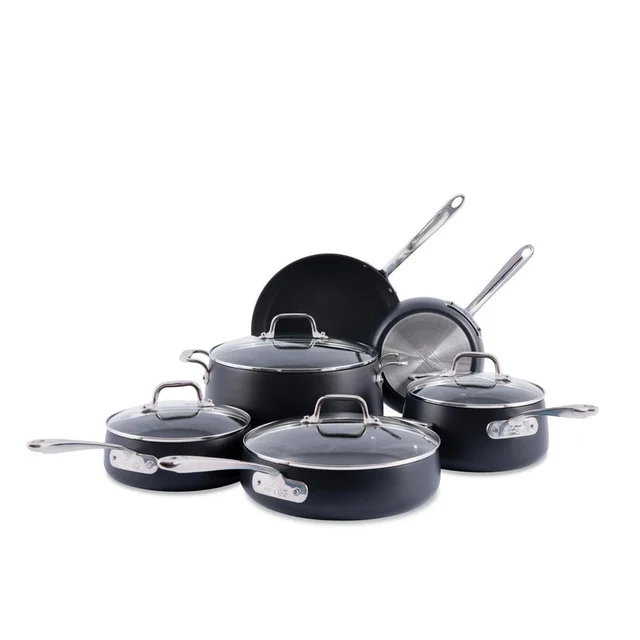
- All-Clad HA1 Expert Nonstick Cookware Set - Buy. A hard-anodized set with a bonded stainless base that heats evenly, runs on induction, and takes a 500-degree oven.
- Circulon A1 Series with ScratchDefense Nonstick Cookware Set - Buy. The most durable coating here, rated for metal utensils, on an induction-ready hard-anodized body.
- Tramontina Sicilia Aluminum Nonstick Cookware Set - It depends. A light, genuinely nonstick budget set that is slick when new but stovetop-only and short-lived.
- Gotham Steel Hammered Copper Nonstick Cookware Set - Skip. A photogenic hammered-copper bundle whose ceramic coating tends to stop releasing within months.
The verdict in 30 seconds
What mattered most
- Coating & body
- Oven-safe rating
- Induction compatible
- Metal-utensil safe
- Dishwasher safe
- Expected nonstick lifespan
Nonstick sets promise easy eggs and easier cleanup, but most lose their slickness within a year or two, and the category is crowded with look-alike bundles that overpromise. We synthesized independent expert assessments and long-term owner feedback to separate the sets worth buying from the ones that photograph better than they cook. Below are three we would actually recommend, plus one to avoid.
A hard-anodized set with a bonded stainless base that heats evenly, runs on induction, and takes a 500-degree oven.
Best for: Cooks who want one nonstick set to last several years and already use gentle utensils.
- Bonded stainless base heats evenly and works on induction, unlike lighter aluminum sets
- Oven-safe to 500 degrees with secure double-riveted stainless handles
- Coating is not metal-utensil safe, so a single scratch shortens its life
- Costs the most here, and the tempered glass lids are rated only to 350 degrees
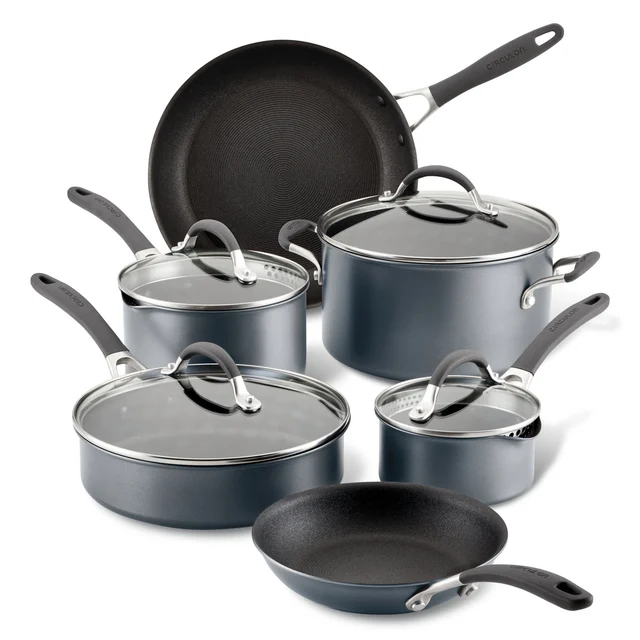
The most durable coating here, rated for metal utensils, on an induction-ready hard-anodized body.
Best for: Households that are hard on pans and want durability without paying a premium price.
- Triple-layer ScratchDefense coating tolerates metal utensils, the main way nonstick usually dies
- Induction-ready stainless base, plus dishwasher-safe pieces
- Oven limit of 400 degrees trails the pricier hard-anodized option
- Silicone handle grips can discolor and soften over years of heat
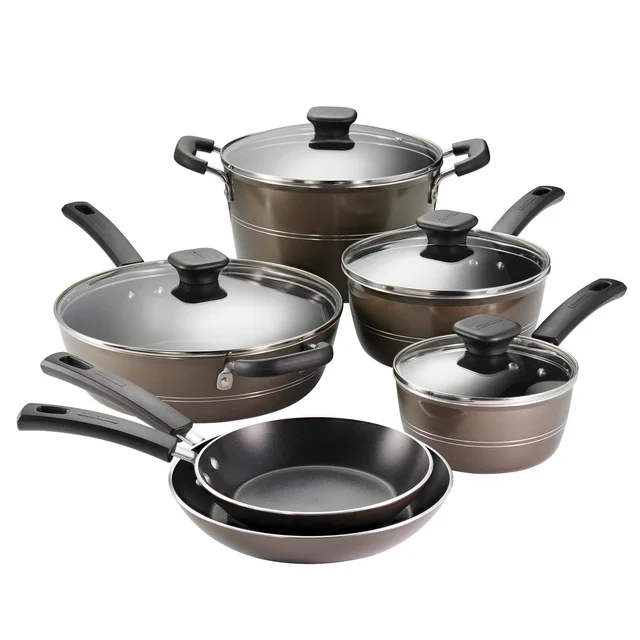
A light, genuinely nonstick budget set that is slick when new but stovetop-only and short-lived.
Best for: First apartments, dorms, or backups where low upfront cost matters more than longevity.
- Light stamped aluminum is easy to lift and cheap to replace
- Genuinely slick when new, with cool-touch Bakelite handles and dishwasher-safe pieces
- Not oven-safe and not induction compatible
- Thin gauge is prone to warping, and the coating tends to fade within one to two years of daily use
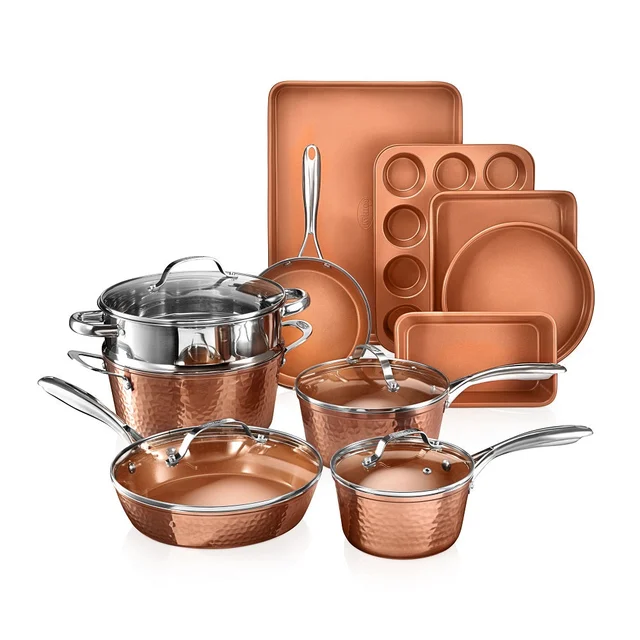
A photogenic hammered-copper bundle whose ceramic coating tends to stop releasing within months.
Best for: Almost no one seeking daily performance; the finish appeals more than the cooking does.
- Eye-catching hammered copper-tone finish and a PTFE-free ceramic surface
- Sold as a large bundle, sometimes with bakeware and a steamer insert
- Owners widely report the nonstick failing within months, with eggs beginning to stick and stain
- Thin body heats unevenly and can warp, and the ten-year warranty excludes lost nonstick performance
| Criteria | All-Clad HA1 Expert Nonstick Cookware Set Top pick | Circulon A1 Series with ScratchDefense Nonstick Cookware Set | Tramontina Sicilia Aluminum Nonstick Cookware Set | Gotham Steel Hammered Copper Nonstick Cookware Set |
|---|---|---|---|---|
| Verdict | Buy it | Buy it | It depends | Skip it |
| Best for | Cooks who want one nonstick set to last several years and already use gentle utensils. | Households that are hard on pans and want durability without paying a premium price. | First apartments, dorms, or backups where low upfront cost matters more than longevity. | Almost no one seeking daily performance; the finish appeals more than the cooking does. |
| Price tier | $$$ · premium | $$ · mid-range | $ · budget | $ · budget |
| Coating & body | 3-layer PTFE on hard-anodized aluminum with steel base | Triple-layer ScratchDefense PTFE on hard-anodized aluminum | Starflon PTFE on stamped lightweight aluminum | Ti-Cerama ceramic-copper on thin aluminum |
| Oven-safe rating | 500°F (glass lids 350°F) | 400°F (lids 350°F) | Stovetop only | Claimed 500°F, unverified in daily use |
| Induction compatible | Yes | Yes | No | Marketed but inconsistent |
| Metal-utensil safe | No | Yes | No | No |
| Dishwasher safe | Yes | Yes | Yes | Yes (hand-wash advised) |
| Expected nonstick lifespan | Several years with care | Longest in this group | One to two years | Months, per many owners |
Which one is right for you?
- Cooks who want one nonstick set to last several years and already use gentle utensils. Buy it All-Clad HA1 Expert Nonstick Cookware Set
- Households that are hard on pans and want durability without paying a premium price. Buy it Circulon A1 Series with ScratchDefense Nonstick Cookware Set
- First apartments, dorms, or backups where low upfront cost matters more than longevity. It depends Tramontina Sicilia Aluminum Nonstick Cookware Set
- Almost no one seeking daily performance; the finish appeals more than the cooking does. Skip it Gotham Steel Hammered Copper Nonstick Cookware Set
How we judged the field
We do not run a test lab. Instead, we read across independent expert evaluations and a large volume of long-term owner feedback, then look for the points where those two groups agree. That agreement is what separates a coating that photographs well from one that still releases an egg after two years of daily cooking.
For nonstick specifically, we weighted four things. Coating durability matters most, because every nonstick pan is a consumable and the only real question is how slowly it wears. After that we looked at heat behavior, since thin pans scorch and warp; oven and induction compatibility, which quietly decides how versatile a set is; and handle and lid construction, which owners complain about long after the novelty fades. Price sets expectations rather than rank: a budget set is not disqualified for being thin, only for pretending it is not.
Three sets cleared the bar. One did not, and it is common enough that it deserves a warning.
All-Clad HA1 Expert Nonstick
Buy itThis is the set we would hand most people. The body is hard-anodized aluminum bonded to a stainless-steel base, and that base is the difference: it heats evenly, resists warping, and makes the set induction-compatible, which lighter aluminum pans cannot claim. The cookware is oven-safe to 500 degrees, the highest ceiling in this group, and the double-riveted stainless handles feel secure rather than glued on.
The coating is a three-layer PTFE surface, PFOA-free, and it releases cleanly when new. What owners value most is longevity: with soft utensils and hand-washing, several years of service is a reasonable expectation. What they value less is that it is not metal-utensil safe, so a single stray fork can start the decline, and the tempered glass lids are rated only to 350 degrees even though the pans go higher. It is also the most expensive option here. For a set meant to last, that trade reads as fair.
Circulon A1 Series with ScratchDefense
Buy itThe Circulon is the pick for anyone who knows they are hard on cookware. Its headline feature is a triple-layer nonstick surface the maker calls ScratchDefense, and unlike most nonstick it is rated for metal utensils. Since scratching is the most common way these coatings die, that tolerance is worth more than the marketing suggests. The hard-anodized body sits on a stainless base, so it works on induction and cleans up in the dishwasher.
What we like more than the All-Clad is exactly that ruggedness, at a lower price. What we like less is the lower oven ceiling of 400 degrees, and the silicone-wrapped handle grips, which are comfortable but can discolor and soften over years of heat. If you want the longest-lasting coating of this group and do not need a 500-degree oven, this is the smarter spend.
Tramontina Sicilia Aluminum Nonstick
It dependsThe Sicilia is an honest budget set, and it is important to be clear about what that means. The body is stamped lightweight aluminum with the brand’s Starflon PTFE coating, and when new it is genuinely slick. It is light enough to handle easily, dishwasher-safe, and the Bakelite handles stay cool on the stovetop.
The limits are real and worth stating plainly. It is not oven-safe at all, so it is a stovetop-only set, and because the body is aluminum it is not induction-compatible. The thin gauge is more prone to warping and hot spots, and in daily use the coating tends to fade within one to two years. None of that is a scandal at this price; it only becomes a problem if you expect it to behave like a set costing several times more. As a first kitchen or a stopgap, it is reasonable. As a long-term purchase, it is not.
Gotham Steel Hammered Copper
Skip itThis is the set to avoid, and it is worth explaining why, because the marketing is persuasive. The hammered copper-tone finish looks distinctive, and the ceramic-copper surface is PTFE- and PFOA-free, which sounds reassuring. Out of the box it is slick, and the bundles are generous, sometimes including bakeware and a steamer insert.
The problem is what happens next. Owner feedback converges on the same complaint: the ceramic coating loses its release quickly, often within months, and eggs that slid on day one start to stick and stain. The thin aluminum body heats unevenly and can warp, which accelerates the wear. Most damaging, the advertised ten-year warranty generally excludes exactly what fails, the nonstick performance, so the guarantee offers little comfort. A pan that looks the part but stops working within a season is not a bargain, and there are budget sets that hold up better.
All-Clad HA1 vs Circulon A1: which should you buy?
These two are the real decision for most people, and the split is straightforward. Choose the All-Clad if you want the highest oven ceiling, the most even heat from its bonded stainless base, and a set you plan to treat carefully with soft utensils. Choose the Circulon if you are honest about being rough on pans: its metal-utensil-safe coating is the most forgiving here, it costs less, and it still works on induction and in the dishwasher.
Put simply, the All-Clad rewards careful owners with even cooking and a longer temperature range, while the Circulon protects careless ones with a tougher coating. Neither is a mistake. The wrong move is buying the premium set and then attacking it with a metal spatula, or buying the budget set and expecting oven duty it was never built for.
What to look for
Start with your stovetop. If you cook on induction, you need a magnetic base, which rules out lightweight aluminum sets regardless of price. Next, decide how you treat cookware: if metal utensils are inevitable, buy a coating rated for them rather than hoping for the best. Consider oven range only if you actually finish dishes under a broiler or in the oven; many cooks never do. Then weigh coating type, since PTFE releases better and lasts longer while ceramic avoids PTFE and PFAS and tolerates higher heat but fades sooner. Finally, match spend to expectation. A budget set is fine as long as you plan to replace it, and a premium set only pays off if you handle it gently.
Our final take
For most kitchens, the All-Clad HA1 Expert Nonstick set is the one to buy, thanks to even heat, induction support, and a 500-degree oven rating. If you are hard on pans or want to spend less, the Circulon A1 Series lasts longer under abuse. The Tramontina Sicilia is a defensible budget stopgap as long as you accept its stovetop-only, thin-gauge limits. And the Gotham Steel hammered copper set is the one to skip, because a finish that quits within months is not worth any price.
Questions, answered
Are nonstick cookware sets safe to use in 2026?
Yes, when used correctly. Modern PTFE coatings are PFOA-free and stable at normal cooking temperatures; the main risk is overheating an empty pan past roughly 500 degrees. Ceramic coatings avoid PTFE entirely but wear faster. Avoid metal utensils unless the set is specifically rated for them.
How long should a nonstick set last?
With gentle use, a quality PTFE set lasts three to five years before release fades, and the toughest coatings stretch further. Budget aluminum sets often decline within one to two years, and ceramic wears fastest, sometimes under a year. Hand-washing and soft utensils meaningfully extend any set's life.
Is ceramic or PTFE nonstick better?
They trade off. PTFE releases food more reliably and lasts longer, but some buyers avoid it on principle. Ceramic is free of PTFE and PFAS and handles higher heat, yet it loses slickness sooner and rarely matches PTFE for longevity. Choose based on which priority matters more to you.
Do I need an induction-compatible set?
Only if you cook on an induction cooktop, which requires magnetic-based cookware. Hard-anodized sets with a bonded stainless base, like the All-Clad and Circulon here, work on induction. Lightweight aluminum sets such as the Tramontina do not. Check your stovetop before buying anything.
Can nonstick pans go in the dishwasher?
Most are labeled dishwasher-safe, but repeated cycles and harsh detergent shorten coating life. Hand-washing with a soft sponge is gentler and preserves release performance longer. If you do use the dishwasher, expect the nonstick surface to degrade faster than the manufacturer's rating suggests.
Deciding between the top two? See our head-to-head: All-Clad HA1 Expert Nonstick Cookware Set vs Circulon A1 Series with ScratchDefense Nonstick Cookware Set.
More Home & Kitchen reviews
 The Best Outdoor Gas Griddles: 4 Compared (and One to Skip)
  The Best Pasta Makers: 4 Compared (and One to Skip)
  The Best Patio Heaters: 4 Compared (and One to Skip)
  The Best Pellet Grills: 4 Compared (and One to Skip)
  The Best Outdoor Pizza Ovens: 4 Compared (and One to Skip)
  The Best Popcorn Machines: 4 Compared (and One to Skip)