

Home & Kitchen
The Best Mandoline Slicers: 4 Compared (and One to Skip)
We compared four current mandoline slicers on cut quality, safety, adjustability, and value to see which ones earn a place in your kitchen.
The short version
For most people, the OXO Good Grips V-Blade Mandoline is the smart buy: it stands on its own, its dial gives repeatable thicknesses, and its guard and grippy base address the biggest safety risks. The Benriner Classic is the connoisseur's value pick, cutting thinner and more precisely than anything else here for a budget price, provided you respect its minimal guard. The Kyocera is a reasonable it-depends choice for light, rust-free slicing of soft produce, but its limited preset settings and struggle with hard vegetables limit it. The Mueller kit tempts with five blades at a low price, yet owner reports of dulling blades and flimsy build make it hard to recommend over the others. Best for: home cooks who want fast, uniform slices and are choosing between a safe standing slicer and the sharpest handheld value.
Our picks at a glance
- Benriner Classic Japanese Mandoline - Buy. A long-time professional-kitchen favorite with sharp, precise cuts for the money.
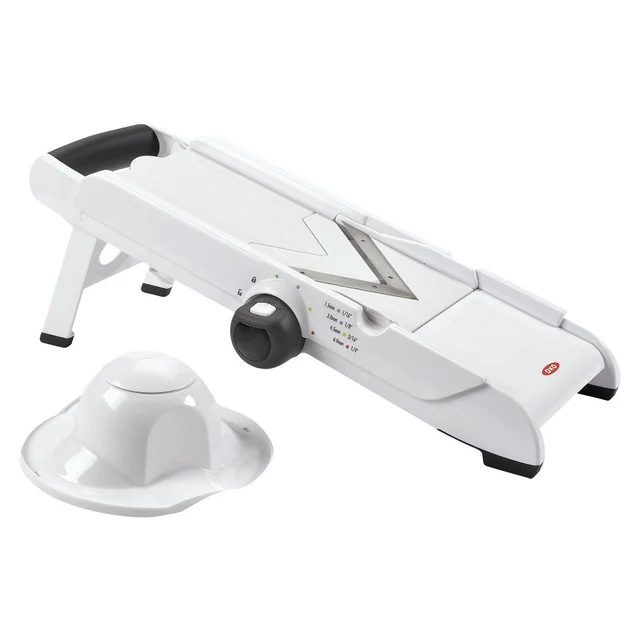
- OXO Good Grips V-Blade Mandoline Slicer - Buy. A stable, safety-minded all-rounder that is the easiest pick for most home kitchens.
- Kyocera Advanced Ceramic Adjustable Mandoline Slicer - It depends. A rust-proof ceramic blade that shines on soft produce but tires on the hard stuff.
- Mueller Austria V-Pro 5-Blade Adjustable Mandoline Slicer - Skip. A cheap five-in-one kit that spreads itself thin and does not hold up like the others.
The verdict in 30 seconds
What mattered most
- Cut quality & sharpness
- Thickness adjustment
- Safety & hand protection
- Handling & stability
- Versatility
- Cleaning & durability
A good mandoline turns tedious knife work into fast, uniform slices, but the category runs from professional-grade Japanese tools to bargain multi-blade kits of wildly different quality. We synthesized maker specifications and owner reports across four widely sold models to sort the genuinely useful from the merely cheap. Two are easy recommendations, one suits a narrow use case, and one is better left on the shelf.
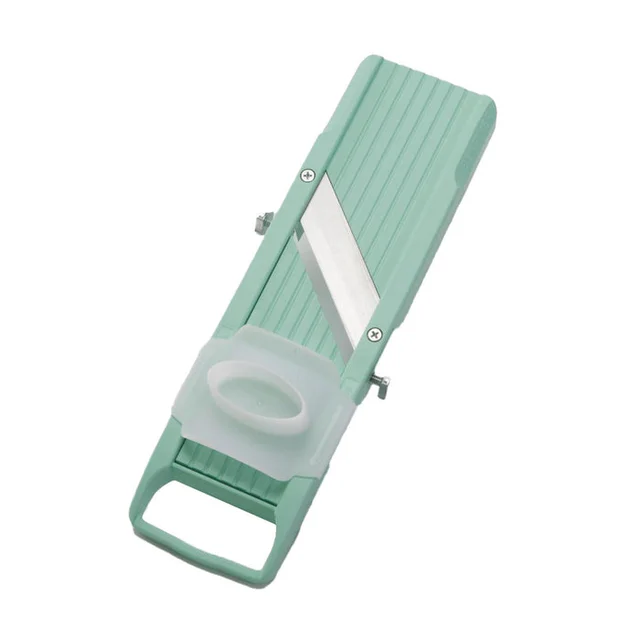
A long-time professional-kitchen favorite with sharp, precise cuts for the money.
Best for: Confident cooks who want the sharpest, most precise slices for the lowest price.
- Sharp stainless steel blades, made in Japan
- Produces thin, even slices with an adjustable thickness
- Ships with one flat blade and three comb blades for julienne cuts
- Compact, light, and inexpensive for the quality
- The finger guard is basic and grips small or round food poorly
- Handheld design needs a bowl or a steady hand and confident technique
A stable, safety-minded all-rounder that is the easiest pick for most home kitchens.
Best for: Home cooks who value stability and safety over the last degree of precision.
- Folding legs let it stand over a bowl or sit flat on the counter
- Color-coded dial gives repeatable thickness settings
- Effective hand guard and grippy feet reduce the biggest safety risks
- Sharp V-blade handles cucumbers, potatoes, and tomatoes well
- Bulkier to store than the handheld models
- Owners note the thinnest setting can be fiddly to lock in
- Costs more than the other three
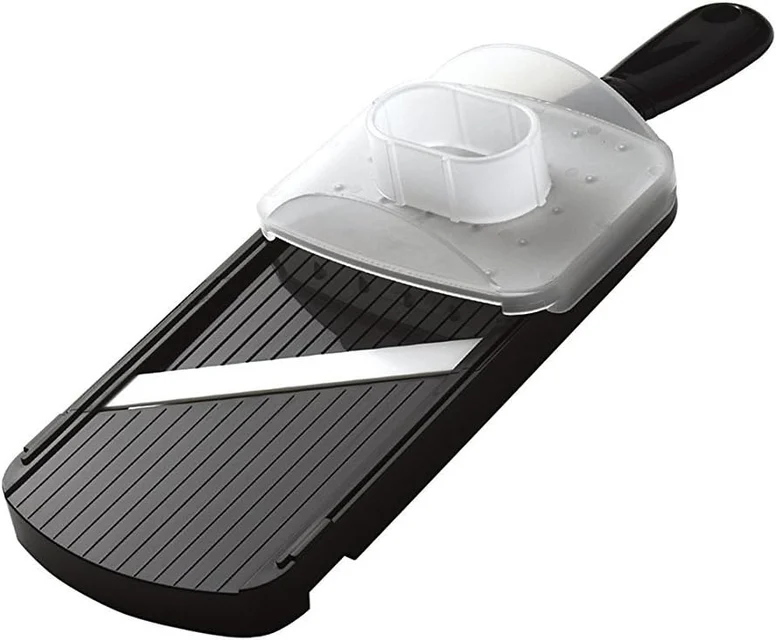
A rust-proof ceramic blade that shines on soft produce but tires on the hard stuff.
Best for: Light, occasional prep of soft vegetables and fruit where rust-free convenience matters.
- Ceramic blade is very sharp and holds its edge well
- Will not rust or react with acidic foods; check the maker's care guide before using a dishwasher
- Compact, light, and quick to set up
- Includes a handguard to hold food securely
- Offers a limited set of preset thicknesses rather than a continuous range
- Owners report it struggles with hard, dense produce such as winter squash
- Plastic components feel less durable over the long term
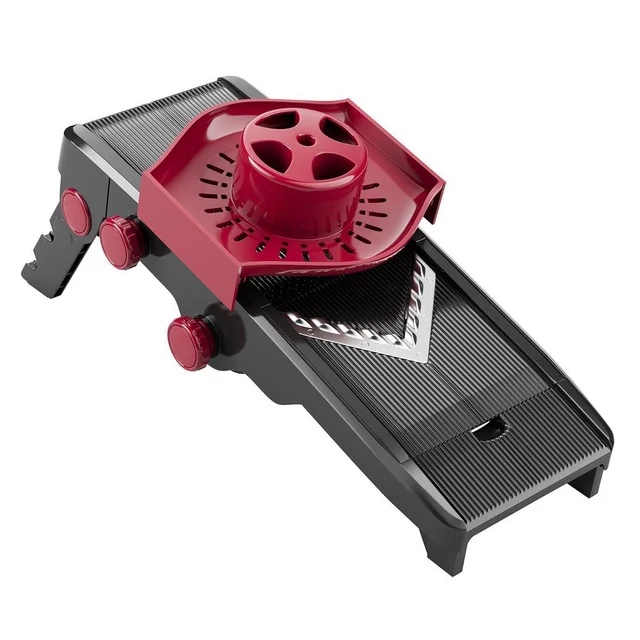
A cheap five-in-one kit that spreads itself thin and does not hold up like the others.
Best for: Bargain hunters who want the most blade options and accept the trade-offs.
- Five interchangeable blades cover slicing, julienne, and grating in one kit
- Folds flat and stores compactly with a blade case
- Among the least expensive options
- Some owner reports flag blades dulling and build quality slipping over time
- More loose parts to swap, manage, and clean
- Feels less precise and rigid than the dedicated slicers
| Criteria | Benriner Classic Japanese Mandoline Buy it Buy | OXO Good Grips V-Blade Mandoline Slicer Top pick Buy it Buy | Kyocera Advanced Ceramic Adjustable Mandoline Slicer It depends Buy | Mueller Austria V-Pro 5-Blade Adjustable Mandoline Slicer Skip it Buy |
|---|---|---|---|---|
| Best for | Confident cooks who want the sharpest, most precise slices for the lowest price. | Home cooks who value stability and safety over the last degree of precision. | Light, occasional prep of soft vegetables and fruit where rust-free convenience matters. | Bargain hunters who want the most blade options and accept the trade-offs. |
| Price tier | $ · budget | $$ · mid-range | $$ · mid-range | $ · budget |
| Cut quality & sharpness | Very sharp, thin and even | Very good | Very sharp on soft produce | Adequate when new |
| Thickness adjustment | Fully adjustable, very fine to thick | Dial with several set levels | Limited presets | Adjustable, multiple levels |
| Safety & hand protection | Basic guard | Effective guard plus stable base | Included handguard | Guard included but fiddly |
| Handling & stability | Handheld, needs a bowl | Stands on folding legs | Handheld, compact | Folding legs, less rigid |
| Versatility | 4 blades incl. julienne | Slice plus julienne | Slice plus julienne | 5 blades: slice/julienne/grate |
| Cleaning & durability | Simple to clean | Sturdy | Plastic wear | More parts, mixed longevity |
| Price tier | $ · budget | $$ · mid-range | $$ · mid-range | $ · budget |
Which one is right for you?
- Confident cooks who want the sharpest, most precise slices for the lowest price. Buy it Benriner Classic Japanese Mandoline
- Home cooks who value stability and safety over the last degree of precision. Buy it OXO Good Grips V-Blade Mandoline Slicer
- Light, occasional prep of soft vegetables and fruit where rust-free convenience matters. It depends Kyocera Advanced Ceramic Adjustable Mandoline Slicer
- Bargain hunters who want the most blade options and accept the trade-offs. Skip it Mueller Austria V-Pro 5-Blade Adjustable Mandoline Slicer
How we judged the field
We did not run our own lab. Instead we synthesized maker specifications and a broad base of owner reports, then weighed the criteria that actually separate a good mandoline from a frustrating one: cut quality and blade sharpness, how finely and repeatably you can set thickness, safety features that keep fingers away from the edge, stability and handling in real kitchens, versatility across slicing and julienne, and how the tool cleans up and holds together over time. Price sits underneath all of it - several of these cost about the same, so value came down to what each one does well rather than the sticker.
A recurring theme across sources is that sharpness and safety are linked. The sharpest tools give the cleanest slices but demand the most respect, which is why guard design and stability mattered as much to us as the edge itself.
Benriner Classic Japanese Mandoline
Buy itThe Benriner is a long-time favorite of professional kitchens, and the reason is simple: owners describe it as a very sharp, precise slicer. Made in Japan with stainless steel blades, it ships with a flat blade plus three comb blades for julienne cuts, and does all of this at a budget price. Owners praise the clean, even slices and easy cleanup. The trade-off is its bare-bones finger guard, which grips small or round items poorly, and a handheld format that rewards confident technique. If you are comfortable using the guard and a cut-resistant glove, few options here cut better for the money.
OXO Good Grips V-Blade Mandoline Slicer
Buy itThe OXO is the most home-friendly pick. It unfolds onto stable legs so it can stand over a bowl or sit flat on the counter, and a color-coded dial lets you return to the same thickness every time. Owners find it sturdy, sharp, and very easy to use, handling potatoes, cucumbers, and tomatoes cleanly, while its guard and grippy feet defuse the biggest hazards. It is not perfect: it is bulkier to store, the thinnest setting can be tricky to lock in, and it costs more than the others. But for most people those are small prices for a slicer that is genuinely easier and safer to live with.
Kyocera Advanced Ceramic Adjustable Mandoline Slicer
It dependsThe Kyocera is built around a ceramic blade that is very sharp, resists rust, holds its edge well, and will not react with acidic foods - a real advantage for tomatoes and citrus. It is compact, light, and comes with a handguard. The limits are just as clear: it offers a limited set of preset thicknesses instead of a continuous range, owners report it labors on hard, dense produce like squash, and its plastic parts feel less durable over time. That makes it a conditional recommendation - excellent for light, frequent slicing of soft vegetables and fruit, less so as an only mandoline for heavy prep.
Mueller Austria V-Pro 5-Blade Adjustable Mandoline Slicer
Skip itOn paper the Mueller is the most tempting: five blades for slicing, julienne, and grating, a folding body, a storage case, and the lowest price. In practice it tries to do everything and masters none. Some owner reports flag blades that dull and build quality that slips with use, and the many loose parts add fiddliness to both slicing and cleanup. It can be a serviceable occasional tool, but next to the sharper, sturdier options at a similar price it is hard to justify.
OXO Good Grips V-Blade vs Benriner Classic: which should you buy?
These are the two strongest tools here, and the choice comes down to temperament. The Benriner cuts thinner and more precisely and costs less, but it is a handheld tool with a minimal guard that assumes you know what you are doing. The OXO gives up a little ultimate precision and asks for more storage space and money, but it stands on its own, dials in repeatable thicknesses, and protects your hands better. If you slice often, want the best cuts, and are confident with technique, the Benriner is the value winner. If you want the safest, most forgiving tool that most cooks will simply find easier, buy the OXO. Neither is a wrong answer.
What to look for
- Blade sharpness: a sharper blade slices cleaner and, counterintuitively, is safer because it does not require forcing food through.
- Thickness control: a continuous adjustment beats a handful of fixed presets if you want versatility.
- Safety design: a secure food holder, a stable base or legs, and grippy feet matter more than any spec.
- Handling: decide between a compact handheld you brace over a bowl and a standing model that frees both hands.
- Cleaning and durability: fewer parts and dishwasher-safe materials save hassle; check owner reports for long-term edge retention.
- Storage: standing mandolines are bulkier, so factor in drawer or cabinet space.
Our final take
Most home cooks should buy the OXO Good Grips V-Blade Mandoline: it is the stable, safety-minded all-rounder that makes fast, uniform slicing approachable. Bargain-minded and confident cooks will get sharper, more precise results for less from the Benriner Classic, our runner-up and the value standout. The Kyocera is worth it only if your prep skews toward soft produce and you value a rust-proof ceramic edge. The Mueller’s five-blade pitch is alluring, but the sharper, sturdier competition at similar prices makes it the one to skip. Whichever you choose, treat the blade with respect - use the guard, and add a cut-resistant glove.
Questions, answered
Is a mandoline slicer actually worth it over a good knife?
For repetitive, uniform cuts - thin potato rounds, even cucumber slices, matchstick julienne - a mandoline is far faster and more consistent than a knife. If you rarely need uniformity, a knife is enough. The catch is safety: mandolines are extremely sharp, so uniformity comes with a real need for care.
Which of these is the safest to use?
The OXO rates best on safety here because it stands on grippy folding legs and includes a food holder, so your hand stays farther from the blade. Every model in this group is dangerously sharp, however. Owners strongly recommend using the included guard and a cut-resistant glove, and never slicing the last stub of food by hand.
Can these mandolines go in the dishwasher?
Check each maker's care guide before using a dishwasher, and note that hand washing extends the life of plastic parts and preserves edges. The Benriner cleans up easily by hand. In all cases, wash the blade carefully - it is the part most likely to cause an injury during cleanup.
Should I choose a handheld or a standing mandoline?
Handheld models like the Benriner and Kyocera are compact, easy to store, and let you slice directly over a bowl, but they demand steadier technique. Standing designs like the OXO are more stable and beginner-friendly at the cost of bulk. If you are new to mandolines or nervous about safety, the standing style is the friendlier place to start.
What foods should I not use on a mandoline?
Very hard, dense produce such as winter squash can overwhelm lighter blades - the Kyocera in particular is reported to struggle here. Small, round, or awkwardly shaped items are also risky because they are hard to secure in a guard. For those, reach for a knife rather than forcing the tool.
Deciding between the top two? See our head-to-head: OXO Good Grips V-Blade Mandoline Slicer vs Benriner Classic Japanese Mandoline.
More in Home & Kitchen
Mandoline Slicers, Explained Plain-English guide → OXO Good Grips V-Blade Mandoline Slicer vs Benriner Classic Japanese Mandoline Head-to-head →  The Best Mattresses in a Box: 4 Compared (and One to Skip)
  The Best Electric Meat Grinders for Home Use: 4 Compared (and One to Skip)
  The Best Countertop Microwaves: 4 Compared (and One to Skip)
  The Best Mouse Traps: 4 Compared (and One to Skip)