

Home & Kitchen
The Best Electric Meat Grinders for Home Use: 4 Compared (and One to Skip)
We compared four standalone electric meat grinders on grind capacity, motor power, build quality, cleanup, and value for real home kitchens.
The short version
A quality standalone electric grinder is worth it if you grind your own meat more than a few times a year, and the #8 size class is the home-use sweet spot. Our top pick is the LEM Big Bite #8 (0.5 HP): stainless construction, a 5-year warranty, and enough muscle for burger, sausage, and wild game without becoming a commercial appliance. The Sausage Maker #8 PRO is the runner-up, though The Sausage Maker's own site no longer lists it, so check availability. If your kitchen is small and you only grind occasionally, the compact LEM #5 saves space and money but bogs down on bulk work. Skip the commercial Pro-Cut #22 for home use, its 29-lb-per-minute capacity and flagship price are overkill for most households. Best for: home cooks and hunters who want a durable grinder sized to real household batches rather than a business.
Our picks at a glance
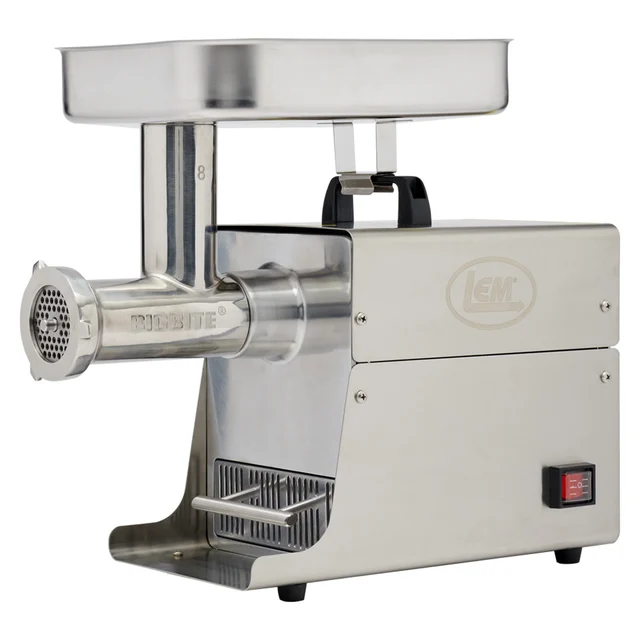
- LEM Big Bite #8 Meat Grinder (0.5 HP) - Buy. The home-use sweet spot: enough power for game and sausage without turning into a commercial appliance.
- The Sausage Maker #8 Electric Meat Grinder PRO - Buy. A semi-commercial #8 grinder with a permanently lubricated motor and a built-in storage drawer, per earlier listings. The Sausage Maker's site no longer lists this model.
- LEM Big Bite #5 Meat Grinder (0.35 HP) - It depends. The compact, lower-cost entry point that's plenty for small batches but runs out of muscle on bulk work.
- Pro-Cut #22 Electric Meat Grinder - Skip. A true commercial workhorse that's wildly over-specced and over-priced for any home kitchen.
The verdict in 30 seconds
What mattered most
- Grind throughput
- Motor power
- Build & gears
- Cleanup & storage
- Footprint & weight
- Best use case
If you want to grind your own burger, sausage, or wild game, a dedicated standalone grinder beats any flimsy budget box or stand-mixer attachment for speed and durability. We weighed how much grinder a home cook actually needs. The verdicts spread out fast: two we'd happily buy, one that only makes sense for smaller kitchens, and a commercial unit that's a genuine mistake for home use.
The home-use sweet spot: enough power for game and sausage without turning into a commercial appliance.
Best for: Home cooks and hunters who grind regularly and want a grinder with a 5-year warranty.
- Stainless steel construction with a 0.5 HP permanently lubricated motor and built-in circuit breaker
- Maker rates it at up to 7 lb of meat per minute, enough for regular batches of venison, pork, and burger
- Storage drawer under the head holds plates and accessories, backed by a 5-year warranty
- Premium price for occasional cooks who only grind a few times a year
- Countertop footprint and weight are noticeable if kitchen storage is tight
Own the LEM Big Bite #8 Meat Grinder (0.5 HP)? Tell us how it held up.
Thanks. Counted, and shown once enough owners have weighed in.
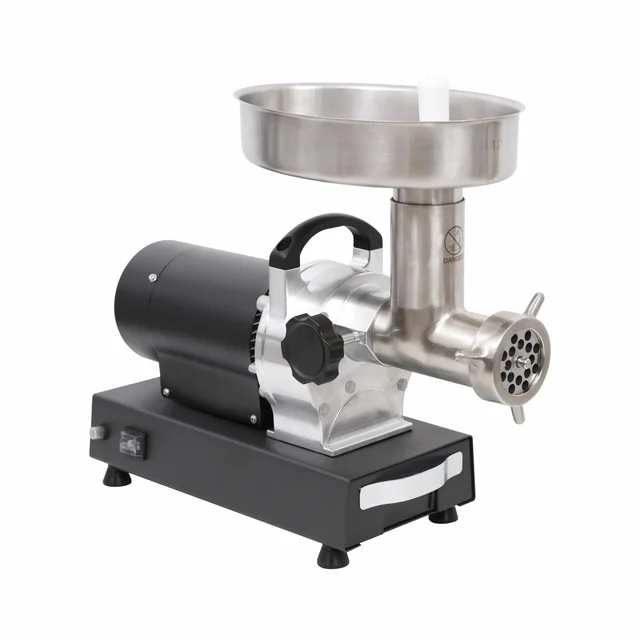
A semi-commercial #8 grinder with a permanently lubricated motor and a built-in storage drawer, per earlier listings. The Sausage Maker's site no longer lists this model.
Best for: Buyers who want #8-class output plus tidy onboard accessory storage at a similar price to the category leaders.
- Air-cooled, permanently lubricated motor (per earlier listings)
- Same #8 class as the LEM top pick
- Built-in drawer stores plates and the stuffing horn so accessories don't wander off
- Priced right alongside more established premium grinders, so it isn't a true bargain
- Brand is less widely known, so local parts and accessory availability vary
- Not currently listed on The Sausage Maker's own site, so check availability
Own the The Sausage Maker #8 Electric Meat Grinder PRO? Tell us how it held up.
Thanks. Counted, and shown once enough owners have weighed in.
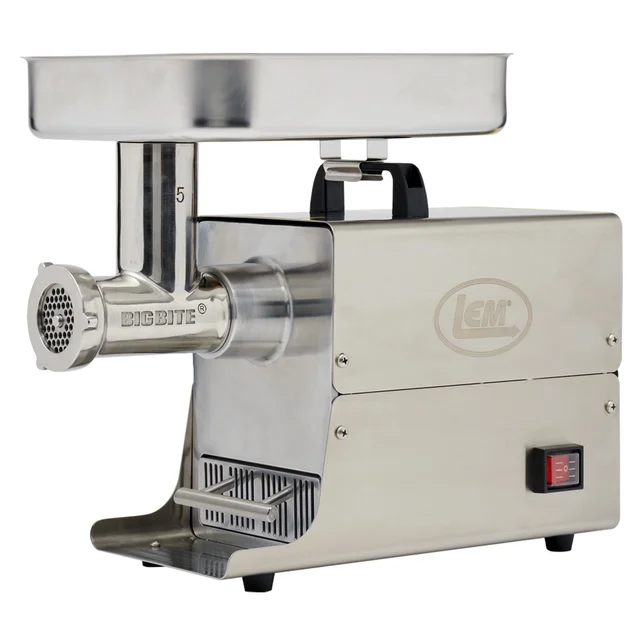
The compact, lower-cost entry point that's plenty for small batches but runs out of muscle on bulk work.
Best for: Occasional and small-batch cooks with limited space who don't process large volumes.
- Smaller footprint than its bigger sibling, easy to store in an apartment kitchen
- Same stainless construction, storage drawer, and 5-year warranty as its bigger sibling
- Lowest entry price among the quality standalone grinders we looked at
- Maker rates it at up to 4 lb per minute, so it can bog down on large volumes and sinewy or semi-frozen cuts
- Slower throughput makes big-batch sausage or game days tedious
Own the LEM Big Bite #5 Meat Grinder (0.35 HP)? Tell us how it held up.
Thanks. Counted, and shown once enough owners have weighed in.
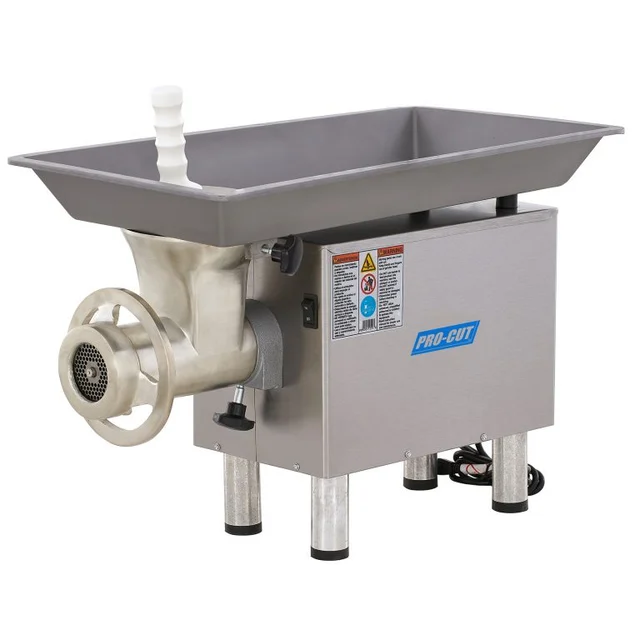
A true commercial workhorse that's wildly over-specced and over-priced for any home kitchen.
Best for: Butcher shops, small food businesses, and clubs processing large volumes, not home kitchens.
- Throughput of 29 lb per minute for small-business meat processing
- Stainless steel body with a cast-iron headstock, listed at about 133 lb
- 1 HP motor and a gear transmission with no belts or pulleys to maintain
- Costs several times what an excellent home grinder does
- Large, very heavy, and awkward to store or move in a home setting
- Capacity most home cooks will not use
Own the Pro-Cut #22 Electric Meat Grinder? Tell us how it held up.
Thanks. Counted, and shown once enough owners have weighed in.
| Criteria | LEM Big Bite #8 Meat Grinder (0.5 HP) Top pick Buy it Buy | The Sausage Maker #8 Electric Meat Grinder PRO Buy it Buy | LEM Big Bite #5 Meat Grinder (0.35 HP) It depends Buy | Pro-Cut #22 Electric Meat Grinder Skip it Buy |
|---|---|---|---|---|
| Best for | Home cooks and hunters who grind regularly and want a grinder with a 5-year warranty. | Buyers who want #8-class output plus tidy onboard accessory storage at a similar price to the category leaders. | Occasional and small-batch cooks with limited space who don't process large volumes. | Butcher shops, small food businesses, and clubs processing large volumes, not home kitchens. |
| Price tier | $$$ · premium | $$$ · premium | $$ · mid-range | $$$$ · flagship |
| Grind throughput | Up to 7 lb/min (maker) | Not verified | Up to 4 lb/min (maker) | 29 lb/min (maker) |
| Motor power | 0.5 HP | Air-cooled #8 class (per earlier listings) | 0.35 HP | 1 HP |
| Build & gears | Stainless steel, permanently lubricated motor | Permanently lubricated motor (per earlier listings) | Stainless steel, permanently lubricated motor | Stainless body, cast-iron headstock, gear transmission |
| Cleanup & storage | Storage drawer under the head | Built-in accessory storage drawer | Compact, storage drawer | Heavy, commercial cleaning routine |
| Footprint & weight | About 29 lb | Moderate, countertop-friendly | About 26 lb | About 133 lb |
| Best use case | Regular home batches, game, sausage | Home batches with tidy storage | Occasional small-batch cooking | Small business / very high volume |
| Price tier | $$$ · premium | $$$ · premium | $$ · mid-range | $$$$ · flagship |
Which one is right for you?
- Home cooks and hunters who grind regularly and want a grinder with a 5-year warranty. Buy it LEM Big Bite #8 Meat Grinder (0.5 HP)
- Buyers who want #8-class output plus tidy onboard accessory storage at a similar price to the category leaders. Buy it The Sausage Maker #8 Electric Meat Grinder PRO
- Occasional and small-batch cooks with limited space who don't process large volumes. It depends LEM Big Bite #5 Meat Grinder (0.35 HP)
- Butcher shops, small food businesses, and clubs processing large volumes, not home kitchens. Skip it Pro-Cut #22 Electric Meat Grinder
How we judged the field
We don’t run our own lab. Instead, we synthesize maker specifications and aggregated owner reports, then weigh them against what a home kitchen actually needs. For meat grinders, a handful of criteria separate the genuinely good from the merely marketed:
- Throughput and power - how many pounds per minute the machine can grind without stalling on tough or chilled cuts.
- Build and gears - metal heads and steel drive gears are a strong predictor of longevity; plastic gears are where cheap grinders fail.
- Right-sizing - the correct grinder for a home is one matched to your batch sizes, not the biggest motor you can buy.
- Cleanup and storage - how easily it strips down, and whether it swallows your counter and cabinet space.
Against those criteria, the standalone grinders below sort cleanly into buy, depends, and skip.
LEM Big Bite #8 Meat Grinder (0.5 HP)
Buy itThis is the grinder we’d hand most home cooks. LEM rates the 0.5 HP motor and #8 head at up to 7 pounds per minute for burger, sausage blends, and wild game. It is stainless steel with a permanently lubricated motor, has a storage drawer beneath the head for plates and accessories, and is backed by a 5-year warranty and lifetime customer support. The only real knocks are price and footprint, both of which are easy to justify if you grind more than a few times a year.
The Sausage Maker #8 Electric Meat Grinder PRO
Buy itA close runner-up in the same #8 class. Earlier listings describe a permanently lubricated, air-cooled motor and a built-in storage drawer for plates and the stuffing horn. One flag: The Sausage Maker’s own site no longer lists a #8 PRO grinder, so confirm the exact model and specs before you buy. It lands at a similar price to the established leaders rather than undercutting them, and the brand is less of a household name, so it’s a smart buy specifically for people who value semi-commercial motor design.
LEM Big Bite #5 Meat Grinder (0.35 HP)
It dependsThe compact, lower-cost option. It shares the stainless construction, storage drawer, and 5-year warranty of its bigger sibling in a smaller body that’s easier to store in a cramped kitchen, and it’s the most affordable quality standalone grinder here. The trade-off is muscle: at 0.35 HP and up to 4 pounds per minute per LEM, it works harder on large volumes and sinewy or semi-frozen cuts. If you grind occasionally and in small batches, it’s a sensible pick. If you see big sausage or game days in your future, the #8 is worth the step up.
Pro-Cut #22 Electric Meat Grinder
Skip itThere’s nothing wrong with this machine, it’s just the wrong tool for a home. It’s a commercial unit with a 1 HP motor, a gear transmission, and throughput of 29 pounds per minute, wrapped in a stainless body with a cast-iron headstock. For a home kitchen that means a price well above a home grinder, a large machine listed at about 133 pounds that’s awkward to store, and capacity most home cooks will not use. Buy it only if you’re processing at small-business volume.
Sources
Specs in this review come from these pages.
LEM Big Bite #8 vs The Sausage Maker #8 PRO: which should you buy?
These two are the strongest picks and they’re closely matched. Both are #8-class grinders with a permanently lubricated motor and an onboard storage drawer, and both cost about the same. The LEM Big Bite #8 gets our top spot on the strength of its owner track record and its current maker listing with a 5-year warranty. The Sausage Maker #8 PRO is described in earlier listings with an air-cooled motor, but its maker no longer lists it. If you want the safest long-term reputation, take the LEM; if you find a Sausage Maker unit with confirmed specs, it is a defensible alternative.
What to look for
- Match the size to your batches. A #8 grinder around 0.5 HP suits most homes; only go bigger if you regularly process large volumes.
- Prefer metal gears and a metal head. This is a major durability differentiator and a main reason to avoid the cheapest grinders.
- Don’t overpay for wattage claims. Marketing watts are often peak, not sustained; real-world throughput and motor design matter more.
- Chill everything first. Grinders cut cleanest when the meat and parts are near freezing; this matters more than a few extra watts.
- Check included accessories. Look for multiple plate sizes and a stuffing tube if you plan to make sausage.
- Skip the false economy. A sub-budget grinder that strips its gears in a season can cost more than a mid-range metal grinder that lasts years.
Our final take
For home use, the right grinder is the one sized to your kitchen, not the one with the biggest motor. The LEM Big Bite #8 is our pick because it nails that balance of power, durability, and manageable size, with the Sausage Maker #8 PRO the runner-up if you can find one with confirmed specs. If space and budget are tight and your batches are small, the LEM #5 is a reasonable, honest compromise. And however tempting its spec sheet looks, leave the commercial Pro-Cut #22 to the businesses it was built for.
Questions, answered
How powerful does a home meat grinder need to be?
For most households, a #8-size grinder around 0.5 HP is the sweet spot. LEM rates its #8 at up to 7 pounds per minute, enough for burger, sausage blends, and wild game. Smaller 0.35 HP units (LEM rates its #5 at up to 4 pounds per minute) are fine for occasional small batches, while 1 HP commercial machines are far more than most home kitchens need.
Is a stand-mixer grinder attachment good enough instead?
For very light, occasional grinding, a stand-mixer attachment can work. But it relies on your mixer's motor, tends to be slower, and can strain the mixer on tough or partially frozen cuts. If you grind regularly or in volume, a dedicated standalone grinder like the ones here is faster, more durable, and less likely to overheat.
Do metal gears really matter versus plastic ones?
Generally yes. Owner reports commonly say that all-metal heads with steel drive gears outlast plastic-geared budget grinders, which can strip or crack under load. Check each listing for the gear material, since not every maker states it.
Can these grinders also stuff sausage?
Most standalone grinders, including these, accept a stuffing tube or horn so you can fill casings. For occasional sausage it works fine, though dedicated cooks often prefer a separate sausage stuffer for cleaner, faster filling. Check that the stuffing accessories are included or available before you buy.
Why not just buy a cheap budget grinder?
Very inexpensive grinders often use plastic gears, inflated wattage claims, and lightweight housings that struggle with real cuts and wear out quickly. Owner reports commonly say they underperform on throughput and longevity, so a mid-range or premium metal-geared grinder is usually the better long-term value even though it costs more upfront.
Deciding between the top two? See our head-to-head: LEM Big Bite #8 Meat Grinder (0.5 HP) vs The Sausage Maker #8 Electric Meat Grinder PRO.
More in Home & Kitchen
Meat Grinders, Explained Plain-English guide → LEM Big Bite #8 Meat Grinder (0.5 HP) vs The Sausage Maker #8 Electric Meat Grinder PRO Head-to-head →  The Best Countertop Microwaves: 4 Compared (and One to Skip)
  The Best Mouse Traps: 4 Compared (and One to Skip)
  The Best Mug Warmers: 4 Compared (and One to Skip)
  The Best Multi-Cookers & Electric Pressure Cookers, Ranked