

Tech & Gadgets
The Best Logic Analyzers: 4 Compared (and One to Skip)
We compared four USB logic analyzers on the numbers that decide whether a capture is readable and whether the tool survives your board: published input bandwidth as distinct from sample rate, input impedance, threshold voltage, protection ratings, and the quality of the software you will actually stare at.
The short version
The Saleae Logic Pro 8 wins because it is the only one here that publishes every number you need, including a real 100 MHz digital bandwidth figure separate from its 500 MS/s sample rate, plus 2 MOhm input impedance and absolute maximum ratings of -25 V to +25 V. The DreamSourceLab DSLogic Plus is the value pick: 16 channels, a threshold you can set anywhere from 0 V to 5 V in 0.1 V steps, 256 Mbit of on-board capture memory, and fly wires rated to plus or minus 30 V, for a fraction of the money. The Digilent Digital Discovery is the depends pick, worth it if you need 32 channels, a 16-channel pattern generator and a programmable supply in one box, and wrong for you if you wanted an analog scope too. Skip the Saleae Logic 8: it sits in the same premium price bracket as the Pro but its datasheet lists 25 MHz digital bandwidth, 100 MS/s on only three channels, and 1 MHz analog bandwidth over USB 2.0. If you buy Saleae buy the Pro, and if the Pro is out of reach the DSLogic Plus does far more per unit of money than the Logic 8 does. Sample rate is the number everyone prints and bandwidth is the number that decides whether your capture is readable, so check that only some makers publish both. Best for: embedded developers and hobbyists debugging I2C, SPI and UART on real boards who want a capture they can trust.
Our picks at a glance
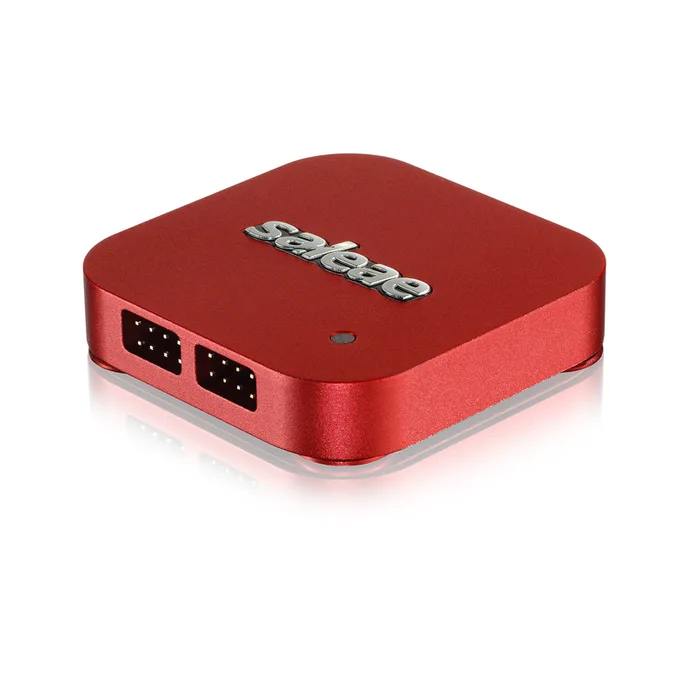
- Saleae Logic Pro 8 - Buy. The one whose datasheet answers nearly every question, with a published 100 MHz digital bandwidth instead of just a sample rate number.
- DreamSourceLab DSLogic Plus - Buy. Sixteen channels, a threshold you can put anywhere from 0 V to 5 V, and real on-board capture memory for budget money.
- Digilent Digital Discovery - It depends. Thirty-two channels plus a pattern generator and programmable supplies, aimed squarely at parallel buses and FPGA work.
- Saleae Logic 8 - Skip. Premium price, and a datasheet that quotes 25 MHz digital bandwidth and 100 MS/s on only three channels.
The verdict in 30 seconds
What mattered most
- Digital channels
- Max sample rate
- Published input bandwidth
- Input impedance
- Logic threshold
- Input protection
A USB logic analyzer is a small box that samples digital pins and hands the waveform to software on your PC, which then decodes I2C, SPI, UART and dozens of other protocols into readable transactions. The hardware is simple enough that the cheapest units and the most expensive ones look similar in a listing, and the headline spec everyone quotes, sample rate, is the one that tells you the least. What separates them is published input bandwidth, how far the threshold voltage can be moved, what happens when a probe touches something it should not, and whether the capture software makes a busy bus legible or unreadable. We picked four devices that are currently sold by their makers and whose specifications are actually published, then read the datasheets rather than the product blurbs.
The one whose datasheet answers nearly every question, with a published 100 MHz digital bandwidth instead of just a sample rate number.
Best for: Someone who debugs boards weekly and wants to stop wondering whether the tool or the board is at fault.
- Publishes a real digital bandwidth figure of 100 MHz and an analog -3 dB bandwidth of 5 MHz, separate from the 500 MS/s sample rate.
- 2 MOhm parallel 10 pF input impedance and absolute maximum ratings of -25 V to +25 V, so a slipped probe is usually survivable.
- Logic 2 runs on Windows, macOS and Linux with 25+ built-in protocol decoders and a Python automation API.
- The 500 MS/s figure applies to up to four channels only; all eight run at 100 MS/s.
- USB 3.0 is required to reach the advertised sample rates, and Saleae states performance drops by roughly a factor of six on USB 2.0.
- No capture memory on board, so recording length depends on your PC's free RAM and how busy the signal is.
- The most expensive option here, and the sigrok project lists Saleae's current generation as work in progress rather than supported.
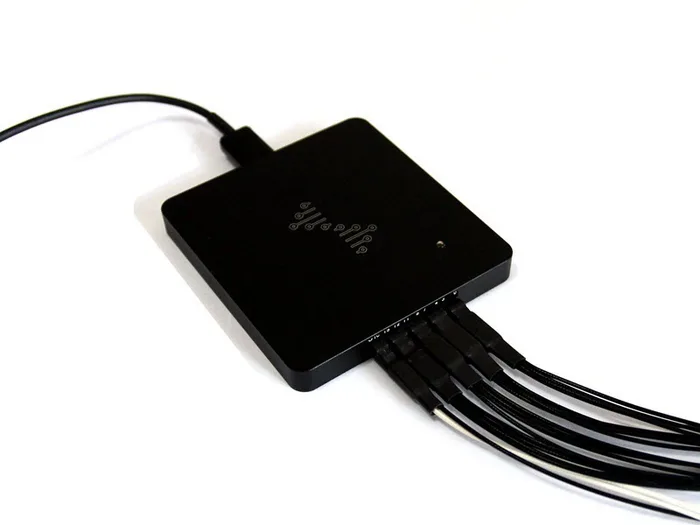
Sixteen channels, a threshold you can put anywhere from 0 V to 5 V, and real on-board capture memory for budget money.
Best for: Hobbyists and small labs who want 16 usable channels and a wide threshold range without premium pricing.
- Threshold voltage is adjustable from 0 V to 5 V in 0.1 V steps, which covers 1.2 V parts through 5 V logic on one device.
- 256 Mbit of on-board memory means the capture is not hostage to your USB link, and the datasheet quotes a 5 ns minimum acquisition pulse.
- The supplied shielded fly wires are rated for a -30 V to +30 V protected input range, and each channel gets its own shield ground.
- DreamSourceLab does not publish an input bandwidth figure at all, only sample rates and the minimum acquisition pulse.
- 250 kOhm parallel 13 pF input impedance loads the circuit under test more than the Saleae devices do.
- The 400 MHz sample rate applies to four channels; all 16 run at 100 MHz in buffer mode, over USB 2.0.
- sigrok lists a hardware variant shipping since early 2023 with a different FPGA vendor as currently incompatible, so open-source support depends on which unit arrives.
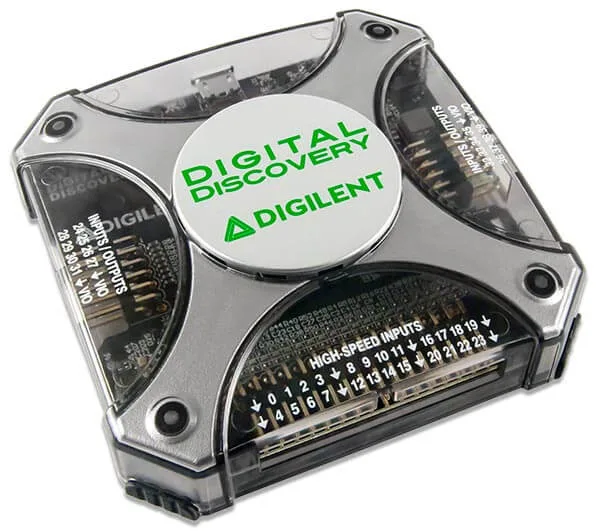
Thirty-two channels plus a pattern generator and programmable supplies, aimed squarely at parallel buses and FPGA work.
Best for: Anyone chasing wide parallel buses, memory interfaces or FPGA IO who also wants to drive stimulus patterns from the same box.
- 32-channel logic analyzer at 200 MS/s, or 8 channels at 800 MS/s, which is more parallel width than anything else here.
- Adds a 16-channel pattern generator at 100 MS/s and a four-channel programmable 1.2 V to 3.3 V supply, so it can stimulate as well as observe.
- Free WaveForms software on Windows, macOS and Linux with 11 built-in interpreters, a script editor, and LabVIEW and MATLAB support.
- Digilent specifies inputs as 1.2 V to 3.3 V CMOS and 5 V tolerant, so the threshold range is narrower than the DSLogic's 0 V to 5 V.
- The 800 MS/s rate requires the separately sold High-Speed Adapter and impedance-matched probes.
- There are no analog scope channels, so it will not replace a mixed-signal tool the way the Saleae devices partly do.
- Digilent's shop listing does not publish an absolute maximum input voltage or a protection rating for the inputs.
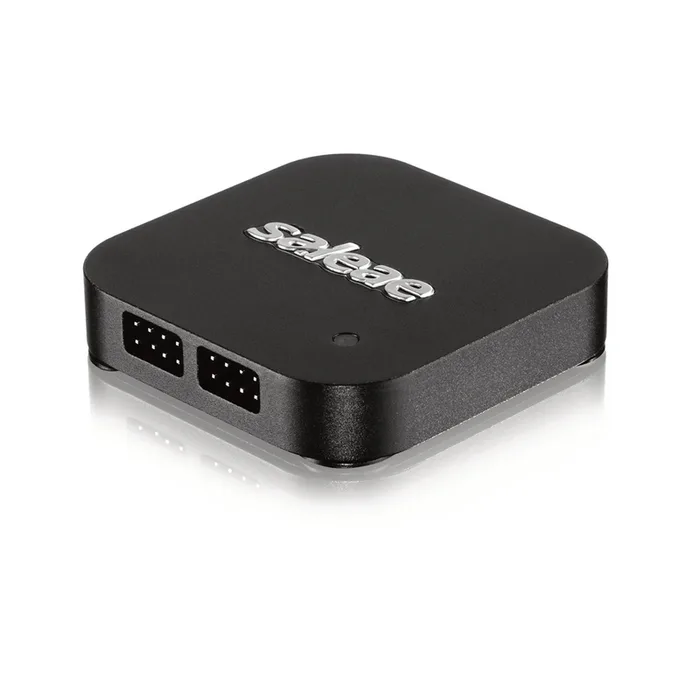
Premium price, and a datasheet that quotes 25 MHz digital bandwidth and 100 MS/s on only three channels.
Best for: Almost nobody at this price; buy the Logic Pro 8 if you want Saleae, or the DSLogic Plus if you want the money back.
- Same Logic 2 software, same three-year warranty and same 180-day return policy as the Logic Pro 8.
- Absolute maximum ratings of -25 V to +25 V and 1 MOhm parallel 10 pF input impedance are honestly published.
- Eight channels that each double as analog inputs, which is more than most budget analyzers offer at all.
- Digital bandwidth is listed as 25 MHz, a quarter of the Logic Pro 8, while sitting in the same premium price bracket.
- 100 MS/s applies to up to three channels, 50 MS/s to six, 40 MS/s to seven, and all eight channels run at 25 MS/s.
- Analog side is limited to 10 MS/s, 1 MHz bandwidth, 10-bit resolution and a 0 V to +5 V input range, against 50 MS/s, 5 MHz, 12-bit and -10 V to +10 V on the Pro.
- The datasheet lists one fixed logic threshold pair where the Pro 8 lists three selectable thresholds, and the device is USB 2.0 only.
| Criteria | Logic Pro 8 Top pick | DSLogic Plus | Digital Discovery | Logic 8 |
|---|---|---|---|---|
| Verdict | Buy it | Buy it | It depends | Skip it |
| Best for | Someone who debugs boards weekly and wants to stop wondering whether the tool or the board is at fault. | Hobbyists and small labs who want 16 usable channels and a wide threshold range without premium pricing. | Anyone chasing wide parallel buses, memory interfaces or FPGA IO who also wants to drive stimulus patterns from the same box. | Almost nobody at this price; buy the Logic Pro 8 if you want Saleae, or the DSLogic Plus if you want the money back. |
| Price tier | $$$ · premium | $ · budget | $$ · mid-range | $$$ · premium |
| Digital channels | 8, each also an analog input | 16 | 32 | 8, each also an analog input |
| Max sample rate | 500 MS/s on up to 4 channels, 100 MS/s on all 8 | 400 MHz on 4 channels, 200 MHz on 8, 100 MHz on 16 | 800 MS/s on 8 channels, 400 MS/s on 16, 200 MS/s on 32 | 100 MS/s on up to 3 channels, 25 MS/s on all 8 |
| Published input bandwidth | 100 MHz digital, 5 MHz analog | Not published; 5 ns minimum acquisition pulse instead | Not published as a bandwidth figure | 25 MHz digital, 1 MHz analog |
| Input impedance | 2 MOhm parallel 10 pF | 250 kOhm parallel 13 pF | 560 kOhm parallel 10 pF on DIN0 to DIN23 | 1 MOhm parallel 10 pF |
| Logic threshold | Selectable at Vth +0.6 V, +0.9 V or +1.65 V | Adjustable 0 V to 5 V in 0.1 V steps | 1.2 V to 3.3 V CMOS, 5 V tolerant | Listed as VIL +0.6 V, VIH +1.2 V |
| Input protection | Absolute max -25 V to +25 V | -30 V to +30 V with the supplied fly wires, ESD protected | Not published on the product listing | Absolute max -25 V to +25 V |
| Capture memory | None on board; streams to PC RAM over USB 3.0 | 256 Mbit on board, plus a streaming mode | On-board DDR3 buffer | None on board; streams to PC RAM over USB 2.0 |
| Software | Logic 2, Windows, macOS and Linux, 25+ decoders, Python API | DSView, GPLv3 and built on sigrok; sigrok support varies by hardware revision | WaveForms, Windows, macOS and Linux, 11 interpreters plus scripting | Logic 2, Windows, macOS and Linux, 25+ decoders, Python API |
Which one is right for you?
- Someone who debugs boards weekly and wants to stop wondering whether the tool or the board is at fault. Buy it Saleae Logic Pro 8
- Hobbyists and small labs who want 16 usable channels and a wide threshold range without premium pricing. Buy it DreamSourceLab DSLogic Plus
- Anyone chasing wide parallel buses, memory interfaces or FPGA IO who also wants to drive stimulus patterns from the same box. It depends Digilent Digital Discovery
- Almost nobody at this price; buy the Logic Pro 8 if you want Saleae, or the DSLogic Plus if you want the money back. Skip it Saleae Logic 8
How we judged the field
Five things decide whether a logic analyzer is useful. First, published input bandwidth, which is the frequency the front end can actually pass, as opposed to sample rate, which is only how often it looks. Saleae’s own guidance is to sample at least four times faster than the digital signal’s bandwidth, so a 24 MHz device is really a 6 MHz instrument. Second, input impedance, because a probe with low resistance and high capacitance changes the circuit it is measuring. Third, threshold voltage range, which decides whether you can read 1.2 V parts and 5 V parts with one tool. Fourth, protection ratings, because the failure mode in this hobby is a probe landing on the wrong pin. Fifth, the software, because the hardware is a firehose of ones and zeros and the decoder is what turns it into a readable transaction log.
The field splits three ways. At the top, Saleae sells two current devices whose datasheets publish everything, paired with Logic 2, the software everything else is compared to. In the middle sit DreamSourceLab and Digilent, both shipping genuinely capable hardware with open or free cross-platform software, both publishing less about bandwidth than they should. At the bottom sit the ubiquitous 8-channel 24 MHz boards built on the Cypress FX2 chip, which the sigrok project has catalogued in detail under dozens of brand names, and which have no capture memory, no hardware trigger and a fixed threshold. We picked the two Saleae devices to show how far apart two products from the same maker can be, the DSLogic Plus as the value case, and the Digital Discovery as the specialist.
Saleae Logic Pro 8
Buy itThe Logic Pro 8 is the only device here whose datasheet answers nearly every question you should be asking. Saleae publishes 100 MHz digital bandwidth at 500 MS/s, a 5 MHz analog bandwidth measured at 50 MS/s, an input impedance of 2 MOhm parallel 10 pF, three selectable logic thresholds, an operating input range of -10 V to +10 V, and absolute maximum ratings of -25 V to +25 V. That last number is the one that saves you the day a hook slips off a header. The 500 MS/s figure applies to up to four channels; all eight run at 100 MS/s, and USB 3.0 is required to reach the advertised rates, with Saleae stating that USB 2.0 costs roughly a factor of six. There is no memory on board, so capture length is bounded by your PC’s free RAM and how busy the signal is. Logic 2 runs on Windows, macOS and Linux, ships 25+ protocol decoders, and exposes a Python automation API. It is the expensive answer and the one you stop arguing with. Best for people who debug hardware most weeks.
DreamSourceLab DSLogic Plus
Buy itThe DSLogic Plus is the value case, and it wins on the specs that decide whether a tool is usable rather than the ones that look good in a listing. Sixteen channels, 400 MHz sampling on four of them, 200 MHz on eight and 100 MHz on all sixteen in buffer mode, backed by 256 Mbit of on-board memory so the capture does not depend on your USB link keeping up. The threshold is adjustable anywhere from 0 V to 5 V in 0.1 V steps, which is the widest range in this comparison and covers 1.2 V parts through 5 V logic on one device. The supplied shielded fly wires give a -30 V to +30 V protected input range with a shield ground per channel. The trade-offs are real: input impedance is 250 kOhm parallel 13 pF, which loads a circuit more than Saleae’s front end, and DreamSourceLab publishes no bandwidth figure at all, only a 5 ns minimum acquisition pulse. DSView is capable but rougher than Logic 2. Best for hobbyists who want channels and range for the money.
Digilent Digital Discovery
It dependsThe Digital Discovery is a different instrument wearing the same category label. Digilent specifies 32 channels at 200 MS/s, 16 at 400 MS/s and 8 at 800 MS/s, with the 800 MS/s figure requiring the separately sold High-Speed Adapter and its impedance-matched probes. Inputs are 1.2 V to 3.3 V CMOS and 5 V tolerant, and the 24 high-speed DIN pins present 560 kOhm parallel 10 pF. Alongside the analyzer it packs a 16-channel pattern generator at 100 MS/s, a four-channel programmable supply from 1.2 V to 3.3 V at 100 mA, virtual IO, and 11 built-in protocol interpreters, all driven from the free WaveForms application on Windows, macOS and Linux with a script editor plus LabVIEW and MATLAB support. What it does not have is analog scope channels, and Digilent does not publish an absolute maximum input voltage on the product listing. If you are chasing parallel buses, memory interfaces or FPGA IO and want to drive stimulus from the same box, it is excellent. If you wanted a mixed-signal tool, it is the wrong purchase.
Saleae Logic 8
Skip itThe Logic 8 is a good instrument sold at the wrong point on the curve, which is exactly why it is the one to skip. Its datasheet lists 25 MHz digital bandwidth, a quarter of the Logic Pro 8, and the 100 MS/s headline applies to three channels: six channels get 50 MS/s, seven get 40 MS/s, and all eight get 25 MS/s. The analog side is 10 MS/s at 1 MHz bandwidth and 10-bit resolution with a 0 V to +5 V input range, against 50 MS/s, 5 MHz and 12-bit from -10 V to +10 V on the Pro. It is USB 2.0 only, its input impedance is 1 MOhm parallel 10 pF, and the datasheet lists a single VIL and VIH threshold pair where the Pro lists three selectable thresholds. Everything good about it, Logic 2, the three-year warranty, the honest datasheet, is also true of the Pro. It sits in the same premium bracket while the DSLogic Plus delivers more raw capability for a fraction of the outlay. Best for nobody at this price.
Sources
Specs in this review come from these pages.
- Saleae Logic Pro 8 data sheet (downloads.saleae.com)
- Saleae support: What is the maximum bandwidth of Logic (saleae.com)
- DreamSourceLab DSLogic Plus datasheet (dreamsourcelab.com)
- Digilent Digital Discovery product page (digilent.com)
- sigrok project: supported hardware (sigrok.org)
- sigrok project: fx2lafw device list (sigrok.org)
Saleae Logic Pro 8 vs DreamSourceLab DSLogic Plus: which should you buy?
The Logic Pro 8 and the DSLogic Plus are separated by a large price gap and by two things you can actually point at. The first is the front end. Saleae publishes 100 MHz digital bandwidth, 2 MOhm parallel 10 pF input impedance and a 5 MHz analog path with 12-bit resolution across -10 V to +10 V. DreamSourceLab publishes no bandwidth figure, quotes 250 kOhm parallel 13 pF, and has no analog capability at all. If your signals are fast, or if loading the circuit would change its behaviour, that gap is the whole argument. The second is the software. Logic 2 is polished, scriptable through a Python API, and consistent across three operating systems. DSView is open source under GPLv3 and built on the sigrok project, which is genuinely admirable, but it asks more patience of you.
The DSLogic Plus answers back on the things Saleae charges most for. Sixteen channels against eight. A threshold you can place anywhere from 0 V to 5 V in 0.1 V steps against three fixed offsets. 256 Mbit of on-board capture memory against streaming into PC RAM. Fly wires rated to plus or minus 30 V against absolute maximum ratings of plus or minus 25 V at the connector. Choose the Logic Pro 8 if you debug for a living, if you need analog and digital on the same pin, or if your signals run past a few tens of megahertz. Choose the DSLogic Plus if you need channel count and threshold flexibility on a hobby budget, and check which hardware revision you receive if open-source sigrok support matters to you, because sigrok flags a variant shipping since early 2023 with a different FPGA as currently incompatible.
What to look for
- Published bandwidth, not just sample rate: the sample rate tells you how often the device looks at the pin, while bandwidth tells you how fast an edge the front end can pass, and the working rule from Saleae’s own documentation is to sample at least four times the signal’s bandwidth.
- Threshold voltage range: a fixed threshold locks you to one or two logic families, while an adjustable threshold like the DSLogic Plus’s 0 V to 5 V in 0.1 V steps reads 1.2 V parts and 5 V parts with the same device.
- Input impedance: higher resistance and lower capacitance disturb the circuit less, and the spread here is wide, from 2 MOhm parallel 10 pF on the Logic Pro 8 down to 250 kOhm parallel 13 pF on the DSLogic Plus.
- Protection ratings: look for an absolute maximum input voltage, because the common failure in this hobby is a probe landing on the wrong pin, and a maker who prints -25 V to +25 V has thought about that day.
- On-board memory versus streaming: a device with capture memory holds the burst even if USB stalls, while a streaming device depends on your PC keeping up, which is why the FX2 boards with no memory at all drop samples at high rates.
- Software you can live in: the decoder is most of the product, so check for cross-platform builds, the protocol list, scripting or an automation API, and whether the open-source sigrok project supports the exact hardware revision you are buying.
Our final take
Buy the Saleae Logic Pro 8 if a stalled debug session costs you real time. It publishes bandwidth, impedance, thresholds and protection ratings, and Logic 2 stays out of your way. Buy the DreamSourceLab DSLogic Plus if you want the most usable capability per unit of money: sixteen channels, a 0 V to 5 V adjustable threshold, on-board memory and probe wires rated well past what a hobby bench throws at them. Take the Digilent Digital Discovery only if you need 32 channels and a pattern generator. Skip the Saleae Logic 8, which charges premium money for a 25 MHz front end when its own sibling quadruples that figure. And treat the cheap FX2 boards as what they are: a fine 6 MHz tool for I2C and UART.
Questions, answered
Is sample rate the same thing as bandwidth?
No, and conflating the two is the single most common mistake in this category. Sample rate is how often the device looks at the pin; bandwidth is how fast an edge the analog front end can actually pass before it smears. Saleae's own guidance is to pick a sample rate at least four times faster than the digital signal's bandwidth, and ten times faster for analog. That is why the Logic Pro 8 samples at 500 MS/s but is specified at 100 MHz digital bandwidth, and why Saleae explicitly notes it is 100 MHz rather than the 125 MHz that a naive four-times calculation would suggest. A device that advertises a high sample rate and never mentions bandwidth is telling you which number flattered it.
Do any manufacturers publish an input bandwidth figure separate from sample rate?
Some do and some do not, and it is worth checking before you buy. Saleae publishes both a digital bandwidth and an analog -3 dB bandwidth for each model, with a footnote naming the sample rate the figure assumes. Kingst is another maker that lists a fastest digital signal alongside its sample rates. DreamSourceLab publishes no bandwidth figure at all, only sample rates and a minimum acquisition pulse of 5 ns on the DSLogic Plus and 2 ns on the U3Pro16. Digilent's Digital Discovery listing gives sample rates and logic levels but no input bandwidth. Absence of the number is not proof the device is bad, but it does mean you are guessing.
Are the cheap 8-channel 24 MHz USB analyzers actually clones?
Many of the units documented by the open-source sigrok project are, in a specific and narrow sense. The sigrok wiki's list of FX2-based devices marks a large number of them as Clone, and defines that as devices that copy the USB vendor and product ID of an original product and ship the original manufacturer's software rather than their own. The original in most cases is the first-generation Saleae Logic or a CWAV USBee model, both built around the same Cypress FX2 microcontroller. That is a documented historical pattern across dozens of brand names, not an accusation against any particular listing you see today, and plenty of sellers now ship these boards honestly as generic FX2 hardware to be used with the open-source fx2lafw firmware. What you should judge them on is the hardware itself, not the branding.
What can an 8-channel 24 MHz FX2 unit actually do?
More than nothing and less than you hope. sigrok lists the reference design at 8 channels and 24 MHz, with no capture memory, no compression, no hardware trigger (software triggering only), a fixed threshold, and a limited input range. They run from a 24 MHz crystal and stream straight over USB 2.0, so a long capture at full rate depends entirely on the host keeping up. At the four-times rule that leaves you around 6 MHz of signal, which is genuinely fine for 100 kHz and 400 kHz I2C, typical UART, and slow SPI. It is not fine for fast SPI, anything with tight setup and hold timing, or a board where a probe might land on 12 V.
Which specs tell me whether the tool will survive contact with a real board?
Three of them, and good manufacturers print all three. Input impedance tells you how much the probe loads the circuit; higher resistance and lower capacitance disturb the signal less, which is why 2 MOhm parallel 10 pF on the Logic Pro 8 is better than 250 kOhm parallel 13 pF on the DSLogic Plus. Threshold voltage tells you which logic families you can read; a fixed threshold locks you to one or two, while the DSLogic's 0 V to 5 V adjustable threshold reads almost anything. Protection ratings tell you what happens on the day you miscount pins: Saleae publishes absolute maximum ratings of -25 V to +25 V, DreamSourceLab quotes -30 V to +30 V through the supplied fly wires. If a product page lists none of these, assume the answer is unflattering.
Deciding between the top two? See our head-to-head: Saleae Logic Pro 8 vs DreamSourceLab DSLogic Plus.
More Tech & Gadgets reviews
 The Best Mechanical Model Kits: 4 Compared (and One to Skip)
  Best Mesh Wi-Fi Systems: Wi-Fi 7 Picks So You Don't Overpay
  The Best microSD Cards: 4 Compared (and One to Skip)
  The Best Mini PCs: 4 Compared (and One to Skip)
  The Best Mirrorless Cameras for Beginners: 4 Compared (and One to Skip)
  The Best Model Rocket Kits: 4 Compared (and One to Skip)