

Home & Kitchen
The Best Kitchen Shears: 4 Compared (and One to Skip)
We compared four kitchen shears on the things that decide whether a pair lasts and stays clean: whether the blades separate at the pivot, whether the pivot is adjustable, whether one blade is micro-serrated, and what the maker actually says about washing them.
The short version
The Messermeister Take-Apart Offset Kitchen Shears are the pair we would put in most kitchens: the blades come apart, Messermeister lists them as dishwasher safe, the pivot tension is adjustable, and one blade is micro-serrated so slippery skin does not slide out of the cut. The Shun Kitchen Shears are the premium alternative, made in Japan with blades that fully separate and a notch for thin poultry bones, though Kai does not publish a hardness figure and you pay a lot for a 420J2 blade. The Wusthof 10 inch Poultry Shears are a genuinely different tool, with slightly curved blades and an internal spring for breaking down whole birds, and Wusthof does not list a take-apart design for them. That makes them a second pair rather than a first one. The Joyce Chen Original Unlimited Kitchen Scissors are the skip: the maker markets them for cutting meat and lobster tails but lists no take-apart design and says hand wash for best results. If you cut raw poultry, buy a pair that separates. Best for: home cooks who want one pair of shears that can be taken apart, washed properly, and tightened back up years from now.
Our picks at a glance
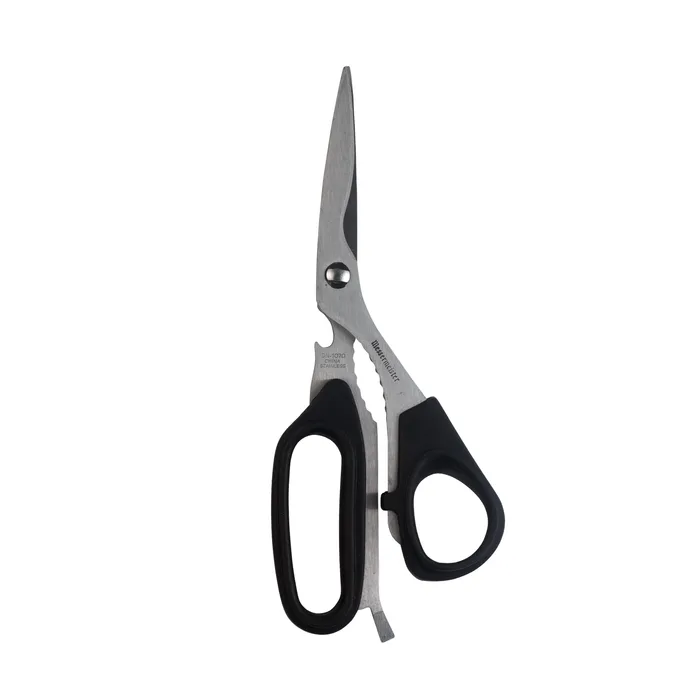
- Messermeister Take-Apart Offset Kitchen Shears - 8.5" - Buy. A cheap take-apart pair that gets the two things right that matter most, cleanability at the pivot and a gripping edge.
- Shun Kitchen Shears (DM7240) - Buy. The premium separating pair, made in Japan, with a notch on the blade for thin poultry bones and flower stems.
- WÜSTHOF 10" Poultry Shears (1049595003) - It depends. A spring-loaded, curved-blade bird tool that is excellent at jointing chicken and wrong for everything else.
- Joyce Chen Original Unlimited Kitchen Scissors (J51-0220) - Skip. A well-loved pair of scissors sold for meat and shellfish that the maker does not list as taking apart.
The verdict in 30 seconds
What mattered most
- Blades separate for cleaning
- Pivot tension adjustable
- Blade edge
- Blade steel
- Published hardness
- Maker's cleaning guidance
Kitchen shears look like a commodity, and most of the pairs people own came free in a knife block. That is exactly the problem. A pair that does not separate at the pivot cannot be cleaned in the one place that matters after you cut up a raw chicken, and a riveted pivot that goes loose cannot be tightened. We picked four pairs that let you check those two things against the maker's own page, plus a poultry shear to show how different that tool really is.
A cheap take-apart pair that gets the two things right that matter most, cleanability at the pivot and a gripping edge.
Best for: Anyone who breaks down raw chicken at home and wants a pair they can genuinely clean without spending much.
- The blades come apart for cleaning and Messermeister lists the shears as dishwasher safe, so the pivot actually gets washed.
- Micro-serrated stainless blades grip skin and herb stems instead of pushing them ahead of the cut.
- Messermeister lists adjustable tension, so a pivot that loosens over time can be snugged back up rather than binned.
- Messermeister lists the blade as SUS420 but publishes no hardness figure.
- The built-in screwdriver, nutcracker, jar lid gripper and bottle opener are clutter most cooks will never reach for.
- Micro-serrations are awkward to resharpen at home, so a dull pair eventually becomes a service or replacement job.
- Origin is listed as China, which matters to some buyers even at this price.
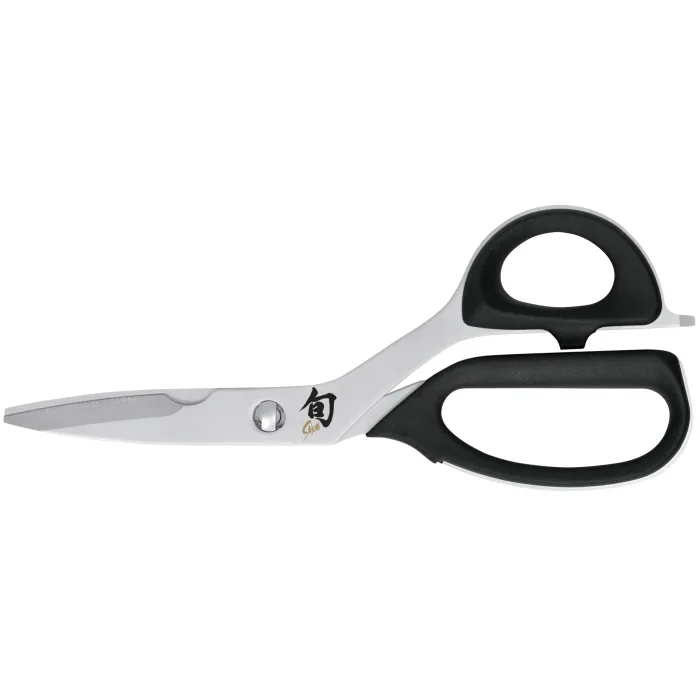
The premium separating pair, made in Japan, with a notch on the blade for thin poultry bones and flower stems.
Best for: Someone who already owns Japanese knives, will hand wash, and wants shears that feel like a real tool rather than a giveaway.
- Kai states the blades fully separate for easy cleaning, which is the whole hygiene argument in one line.
- The notch on the blade is designed for thin poultry bones and flower stems, so the tough cuts do not slide toward the tip.
- Made in Japan and covered by a limited lifetime warranty, with a non-slip grip.
- The blades are Japanese 420J2, a corrosion-resistant stainless on the softer side, and Kai publishes no hardness figure.
- Kai lists no dishwasher guidance for this model, so hand washing after separating is the safe assumption.
- No adjustable pivot tension is published, so there is nothing listed to tighten if the joint loosens.
- The edge is described as partially serrated rather than micro-serrated, and you pay a large multiple of the value pick for it.
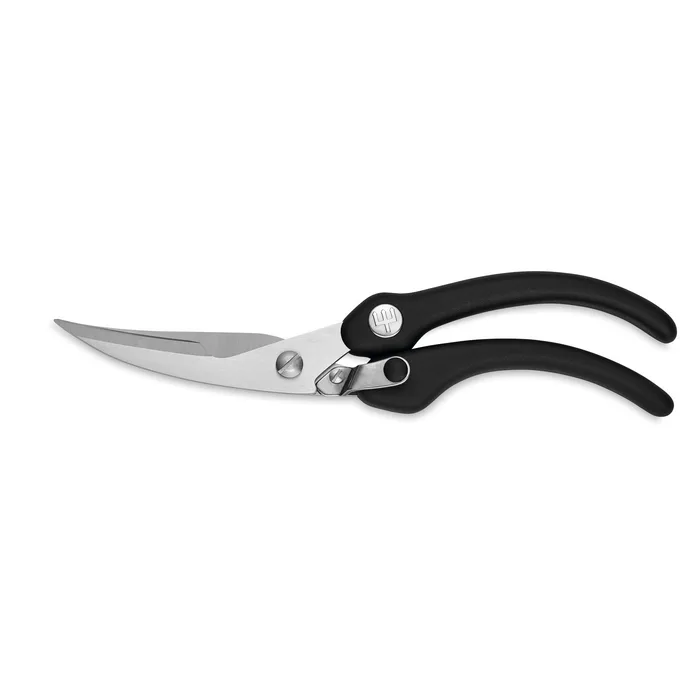
A spring-loaded, curved-blade bird tool that is excellent at jointing chicken and wrong for everything else.
Best for: Someone who breaks down whole birds often and already owns a separate general-purpose pair for everything else.
- Wusthof describes slightly curved stainless blades made for skinning, jointing and butterflying poultry.
- An internal spring between the blades reopens them for you, which is what keeps your hand from cramping on a whole bird.
- Made in Germany and long enough at 10 inches to give real leverage on thinner bones.
- Wusthof does not list a take-apart design for these, so the pivot is not documented as separable.
- The published care instruction is to wash by hand and towel-dry immediately, which is the wrong direction for a raw-poultry tool.
- Wusthof does not publish a steel grade, hardness figure, or serration detail for this model.
- Curved blades and a spring make them clumsy for the everyday jobs, such as herbs, parchment and packaging.
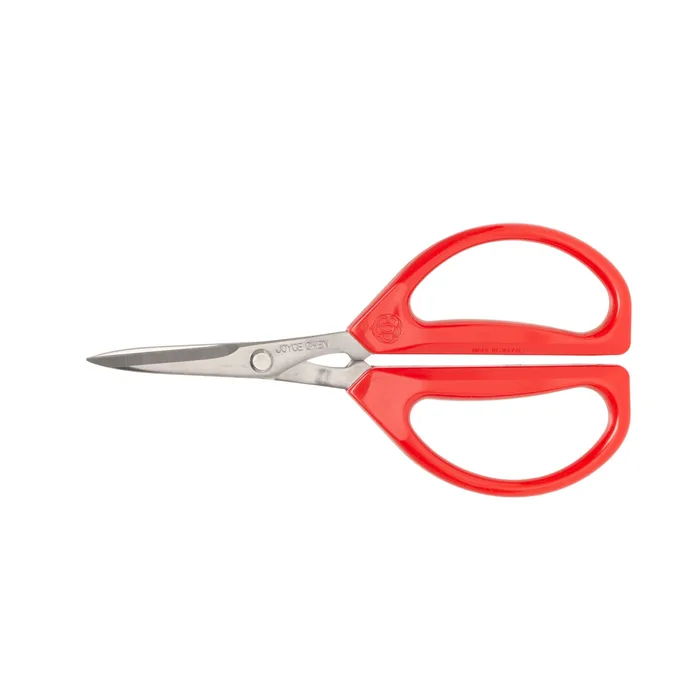
A well-loved pair of scissors sold for meat and shellfish that the maker does not list as taking apart.
Best for: Herb and vegetable snipping only, if you accept that this pair should never touch raw poultry.
- The looped, ambidextrous handles are comfortable enough to use for a long prep session with either hand.
- Joyce Chen lists high carbon Japanese stainless steel blades, and they cut herbs, greens and packaging cleanly.
- At 6.3 inches they are small and light, which suits fiddly snipping work at the board.
- Joyce Chen lists no take-apart design here, while the Deluxe Multi-Use model in the same line is described as separating.
- The listing pitches them for cutting meat and lobster tails, yet the care guidance is hand wash for best results, which leaves the pivot uncleanable.
- No serration, hardness figure or country of origin is published for this model.
- At 6.3 inches there is little leverage for bones, so the marketing outruns the tool.
| Criteria | Take-Apart Offset Kitchen Shears - 8.5" Top pick | Kitchen Shears (DM7240) | 10" Poultry Shears (1049595003) | Original Unlimited Kitchen Scissors (J51-0220) |
|---|---|---|---|---|
| Verdict | Buy it | Buy it | It depends | Skip it |
| Best for | Anyone who breaks down raw chicken at home and wants a pair they can genuinely clean without spending much. | Someone who already owns Japanese knives, will hand wash, and wants shears that feel like a real tool rather than a giveaway. | Someone who breaks down whole birds often and already owns a separate general-purpose pair for everything else. | Herb and vegetable snipping only, if you accept that this pair should never touch raw poultry. |
| Price tier | $ · budget | $$$ · premium | $$$ · premium | $$ · mid-range |
| Blades separate for cleaning | Yes, take-apart design | Yes, blades fully separate | Not listed by the maker | Not listed by the maker |
| Pivot tension adjustable | Yes, adjustable tension listed | Not published | Not published | Not published |
| Blade edge | Micro-serrated | Partially serrated, bone notch | Slightly curved, serration not published | Not published |
| Blade steel | SUS420 stainless | Japanese 420J2 stainless | Stainless steel, grade not published | High carbon Japanese stainless |
| Published hardness | Not published | Not published | Not published | Not published |
| Maker's cleaning guidance | Dishwasher safe | Separate blades for easy cleaning | Wash by hand, towel-dry immediately | Hand wash for best results |
| Extra functions | Screwdriver, nutcracker, jar gripper, bottle opener | Bone notch | Internal spring, no add-on tools | None listed |
| Length and origin | 8.5 in, China | 9 in, Japan | 10 in, Germany | 6.3 in, origin not published |
Which one is right for you?
- Anyone who breaks down raw chicken at home and wants a pair they can genuinely clean without spending much. Buy it Messermeister Take-Apart Offset Kitchen Shears - 8.5"
- Someone who already owns Japanese knives, will hand wash, and wants shears that feel like a real tool rather than a giveaway. Buy it Shun Kitchen Shears (DM7240)
- Someone who breaks down whole birds often and already owns a separate general-purpose pair for everything else. It depends WÜSTHOF 10" Poultry Shears (1049595003)
- Herb and vegetable snipping only, if you accept that this pair should never touch raw poultry. Skip it Joyce Chen Original Unlimited Kitchen Scissors (J51-0220)
How we judged the field
Five things decide whether a pair of kitchen shears is worth owning. First, whether the blades separate, because the pivot is a covered joint and raw chicken residue goes into it whether you like it or not. The FDA Food Code sets the professional bar here: multiuse food-contact surfaces should be smooth, free of crevices, and reachable for cleaning either without disassembly, by disassembling without tools, or by easy disassembly with common handheld tools. Second, whether the pivot can be adjusted. A pivot you can snug back up is a tool you can keep; a fixed one is a countdown. Third, whether one blade is micro-serrated, because tiny scallops bite into chicken skin and herb stems rather than shoving them toward the tip. Fourth, the published blade steel and any hardness figure. Fifth, the maker’s own cleaning instruction, which is often the most revealing line on the page.
The field splits cleanly along the first of those. On one side are pairs the maker openly describes as taking apart, come-apart, pull-apart or separating, and these tend to be the ones a company expects you to keep for years. On the other side sit the fixed-pivot pairs, which is nearly everything bundled in a knife block and a surprising number of pairs sold on their own for meat. We picked one budget separating pair, one premium separating pair, one spring-loaded poultry shear to show how different that tool is, and one popular fixed-pivot pair marketed for meat and shellfish that we think most people should pass on.
Messermeister Take-Apart Offset Kitchen Shears - 8.5”
Buy itThe Messermeister Take-Apart Offset Kitchen Shears do the unglamorous things right. Messermeister lists the blades as micro-serrated stainless, states that they come apart for cleaning, calls the shears dishwasher safe, and lists adjustable tension among the features. That last one is the quiet tell of a serviceable tool: a pivot you can tighten is a pivot the maker expects to still be in use after the edge has been sharpened a few times. The blade is listed as SUS420 with TPE handles, origin China, and no hardness figure is published, which is normal at this price but worth stating plainly. The built-in screwdriver, nutcracker, jar lid gripper and bottle opener are marketing rather than utility, and you can ignore all four without losing anything. This is the pair for a home cook who spatchcocks a chicken on a Sunday and wants to know the joint got washed afterwards.
Shun Kitchen Shears (DM7240)
Buy itThe Shun Kitchen Shears are the premium version of the same idea, and Kai is direct about the important part: the blades fully separate for easy cleaning. The notch on the blade is described for thin poultry bones and flower stems, which is the cut where a plain edge tends to slip toward the tip. Kai lists Japanese 420J2 stainless blades, a partially serrated edge, a comfortable non-slip grip, an overall length of 9 inches, Japanese manufacture, and a limited lifetime warranty. What Kai does not publish is a hardness figure, dishwasher guidance, or any adjustable pivot tension, so treat these as hand-wash-and-separate shears with a fixed joint feel. 420J2 is a corrosion-resistant stainless on the softer side, chosen for shears because toughness matters more than extreme edge retention, but it is a modest steel to be paying premium money for. Buy these if you want a Japanese-made tool you will keep and enjoy handling, not because the spec sheet demands it.
WÜSTHOF 10” Poultry Shears (1049595003)
It dependsThe Wusthof 10 inch Poultry Shears are here to make a point as much as to be bought. Wusthof describes slightly curved stainless blades for skinning, jointing and butterflying poultry, an ability to get through thinner bones, and an internal spring between the blades that reopens them so your hand does not cramp on a whole bird. Made in Germany, SKU 1049595003. That combination of curve plus spring is what a poultry shear is, and it is genuinely better than general shears at breaking a chicken into pieces. It is also worse at nearly everything else, because the curve makes straight cuts awkward and the spring fights you when you want the blades to stay shut. Wusthof lists no take-apart design and instructs you to wash by hand and towel-dry immediately, which is an uncomfortable pairing for a tool aimed squarely at raw poultry. Buy these as a second pair if you butcher birds regularly, not as your only shears.
Joyce Chen Original Unlimited Kitchen Scissors (J51-0220)
Skip itThe Joyce Chen Original Unlimited Kitchen Scissors are genuinely liked, and that is what makes them worth arguing about. Joyce Chen lists high carbon Japanese stainless steel blades, looped ergonomic handles, ambidextrous use, four handle colours, a 6.3 inch length, and the instruction to hand wash for best results. What is absent is any take-apart claim, which stands out because Joyce Chen does describe its Deluxe Multi-Use model as separating. So the maker knows the feature exists and did not put it here. Meanwhile the listing pitches these for cutting meat and lobster tails. A fixed pivot, hand wash only, and raw protein is the combination this whole category exists to avoid. There is no published serration, hardness figure or country of origin either, and 6.3 inches gives you little leverage for bone. Keep a pair for herbs and packaging if you already own them, but do not buy them as meat shears.
Sources
Specs in this review come from these pages.
- FDA Food Code 2022, Section 4-202.11 Cleanability of Food-Contact Surfaces (fda.gov)
- Messermeister Take-Apart Offset Kitchen Shears 8.5 inch product page (messermeister.com)
- Messermeister Push Button Take-Apart Multi Shears 9 inch product page (messermeister.com)
- Shun Kitchen Shears DM7240 product page, Kai USA (shun.kaiusa.com)
- WUSTHOF 10 inch Poultry Shears product page (wusthof.com)
- Joyce Chen Original Unlimited Kitchen Scissors product page (kitchensupply.com)
Messermeister Take-Apart Offset Kitchen Shears - 8.5” vs Shun Kitchen Shears (DM7240): which should you buy?
The Messermeister and the Shun agree on the thing that matters and differ on almost everything else. Both separate at the pivot, which puts them in a different category from most of what people own. From there the Messermeister wins on published specification: it is the pair with a micro-serrated edge, adjustable pivot tension, and an explicit dishwasher-safe statement from the maker. The Shun answers with Japanese manufacture, a bone notch, a limited lifetime warranty, and the feel of a tool rather than a gadget, but Kai publishes no hardness number, no dishwasher guidance, and no tension adjustment, and the blade is a fairly ordinary 420J2 stainless.
So the decision is not really about performance, it is about what you are buying. If you want the shears that clean up best and stay adjustable for the least money, take the Messermeister and put the difference into a knife. If you already own Japanese knives, hand wash everything anyway, and want a pair that matches the rest of your kit and is covered for life, the Shun is a reasonable indulgence. What we would not do is spend premium money on a pair that does not separate, in either direction. Separating is the feature; everything else is preference.
What to look for
- Take-apart pivot: Look for the words take apart, come apart, pull apart or blades separate on the maker’s own page, because a joint you cannot open is a joint you cannot clean after raw chicken.
- Adjustable tension: A pivot listed as adjustable can be tightened when the blades develop play, while a fixed pivot means the shears are disposable once they go loose.
- Micro-serration on one blade: Tiny scallops grip skin, herb stems and vine tomatoes instead of pushing them ahead of the cut, at the cost of a harder resharpening job later.
- Published steel and hardness: Most makers list a grade such as 420J2 or SUS420 and skip the hardness figure, so treat a published hardness number as a sign of unusual transparency rather than a requirement.
- The maker’s own cleaning line: Dishwasher safe is a materials claim about the steel and handle, not a promise that water reaches inside the pivot, so read it alongside the take-apart claim rather than instead of it.
- Straight blades versus curved plus spring: Straight blades with no spring are the general-purpose tool, while curved blades and an internal spring make a poultry shear that is excellent on whole birds and clumsy on everything else.
Our final take
Kitchen shears are one of the few kitchen tools where a single design decision separates the useful from the disposable, and it is not the steel. It is whether the blades come apart. Buy the Messermeister Take-Apart Offset Kitchen Shears if you want that feature for as little as possible, with a micro-serrated edge and an adjustable pivot thrown in. Buy the Shun Kitchen Shears if you want the same feature in a Japanese-made tool you will enjoy owning. Add the Wusthof poultry shears only if you break down whole birds often enough to justify a second pair. And if a pair is sold for meat but the maker never says it separates, that is your answer.
Questions, answered
Do kitchen shears really need to come apart?
If you cut raw poultry or meat with them, yes. The pivot is a joint with a gap in it, and protein and moisture work into that gap where a sponge cannot reach. The FDA Food Code, the model rule most US health departments build their own rules on, tells you what the professional standard looks like: multiuse food-contact surfaces are supposed to be smooth, free of crevices, and accessible for cleaning without disassembly, by disassembling without tools, or by easy disassembly with common handheld tools. A pair of shears that separates by hand meets the middle option. A riveted pair meets none of them. If your shears never touch anything but herbs and cardboard, the argument is much weaker.
Is a pair labelled dishwasher safe good enough if the blades do not separate?
Not for raw meat work. Dishwasher safe is a materials claim: it says the steel and the handle survive detergent and heat without corroding or cracking. It says nothing about whether water and detergent reach inside the pivot, and a dishwasher sprays from the outside like everything else. A closed joint packed with chicken fat will come out of the cycle still packed with chicken fat, just hotter. Look for the words take apart, come apart, pull apart or blades separate on the maker's own page, and treat dishwasher safe as a bonus on top of that rather than a substitute for it.
What is the difference between kitchen shears and poultry shears?
They are different tools that happen to look related. General kitchen shears have straight blades, a plain pivot, and handles you squeeze and open yourself, so they suit herbs, packaging, parchment, bacon and spatchcocking. Poultry shears, like the Wusthof pair here, have slightly curved blades that hook around a joint and an internal spring that reopens them after every cut, which is what makes breaking down a whole bird tolerable. That spring is exactly what makes them annoying for everyday snipping, because the blades fight you open when you want them closed. If you only buy one pair, buy general kitchen shears.
Can micro-serrated shears be sharpened?
They can be worked on, but it is harder than a plain edge and most home sharpening kits are not built for it. A micro-serrated blade is a row of tiny scallops, and a flat stone or a pull-through sharpener grinds the peaks down while leaving the valleys untouched, which flattens the edge into a duller plain one. A professional sharpener can address serrations with a tapered rod, one scallop at a time, but for shears at the budget end the labour can rival replacement. This is the honest trade-off for micro-serration: you get better grip on slippery food now, and a harder resharpening job later.
Are the shears that came in my knife block good enough?
Usually not, and the reason is structural rather than snobbery. Block shears are typically built with a fixed pivot so they can be made cheaply and shipped as a bonus item, which means you cannot open them for cleaning and you cannot tighten them when the joint develops play. Once the blades no longer meet along their length, they stop cutting and start folding food, and there is nothing to adjust. If your block pair separates and the maker says so, keep using it. If it does not, keep it for packaging and buy a dedicated separating pair for food.
Deciding between the top two? See our head-to-head: Messermeister Take-Apart Offset Kitchen Shears - 8.5" vs Shun Kitchen Shears (DM7240).
More Home & Kitchen reviews
 The Best Kitchen Trash Cans: 4 Compared (and One to Skip)
  The Best Kitchen Knife Sets: 4 Compared (and One to Skip)
  The Best Knife Sharpeners: 4 Compared (and One to Skip)
  The Best Cordless Leaf Blowers: 4 Compared (and One to Skip)
  The Best Linen Sheets: 4 Compared (and One to Skip)
  The Best Mandoline Slicers: 4 Compared (and One to Skip)