

Home & Kitchen
The Best Kitchen Knife Sets: 4 Compared (and One to Skip)
We compared four matched knife block sets on construction, steel, useful pieces versus filler, and long-term value.
The short version
For most cooks, the Wüsthof Classic 7-Piece is the set to buy: precision-forged, sensibly chosen pieces, and a lifetime warranty that makes the price a once-in-a-lifetime cost. If you don't want to spend that much, the Victorinox Fibrox Pro 8-Piece delivers Swiss-made, restaurant-grade cutting for far less and is the easiest set to own and resharpen. The Zwilling Pro is every bit as good as the Wüsthof — pick it only if its modern bolster and grip suit you better. Skip the Cuisinart Graphix 15-Piece and other giant blocks: you're buying filler, not blades. Best for: anyone who wants a matched set built around the two or three knives they'll actually use, in steel worth keeping sharp.
The verdict in 30 seconds
What mattered most
- Construction
- Steel & edge retention
- Useful pieces vs filler
- Handle & balance
- Storage block
- Warranty
A good knife set should hand you the two or three blades you actually reach for every day, in one honest package, and store them somewhere that keeps the edges intact. The problem is that most of the market is either premium-forged sets that ask you to pay for pieces you'll rarely touch, or giant budget blocks padded with filler. We synthesized independent testing and long-run owner reports to sort a genuinely great forged set from a superb value, a premium alternative worth thinking hard about, and one crowd-pleasing block that we'd steer you away from.
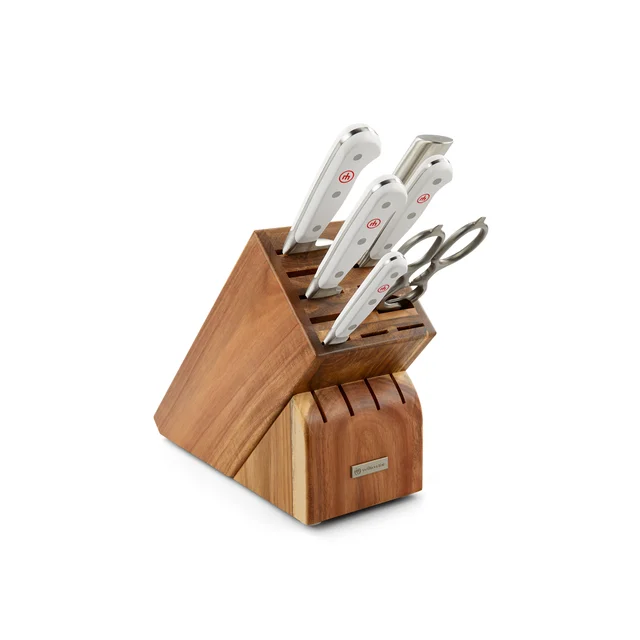
A precision-forged German set that gets the essentials right and is backed for life.
Best for: Cooks who want one forged set to keep for decades and will hone it regularly.
- Precision-forged, full-tang, triple-riveted blades with real heft and balance
- High-carbon stainless holds a keen edge and takes a fine one when honed
- Sensible piece count — the block isn't padded with things you won't use
- Lifetime manufacturer warranty and decades of easy resharpening ahead
- A real investment for a starter kitchen
- Heavier blades take some getting used to if you learned on light knives
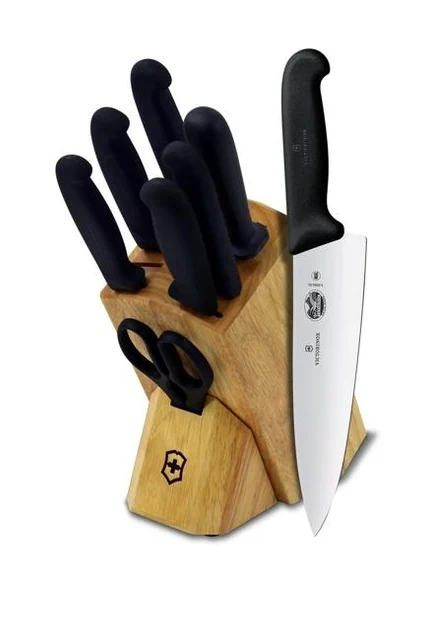
The value benchmark — Swiss-made stamped blades that punch far above their price.
Best for: First real kitchen, or anyone who wants pro-level cutting without premium spend.
- Swiss high-carbon stainless blades that are genuinely sharp out of the box
- Lightweight, and the grippy Fibrox handles stay secure with wet hands
- Soft enough steel to resharpen quickly at home — very forgiving to own
- Commercial-grade (NSF) pedigree that restaurant lines rely on
- Stamped blades feel less substantial than forged German knives
- Molded handles and plain oak block are utilitarian, not showpiece
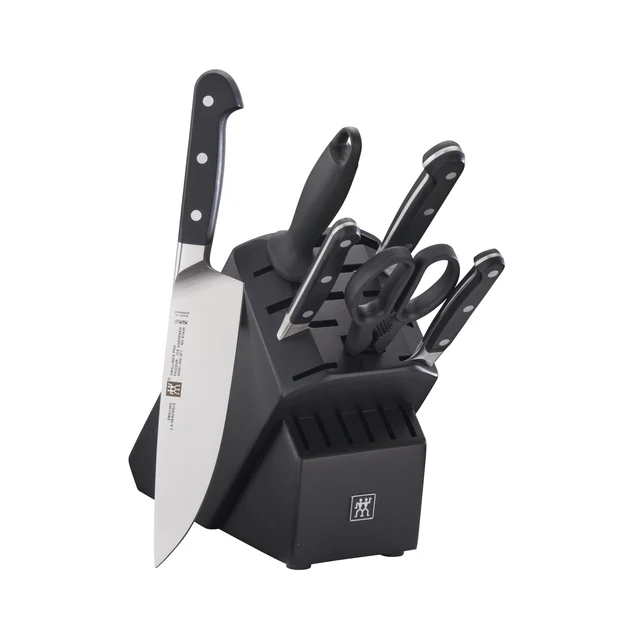
A flawless ice-hardened forged set — whether it's worth it over Wüsthof comes down to feel.
Best for: Buyers set on premium forged steel who prefer a modern bolster and grip over the classic profile.
- SIGMAFORGE single-piece forging with an ice-hardened (FRIODUR) edge that stays sharp
- Curved bolster leaves the full blade usable and encourages a safe pinch grip
- Reliably arrives with a clean, even factory edge; made in Germany with a lifetime warranty
- Sensible essentials-plus-block layout, not a filler haul
- Priced right alongside Wüsthof, so it's a preference call more than a value one
- The half-bolster and rounded spine feel different from a traditional German knife — try before you commit
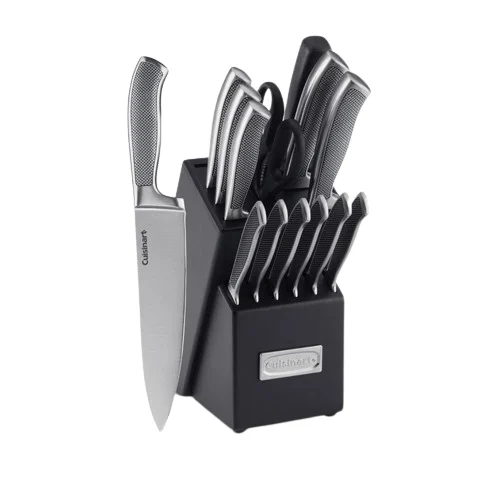
A big, good-looking block that's mostly filler wrapped around a few soft, short-lived blades.
Best for: Almost no one long-term; at best a stopgap for a rental or a first apartment.
- Fills a counter for very little money and looks the part in the box
- Includes a matching set of steak knives and shears
- Most of the 15 pieces are filler — six steak knives and duplicates you rarely reach for
- Stamped, softer stainless dulls faster and is harder to bring back to a fine edge
- You're paying for piece count, not for the two or three blades that matter
- A three- or four-piece set of better steel outperforms it for years
| Criteria | Wüsthof Classic 7-Piece Knife Block Set Top pick | Victorinox Fibrox Pro 8-Piece Knife Block Set | Zwilling Pro 7-Piece Knife Block Set | Cuisinart Graphix 15-Piece Knife Block Set |
|---|---|---|---|---|
| Verdict | Buy it | Buy it | It depends | Skip it |
| Best for | Cooks who want one forged set to keep for decades and will hone it regularly. | First real kitchen, or anyone who wants pro-level cutting without premium spend. | Buyers set on premium forged steel who prefer a modern bolster and grip over the classic profile. | Almost no one long-term; at best a stopgap for a rental or a first apartment. |
| Price tier | $$$ · premium | $$ · mid-range | $$$ · premium | $ · budget |
| Construction | Forged, full-tang | Stamped | Forged (SIGMAFORGE) | Stamped |
| Steel & edge retention | High-carbon stainless, excellent | Swiss stainless, good, easy to resharpen | Ice-hardened, excellent | Soft stainless, dulls quickly |
| Useful pieces vs filler | Mostly essentials | Essentials + shears | Essentials + shears | Few essentials, lots of filler |
| Handle & balance | Riveted, substantial | Grippy Fibrox, light | Curved bolster, ergonomic | Molded, decorative |
| Storage block | Wood block | Oak block | Hardwood block | Wood block, oversized |
| Warranty | Lifetime | Lifetime (limited) | Lifetime | Limited |
| Best-use fit | Keep-for-decades forged set | Best value / first kitchen | Premium forged alternative | Short-term stopgap only |
| Price tier | $$$ · premium | $$ · mid-range | $$$ · premium | $ · budget |
Which one is right for you?
- Cooks who want one forged set to keep for decades and will hone it regularly. Buy it Wüsthof Classic 7-Piece Knife Block Set
- First real kitchen, or anyone who wants pro-level cutting without premium spend. Buy it Victorinox Fibrox Pro 8-Piece Knife Block Set
- Buyers set on premium forged steel who prefer a modern bolster and grip over the classic profile. It depends Zwilling Pro 7-Piece Knife Block Set
- Almost no one long-term; at best a stopgap for a rental or a first apartment. Skip it Cuisinart Graphix 15-Piece Knife Block Set
How we judged the field
We don’t run a cutlery lab. Instead, we synthesize independent testing and a large body of long-run owner reports, then weigh what actually matters over years of daily cooking. For a set — as opposed to a single chef’s knife — the questions are a little different: it’s not just how well one blade cuts, but whether the whole package earns its place on the counter.
Four things carried the most weight. First, construction and steel: is the blade forged from a single billet or stamped from sheet, and does the steel hold a usable edge and take a new one easily? Second, the pieces themselves — how many are genuine essentials versus filler bulking up the count. Third, handle, balance, and the storage block, because a set lives on your counter and in your hand every day. And fourth, warranty and how the set holds up, since a lifetime-backed forged set is a very different purchase from a block you’ll replace in a couple of years.
A note on scope: this is about matched sets and block sets, not single knives. If you’re choosing one workhorse blade, our separate chef’s-knife and santoku guides go deeper there.
Wüsthof Classic 7-Piece Knife Block Set — buy
This is the set most cooks should buy and never think about again. The Classic line is precision-forged from a single piece of high-carbon stainless steel, full-tang and triple-riveted, so the blades have the heft and balance that make longer prep sessions feel controlled rather than fussy. The steel holds a keen edge, takes a fine one when you hone it, and is backed by a lifetime warranty — which reframes the price as a once-in-a-lifetime cost rather than a recurring one.
Just as important is what’s not in the box. The block is built around the knives you’ll actually reach for, plus shears and a honing steel, instead of a drawer’s worth of duplicates. Owners consistently report these knives staying in rotation for decades with nothing more than regular honing and the occasional sharpening. The trade-offs are honest ones: it’s a real investment, and if you learned on light blades the forged weight takes a session or two to appreciate.
Victorinox Fibrox Pro 8-Piece Knife Block Set — buy
If you don’t want to spend forged-German money, this is the set to get, and it’s good enough that plenty of people who could afford more choose it anyway. The blades are stamped from Swiss high-carbon stainless, they arrive genuinely sharp, and the whole set is light and nimble. The Fibrox handles are the quiet star — textured, slightly soft, and grippy even when your hands are wet, which is exactly what you want when you’re moving fast. This is the same lineage that stocks professional kitchens, and the NSF-rated pedigree shows.
The steel is a touch softer than the forged Germans, and that’s a feature as much as a limitation: it dulls a little sooner but comes back to a fine edge in minutes on a basic sharpener, so it’s one of the most forgiving sets to actually live with. You give up the substance and showpiece looks of a forged set — molded handles, a plain oak block — but not the cutting. For a first real kitchen, it’s hard to beat.
Zwilling Pro 7-Piece Knife Block Set — it depends
The Zwilling Pro is not a lesser set than our top pick — it’s an alternative to it. The blades are SIGMAFORGE forged from a single piece of steel and given Zwilling’s ice-hardening treatment, so they start sharp and stay that way, and independent testing and owner reports alike note how consistently these arrive with a clean, even factory edge. The signature move is the curved half-bolster: it leaves the entire blade edge usable all the way to the heel and nudges your grip into a safe, controlled pinch. Like the Wüsthof, it’s made in Germany and carries a lifetime warranty, and the block sticks to essentials plus shears and a steel.
So why “it depends”? Because it sits at the same premium price as the Wüsthof, which turns the decision into a matter of feel rather than value. Some cooks love the rounded spine and modern bolster; others prefer the traditional full bolster and heavier front end of the Classic. This is a set worth handling before you commit — whichever profile disappears in your hand is the right one.
Cuisinart Graphix 15-Piece Knife Block Set — skip
This is the kind of set that looks like the most for your money and delivers the least of what matters. Fifteen pieces sounds generous until you count them: a couple of everyday knives, then six steak knives, some duplicated blades, shears, and a big block to hold it all. You’re paying for piece count, not for cutting performance. To land the low price, the blades are stamped from softer stainless that dulls quickly and is harder to bring back to a fine edge — the opposite of what you want in the two knives you’ll use most.
It isn’t dangerous or defective; it’s just poor value over any real timeframe. A three- or four-piece set in better steel will out-cut it within weeks and still be going strong years after a budget block’s edges have gone dull and its handles have loosened. If you truly need something for a short-term rental, it’ll do — but for a kitchen you plan to keep, put the same money toward fewer, better knives.
Wüsthof Classic vs Zwilling Pro: which should you buy?
These are the two strongest sets here, and on paper they’re nearly twins: both forged in Germany from a single piece of high-carbon stainless, both backed for life, both built around sensible essentials rather than filler. Neither is a mistake, and neither is meaningfully sharper than the other in normal use.
The real difference is in the hand. The Wüsthof Classic has a traditional full bolster and a substantial, front-weighted feel that rewards a firm grip — the profile generations of cooks grew up on. The Zwilling Pro uses a curved half-bolster that frees the whole edge and encourages a lighter pinch grip, with a rounded spine that some find more comfortable over long sessions. Because they’re priced alongside each other, there’s no value tiebreaker; buy the one whose handle and balance you prefer. If you can’t try them, the Wüsthof is the safer default simply because its classic geometry suits the widest range of hands — which is why it’s our overall pick, with the Zwilling a genuine co-favorite for anyone drawn to the modern feel.
What to look for
- Count the useful pieces, not the total. A chef’s knife, paring knife, and serrated/bread knife do the vast majority of the work; shears and a honing steel are welcome. Treat extra slicers and a battalion of steak knives as filler.
- Forged for keeps, good stamped for value. Forged sets are heavier and hold an edge longer; a well-made stamped set cuts beautifully for far less and resharpens fast. Both are valid — cheap forged is not.
- Check the steel and the warranty together. Harder steel holds longer between sharpenings; a lifetime warranty turns a premium set into a one-time purchase.
- Handle feel beats spec sheets. Grip, balance, and bolster style matter more day to day than any single number. Hold the knives if you can.
- Mind the block. It should store what you use without wobble, keep edges from knocking together, and fit your counter — an oversized block full of empty slots is a sign of a padded set.
- Plan to maintain it. Any set stays good only if you hand-wash, hone regularly, and sharpen once or twice a year.
Our final take
Buy the set built around the two or three knives you’ll actually use, in steel worth keeping sharp — and ignore the piece count on the box. The Wüsthof Classic 7-Piece is our pick for most cooks: forged, sensibly chosen, and backed for life, so the price buys a set you’ll hand down rather than replace. The Zwilling Pro is its equal and comes down to feel. If the premium tier isn’t for you, the Victorinox Fibrox Pro delivers Swiss, restaurant-grade cutting for a fraction of the cost and is the friendliest set to own. And whatever you do, walk past the fully loaded budget blocks like the Cuisinart Graphix — a small set of good knives will serve you far longer than a big block of soft ones.
Questions, answered
How many knives do you actually need in a set?
Realistically three: a chef's knife for most of the work, a paring knife for small in-hand tasks, and a serrated bread knife that also handles tomatoes and citrus. A utility knife and kitchen shears are nice extras. Everything beyond that — extra slicers, duplicate blades, and half-a-dozen steak knives — is filler that pads the piece count without changing how you cook.
Forged or stamped — does it matter for a set?
Forged blades (Wüsthof Classic, Zwilling Pro) are made from a single piece of steel, so they're heavier, stiffer, and typically hold an edge longer, which suits people who want one set for decades. Stamped blades (Victorinox Fibrox, most budget blocks) are cut from sheet steel — lighter and cheaper, and the good ones cut beautifully. The gap is smaller than the price gap suggests; a well-made stamped set beats a cheap forged one.
Are the big 15- and 18-piece block sets worth it?
Usually not. The high piece count is mostly steak knives, duplicate blades, and a bigger block, and to hit a low price the maker uses softer steel that dulls faster and is harder to resharpen. You almost always get more real-world value from a three- or four-piece set in better steel than from a fully loaded budget block.
Should I buy a matched set or individual knives?
A set makes sense if you want a coordinated look, a storage block, and one purchase that covers the essentials — and if the set is built around good core knives rather than filler. If you already own a chef's knife you love, buying individual pieces (or a small three-piece set plus a separate block) often gets you better blades for the money.
How do I keep set knives sharp, and can they go in the dishwasher?
Hand-wash and dry them; dishwasher heat, detergent, and knocking against other items dull and chip edges and can loosen handles. Hone with the set's steel every few uses to realign the edge, and have the knives sharpened once or twice a year. Softer stamped steel needs sharpening more often but responds to it quickly, while harder forged steel holds longer between sharpenings.
More Home & Kitchen reviews
 The Best Knife Sharpeners: 4 Compared (and One to Skip)
  The Best Cordless Leaf Blowers: 4 Compared (and One to Skip)
  The Best Mandoline Slicers: 4 Compared (and One to Skip)
  The Best Mattresses in a Box: 4 Compared (and One to Skip)
  The Best Electric Meat Grinders for Home Use: 4 Compared (and One to Skip)
  The Best Countertop Microwaves: 4 Compared (and One to Skip)