

Home & Kitchen
The Best Kitchen Trash Cans: 4 Compared (and One to Skip)
We compared four kitchen trash cans across step and motion-sensor designs on liner retention, lid durability, fingerprint-proof steel, capacity, and recycling.
The short version
For most kitchens, the simplehuman 45L Rectangular Step Can is the pick: its liner pocket and liner-rim system make bag changes painless, the steel shrugs off fingerprints, and the pedal and damped lid are built to outlast the kitchen. Want touchless? The simplehuman 45L Semi-Round Sensor Can adds a well-tuned motion sensor that opens on cue and ignores the dog. The Ninestars 21-gallon sensor can is a lot of touchless capacity for little money, but its sensor and build are hit-or-miss, so it's a value pick with caveats. The iTouchless dual-compartment recycler is a good idea undone by battery drain, bulk, and reliability, and is the one to skip. Best for: a durable, low-fuss everyday can where reliability matters more than gadgetry.
The verdict in 30 seconds
What mattered most
- Type
- Capacity
- Liner retention
- Lid mechanism durability
- Fingerprint-proof steel
- Dual-compartment / recycling
A kitchen trash can is a thing you touch a dozen times a day, so the difference between a good one and a bad one adds up fast. We looked at step cans and touchless motion-sensor cans from budget to premium, weighing how well each holds a liner, how the lid mechanism ages, whether the steel actually resists fingerprints, and how it copes with pets. Two of these are easy recommendations, one is a solid pick only for the right buyer, and one is a genuine skip.
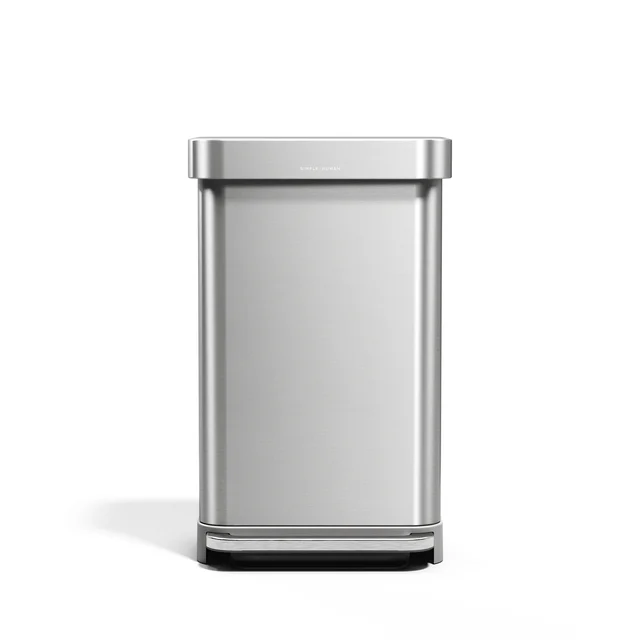
The step can that gets the boring details right, from the liner pocket to a pedal built to outlast your kitchen.
Best for: Anyone who wants a fuss-free, long-lasting everyday can and doesn't mind paying up for fit and finish.
- Built-in liner pocket stores a spare roll of custom-fit liners and dispenses them one at a time, so bag changes take seconds
- Liner-rim system tucks the bag out of sight and stops it slipping down into the can
- Steel pedal is rated for around 150,000 presses and the damped lid closes slowly and quietly instead of clanging
- Fingerprint- and dent-resistant finish genuinely stays clean with an occasional wipe
- The custom-fit liners cost more than generic bags, and the can is sized around them
- Rectangular footprint is space-efficient but the can is tall, which can be awkward under some counters
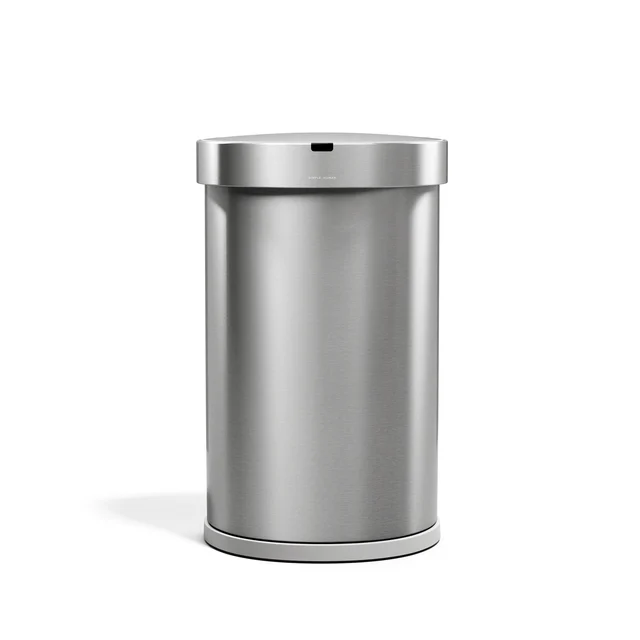
A touchless can whose motion sensor is tuned well enough that it opens when you want and ignores the dog.
Best for: Cooks who want hands-free opening while handling raw meat or messy prep and value a reliable, non-twitchy sensor.
- Adaptive motion sensor opens on a deliberate hand wave and, in owner reports, rarely false-triggers from passing pets or foot traffic
- Semi-round shape sits flat against a wall to save floor space
- Keeps the same liner pocket and liner-rim system as the step models for tidy, quick bag changes
- Lid opening and closing is slow and quiet rather than snappy
- Needs power: you'll recharge the internal battery pack periodically or feed it disposable batteries
- Premium price for what is still, mechanically, a lid on a motor

A lot of touchless capacity for the money, if you can live with generic bags and a sensor that's occasionally over-eager.
Best for: Budget-minded households that want touchless convenience and big capacity and can tolerate some sensor quirks.
- Large capacity swallows a week of family trash, and the fingerprint-resistant steel base hides smudges
- Removable plastic inner bucket lifts out for cleaning and keeps drips off the outer shell
- Touchless lid at a price far below the premium sensor cans
- A retention ring holds a standard bag reasonably well without a custom liner
- Owner reports are mixed on the sensor: some units open when you merely walk past, others need a second wave
- Uses standard drawstring bags but the tall rectangular shape can make a clean fit fiddly
- Motor and lid feel less refined and, in some reports, wear faster than premium cans

A clever trash-and-recycling combo on paper that stumbles on power, bulk, and sensor reliability in daily use.
Best for: Almost no one over a simpler setup — most kitchens are better served by one good can plus a separate recycling bin.
- Two independent touchless compartments make sorting trash and recycling genuinely convenient
- Casters let you roll a heavy load out for collection
- Removable inner buckets in each side simplify emptying and cleaning
- Runs on four D batteries by default, which drain quickly under two motors; the AC adapter is sold separately
- Each side is only about half the total, so compartments fill fast and need frequent bag changes
- Large footprint takes real floor space for the usable volume you get
- Owner reports flag sensor and motor reliability slipping after moderate use
| Criteria | simplehuman 45L Rectangular Step Can with Liner Pocket Top pick | simplehuman 45L Semi-Round Sensor Can | Ninestars 21 Gallon Rectangular Motion Sensor Trash Can | iTouchless 16 Gallon Dual-Compartment Sensor Recycle Bin and Trash Can |
|---|---|---|---|---|
| Verdict | Buy it | Buy it | It depends | Skip it |
| Best for | Anyone who wants a fuss-free, long-lasting everyday can and doesn't mind paying up for fit and finish. | Cooks who want hands-free opening while handling raw meat or messy prep and value a reliable, non-twitchy sensor. | Budget-minded households that want touchless convenience and big capacity and can tolerate some sensor quirks. | Almost no one over a simpler setup — most kitchens are better served by one good can plus a separate recycling bin. |
| Price tier | $$$ · premium | $$$ · premium | $ · budget | $$ · mid-range |
| Type | Foot-pedal step can | Touchless motion sensor | Touchless motion sensor | Touchless dual-compartment |
| Capacity | 45 L (~12 gal) | 45 L (~12 gal) | 80 L (~21 gal) | 61 L (~16 gal), split 2x |
| Liner retention | Liner-rim + liner pocket, custom-fit | Liner-rim + liner pocket, custom-fit | Retention ring, standard bags | Inner buckets, standard bags |
| Lid mechanism durability | Excellent, ~150k-step pedal, damped close | Very good, quiet motorized lid | Fair, mixed longevity reports | Fair, reliability slips over time |
| Fingerprint-proof steel | Yes, dent- and fingerprint-resistant | Yes, fingerprint-resistant | Yes, fingerprint-resistant base | Partial, brushed steel with plastic trim |
| Dual-compartment / recycling | No | No | No | Yes, two independent bins |
| Pet-proofing | Lid stays shut unless pedal is pressed | Adaptive sensor resists false pet triggers | Sensor can be triggered by pets | Sensor can be triggered by pets |
| Price tier | $$$ · premium | $$$ · premium | $ · budget | $$ · mid-range |
Which one is right for you?
- Anyone who wants a fuss-free, long-lasting everyday can and doesn't mind paying up for fit and finish. Buy it simplehuman 45L Rectangular Step Can with Liner Pocket
- Cooks who want hands-free opening while handling raw meat or messy prep and value a reliable, non-twitchy sensor. Buy it simplehuman 45L Semi-Round Sensor Can
- Budget-minded households that want touchless convenience and big capacity and can tolerate some sensor quirks. It depends Ninestars 21 Gallon Rectangular Motion Sensor Trash Can
- Almost no one over a simpler setup — most kitchens are better served by one good can plus a separate recycling bin. Skip it iTouchless 16 Gallon Dual-Compartment Sensor Recycle Bin and Trash Can
How we judged the field
We don’t run a lab. Instead we synthesize independent testing, expert teardowns, and the pattern of owner reports that build up over months and years of daily use, then weigh them against what actually matters in a kitchen. A trash can lives in the busiest corner of the house and gets opened, wiped, and refilled constantly, so small annoyances compound.
The criteria that carried the most weight: how well the can holds a liner and how easily you change bags; how the lid mechanism ages, whether it’s a foot pedal or a motorized sensor; whether the fingerprint-resistant steel genuinely stays clean; usable capacity for the footprint; and how it copes with pets nosing around. We also looked at whether custom-fit liners are a convenience or a lock-in, and whether dual-compartment recycling earns its extra bulk.
simplehuman 45L Rectangular Step Can with Liner Pocket — buy
This is the can that quietly does everything right. The liner-rim system tucks the bag edge out of sight and grips it so it can’t slide down into the can under a heavy load, and the built-in liner pocket holds a spare roll of custom-fit liners so a bag change is a five-second pull-and-replace. The steel pedal is rated for roughly 150,000 presses, and the damped lid lowers slowly and silently instead of slamming. The dent- and fingerprint-resistant finish holds up to constant wiping and genuinely stays looking clean. The trade-off is that it’s built around simplehuman’s custom liners, which cost more than generic bags, and it’s a tall can. For a reliable everyday workhorse, those are easy compromises.
simplehuman 45L Semi-Round Sensor Can — buy
If you want touchless, this is how to do it. The adaptive motion sensor opens on a deliberate hand wave, and owner reports consistently note that it doesn’t fire off every time a pet or family member wanders past, which is the failure mode that makes cheaper sensor cans maddening. It keeps the same liner pocket and liner-rim system as the step models, so bag changes stay tidy, and the semi-round back sits flush against a wall to reclaim floor space. The lid glides open and shut quietly. The catch is simply that it needs power, so you’ll recharge or replace batteries periodically, and you’re paying a premium for a motorized lid. For hands-free hygiene during messy prep, it’s worth it.
Ninestars 21 Gallon Rectangular Motion Sensor Trash Can — it depends
This is a lot of touchless can for very little money, and for some households that’s exactly the right trade. Capacity is generous enough to hold a family’s weekly trash, the fingerprint-resistant base hides smudges, and a removable inner bucket makes cleaning easy. It takes standard drawstring bags held by a retention ring, so there’s no custom-liner lock-in. But the owner reports are genuinely split: some units have a sensor that opens when you merely walk past, others need a second wave, and the motor and lid feel less refined than the premium cans and, by some accounts, wear sooner. If your budget is firm and you can live with a bit of variability, it delivers real value. If sensor precision matters to you, spend up.
iTouchless 16 Gallon Dual-Compartment Sensor Recycle Bin and Trash Can — skip
The pitch is great: two independent touchless compartments for trash and recycling, casters to roll it out, and removable inner buckets. In practice it stumbles. By default it runs on four D batteries feeding two motors, which drains them quickly, and the AC adapter that fixes this is sold separately. Because the total splits in two, each compartment is small and fills fast, so you’re changing bags often. It’s also a big unit for the usable volume, and owner reports point to sensor and motor reliability slipping after moderate use. Most kitchens end up better served by one good can plus a separate recycling bin, which is simpler to power, empty, and keep running for years.
simplehuman 45L Rectangular Step Can vs simplehuman 45L Semi-Round Sensor Can: which should you buy?
These are the two strongest cans here, and they share the same tidy liner system and clean-staying steel, so the real question is how you want to open the lid. The step can is the more bulletproof choice: there’s no motor, no battery to recharge, and no sensor to misread, and the pedal keeps the lid firmly shut against pets. It’s the one to buy if you want to set it down and forget about it for years.
The semi-round sensor can earns its place only if hands-free opening is something you’ll use daily, for example when you’re constantly handling raw meat or sticky prep and don’t want to touch anything. Its sensor is well-tuned enough to be a pleasure rather than a nuisance, and the flat back saves space. But it costs more, needs power, and adds a mechanism that can eventually fail, whereas a pedal essentially can’t. Default to the step can; choose the sensor can when touchless is a genuine daily need.
What to look for
- Liner retention: a liner-rim or grip system that hides the bag and stops it sliding down; a built-in liner pocket makes changes far faster.
- Custom vs standard bags: custom-fit liners fit best but cost more and lock you in; standard-bag cans are cheaper to feed but fit looser.
- Lid mechanism durability: on step cans, a high-rated pedal and a soft, damped close; on sensor cans, a quiet motor and a sensor that ignores passing movement.
- Fingerprint-proof steel: a coated or brushed finish that hides smudges so the can looks clean with minimal wiping.
- Capacity vs footprint: match liters to your household, and favor semi-round or rectangular shapes that sit flush against a wall.
- Pet-proofing: a pedal-only lid or an adaptive sensor, plus a stable, heavy base that won’t tip.
- Recycling needs: only choose a dual-compartment can if space is tight and you truly want both bins in one body.
Our final take
Buy the simplehuman 45L Rectangular Step Can with Liner Pocket if you want the most reliable, lowest-fuss can: it nails liner handling, keeps its finish clean, and its pedal and lid are built to outlast the kitchen, with nothing to power or break. Step up to the simplehuman 45L Semi-Round Sensor Can only if hands-free opening is a daily need; its sensor is one of the few that behaves. The Ninestars 21-gallon sensor can is a legitimate budget option if you accept some sensor and build variability for a lot of capacity. And skip the iTouchless dual-compartment recycler: the split-bin idea is good, but battery drain, bulk, and reliability make one solid can plus a separate recycling bin the smarter setup.
Questions, answered
Are step cans or touchless sensor cans better?
Step cans have almost nothing to break: no motor, no batteries, and a pedal that reliably keeps the lid shut against curious pets. Touchless sensor cans are more hygienic when your hands are full or messy, but they need power and a well-tuned sensor to avoid false openings. If you want maximum reliability, choose a step can; if hands-free opening during cooking matters most, choose a good sensor can.
What are custom-fit liners and are they worth it?
Custom-fit liners are bags sized to a specific can so they fit snugly, don't slip down inside, and hide neatly under the rim. On cans with a built-in liner pocket you can store a spare roll inside the can and pull a fresh bag straight up when you empty it. They cost more than generic bags, but many owners find the tidier fit and faster changes worth it. Cans that take standard drawstring bags save money at the expense of a looser fit.
How do I keep pets out of the kitchen trash?
A step can is the most pet-proof option because the lid only opens when the pedal is pressed, and a soft-close, weighted lid resists being nosed open. If you prefer touchless, look for an adaptive motion sensor that reacts to a deliberate hand wave rather than any nearby movement, so a passing dog or cat doesn't set it off. Heavier cans with a wide base are also harder for a determined pet to tip over.
Does fingerprint-proof stainless steel really stay clean?
Fingerprint-resistant finishes have a coating or brushed texture that hides smudges and oils far better than plain polished steel, so day-to-day the can looks cleaner and needs wiping less often. It isn't magic: heavy grease or a wet hand can still leave a mark, but it comes off with a damp cloth. If a spotless look matters, it's a feature worth prioritizing over bright mirror-polished steel.
Is a dual-compartment can the best way to handle recycling?
A dual-compartment can is convenient because trash and recycling sit side by side, but each side holds only about half the total, so both fill and need emptying more often, and the unit takes up more floor space. Many kitchens are better served by one good trash can plus a separate, larger recycling bin, which is simpler to power and empty. Choose a combo unit only if counter and floor space are tight and you value having both in one place.
More Home & Kitchen reviews
 The Best Kitchen Knife Sets: 4 Compared (and One to Skip)
  The Best Knife Sharpeners: 4 Compared (and One to Skip)
  The Best Cordless Leaf Blowers: 4 Compared (and One to Skip)
  The Best Mandoline Slicers: 4 Compared (and One to Skip)
  The Best Mattresses in a Box: 4 Compared (and One to Skip)
  The Best Electric Meat Grinders for Home Use: 4 Compared (and One to Skip)