

Home & Kitchen
The Best Digital Kitchen Scales: 4 Compared (and One to Skip)
We compared four current digital kitchen scales on accuracy, capacity, tare, units, and readability to find the ones worth owning.
The short version
For most kitchens the OXO Good Grips 11 lb scale is the one to buy: reliable, easy to read behind a bowl, and easy to clean. The Escali Primo P115 is the smarter spend if budget matters, with owners praising its accuracy. Step up to the Fellow Tally Pro only if you brew coffee or bake at 0.1-gram precision and want Brew Assist and a timer. Skip the Ozeri Ultra Thin for most kitchens: it is slim and easy to wipe clean, but the maker lists a 1-minute auto-off and 1-gram steps with no backlight, which is thin on the details that matter mid-recipe. Best for: bakers and cooks who want a trustworthy everyday scale, with a coffee-grade upgrade path for enthusiasts.
Our picks at a glance
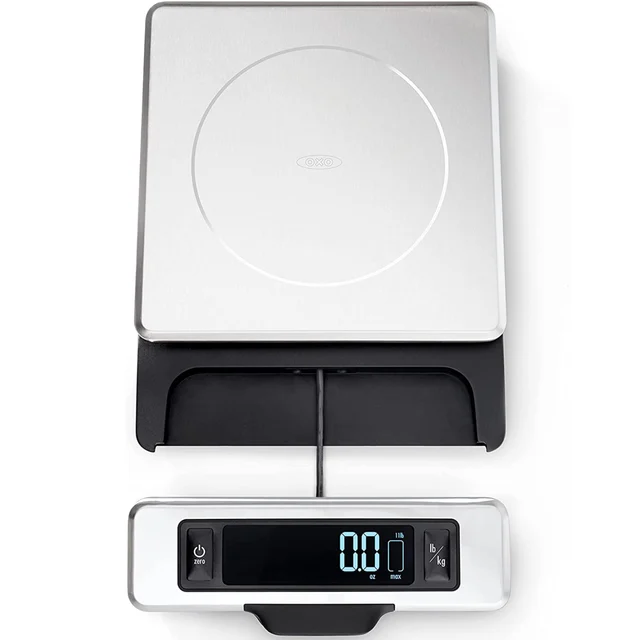
- OXO Good Grips Stainless Steel Food Scale with Pull-Out Display (11 lb) - Buy. The most usable everyday scale, with a pull-out display that solves the bowl-shadow problem.
- Escali Primo P115 Digital Kitchen Scale - Buy. A long-running budget scale with sealed controls and simple two-button operation.
- Fellow Tally Pro Precision Scale - It depends. A gorgeous 0.1-gram coffee scale with Brew Assist, but overkill for general cooking.
- Ozeri Ultra Thin Professional Digital Kitchen Food Scale (Stainless Steel) - Skip. Slim stainless scale with a clear spec sheet, but a 1-minute auto-off that can blank the display mid-recipe.
The verdict in 30 seconds
What mattered most
- Accuracy / resolution
- Capacity
- Tare & zero
- Units
- Readability
- Power
A kitchen scale lives or dies on trust: if it cannot read a single gram reliably, it undermines every recipe. We synthesized maker specifications and owner reports across four current, buyable-in-2026 models spanning a coffee-grade precision scale to budget everyday workhorses. Two earn a clear buy, one is a smart-scale splurge that only makes sense for specific users, and one we would pass on for most kitchens.
The most usable everyday scale, with a pull-out display that solves the bowl-shadow problem.
Best for: Home cooks and bakers who want one dependable scale for daily use and value readability above all.
- Pull-out display on a cord stays readable behind a large bowl or plate
- Removable stainless platform is easy to hand-wash
- Owners report dependable, repeatable readings
- Backlit display
- Larger than compact scales, so it takes more counter and storage space
- Not a 0.1-gram precision scale, so not suitable for espresso-level dosing
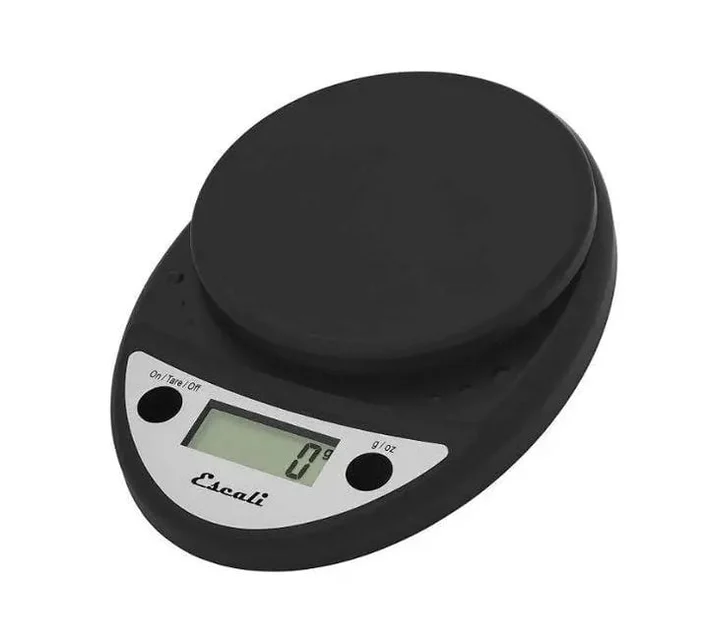
A long-running budget scale with sealed controls and simple two-button operation.
Best for: Serious home bakers and anyone who wants proven accuracy without paying for extras.
- Owners praise its accuracy for everyday baking
- Rated to 11 lb (5,000 g)
- Sealed control panel guards against spills
- Simple two-button operation and a tare feature
- Small platform limits what large bowls or wide dishes will sit on
- Basic display and gram-level resolution cap its precision
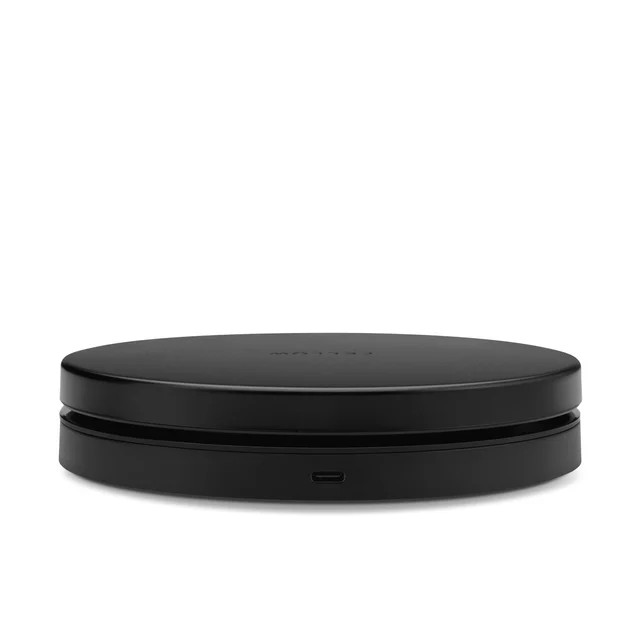
A gorgeous 0.1-gram coffee scale with Brew Assist, but overkill for general cooking.
Best for: Coffee enthusiasts and precision bakers who want fine resolution and brew guidance in one device.
- 0.1-gram resolution suited to pour-over and espresso dosing
- Brew Assist mode guides you to a target weight from a chosen coffee-to-water ratio
- USB-C rechargeable with a crisp OLED display and built-in timer
- Premium build with glass, metal and anodized aluminum parts
- Costs several times what a capable everyday scale does
- 2,500-gram capacity is low for weighing large batches or whole roasts
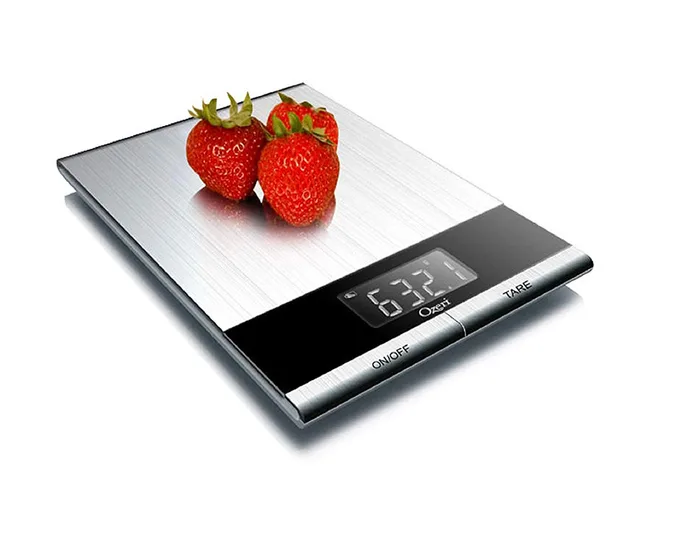
Slim stainless scale with a clear spec sheet, but a 1-minute auto-off that can blank the display mid-recipe.
Best for: Cooks short on storage who weigh quick single ingredients and want a very thin scale.
- Only 11 mm thick, so it slides into a drawer
- Easy-clean stainless steel surface
- Rated 1 g to 5,250 g with a tare function and g, oz, lb and kg units
- The maker lists a 1-minute automatic turn-off, shorter than the 3-minute setting on its own Pro models
- 1 g or 0.05 oz graduations cap its precision for small ingredients
- No backlight and no pull-out display are listed
| Criteria | OXO Good Grips Stainless Steel Food Scale with Pull-Out Display (11 lb) Top pick | Escali Primo P115 Digital Kitchen Scale | Fellow Tally Pro Precision Scale | Ozeri Ultra Thin Professional Digital Kitchen Food Scale (Stainless Steel) |
|---|---|---|---|---|
| Verdict | Buy it | Buy it | It depends | Skip it |
| Best for | Home cooks and bakers who want one dependable scale for daily use and value readability above all. | Serious home bakers and anyone who wants proven accuracy without paying for extras. | Coffee enthusiasts and precision bakers who want fine resolution and brew guidance in one device. | Cooks short on storage who weigh quick single ingredients and want a very thin scale. |
| Price tier | $$ · mid-range | $ · budget | $$$ · premium | $ · budget |
| Accuracy / resolution | Everyday cooking and baking | Praised by owners for accuracy | 0.1 g precision | 1 g or 0.05 oz graduations |
| Capacity | 11 lb / 5 kg | 11 lb / 5 kg | 2,500 g (low) | 11 lb / 5,250 g |
| Tare & zero | Yes | Yes | Yes | Yes |
| Units | g, oz, lb+oz | g, oz, lb+oz | g, oz, lb, ml | g, oz, lb, kg |
| Readability | Backlit pull-out display | Basic LCD | Crisp OLED with timer | Large LCD, no backlight listed |
| Power | Replaceable batteries | Battery powered | USB-C rechargeable | 2 lithium batteries included |
| Water resistance / cleaning | Removable platform, hand-wash | Sealed control panel | Water resistant per maker, wipe clean | Stainless surface, easy to clean; no water rating listed |
| Price tier | $$ · mid-range | $ · budget | $$$ · premium | $ · budget |
Which one is right for you?
- Home cooks and bakers who want one dependable scale for daily use and value readability above all. Buy it OXO Good Grips Stainless Steel Food Scale with Pull-Out Display (11 lb)
- Serious home bakers and anyone who wants proven accuracy without paying for extras. Buy it Escali Primo P115 Digital Kitchen Scale
- Coffee enthusiasts and precision bakers who want fine resolution and brew guidance in one device. It depends Fellow Tally Pro Precision Scale
- Cooks short on storage who weigh quick single ingredients and want a very thin scale. Skip it Ozeri Ultra Thin Professional Digital Kitchen Food Scale (Stainless Steel)
How we judged the field
A kitchen scale has exactly one job it cannot get wrong: report weight accurately and repeatably. We do not run our own laboratory. Instead, we synthesize maker specifications and aggregated owner reports, giving the most weight to how consistently owners say each model reads known weights, how it behaves near the low end, and whether readings hold up when the load is off-center.
Beyond accuracy, we looked at the criteria that decide whether a scale is a pleasure or a chore to use: capacity for real recipes, a tare function that zeroes cleanly, the range of units offered, and readability, meaning both display quality and whether a bowl blocks your view. We also considered cleaning and durability, since scales live in a messy environment. Prices are given only as qualitative tiers.
OXO Good Grips Stainless Steel Food Scale with Pull-Out Display (11 lb)
Buy itThis is the everyday scale most kitchens should own. Its signature feature is a display that pulls out on a flexible cord, so a wide mixing bowl never shadows the numbers, which is a genuinely recurring annoyance on front-display scales. Owners report dependable, repeatable readings, and praise the removable stainless platform that lifts off for hand-washing. The trade-offs are size and resolution: it is larger than compact scales, and it is not a 0.1-gram precision scale, so it is not meant for espresso-level dosing. For general cooking and baking, it is the most usable choice here.
Escali Primo P115 Digital Kitchen Scale
Buy itThe Primo has been a home-baker favorite for over a decade, and owners praise its accuracy. It is rated to 11 lb (5,000 g), the sealed control panel guards against spills, and the two-button interface is simple. Its limitations are cosmetic and practical rather than fundamental: the platform is smaller than most, and the display is plain. If value and accuracy matter more than a large deck, it is the smart buy.
Fellow Tally Pro Precision Scale
It dependsThe Tally Pro is a different class of tool. With 0.1-gram resolution, a bright OLED display, a built-in timer, and a Brew Assist mode that guides you to a target weight from a chosen coffee-to-water ratio, it is aimed squarely at coffee enthusiasts and precision bakers. It is built from glass, metal and anodized aluminum parts. But it costs several times what a capable everyday scale does, and its roughly 2,500-gram capacity is low for large batches or whole roasts. It is worth the money only if you will actually use the fine resolution and brew guidance; for weighing flour and produce, it is overkill.
Ozeri Ultra Thin Professional Digital Kitchen Food Scale (Stainless Steel)
Skip itThe Ultra Thin has real appeal for small kitchens: the maker lists it at only 11 mm thick, with an easy-clean stainless steel surface, a tare function, a rating from 1 g to 5,250 g, and grams, ounces, pounds and kilograms. The weak points are on the maker’s own page. It lists a 1-minute automatic turn-off, which is short if you pause between additions and risk losing your running total. Its 1 g or 0.05 oz graduations are coarse for small amounts, and no backlight or water rating is listed. Someone who weighs a quick single ingredient and values a drawer-flat scale may be happy with it, but for recipe-length baking we would pick the OXO or Escali.
OXO 11 lb vs Escali Primo P115: which should you buy?
These two cover the majority of buyers, and the decision comes down to display and deck versus price. The OXO wins on usability: its pull-out display stays readable behind big bowls, its platform is larger and removable for cleaning, and the screen is backlit. The Escali wins on value, with owners praising its accuracy, and it is more compact for small kitchens. Both tare cleanly. Choose the OXO if readability and a roomy, easy-clean platform justify the higher tier; choose the Escali if you want proven accuracy for less and can work with a smaller deck and a basic display.
What to look for
- Accuracy and low-end behavior: confirm the scale registers small weights (1 to 5 grams) reliably, not just heavy loads.
- Resolution that matches your use: 1 gram for general cooking and baking; 0.1 gram only if you brew coffee or weigh tiny quantities.
- Capacity: aim for around 11 pounds (5 kg) for versatile kitchen use; coffee scales trade capacity for precision.
- Tare and units: a clean zero/tare and the units you actually use (grams above all for baking).
- Readability: backlighting and a display that a bowl will not hide; a pull-out display solves the common shadow problem.
- Cleaning and power: a removable or sealed surface for spills, and a power source (replaceable cells or USB-C) that fits your habits.
Our final take
For almost everyone, the OXO Good Grips 11 lb scale is the right buy: accurate enough for daily cooking and baking, easy to read behind a bowl, and easy to clean. If budget is the priority, the Escali Primo P115 is praised by owners for accuracy at a lower tier, provided you can live with a smaller platform and a plainer display. Reserve the Fellow Tally Pro for coffee brewing and 0.1-gram precision work where its price is justified. And skip the Ozeri Ultra Thin for recipe-length work: its slim stainless body is handy, but a 1-minute auto-off, 1-gram steps and no listed backlight make it the weakest fit here for baking and long prep sessions.
Questions, answered
Do I need 0.1-gram resolution or is 1 gram enough?
For general cooking and most baking, 1-gram resolution is plenty, which is why the OXO and Escali serve the majority of kitchens well. You only need 0.1-gram resolution for espresso dosing, pour-over coffee, and small-quantity work like yeast, salt, or spices, where a single gram is a large percentage of the total. The Fellow Tally Pro is built for that precision use case.
What capacity should a kitchen scale have?
An 11-pound (5 kg) capacity, as on the OXO and Escali, comfortably covers bread doughs, large bowls of batter, and portioning meat. Coffee-focused scales like the Fellow trade capacity for precision, so their roughly 2,500-gram ceiling is fine for brewing but limiting for big batches. If you frequently weigh heavy items, favor the higher-capacity models.
Why does the display placement matter?
A wide bowl or plate on the platform can hide a display that sits at the front of the scale, forcing you to lift the bowl to read the weight. The OXO addresses this with a pull-out display on a cord that you can position clear of the vessel. Backlighting, as found on several of these models, also helps in dim kitchens.
Are rechargeable scales better than battery-powered ones?
It depends on your preference. A USB-C rechargeable model like the Fellow removes the need to buy disposable cells, which is convenient for frequent users. Battery-powered scales like the Escali, however, are ready whenever you need them without waiting for a charge, and replaceable cells are easy to swap. Both approaches are reliable when the underlying scale is accurate.
How do you rate these scales without your own lab?
This is general product information, not a substitute for hands-on calibration in your own kitchen. We synthesize maker specifications and aggregated owner reports rather than running our own laboratory, so we weigh how consistently owners say each model reads known weights, how it held up over time, and how usable owners found it day to day. Where a maker page lists a limit, as with the Ozeri Ultra Thin's auto-off, we flag it plainly.
Deciding between the top two? See our head-to-head: OXO Good Grips Stainless Steel Food Scale with Pull-Out Display (11 lb) vs Escali Primo P115 Digital Kitchen Scale.
More Home & Kitchen reviews
 The Best Kitchen Shears: 4 Compared (and One to Skip)
  The Best Kitchen Trash Cans: 4 Compared (and One to Skip)
  The Best Kitchen Knife Sets: 4 Compared (and One to Skip)
  The Best Knife Sharpeners: 4 Compared (and One to Skip)
  The Best Cordless Leaf Blowers: 4 Compared (and One to Skip)
  The Best Linen Sheets: 4 Compared (and One to Skip)