

Home & Kitchen
The Best Food Processors: 4 Models Compared (and One to Skip)
We compared four current food processors on motor power, slicing control, and cleanup to find which ones earn their counter space and which to quietly avoid.
The short version
For most kitchens, the Cuisinart Custom 14 is the smart buy: a quiet 720-watt motor, dependable dough kneading, and a durable base, without gimmicks. Step up to the Breville Sous Chef 16 if you want adjustable slicing, dicing, dual bowls, and a timer, and have the counter space and budget. The KitchenAid 13-Cup makes sense when slicing precision and dicing matter more than motor strength. Skip the Hamilton Beach Stack & Snap: it is easy to assemble but loud, uneven at chopping, and can leak with liquids.
Our picks at a glance
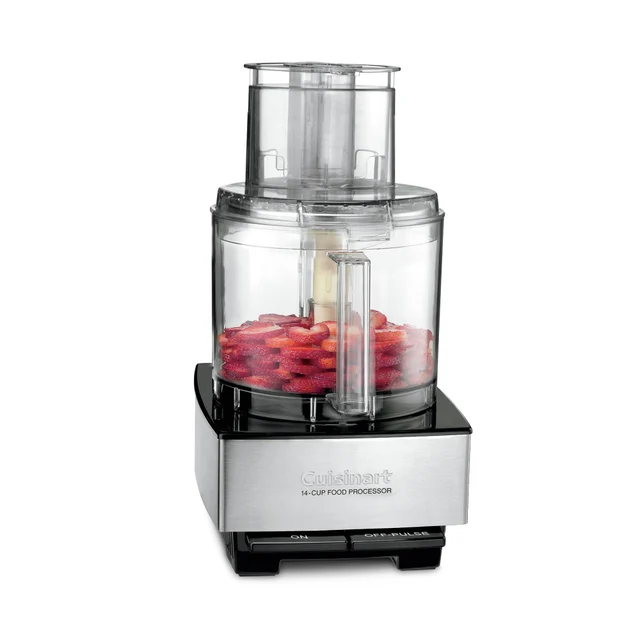
- Cuisinart Custom 14 (DFP-14BCNY) - Buy. A quiet, durable 14-cup workhorse that does the core jobs well and skips the gimmicks.
- Breville Sous Chef 16 (BFP810) - Buy. The most capable and versatile of the group, if you have the counter space and budget for it.
- KitchenAid 13-Cup with Dicing Kit (KFP1319) - It depends. Feature-rich for the tier, with an external slicing lever and dicing kit, but a lighter motor.
- Hamilton Beach Stack & Snap (70725A) - Skip. Easy to assemble and cheap, but loud, uneven at chopping, and prone to leaking.
The verdict in 30 seconds
What mattered most
- Bowl capacity
- Motor power
- Slicing control
- Dicing
- Feed chute
- Noise level
A food processor should chop, slice, shred, and knead without a wrestling match at cleanup time. We synthesized independent expert testing and long-term owner reports across four food processors sold in 2026, weighing motor strength, slicing control, and how many parts you actually have to wash. Three are worth the counter space for different kitchens; one is hard to recommend at any tier.
A quiet, durable 14-cup workhorse that does the core jobs well and skips the gimmicks.
Best for: Cooks who want one dependable machine for chopping, shredding, and dough rather than a drawer of specialty discs.
- 720-watt motor kneads stiff pizza dough into an even ball without stalling
- Runs noticeably quieter than most rivals, and the metal-clad base feels built to last
- Single large feed tube only, with no adjustable-thickness slicing or dicing kit
- Two-button On / Off-Pulse controls are basic, with no timer or speed range
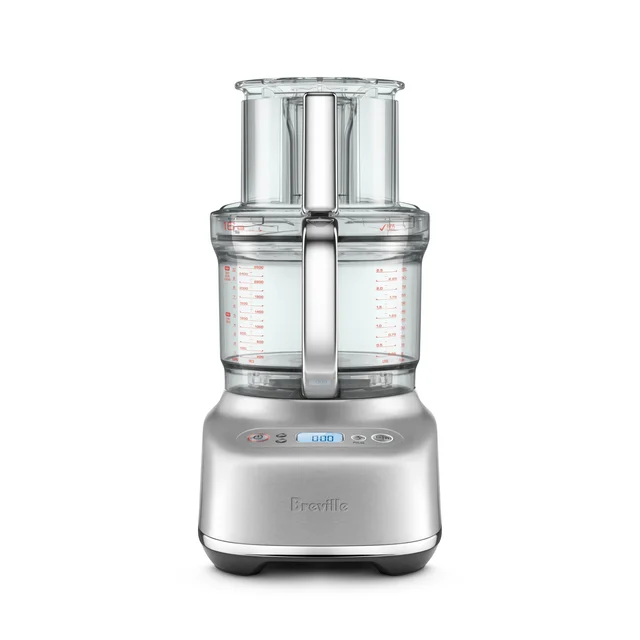
The most capable and versatile of the group, if you have the counter space and budget for it.
Best for: Frequent, high-volume cooks and bakers who want precise slicing and dicing and will use the full accessory set.
- Adjustable slicing disc with 24 thickness settings plus a 5.5-inch wide feed chute cuts down on pre-cutting
- Ships with a 16-cup bowl and a 2.5-cup mini bowl, a digital timer, and a storage caddy for the discs and blades
- Large footprint and a lot of parts to wash and store after each use
- Sits well above the others in price for capability most home cooks will not fully use
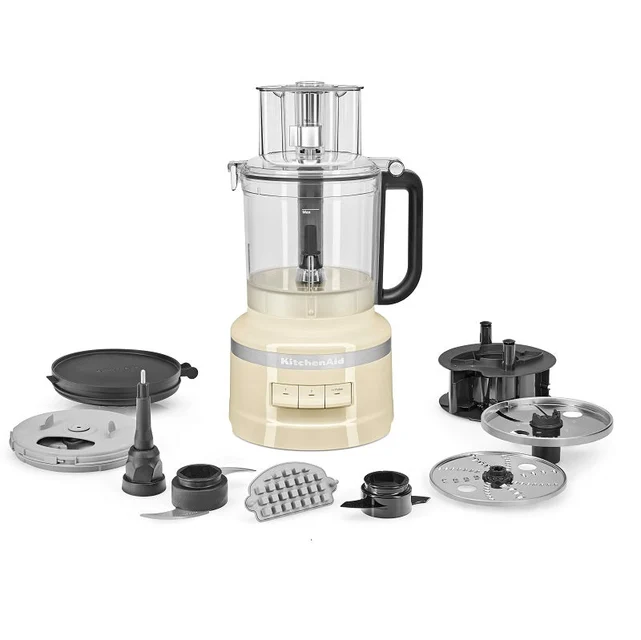
Feature-rich for the tier, with an external slicing lever and dicing kit, but a lighter motor.
Best for: Cooks who prioritize slicing precision and dicing over raw motor strength and mostly process vegetables, cheese, and lighter tasks.
- External ExactSlice lever adjusts slice thickness without opening the bowl
- Included dicing kit and 3-in-1 adjustable feed tube handle jobs many machines this size cannot
- Roughly 500-watt motor can labor on stiff dough and dense loads compared with the Cuisinart and Breville
- Leans heavily on plastic latches and clips that owners watch for wear over time
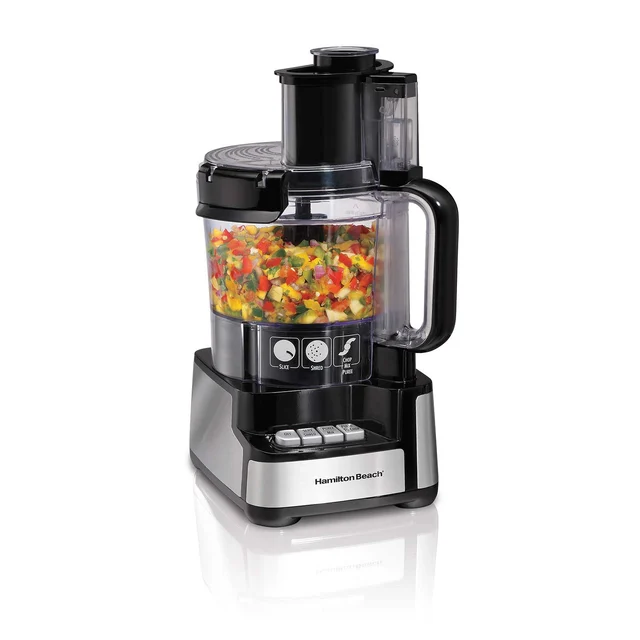
Easy to assemble and cheap, but loud, uneven at chopping, and prone to leaking.
Best for: Very occasional users on a tight budget who mostly slice or shred and can live with the noise and inconsistency.
- Stack-and-snap bowl assembles without any twisting or locking, and the big-mouth feed tube fits whole items
- 12-cup sealed bowl with a pour spout is straightforward for basic slicing and shredding
- Reported to run around 90 dBA, and it chops unevenly, often leaving large pieces behind
- All-plastic build lacks a lid gasket and can spray liquid when filled near the max line
| Criteria | Cuisinart Custom 14 (DFP-14BCNY) Top pick | Breville Sous Chef 16 (BFP810) | KitchenAid 13-Cup with Dicing Kit (KFP1319) | Hamilton Beach Stack & Snap (70725A) |
|---|---|---|---|---|
| Verdict | Buy it | Buy it | It depends | Skip it |
| Best for | Cooks who want one dependable machine for chopping, shredding, and dough rather than a drawer of specialty discs. | Frequent, high-volume cooks and bakers who want precise slicing and dicing and will use the full accessory set. | Cooks who prioritize slicing precision and dicing over raw motor strength and mostly process vegetables, cheese, and lighter tasks. | Very occasional users on a tight budget who mostly slice or shred and can live with the noise and inconsistency. |
| Price tier | $$ · mid-range | $$$$ · flagship | $$$ · premium | $ · budget |
| Bowl capacity | 14 cups | 16 cups + 2.5-cup mini | 13 cups | 12 cups |
| Motor power | 720 W | ~1200 W class | ~500 W | 450 W |
| Slicing control | Fixed disc | Adjustable dial, 24 settings | External ExactSlice lever | Reversible disc only |
| Dicing | No | Yes (plus french-fry disc) | Yes (dicing kit) | No |
| Feed chute | Single large tube | 5.5-inch wide + mini | 3-in-1 adjustable | Big-mouth |
| Noise level | Low | Low to moderate | Moderate | High |
Which one is right for you?
- Cooks who want one dependable machine for chopping, shredding, and dough rather than a drawer of specialty discs. Buy it Cuisinart Custom 14 (DFP-14BCNY)
- Frequent, high-volume cooks and bakers who want precise slicing and dicing and will use the full accessory set. Buy it Breville Sous Chef 16 (BFP810)
- Cooks who prioritize slicing precision and dicing over raw motor strength and mostly process vegetables, cheese, and lighter tasks. It depends KitchenAid 13-Cup with Dicing Kit (KFP1319)
- Very occasional users on a tight budget who mostly slice or shred and can live with the noise and inconsistency. Skip it Hamilton Beach Stack & Snap (70725A)
How we judged the field
A food processor lives or dies on a few practical things: whether the motor can drive through dough and dense vegetables without stalling, how much control you get over slicing and dicing, and how much of a chore the machine is to clean and store. Flashy accessory counts matter less than most marketing suggests.
We do not lab-test. Instead we synthesized independent expert evaluations and long-term owner reports for food processors currently sold in 2026, then weighed each model on motor strength, bowl capacity, slicing and dicing control, noise, and everyday cleanup. We looked for machines that hold up over years, not ones that impress for a week. Three of the four below are worth buying for different kitchens. One is hard to justify even at its low tier.
Cuisinart Custom 14 (DFP-14BCNY)
Buy itThis is the classic all-rounder, and it remains our overall pick because it does the core jobs well and quietly. The 720-watt motor kneads stiff pizza dough into a smooth, even ball without the manual coaxing lighter machines need, and it stays composed through hard vegetables and cheese. Owners consistently single out two things: how quiet it runs compared with rivals, and how solid the metal-clad base feels after years of use.
What you give up is versatility. There is a single large feed tube, a fixed slicing disc, and no dicing kit, so you cannot dial in slice thickness or dice without extra work. The two-button On / Off-Pulse control is about as simple as it gets, with no timer or speed range. For cooks who want one dependable machine rather than a collection of discs, those are easy trade-offs. For anyone who slices a lot and wants precision, they are not.
Breville Sous Chef 16 (BFP810)
Buy itThe Sous Chef 16 is the most capable machine here and our runner-up. Its adjustable slicing disc offers 24 thickness settings, and the 5.5-inch wide feed chute swallows whole tomatoes and potatoes, which cuts down sharply on pre-cutting. It ships with a 16-cup main bowl plus a 2.5-cup mini bowl, a digital timer, a french-fry disc, and a caddy that stores the blades and discs together so they do not scatter through a drawer.
The cost of that capability is size, cleanup, and price. It takes up real counter space, there are more parts to wash after each session, and it sits well above the others in tier. If you cook in volume, bake often, or genuinely want adjustable slicing and dicing, it repays the outlay. If your processor mostly chops onions and shreds cheese on weeknights, you are paying for headroom you will not use.
KitchenAid 13-Cup with Dicing Kit (KFP1319)
It dependsThis one is feature-rich for its tier. The external ExactSlice lever lets you adjust slice thickness without opening the bowl, the 3-in-1 feed tube adapts to different ingredient sizes, and the included dicing kit does a job most machines this size cannot touch. A dough blade, reversible shredding disc, and storage caddy round out a genuinely useful set.
The caveat is the motor. At roughly 500 watts, it can labor on stiff dough and dense loads in a way the Cuisinart and Breville do not, so heavy bakers should look elsewhere. The design also leans on plastic latches and clips that owners keep an eye on over time. Buy it if slicing precision and dicing matter more to you than raw strength, and if your workload skews toward vegetables, cheese, and lighter prep.
Hamilton Beach Stack & Snap (70725A)
Skip itThis is the honest dis-buy. Its one real strength is assembly: the stack-and-snap bowl clicks together with no twisting or locking, and the big-mouth feed tube fits whole items. The 12-cup sealed bowl with a pour spout is fine for basic slicing and shredding, and the price is low.
But the compromises are the kind you notice every time you use it. It is loud, with reported operation around 90 dBA, and its chopping is uneven, frequently leaving large chunks that force extra pulses. The all-plastic build lacks a lid gasket, and testing found it can spray liquid when filled near the max line. Spending one tier up buys steadier results and a machine that feels built to last, which is why we cannot recommend this one except for the most occasional use.
Cuisinart Custom 14 vs Breville Sous Chef 16: which should you buy?
These two anchor the lineup, and the choice comes down to how you cook. The Cuisinart Custom 14 is the better default. It is quieter, its motor handles dough with less fuss, it takes up less room, and it costs meaningfully less while covering the tasks the vast majority of home cooks actually perform. Nothing about it feels fragile.
The Breville Sous Chef 16 is the machine to choose when versatility is the point. If you regularly want fine control over slice thickness, dice vegetables without a separate tool, process large batches, or lean on the mini bowl and timer, it does all of that in one unit and does it well. The catch is that you pay for it in price, counter space, and cleanup. Put simply: buy the Cuisinart if you want a quiet, durable workhorse, and the Breville if you want a full prep station and will use every part of it.
What to look for
Start with capacity. A 12-to-14-cup bowl suits most households; go to 16 cups only if you cook in bulk, and stay smaller only if storage is tight and you accept batching. Next, weigh motor strength against your habits: if you knead dough or grind nuts, favor the higher-wattage models, since a stronger motor resists stalling and overheating on long runs.
Then decide how much slicing and dicing control you need. Fixed-disc machines are simpler and easier to clean; adjustable slicers and dicing kits add real capability but also more parts. Finally, factor in the unglamorous details that decide whether a processor gets used: noise, how easily the bowl and lid seal, and how quickly it all goes in the dishwasher. A machine that is loud or leaks tends to stay in the cupboard.
Our final take
The Cuisinart Custom 14 is the right pick for most kitchens, pairing a quiet, capable motor and dependable dough handling with a durable build at a fair tier. Choose the Breville Sous Chef 16 if you want adjustable slicing, dicing, dual bowls, and a timer, and have the space and budget to match. The KitchenAid 13-Cup is a reasonable middle path when slicing precision and dicing outrank motor strength. The Hamilton Beach Stack & Snap is the one to skip: easy to put together, but too loud, too uneven, and too leak-prone to earn lasting counter space.
Questions, answered
What size food processor should I buy?
Most households are well served by a 12-to-14-cup bowl, which handles dough, batch chopping, and shredding without crowding. Choose 16 cups only if you cook in large volume often. Smaller bowls save storage space but force you to work in batches.
Do I need a high-wattage motor?
For everyday chopping, shredding, and slicing, roughly 450 to 700 watts is enough. Higher wattage mainly matters if you knead stiff dough, grind nuts, or process dense loads regularly, where a stronger motor resists stalling and overheating during longer runs.
Is a food processor better than a blender?
They solve different problems. A food processor chops, slices, shreds, and kneads dry or chunky ingredients with a wide bowl and flat blade. A blender purees liquids smoothly. For salsa, dough, and shredded cheese, the processor wins; for smoothies and soups, use a blender.
Why skip the Hamilton Beach Stack & Snap?
It assembles easily and costs little, but independent testing and owners report loud operation near 90 dBA, uneven chopping that leaves large pieces, and a gasket-free lid that can leak liquids. Spending one tier up buys noticeably steadier results and better durability.
Deciding between the top two? See our head-to-head: Cuisinart Custom 14 (DFP-14BCNY) vs Breville Sous Chef 16 (BFP810).
More Home & Kitchen reviews
 The Best Food Storage Containers: 4 Compared (and One to Skip)
  The Best Nonstick Frying Pans: 4 Compared (and One to Skip)
  The Best Garbage Disposals: 4 Compared (and One to Skip)
  The Best Garden Hoses: 4 Compared (and One to Skip)
  The Best Garment Steamers: 4 Compared (and One to Skip)
  The Best Gas Grills for Backyards: 4 Compared (and One to Skip)