

Tools & DIY
The Best Fall Protection Harnesses: 4 Compared (and One to Skip)
We compared full body harnesses against what OSHA 29 CFR 1926.502 and ANSI/ASSP Z359.11 actually require, then checked each maker's own published capacity, inspection interval and retirement rules.
The short version
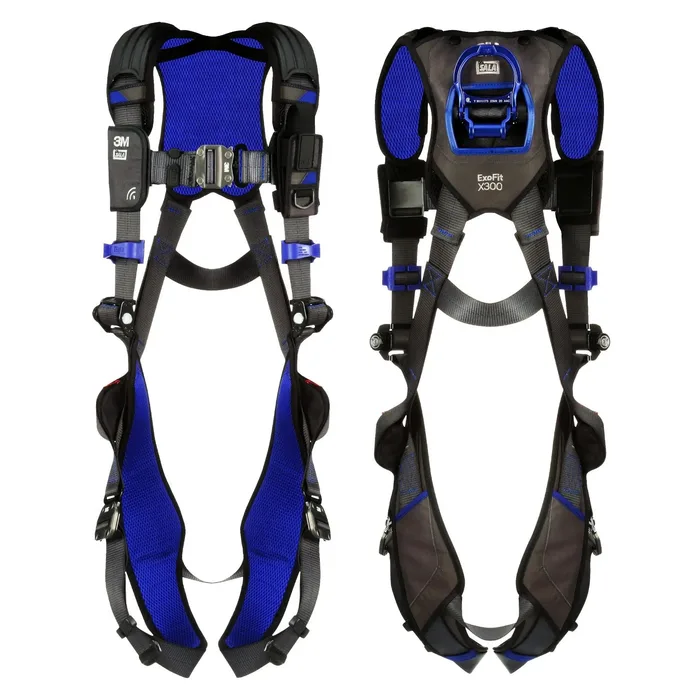
The 3M DBI-SALA ExoFit X300 Comfort Vest is the pick: 3M publishes an ANSI capacity of 130 to 310 pounds with an OSHA rating up to 420 pounds, rates every D-ring at 5,000 pounds tensile, ties retirement to inspection rather than a calendar, and states plainly in its own instructions that you should only use a full body harness for fall arrest. The value pick is the MSA V-FORM, a plain back D-ring harness with ANSI Z359.11, CSA Z259.10 and OSHA approvals on MSA's own page. The Petzl AVAO FAST is the depends pick: it adds ventral and lateral attachments and carries EN 813 and ANSI Z459.1 rope access certification, which is exactly right for tower and rope work and more harness than a roofer needs at over four and a half pounds. Skip the 3M DBI-SALA tongue buckle positioning belt for fall protection: it is a fine restraint and positioning device, but OSHA has not accepted body belts as part of a personal fall arrest system since January 1, 1998, and 3M's own harness instructions say do not use a body belt for fall arrest. Whichever you buy, the harness is one third of the job. You still need an anchorage capable of supporting at least 5,000 pounds per attached worker, a deceleration device, and a written rescue plan, because OSHA requires prompt rescue and suspension in a harness can turn fatal in under 30 minutes. Best for: anyone who has to work at height and wants to buy the right harness and then buy the rest of the system that makes it work.
Our picks at a glance
- 3M DBI-SALA ExoFit X300 Comfort Vest Safety Harness - Buy. The best documented harness in the category, with padding and hardware that hold up and instructions that tell you the truth about capacity.
- MSA Safety V-FORM Full Body Harness (Back D-Ring, Qwik-Fit Leg Straps) - Buy. A plain fall arrest harness with published approvals and an RFID tag for logging inspections.
- Petzl AVAO FAST International Version - It depends. A rope access and suspension harness that happens to do fall arrest, and the wrong answer if all you do is stand on a roof.
- 3M DBI-SALA Tongue Buckle Positioning Belt with Hip Pad - Skip. A perfectly good positioning and restraint belt that is not fall arrest equipment and is bought by people who think it is.
The verdict in 30 seconds
What mattered most
- Fall arrest attachment
- Standards on the label
- Published capacity
- Work positioning capability
- Rated for suspension or rope access
- Maker's competent person inspection interval
A harness is the only piece of fall protection you wear, which is why it is the piece people shop for. It is also the piece that does the least on its own. Under OSHA 29 CFR 1926.502(d), a personal fall arrest system is an anchorage, a connector and a body harness, and OSHA sets hard numbers for all of it: no more than 1,800 pounds of arresting force on the worker, no more than 6 feet of free fall, and no more than 3.5 feet of deceleration distance. We judged four widely sold products on what their makers publish, not on marketing copy, and one of the four is here to show you what buying the wrong category looks like.
The best documented harness in the category, with padding and hardware that hold up and instructions that tell you the truth about capacity.
Best for: Someone who wears a harness most days and wants the best documented, best padded option with a clear paper trail.
- 3M publishes both ratings separately: ANSI 130 to 310 pounds and OSHA up to 420 pounds, so you can see exactly where the standard stops and the regulation continues.
- Every attachment element in the instructions is listed at 22.2 kN (5,000 pounds) tensile strength, and the manual carries an RFID tag for logging inspections.
- 3M sets no fixed expiry: the instructions say functional life is determined by work conditions and maintenance, and the harness may stay in service as long as it passes inspection.
- It is the most expensive way to solve the problem, and the padding that justifies the premium is comfort rather than protection.
- 3M states the equipment cannot be repaired, so any failed inspection or arrested fall means destroying the harness.
- The dorsal D-ring extension available on some configurations adds 1.5 feet of free fall, which has to be added to your clearance calculation.
- Buying this harness alone leaves you with no anchorage and no deceleration device, which is most of a fall arrest system.
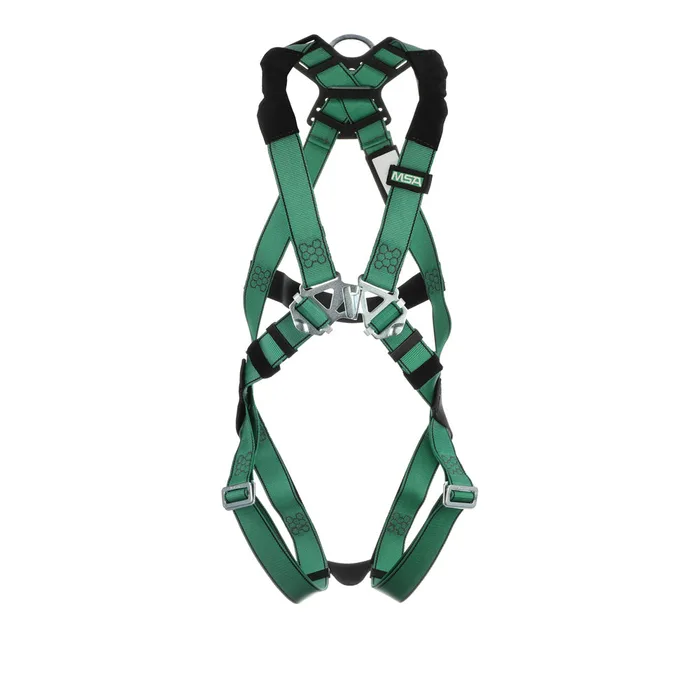
A plain fall arrest harness with published approvals and an RFID tag for logging inspections.
Best for: General industry and construction work where you need a compliant fall arrest harness and would rather spend the difference on a self retracting lifeline.
- MSA lists it on its own site as meeting ANSI Z359.11, CSA Z259.10 and OSHA, with a 400 pound capacity and an RFID tag.
- The product page lists plated steel hardware, polyester webbing, one back D-ring and lanyard keepers.
- Qwik-Fit connections at the chest and legs make it quick to put on.
- This configuration has no padding, no torso adjustment and no belt, so long days in it are less comfortable than the padded options.
- One back D-ring only, so there is no work positioning capability and no sternal attachment for ladder climbing.
- ANSI Z359.11 covers users from 130 to 310 pounds, so the 400 pound figure is not an ANSI rating.
- Like any harness, it has to be retired after it arrests a fall.
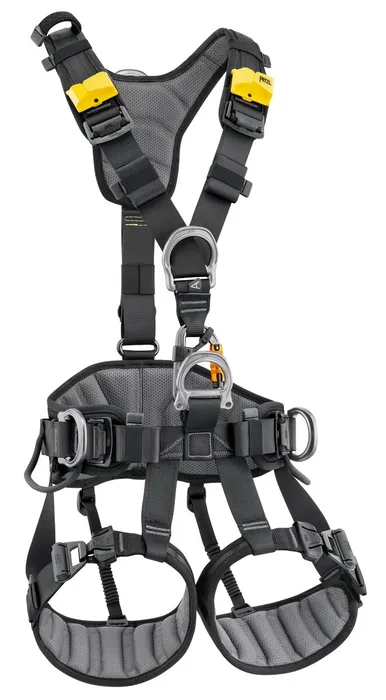
A rope access and suspension harness that happens to do fall arrest, and the wrong answer if all you do is stand on a roof.
Best for: Tower climbers, rope access technicians and rescue teams who need to hang in the harness and work, not just be caught by it.
- Certified to CE EN 361, EN 813 and EN 358 plus ANSI Z359.11, ANSI Z459.1, CSA Z259.10 and NFPA 2500 class 3, so it covers fall arrest, work positioning and suspension on one label.
- Five attachment points with clearly published roles: dorsal and sternal for fall arrest, ventral for a descender or work seat, two lateral for a positioning lanyard in double mode, and a rear waist point for restraint only.
- A red indicator appears on the dorsal attachment after a fall, telling you unambiguously that the harness is retired.
- It is heavy for general work at between 2,060 and 2,200 grams depending on size, roughly four and a half to nearly five pounds.
- Petzl sets textile service life in its technical notice rather than on the product page, so check it before you buy.
- Petzl does not publish a pounds capacity figure on the product page, so you have to read the technical notice for your configuration.
- European sizing in three sizes only, with waist and stature ranges in centimetres.
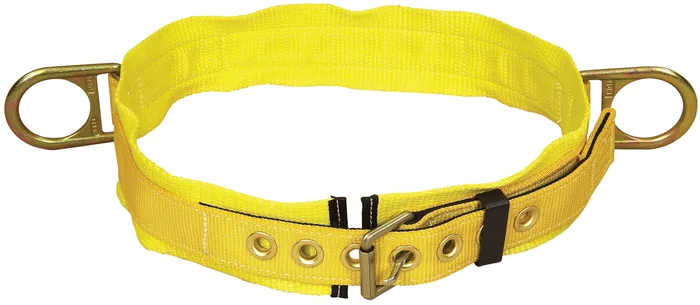
A perfectly good positioning and restraint belt that is not fall arrest equipment and is bought by people who think it is.
Best for: Someone who already owns a full body harness and needs side D-rings for positioning, and nobody who is shopping for fall arrest.
- For its actual job, restraint and work positioning, it is simple, cheap and comfortable, with two side D-rings and a hip pad.
- 3M's own harness instructions are honest about the limit: only use a full body harness for fall arrest and do not use a body belt.
- A positioning belt worn with a full body harness is a legitimate combination that many utility and rebar workers use every day.
- OSHA has not accepted body belts as part of a personal fall arrest system since January 1, 1998, under 29 CFR 1926.502(d).
- 3M's own harness instructions say to only use a full body harness for fall arrest applications and do not use a body belt.
- A positioning device system under 1926.502(e) is rigged so free fall cannot exceed 2 feet, which is a fundamentally different setup from the 6 feet a fall arrest system allows.
- Arresting a fall on a belt loads the abdomen rather than the thighs, shoulders and sub pelvic strap, which is what a full body harness exists to do.
| Criteria | DBI-SALA ExoFit X300 Comfort Vest Safety Harness Top pick | V-FORM Full Body Harness (Back D-Ring, Qwik-Fit Leg Straps) | AVAO FAST International Version | DBI-SALA Tongue Buckle Positioning Belt with Hip Pad |
|---|---|---|---|---|
| Verdict | Buy it | Buy it | It depends | Skip it |
| Best for | Someone who wears a harness most days and wants the best documented, best padded option with a clear paper trail. | General industry and construction work where you need a compliant fall arrest harness and would rather spend the difference on a self retracting lifeline. | Tower climbers, rope access technicians and rescue teams who need to hang in the harness and work, not just be caught by it. | Someone who already owns a full body harness and needs side D-rings for positioning, and nobody who is shopping for fall arrest. |
| Price tier | $$$ · premium | $$ · mid-range | $$$ · premium | $ · budget |
| Fall arrest attachment | Dorsal D-ring, plus sternal on some models | Dorsal D-ring only | Dorsal and sternal | None |
| Standards on the label | ANSI Z359.11, OSHA 1910.140 and 1926.502 | ANSI Z359.11, CSA Z259.10, OSHA | EN 361, EN 813, EN 358, ANSI Z359.11, ANSI Z459.1, CSA Z259.10, NFPA 2500 class 3 | Positioning and restraint device, not a fall arrest component |
| Published capacity | ANSI 130 to 310 lb, OSHA up to 420 lb | 400 lb; ANSI covers 130 to 310 lb | Not published as a pounds figure on the product page | Not published as a pounds figure on the product page |
| Work positioning capability | Only on the construction and positioning models with hip D-rings | No, this configuration has no side D-rings | Ventral plus two lateral attachment points | Two side D-rings, positioning only |
| Rated for suspension or rope access | No, 3M recommends a seat for extended suspension | No | Yes, EN 813 and ANSI Z459.1 | No |
| Maker's competent person inspection interval | No more than one year | Follow the maker's instructions | Follow the technical notice; Petzl publishes a PPE inspection procedure and checklist | Follow the product user instructions |
| Published life limit | None; life set by inspection and conditions | Not stated on the product page | Not stated on the product page; see the technical notice | None stated in the product listing |
| Fall indicator | Stitched impact indicators; deployment means destroy the harness | Not stated on the product page | Red indicator appears at the dorsal attachment after a fall | Not applicable |
Which one is right for you?
- Someone who wears a harness most days and wants the best documented, best padded option with a clear paper trail. Buy it 3M DBI-SALA ExoFit X300 Comfort Vest Safety Harness
- General industry and construction work where you need a compliant fall arrest harness and would rather spend the difference on a self retracting lifeline. Buy it MSA Safety V-FORM Full Body Harness (Back D-Ring, Qwik-Fit Leg Straps)
- Tower climbers, rope access technicians and rescue teams who need to hang in the harness and work, not just be caught by it. It depends Petzl AVAO FAST International Version
- Someone who already owns a full body harness and needs side D-rings for positioning, and nobody who is shopping for fall arrest. Skip it 3M DBI-SALA Tongue Buckle Positioning Belt with Hip Pad
How we judged the field
Five things decide whether a harness is the right buy. First, what it is actually certified for: ANSI/ASSP Z359.11 is the full body harness standard, and it is not the same as EN 358 work positioning or EN 813 and ANSI Z459.1 rope access. Second, whether the maker publishes real numbers rather than adjectives, meaning D-ring tensile strength, webbing breaking strength, and the difference between the ANSI capacity range and the higher OSHA figure. Third, what the maker says about retirement, because that is where the differences between brands are largest and least advertised. Fourth, how often the maker requires a competent person to inspect it, which is a genuine safety difference. Fifth, whether the attachment points you are paying for are the ones you will use, since a hip D-ring and a ventral D-ring are for work positioning and are explicitly not fall arrest attachments.
The field splits along one line: harnesses that only stop falls, and harnesses that also hold you up while you work. The first group is most of the market and is what a roofer, a warehouse picker or a steel erector needs. The second group costs more, weighs more and adds attachment points that a fall arrest user will never clip into. We picked one of each from the two makers with the clearest published documentation, added the rope access option so you can see what the extra money buys, and included a positioning belt as the fourth product because it is the most common wrong purchase in this aisle and its own maker says exactly why.
3M DBI-SALA ExoFit X300 Comfort Vest Safety Harness
Buy itThe ExoFit X300 is the harness to buy if you wear one all day and want the documentation to match the price. The comfort case is real, with padding, but the reason it wins is the instruction manual. 3M lists every attachment element at 22.2 kN, which is 5,000 pounds tensile strength, publishes the ANSI capacity range of 130 to 310 pounds and the OSHA rating of up to 420 pounds as separate lines rather than blurring them, and states that the functional life of the harness is determined by work conditions and maintenance rather than a date. The dorsal area carries an RFID tag for logging inspections. The trade-off is money and finality: 3M says the equipment cannot be repaired, so a failed inspection or an arrested fall means cutting the straps and buying another. It is also worth reading the note that a D-ring extension adds 1.5 feet of free fall to your clearance sum. For a daily wearer, this is the one.
MSA Safety V-FORM Full Body Harness (Back D-Ring, Qwik-Fit Leg Straps)
Buy itThe V-FORM is the harness for someone who wants compliance without ceremony. On MSA’s own site it is listed as meeting ANSI Z359.11, CSA Z259.10 and OSHA, with a 400 pound capacity, an RFID tag, lanyard keepers and Qwik-Fit connections at the chest and legs. There is no padding, no torso adjustment and no belt, which is exactly why it costs what it costs. What earns it the value pick is the plain package: one back D-ring, polyester webbing, plated steel hardware and the approvals listed above, with a 400 pound capacity that sits above the 310 pound top of the ANSI range. Buy it and put the savings into a self retracting lifeline.
Petzl AVAO FAST International Version
It dependsThe AVAO FAST is not a better version of the other two, it is a different tool. Petzl certifies it to CE EN 361 for fall arrest, EN 358 for work positioning and EN 813 for sit harness suspension, plus ANSI Z359.11, ANSI Z459.1 for rope access, CSA Z259.10 and NFPA 2500 class 3. That means five attachment points with published roles: dorsal and sternal for fall arrest, a ventral D-ring for a descender or a work seat, two lateral points for a positioning lanyard in double mode, and a rear waist point that is for restraint only. If you hang in a harness to work, this is what you want. If you do not, you are carrying between 2,060 and 2,200 grams of harness, roughly four and a half to nearly five pounds, for attachment points you will never clip into. Note too that Petzl sets textile service life in its technical notice, so check it before you buy.
3M DBI-SALA Tongue Buckle Positioning Belt with Hip Pad
Skip itThe tongue buckle positioning belt is here as the skip, and not because it is a bad product. It is a competent restraint and work positioning belt with two side D-rings and a hip pad, and utility workers and rebar tiers use belts like it correctly every day, worn together with a full body harness. The problem is who buys it. It sits in the fall protection aisle, it is the cheapest thing there, and it looks like safety equipment. It is not fall arrest equipment. OSHA has not accepted body belts as part of a personal fall arrest system since January 1, 1998, and a positioning device system under 1926.502(e) is rigged so free fall cannot exceed 2 feet, a fundamentally different setup from the 6 feet a fall arrest system allows. 3M says it plainly in its harness instructions: only use a full body harness for fall arrest applications and do not use a body belt.
Sources
Specs in this review come from these pages.
- OSHA 29 CFR 1926.502, Fall protection systems criteria and practices (osha.gov)
- OSHA Safety and Health Information Bulletin SHIB 03-24-2004, Suspension Trauma / Orthostatic Intolerance (osha.gov)
- 3M Technical Bulletin, ANSI/ASSP Z359 Standards Update Summary (multimedia.3m.com)
- 3M DBI-SALA ExoFit X300 Full Body Harness User Instructions (multimedia.3m.com)
- MSA Safety, V-FORM Harness product page (us.msasafety.com)
- Petzl, AVAO FAST International Version product page (petzl.com)
3M DBI-SALA ExoFit X300 Comfort Vest Safety Harness vs MSA Safety V-FORM Full Body Harness (Back D-Ring, Qwik-Fit Leg Straps): which should you buy?
The ExoFit X300 and the V-FORM stop a fall the same way, because the standard that governs both sets the same limits: the system has to hold arresting force to 1,800 pounds or less, cap free fall at 6 feet, and stop you inside 3.5 feet of deceleration distance. What separates them is everything around that moment. The X300 is padded, has more configuration options including models with hip D-rings for positioning, and comes with the most complete published spec sheet in the category. The V-FORM is one back D-ring, no padding, and a shorter list of things to inspect. If you spend six hours a day in a harness, the padding is not a luxury, because a harness you loosen because it is uncomfortable is a harness that does not distribute load correctly.
Choose on how long you wear it and who inspects it. If the harness lives on your body through the shift, buy the X300 and accept that a fall or a failed inspection ends it. If you put it on for an hour at a time, or you are equipping several people and the budget has to stretch to lanyards and anchorages as well, buy the V-FORM and use the money you saved to buy the rest of the system, which is the part that actually stops you. Whichever you pick, read the inspection interval in its instructions and build it into your plan before you buy a stack of them.
What to look for
- Buy the system, not the harness: OSHA 1926.502(d) defines a personal fall arrest system as an anchorage, a connector and a body harness, and the anchorage alone has to support at least 5,000 pounds per attached worker unless a qualified person designs it to a safety factor of at least two.
- Check the standard, not the word certified: ANSI/ASSP Z359.11 is the full body harness standard; EN 358 covers work positioning and EN 813 and ANSI Z459.1 cover suspension and rope access, and a harness can carry one without the others.
- Read both capacity numbers: Z359.11 covers users from 130 to 310 pounds including clothing and tools, so any figure above 310 pounds on a label is an OSHA or CSA rating rather than an ANSI one.
- Know which D-rings arrest a fall: the ANSI Z359 guidance printed in these manuals says the dorsal attachment is the primary fall arrest point, and that hip, rear waist, shoulder and suspension seat attachments are not to be used for fall arrest at all.
- Do the clearance arithmetic before you buy the lanyard: free fall, deceleration distance, harness stretch, the height of your back D-ring and a safety margin all add up, and a dorsal D-ring extension adds its own length to the free fall side of that sum.
- Have a written rescue plan before the first shift: OSHA requires prompt rescue or self rescue, and its own bulletin says suspension in a fall arrest device can lead to unconsciousness and death in under 30 minutes.
Our final take
Buy the 3M DBI-SALA ExoFit X300 if you wear a harness daily and want the best documented option on the market, or the MSA V-FORM if you want the same certifications on a simpler harness and would rather spend the difference on the connecting device. Take the Petzl AVAO FAST only if you genuinely hang in the harness to work, because the extra attachment points and weight are wasted otherwise. Do not buy a positioning belt for fall arrest; OSHA stopped accepting body belts in fall arrest systems in 1998. Then finish the job: a rated anchorage, a deceleration device, a clearance calculation and a written rescue plan. The harness is the part you wear. The rest is the part that saves you.
Questions, answered
Is a harness on its own enough to protect me from a fall?
No, and this is the single most important thing to understand before you buy. Under OSHA 29 CFR 1926.502(d), a personal fall arrest system consists of an anchorage, a connector and a body harness, and it may include a lanyard, deceleration device, lifeline or a combination of these. The anchorage has its own published requirement: it must be independent of any anchorage used to support or suspend platforms, and capable of supporting at least 5,000 pounds per attached worker, unless it is designed, installed and used as part of a complete system with a safety factor of at least two under the supervision of a qualified person. The system as a whole has to limit arresting force on you to 1,800 pounds or less, limit free fall to 6 feet, and stop you within 3.5 feet of deceleration distance. A harness delivered on its own does none of that, which is why an energy absorbing lanyard or a self retracting lifeline and a real anchorage are not accessories.
What is suspension trauma and why does a rescue plan matter so much?
Suspension trauma, more properly called orthostatic intolerance, is what happens when you hang motionless in a harness and blood pools in your legs instead of returning to your heart. OSHA's Safety and Health Information Bulletin on the subject states that research indicates suspension in a fall arrest device can result in unconsciousness followed by death in less than 30 minutes. That is why rescue is not optional: 29 CFR 1926.502(d)(20) requires the employer to provide for prompt rescue in the event of a fall or to assure that workers can rescue themselves. If rescue cannot be prompt, OSHA recommends the suspended worker be trained to pump their legs to activate the muscles and use footholds to relieve pressure, and that they be monitored continuously. OSHA also notes that delayed effects such as kidney failure are not unusual, so anyone rescued after a fall needs evaluation by a health care professional even if they seem fine.
Do I have to throw the harness away after it has stopped a fall?
OSHA's rule is that any personal fall arrest system or component subjected to impact loading must be immediately removed from service and not used again for employee protection until it has been inspected and determined by a competent person to be undamaged and suitable for reuse. Manufacturers are usually stricter than that. 3M's instructions say any product subjected to fall arrest or impact force must be immediately removed from service, that the equipment cannot be repaired, and that you should cut the straps before disposing of it. Check your own maker's instructions too, and do not rely on an indicator alone to tell you a harness is fit to keep. In practice, treat a fall as the end of that harness.
How often does a harness need to be inspected, and by whom?
There are two levels and both are required. OSHA 1926.502(d)(21) requires personal fall arrest systems to be inspected prior to each use for wear, damage and other deterioration, with defective components removed from service. On top of that, the ANSI Z359 requirements printed in manufacturer manuals call for inspection by a competent person other than the user at intervals of no more than one year. Individual makers can be stricter, so read the instructions for your harness. The competent person inspection has to be documented, which is why several of these harnesses carry an RFID tag or an inspection grid label.
Are the weight capacities on harness listings the same thing as the ANSI rating?
Usually not, and the gap trips people up. ANSI/ASSP Z359.11 covers users in a capacity range of 130 to 310 pounds including clothing and tools. OSHA and CSA allow manufacturers to adjust test methods to simulate higher capacities, so you see numbers above 310 pounds on the same label. 3M lists the ExoFit X300 as ANSI 130 to 310 pounds and OSHA up to 420 pounds, side by side. MSA lists a 400 pound capacity on a harness it also lists as ANSI Z359.11, whose range is 130 to 310 pounds. One more thing matters more than either number: 3M points out that the capacity of a complete system is limited by its lowest rated component, so a 420 pound harness on a 310 pound lanyard is a 310 pound system.
Deciding between the top two? See our head-to-head: 3M DBI-SALA ExoFit X300 Comfort Vest Safety Harness vs MSA Safety V-FORM Full Body Harness (Back D-Ring, Qwik-Fit Leg Straps).
More Tools & DIY reviews
 The Best Fish Tapes: 4 Compared (and One to Skip)
  The Best Framing Nailers: 4 Compared (and One to Skip)
  The Best Grease Guns: 4 Compared (and One to Skip)
  The Best Hard Hats: 4 Compared (and One to Skip)
  The Best Heat Guns: 4 Compared (and One to Skip)
  The Best Helping Hands: 4 Compared (and One to Skip)