

Audio
The Best Replacement Earbud Tips: 4 Compared (and One to Skip)
We compared four replacement ear tip sets on the thing that actually decides whether they work: whether the maker publishes a nozzle diameter you can check, how many sizes you get, and what happens to the seal over time.
The short version
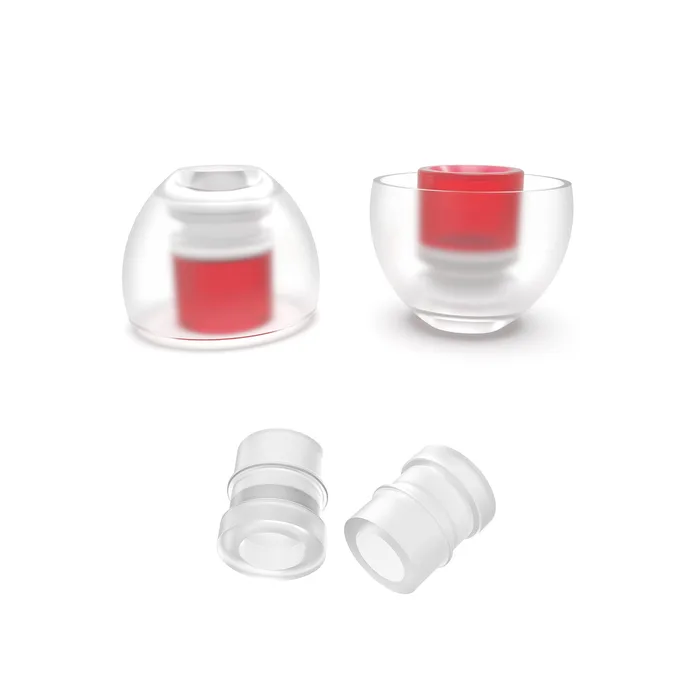
The SpinFit CP100+ is the pick, because SpinFit publishes the fit range in millimetres, 4.5 to 5.5 mm on the nozzle or 3 to 3.5 mm with the inserts that come in the box, and offers five sizes from SS to XL. The value pick is the final Type E, a five-size silicone set with a harder grooved stem and a softer dome, cheap enough that buying the all-size assortment to find your real size costs almost nothing. Dekoni Mercury Bulletz are the memory foam option and the one to choose if isolation is the whole point, because Dekoni states the bore as 4.9 mm and sells a 3 mm version alongside it, so compatibility is a number rather than a lookup. The catch with any foam is that it wears out, and Dekoni does not say how fast. Comply 500 Core Series is the set most people buy reflexively and the one to skip: Comply's own FAQ puts a pair at roughly two to three months, and the company publishes no nozzle diameter you can measure against, so you are committing to a recurring purchase whose fit you cannot check yourself. If your earbuds sound thin, the tip is usually the reason before the earphone is. Best for: anyone who can find out their earphone's nozzle diameter and wants to fix a bad seal without replacing the earphones.
Our picks at a glance
- SpinFit CP100+ - Buy. Publishes its nozzle fit in millimetres and covers two different ranges, because a pair of thin-nozzle inserts comes in the box.
- final Type E - Buy. Five sizes of two-hardness silicone, with a case and a thin-nozzle adapter in the box, from a maker that explains on its own product page why the seal changes the bass.
- Dekoni Audio Mercury Bulletz 4.9 mm - It depends. Memory foam that puts its bore size, 4.9 mm, in the product name, so you can check compatibility before you spend anything.
- Comply 500 Core Series Memory Foam Ear Tips - Skip. Good foam, but Comply's own FAQ puts a pair at roughly two to three months and the company publishes no nozzle diameter you can check against your earphones.
The verdict in 30 seconds
What mattered most
- Material
- Stated nozzle fit
- Sizes
- Maker's replacement guidance
- How you check compatibility
- Shape options
Ear tips are the cheapest meaningful upgrade you can make to a pair of earphones, and the easiest one to get wrong. The tip has to do two jobs at once: grip the metal or plastic nozzle on your earphone tightly enough that it never stays behind in your ear, and seal against your ear canal well enough that the bass the earphone makes actually reaches your eardrum. Those are separate measurements, and most buyers only think about the second one. We looked at four sets that cover the two families most people choose between, silicone and memory foam, and judged them mainly on whether you can verify the fit before you spend anything.
Publishes its nozzle fit in millimetres and covers two different ranges, because a pair of thin-nozzle inserts comes in the box.
Best for: Anyone who can measure or look up their earphone's nozzle diameter and wants one set that covers both common nozzle families.
- SpinFit states the fit range plainly: 4.5 to 5.5 mm nozzles bare, and 3 to 3.5 mm with the inserts included in the pack.
- Five sizes, SS through XL, so there is real room to move up or down when the seal is not right.
- The dome swivels on a stiffer stem, which SpinFit describes as its patented design, letting the tip follow a canal that bends.
- SpinFit publishes no replacement interval, so you are judging wear by feel rather than by a schedule.
- Silicone seals but does not damp, so it blocks less outside noise than foam of the same size.
- You get one pair of inserts, they are small, and losing them costs you the thin-nozzle compatibility.
- Model-by-model compatibility beyond the stated millimetre range is a list, so a very new or obscure earphone may not appear on it.
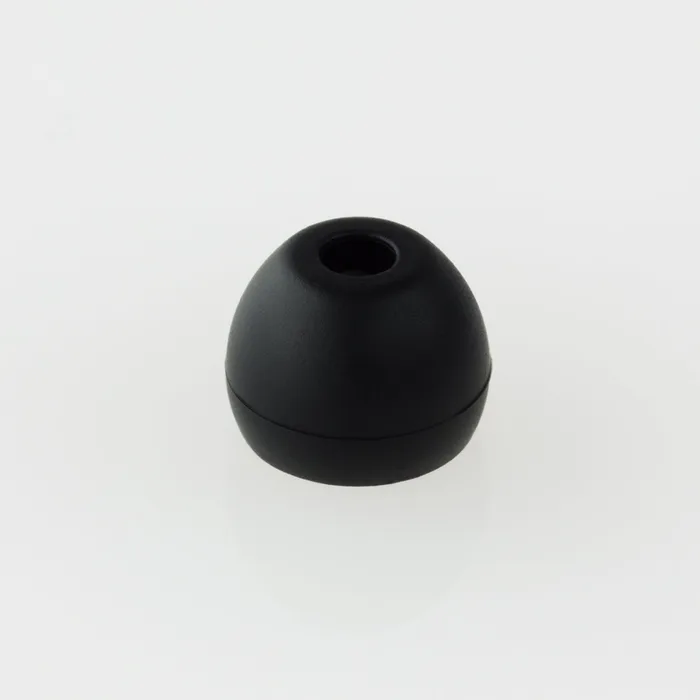
Five sizes of two-hardness silicone, with a case and a thin-nozzle adapter in the box, from a maker that explains on its own product page why the seal changes the bass.
Best for: First-time tip buyers who want to find their real size cheaply before committing to anything more expensive.
- Five sizes, SS to LL, with the stem colour stepping through the range so a mismatched pair is obvious at a glance.
- final uses a harder grooved silicone for the stem and a softer grade for the dome, so it grips the nozzle without pressing on the canal.
- A carrying case and an adapter for earphones with thin sound tubes are both included.
- final does not publish a nozzle diameter range in millimetres, so on an unusual earphone you are testing rather than checking.
- Silicone gives you less isolation than foam, which shows up on a train or a plane.
- The two-colour left and right stem applies only to the black version.
- Sold both as single-size six-packs and as an all-size assortment, so it is easy to order the wrong thing before you know your size.
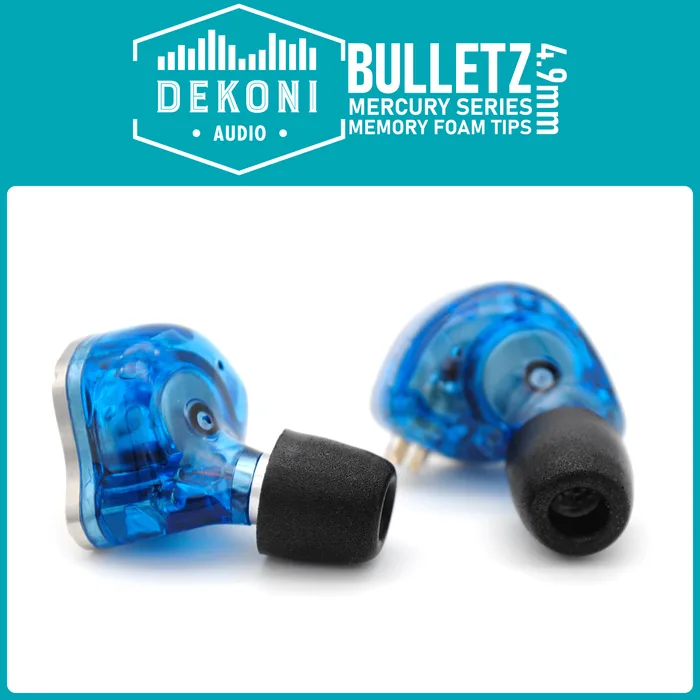
Memory foam that puts its bore size, 4.9 mm, in the product name, so you can check compatibility before you spend anything.
Best for: Commuters and open-office listeners who want the most passive isolation on offer here and have a nozzle at or near 4.9 mm.
- Dekoni states the bore as 4.9 mm and sells a separate 3 mm Gemini version, so fit is a number rather than a compatibility table.
- High-density slow-rebound foam expands to fill the canal, which is the mechanism that makes foam block more outside noise than silicone.
- Four sizes, S through XL, sold as single pairs, three-packs or a sample pack that lets you try sizes.
- Dekoni publishes no replacement interval, and foam does degrade, so you get no guidance on when a pair is finished.
- The foam has to be rolled down and held in place while it expands, every time you put the earphones in.
- 4.9 mm is a specific target, and a nozzle well outside it will either not grip or will stretch the foam thin.
- Foam sits deeper and damps more than silicone, and listeners commonly describe the top end as softened as a result.
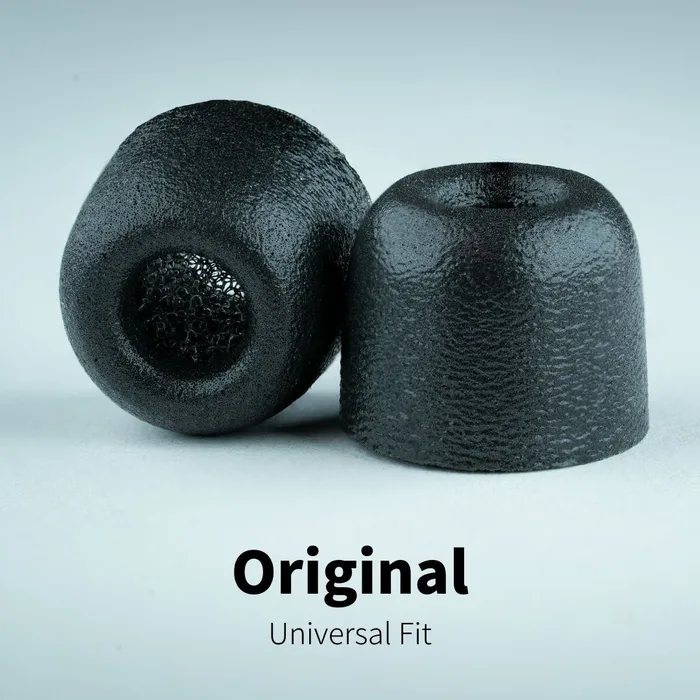
Good foam, but Comply's own FAQ puts a pair at roughly two to three months and the company publishes no nozzle diameter you can check against your earphones.
Best for: People whose exact earphone model appears on Comply's compatibility list and who do not mind re-buying several times a year.
- Comply is unusually direct about lifespan, which is more information than most tip makers give you.
- An optional TechDefender mesh is built into the tip and is meant to keep debris out of the earphone nozzle.
- Three dome shapes, Original, Round and Oval, plus a fit programme Comply describes as finding you a pair that fits if the first one does not.
- Comply's own FAQ says lifespan averages roughly two to three months per pair, which makes this a recurring purchase rather than a one-time upgrade.
- No nozzle diameter is published in millimetres, so you have to match your earphone through Comply's compatibility list instead of measuring.
- The range splits by core number, then dome shape, then size, then mesh or no mesh, which is a lot of ways to order the wrong item.
- Foam has to be compressed before every insertion, and this is the more expensive of the two foam options here.
| Criteria | CP100+ | Type E | Mercury Bulletz 4.9 mm | 500 Core Series Memory Foam Ear Tips |
|---|---|---|---|---|
| Verdict | Buy it | Buy it | It depends | Skip it |
| Best for | Anyone who can measure or look up their earphone's nozzle diameter and wants one set that covers both common nozzle families. | First-time tip buyers who want to find their real size cheaply before committing to anything more expensive. | Commuters and open-office listeners who want the most passive isolation on offer here and have a nozzle at or near 4.9 mm. | People whose exact earphone model appears on Comply's compatibility list and who do not mind re-buying several times a year. |
| Price tier | $$ · mid-range | $ · budget | $ · budget | $$ · mid-range |
| Material | Silicone, described by SpinFit as medical grade | Silicone, two hardnesses in one tip | Slow-rebound memory foam | Heat-activated memory foam |
| Stated nozzle fit | 4.5 to 5.5 mm, or 3 to 3.5 mm with inserts | Not published; thin-nozzle adapter included | 4.9 mm bore | Not published as a measurement |
| Sizes | SS, S, M, L, XL | SS, S, M, L, LL | S, M, L, XL | S, M, L |
| Maker's replacement guidance | Not published | Not published | Not published | Averages roughly 2 to 3 months per pair |
| How you check compatibility | Millimetre range, plus a model list | Try it, or use the included adapter | Measure against the stated 4.9 mm bore | Look your earphone up in Comply's tip finder |
| Shape options | One dome shape, five sizes | One dome shape, five sizes | One bullet shape, four sizes | Original, Round or Oval dome |
| Notable design feature | Dome swivels on a stiffer stem | Harder grooved stem, softer dome, colour-coded by size | Bore size printed on the product itself | Optional TechDefender mesh moulded into the tip |
| Isolation vs comfort balance | Seal-based, comfortable, moderate isolation | Seal-based, softest dome here, moderate isolation | Expansion-based, strongest isolation here | Expansion-based, strong isolation, needs rolling |
Which one is right for you?
- Anyone who can measure or look up their earphone's nozzle diameter and wants one set that covers both common nozzle families. Buy it SpinFit CP100+
- First-time tip buyers who want to find their real size cheaply before committing to anything more expensive. Buy it final Type E
- Commuters and open-office listeners who want the most passive isolation on offer here and have a nozzle at or near 4.9 mm. It depends Dekoni Audio Mercury Bulletz 4.9 mm
- People whose exact earphone model appears on Comply's compatibility list and who do not mind re-buying several times a year. Skip it Comply 500 Core Series Memory Foam Ear Tips
How we judged the field
Five things decide whether a set of tips is worth buying. First is nozzle compatibility, meaning the outside diameter of the tube on your earphone that the tip has to grip. Get this wrong and the tip either will not stay on or, worse, pulls off and stays in your ear when you remove the earphone, which final explicitly warns about on its own product page. Second is the size range, because a maker offering three sizes is offering you three chances to seal and a maker offering five is offering five. Third is the seal itself, which is the single biggest determinant of how much bass you hear; Apple states plainly on its AirPods Pro support page that when the fit is right, music has a rich bass sound. Fourth is isolation, where the material family does the deciding: foam expands to fill the canal, silicone presses against it. Fifth is what happens over time, because foam has a service life and silicone mostly does not.
The field splits cleanly into silicone, memory foam, and shaped variants like double-flange and textured-bore designs. We picked two silicone sets and two foam sets, and we weighted heavily toward makers who publish a nozzle diameter you can measure against, because that is the one specification that turns a guess into a check. SpinFit publishes a millimetre range and ships inserts to cover a second one. Dekoni prints the bore size in the product name. final does not publish a figure but includes an adapter and sells cheaply enough to make trial and error painless. Comply publishes a lifespan but not a diameter, which is the wrong way round for a part whose entire job is fitting something.
SpinFit CP100+ - buy
SpinFit is the brand here that answers the question that actually decides whether a tip works: how wide is the nozzle it clamps onto. The CP100+ page gives 4.5 to 5.5 mm bare, and 3 to 3.5 mm with the pair of inserts that ships in the box, which covers the wide nozzles on most dynamic-driver in-ear monitors and the thin tubes used by monitoring-style earphones. Five sizes, SS through XL, give you genuine room to move when the medium does not seal. The stem is stiffer than the dome and the dome swivels on it, which SpinFit calls its patented design and which lets the tip follow an ear canal that bends rather than fighting it straight. The trade-off is material: silicone seals, but it does not damp, so a noisy train is still a noisy train. SpinFit also publishes no wear interval, so you replace these when they go slack or split. For most people with most earphones, this is the safest first purchase in the category.
final Type E - buy
final’s Type E is the inexpensive set that people who own expensive earphones keep going back to. The stem uses a harder, grooved silicone so it grips the nozzle, and the dome uses a low-hardness grade so it does not press on the canal, and final says on its own page that this combination improves the low range and reduces the irritating sounds people notice in the treble. You get five sizes, SS to LL, with the stem colour stepping through the range so an odd pair is obvious, plus a small carrying case and an adapter for earphones with thin sound tubes. What final does not give you is a millimetre figure for nozzle compatibility, so on an unusual earphone you are testing rather than checking. The two-colour left and right stem applies only to the black version. The smart way to buy these is the all-size assortment first, then a six-pack of whichever size actually sealed.
Dekoni Audio Mercury Bulletz 4.9 mm - it depends
Dekoni does the thing foam brands usually avoid: it puts the bore size in the product name. Mercury Bulletz are 4.9 mm, and Dekoni sells a 3 mm Gemini version alongside them, so the compatibility question comes with a number attached instead of a lookup table. The foam is high-density and slow-rebound, so it warms, expands and fills the canal, and that expansion is the mechanism that makes foam block more outside noise than a silicone dome of the same nominal size. Four sizes run S to XL, sold as single pairs, three-packs, or a sample pack for finding your size. Two things keep this out of the top two spots. The foam has to be rolled down and held while it expands each time you put the earphones in, which some people never stop resenting. And Dekoni publishes no replacement interval, which matters because foam does wear, so you are on your own deciding when a pair is finished. Buy these if isolation is the point and your nozzle sits near 4.9 mm.
Comply 500 Core Series Memory Foam Ear Tips - skip
Comply is the reflex answer whenever someone asks about tips, and the foam itself is genuinely good: heat-activated, slow to rebound, with an optional TechDefender mesh moulded in to keep debris out of the nozzle and a choice of Original, Round and Oval domes. The problem is what a pair commits you to. Comply’s own FAQ puts the average lifespan at roughly two to three months per pair, which makes this a subscription rather than an upgrade, and it is the more expensive of the two foam options here. Comply also publishes no nozzle diameter in millimetres. Instead you pick a core number, from 100 through 600, by looking your earphone up in their tip finder, then a dome shape, then a size, then mesh or no mesh. If your earphone is on the list, that works fine. If it is not, you are guessing at a consumable, and that is a bad combination. Skip unless your model is listed and the recurring cost genuinely does not bother you.
SpinFit CP100+ vs final Type E: which should you buy?
The choice between the SpinFit CP100+ and the final Type E comes down to whether you want to check the fit or test it. SpinFit tells you the answer in advance: 4.5 to 5.5 mm on the nozzle, or 3 to 3.5 mm with the inserts. If you own calipers, or if your earphone appears on SpinFit’s list, you can be confident before you order, and the swivelling dome tends to suit people whose canals are angled enough that a rigid tip sits crooked. final asks you to try instead, and offsets that by costing much less and by including an adapter that covers thin sound tubes. Both give you five sizes, which is the number that actually matters, and both are silicone, so both isolate about the same amount, which is to say less than foam.
Practically, buy the final Type E assortment first if you have never systematically sized tips before. It is the cheapest way to learn whether you are actually a medium, and a surprising number of people are not. Once you know your size, the CP100+ is the better long-term set: the stem grips harder, the published fit range means you can reuse the same tips across future earphones with confidence, and the inserts give you a second nozzle family for free. If neither seals well enough for a noisy commute, that is your signal to move to foam rather than to keep buying silicone in different shapes.
What to look for
- Nozzle diameter first: measure the tube on your earphone with calipers before you buy anything, because a tip that does not grip can pull off and stay in your ear.
- Count the sizes, not the marketing: five sizes gives you five chances to seal, and the difference between a medium that almost works and a large that does is the whole review.
- Prefer makers that publish millimetres: SpinFit states a range and Dekoni prints the bore in the product name, which turns a fitting guess into something you can verify.
- Decide material by environment: silicone is fine at a desk, foam earns its keep on trains and planes, and there is no reason you cannot own both and swap.
- Treat foam as a consumable: Comply’s own FAQ puts a pair at roughly two to three months, and the fact that other foam makers stay quiet about it does not mean their foam lasts longer.
- Test depth as well as size: final’s own page explains that pushing a tip deeper shifts the treble resonance and lifts the perceived bass, so the same size can sound like two different tips.
Our final take
Ear tips are the rare upgrade where the cheap option is often the right one, provided you buy on fit, not brand. Start by measuring your earphone’s nozzle. If it lands in the common 4.5 to 5.5 mm band, the SpinFit CP100+ is the set to own, and the included inserts mean it will probably fit your next earphones too. If you would rather spend almost nothing to discover your real size, the final Type E assortment does that job and stays good afterwards. Move to foam only if silicone cannot get you enough isolation, and if you do, pick the one that tells you its bore size. Skip the tips that ask you to trust a compatibility list for a part you will re-buy several times a year.
Questions, answered
Why do my earbuds sound like they have no bass?
Nine times out of ten it is the seal, not the earphone. When there is an air gap between the tip and your ear canal, low frequencies leak out before they reach your eardrum, and what you hear is a thin, mid-heavy sound. Apple says this directly on its own support page for AirPods Pro ear tips: when the fit is right, you get better noise cancellation and music has a rich bass sound. final's Type E page explains the same physics in more detail, describing how the low-frequency sound pressure changes with how completely the tip seals, and how a big air leak drops the bass. Before you conclude your earphones are bass-light, try one size larger and one size smaller, and try seating them slightly deeper.
How do I find out my earphone's nozzle diameter?
Measure the outside diameter of the metal or plastic tube the tip slides onto, at its widest point, using digital calipers. Most in-ear monitors land somewhere between about 4.5 and 6 mm, and some monitoring-style earphones use much thinner tubes closer to 3 mm, which is why SpinFit ships inserts for that range and Dekoni sells a 3 mm version alongside its 4.9 mm one. If you do not own calipers, check whether the tip maker lists your earphone by model; SpinFit, Comply and JVC all maintain compatibility lists. A tip that is too loose for the nozzle can pull off and stay in your ear, which final warns about on its own product page, so this is worth getting right rather than guessing.
Do foam tips really block more outside noise than silicone?
Yes, and the reason is mechanical rather than marketing. Silicone works by pressing a thin wall of rubber against the canal, so the seal depends on getting the diameter right. Memory foam is compressed, inserted, and then expands to fill whatever shape the canal actually is, which closes gaps that a fixed-diameter dome cannot. Dekoni and Comply both describe this expansion behaviour on their product pages as the source of the isolation. The trade-offs are real, though: foam has to be rolled before every insertion, it wears out on a schedule that silicone does not, and listeners commonly report that the top end sounds a little softer through foam.
How often should I replace ear tips?
It depends heavily on the material, and only one maker in this group gives you a number. Comply's FAQ states that lifespan averages roughly two to three months per pair, and tells you to replace tips when they start to flake, tear, or stop expanding slowly. Dekoni, SpinFit and final publish no interval, which in practice means silicone tips last until they tear, go slack on the nozzle, or stop sealing. The honest way to think about it is that foam is a consumable and silicone is closer to a durable part. Budget for foam accordingly, and check silicone tips for splits at the stem, which is where they usually fail first.
Will a bigger tip always give me more bass?
No. A bigger tip helps only up to the point where it seals, and past that it starts to work against you, because a tip that is too large will not seat properly and can end up sealing worse than the size below it. Insertion depth matters too. final's own product page explains that pushing the tip deeper shortens the distance to the eardrum and shifts where the closed-tube resonance falls, which raises the perceived bass and tames the sharpness up top. That is why the size that measures largest is not always the size that sounds best. Test one size up and one size down at the same insertion depth, then vary the depth, and pick what stays comfortable over hours rather than what impresses in thirty seconds.
More Audio reviews
 The Best Gaming Headsets in 2026 (and One to Skip)
  The Best Guitar Amps for Practice and Home: 4 Compared (and One to Skip)
  The Best Turntable Headshells: 4 Compared (and One to Skip)
  The Best Wired In-Ear Monitors: 4 Compared (and One to Skip)
  The Best Home Karaoke Machines: 4 Compared (and One to Skip)
  The Best Volume-Limited Kids' Headphones: 4 Compared (and One to Skip)