

Tech & Gadgets
The Best Compact Cameras: 4 Compared (and One to Skip)
Four fixed-lens compact cameras for travel, compared on sensor size, lens range and maximum aperture, viewfinder, stabilisation type and published weight, using each maker's own spec sheet.
The short version
The Sony RX100 VII is our pick for most travellers: a 1.0-type sensor, a 24-200 mm equivalent F2.8-4.5 zoom, a built-in electronic viewfinder and a stated 302 g with battery and card. The Panasonic LUMIX ZS99 is the value pick, trading sensor size (1/2.3 inch) for a 24-720 mm equivalent optical zoom at a clearly lower tier. The Fujifilm X100VI has the largest sensor here (APS-C) and a hybrid optical and electronic viewfinder, but its single 35 mm equivalent lens and 521 g weight make it right for some travellers and wrong for others. Skip the Kodak PIXPRO FZ55: a 1/2.3 inch sensor behind an F3.9-6.3 lens with digital-only stabilisation, JPEG-only stills and a 230K-pixel screen gives you little beyond a modest 5x zoom. Sensor size and lens speed decide image quality here, not megapixels. Best for: travellers who want one pocketable camera and need to know which trade-off (sensor, zoom or weight) they are paying for.
Our picks at a glance
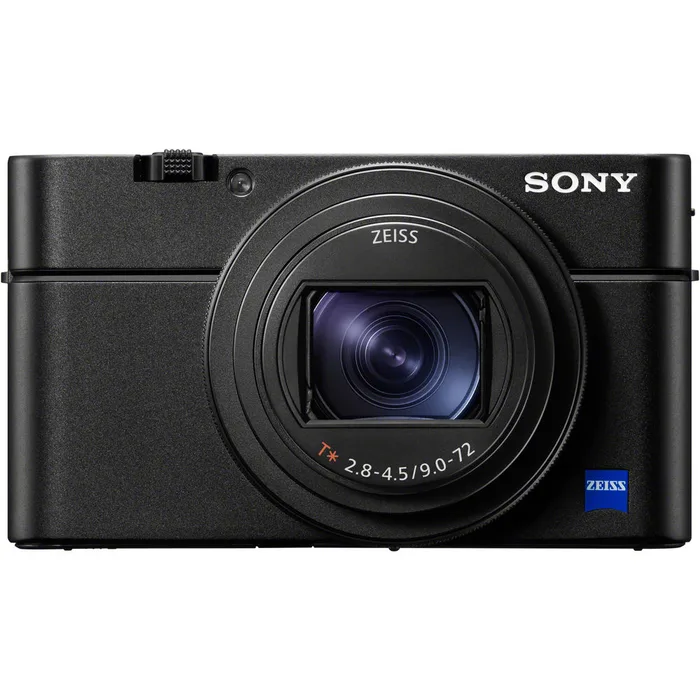
- Sony RX100 VII - Buy. A 1.0-type sensor, a 24-200 mm equivalent F2.8-4.5 ZEISS zoom and an electronic viewfinder in a body Sony lists at 302 g with battery and card.
- Panasonic LUMIX ZS99 - Buy. A 30x optical zoom reaching 720 mm equivalent in a 322 g body with USB Type-C charging, built around a small 1/2.3 inch sensor.
- Fujifilm X100VI - It depends. An APS-C sensor, a fixed 23 mm F2 lens (35 mm equivalent) and a hybrid optical and electronic viewfinder, with no zoom at all.
- Kodak PIXPRO FZ55 - Skip. A 106 g budget point-and-shoot with a 1/2.3 inch sensor, a 5x zoom at F3.9-6.3 and digital-only stabilisation.
The verdict in 30 seconds
What mattered most
- Sensor (as stated)
- Effective pixels
- Lens (35 mm equivalent)
- Maximum aperture
- Viewfinder
- Stabilisation
A compact camera has to earn its place next to the phone already in your pocket, and it does that in one of two ways: a bigger sensor or a longer optical zoom. Megapixel counts tell you almost nothing about either. We picked four fixed-lens cameras that are on sale new from their makers in 2026 and that cover the three sensor classes you will meet: 1/2.3 inch, 1.0 type and APS-C. Every number below comes from the manufacturer's specification page for that exact model.
A 1.0-type sensor, a 24-200 mm equivalent F2.8-4.5 ZEISS zoom and an electronic viewfinder in a body Sony lists at 302 g with battery and card.
Best for: Travellers who want one pocketable camera with a useful zoom, a viewfinder and a sensor clearly larger than the small-sensor class.
- Sony states a 13.2 x 8.8 mm (1.0 type) CMOS sensor with approximately 20.1 million effective pixels, a far larger light-gathering area than the 1/2.3 inch class.
- The lens covers 24-200 mm in 35 mm equivalent terms at F2.8 to F4.5 with optical SteadyShot, which handles most travel subjects without a second lens.
- A built-in 0.39 type electronic viewfinder with 2,359,296 dots and 100% frame coverage makes framing possible in bright sun.
- It sits in the premium tier, close to cameras with much larger sensors.
- Sony's specification lists a Multi/Micro USB terminal (USB 2.0), not USB Type-C.
- The maximum aperture narrows to F4.5 at the long end, so low light at 200 mm equivalent is harder work.
- Sony's spec sheet makes no dust or moisture resistance claim for this model.
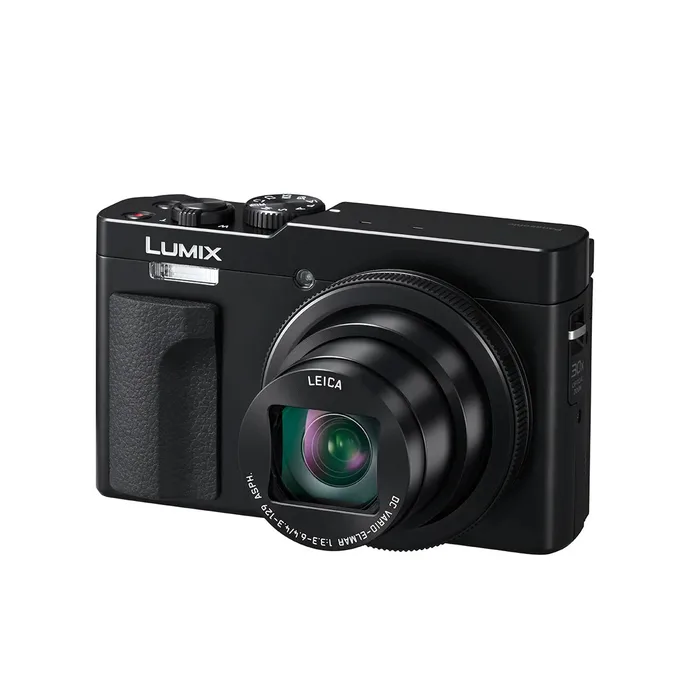
A 30x optical zoom reaching 720 mm equivalent in a 322 g body with USB Type-C charging, built around a small 1/2.3 inch sensor.
Best for: Daylight travel, safaris, stadium seats and anyone who wants far-away subjects from a jacket pocket more than they want low-light quality.
- Panasonic states an optical 30x zoom of 24 mm to 720 mm in 35 mm equivalent terms, reach that the other three cameras here do not approach.
- Stills can be saved as RAW as well as JPEG, the camera records 4K video, and the stabiliser is listed as an optical method.
- Charging is over USB Type-C and the 3.0 inch touch screen is listed at approximately 1,843,200 dots.
- The sensor is a 1/2.3 inch MOS type, the smallest class in this comparison, so expect more noise indoors and at dusk than from the Sony or Fujifilm.
- Maximum aperture is F3.3 at the wide end and F6.4 at full zoom, which limits low-light use at long focal lengths.
- Panasonic's specification for the DC-ZS99 lists a monitor but no viewfinder.
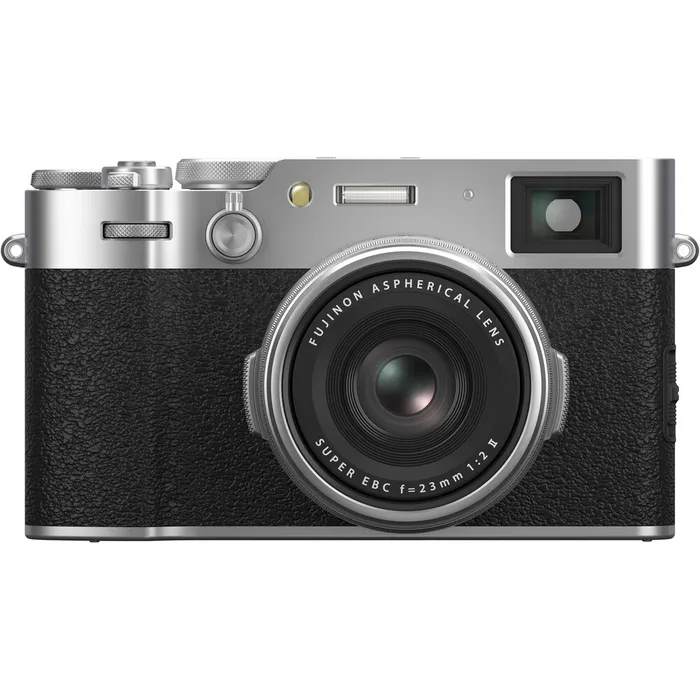
An APS-C sensor, a fixed 23 mm F2 lens (35 mm equivalent) and a hybrid optical and electronic viewfinder, with no zoom at all.
Best for: Photographers who already like the 35 mm view for streets, food and people, and who would rather walk closer than zoom.
- Fujifilm lists a 23.5 x 15.7 mm (APS-C) X-Trans CMOS 5 HR sensor with 40.2 million effective pixels, by far the largest sensor in this group.
- The F2.0 lens has a built-in 4 stop ND filter, and the sensor-shift stabiliser is rated by Fujifilm at 6.0 stops with 5-axis compensation.
- The viewfinder switches between an optical finder and a 0.5 inch OLED electronic finder with approximately 3.69 million dots.
- One focal length: 35 mm equivalent, with 50 mm and 70 mm equivalent views available through a digital tele-converter crop.
- Fujifilm lists approximately 521 g including battery and memory card and a 55.3 mm depth, so it is a coat-pocket camera at best.
- Fujifilm says the camera is weather-resistant when the separate AR-X100 adapter ring and PRF-49 filter are fitted together.
- Premium tier, and you are paying for a sensor and viewfinder that a zoom-first traveller may not use to the full.
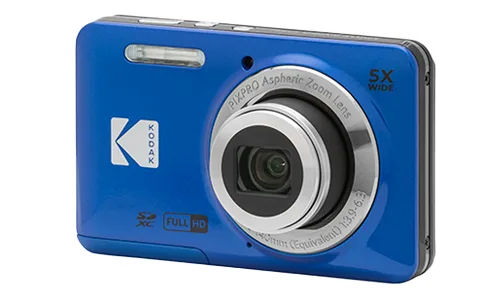
A 106 g budget point-and-shoot with a 1/2.3 inch sensor, a 5x zoom at F3.9-6.3 and digital-only stabilisation.
Best for: A spare camera for a child or a place where phones are not allowed, and little else.
- It is very light and small: approximately 106 g body only and 22.9 mm deep on the maker's sheet.
- The 5x optical zoom covers 28 mm to 140 mm in 35 mm equivalent terms, and the battery charges in the camera.
- It sits in the budget tier and has simple automatic and scene modes.
- A 1/2.3 inch sensor behind an F3.9 to F6.3 lens gathers little light, and the listed ISO range stops at 3200.
- Anti-handshake is listed as digital image stabilisation, with no optical or sensor-shift system on the spec sheet.
- Stills are JPEG only, and video is 1080p at 30 fps recorded as Motion JPEG with monaural audio.
- The 2.7 inch screen has 230K pixels, is not a touch panel and does not tilt, and the port is Micro USB.
| Criteria | Sony RX100 VII Top pick | Panasonic LUMIX ZS99 | Fujifilm X100VI | Kodak PIXPRO FZ55 |
|---|---|---|---|---|
| Verdict | Buy it | Buy it | It depends | Skip it |
| Best for | Travellers who want one pocketable camera with a useful zoom, a viewfinder and a sensor clearly larger than the small-sensor class. | Daylight travel, safaris, stadium seats and anyone who wants far-away subjects from a jacket pocket more than they want low-light quality. | Photographers who already like the 35 mm view for streets, food and people, and who would rather walk closer than zoom. | A spare camera for a child or a place where phones are not allowed, and little else. |
| Price tier | $$ · premium | $ · mid-range | $$ · premium | $ · budget |
| Sensor (as stated) | 1.0 type, 13.2 x 8.8 mm CMOS | 1/2.3 inch MOS | APS-C, 23.5 x 15.7 mm | 1/2.3 inch CMOS |
| Effective pixels | Approx. 20.1 million | Approx. 20.3 million | 40.2 million | 16.35 million |
| Lens (35 mm equivalent) | 24-200 mm | 24-720 mm | 35 mm, fixed | 28-140 mm |
| Maximum aperture | F2.8 wide, F4.5 tele | F3.3 wide, F6.4 tele | F2.0 | F3.9 wide, F6.3 tele |
| Viewfinder | Electronic, 2,359,296 dots | None listed | Hybrid optical and 3.69M-dot OLED | None |
| Stabilisation | Optical SteadyShot | Optical | 5-axis sensor shift, 6.0 stops | Digital |
| Published weight | 302 g with battery and card | 322 g with battery and card | 521 g with battery and card | 106 g body only |
| USB port | Multi/Micro USB | USB Type-C | USB Type-C | Micro USB |
Which one is right for you?
- Travellers who want one pocketable camera with a useful zoom, a viewfinder and a sensor clearly larger than the small-sensor class. Buy it Sony RX100 VII
- Daylight travel, safaris, stadium seats and anyone who wants far-away subjects from a jacket pocket more than they want low-light quality. Buy it Panasonic LUMIX ZS99
- Photographers who already like the 35 mm view for streets, food and people, and who would rather walk closer than zoom. It depends Fujifilm X100VI
- A spare camera for a child or a place where phones are not allowed, and little else. Skip it Kodak PIXPRO FZ55
How we judged the field
Five things separate a compact camera worth carrying from one that duplicates your phone. Sensor size comes first, because a larger sensor gathers more light and that shows up in every dim restaurant and evening street. The lens is second: its focal range in 35 mm equivalent terms tells you what you can frame, and its maximum aperture at both ends tells you how much light reaches the sensor. Third is a viewfinder, which matters in bright sun. Fourth is the type of stabilisation, since optical and sensor-shift systems move glass or the sensor while digital stabilisation works on the image after the fact. Fifth is the weight the maker publishes with battery and card, because a camera left in the hotel takes no pictures.
The field splits by sensor class. Cameras with 1/2.3 inch sensors are either long-zoom travel models or cheap point-and-shoots; 1.0-type cameras balance zoom and quality; APS-C fixed-lens cameras give up zoom for the largest sensor. We chose one camera that represents each sensible position and one that represents the cheap end: the Sony RX100 VII (1.0 type with a 24-200 mm equivalent zoom), the Panasonic LUMIX ZS99 (1/2.3 inch with a 30x zoom), the Fujifilm X100VI (APS-C with a fixed lens) and the Kodak PIXPRO FZ55 (1/2.3 inch with a 5x zoom). All four are listed on their makers’ own sites. Interchangeable-lens systems are covered in our mirrorless camera comparison and are left out here.
The Sony RX100 VII is the camera here that asks for the fewest compromises. Sony lists a 13.2 x 8.8 mm (1.0 type) CMOS sensor with approximately 20.1 million effective pixels behind a ZEISS Vario-Sonnar T* lens covering 24 to 200 mm in 35 mm equivalent terms, at F2.8 wide and F4.5 at full zoom, with optical SteadyShot. A 0.39 type electronic viewfinder with 2,359,296 dots sits in the body, and there is a 3.5 mm microphone jack. Sony’s product page states 4K video at up to 30p and bursts at up to 20 frames per second. The whole thing is listed at 101.6 x 58.1 x 42.8 mm and approximately 302 g with battery and SD card. The trade-offs are the premium tier, a Multi/Micro USB terminal instead of USB Type-C on Sony’s specification, and a lens that is no longer bright by the time you reach 200 mm. It is for the traveller who wants one small camera to cover landscapes, portraits and moderate telephoto with a real step up in sensor size.
The Panasonic LUMIX ZS99 makes the opposite bet: a small sensor and an enormous lens range. Panasonic states a 1/2.3 inch MOS sensor with approximately 20.3 million effective pixels and an optical 30x zoom of 24 to 720 mm in 35 mm equivalent terms, at F3.3 wide and F6.4 at the long end, stabilised by an optical method. It records RAW and JPEG stills and 4K video, charges over USB Type-C, and has a 3.0 inch touch screen listed at approximately 1,843,200 dots. Weight is approximately 322 g with card and battery. The cost of that reach is plain on the spec sheet: the smallest sensor class in this comparison, a slow aperture at long focal lengths and no viewfinder listed. In good light it will bring distant subjects close in a way the other cameras here cannot. Indoors and after sunset the Sony and Fujifilm have the advantage by design. It is for daylight travellers who value reach over low-light quality and want to spend less.
The Fujifilm X100VI is the image-quality camera of the group and the least flexible. Fujifilm lists a 23.5 x 15.7 mm APS-C X-Trans CMOS 5 HR sensor with 40.2 million effective pixels, a fixed 23 mm F2.0 lens (35 mm equivalent) with a built-in 4 stop ND filter, and 5-axis sensor-shift stabilisation rated at 6.0 stops. Its hybrid viewfinder switches between an optical finder and a 0.5 inch OLED with approximately 3.69 million dots, and the touch screen tilts. Battery life is listed at approximately 310 frames with the electronic finder and 450 with the optical one in normal mode. What you give up is zoom: there is one lens, plus a digital tele-converter that crops to 50 mm and 70 mm equivalent views. At approximately 521 g with battery and card and 55.3 mm deep, it is also the heaviest and bulkiest camera here. It suits photographers who already know they like the 35 mm view and want the largest sensor in this comparison; zoom-first travellers should pick the Sony.
The Kodak PIXPRO FZ55 is a common budget buy, and its own spec sheet explains why we would pass. It pairs a 1/2.3 inch CMOS sensor (16.35 million effective pixels) with a 5x zoom covering 28 to 140 mm equivalent at F3.9 wide and F6.3 at the long end, so it has the smallest sensor class here and the slowest wide-angle aperture of the four. Anti-handshake is listed as digital image stabilisation. Stills are JPEG only, ISO stops at 3200, and video is 1080p at 30 fps in Motion JPEG with monaural audio. The 2.7 inch screen has 230K pixels and is neither a touch panel nor adjustable, and the port is Micro USB. In its favour it weighs approximately 106 g body only and is rated for approximately 200 shots per charge. The Panasonic uses the same sensor class but justifies it with a 30x optical zoom, optical stabilisation and RAW files. The FZ55 has none of those. It is for a child’s first camera or a phone-free setting, not for a trip you care about.
Sony RX100 VII vs Panasonic LUMIX ZS99: which should you buy?
The two buy picks differ in sensor class and in zoom reach, and those pull in opposite directions. The Sony RX100 VII has a 1.0-type sensor measuring 13.2 x 8.8 mm, an F2.8 aperture at the wide end and an electronic viewfinder. The Panasonic ZS99 has a 1/2.3 inch sensor, F3.3 at the wide end and no viewfinder on its spec sheet, but its lens runs to 720 mm equivalent where the Sony stops at 200 mm. Their published weights are close: 302 g for the Sony and 322 g for the Panasonic, both with battery and card. The Panasonic also has USB Type-C charging, where Sony’s specification lists a Multi/Micro USB terminal.
Choose by what you photograph and when. If your trips are cities, meals, family and evenings, the Sony’s larger sensor and brighter lens are the things you will notice, and 200 mm equivalent is plenty. If your trips are wildlife, mountains, stadiums or cruise decks in daylight, the Panasonic’s extra reach matters more than its sensor, and it sits a tier lower. If you cannot decide, ask how often you have wished for more zoom than a 200 mm equivalent lens gives. If the answer is rarely, buy the Sony.
What to look for
- Sensor size first: look for the sensor type on the spec sheet (1/2.3 inch, 1.0 type, APS-C) before anything else, because it sets the ceiling for low-light quality.
- Maximum aperture at both ends: a zoom listed as F2.8-4.5 passes more light than one listed as F3.9-6.3, and the second number tells you what happens when you zoom in.
- Optical zoom range only: read the 35 mm equivalent focal lengths the maker states and ignore digital or combined zoom figures, which describe cropping.
- Stabilisation type: optical and sensor-shift systems are listed as such; if the sheet says digital image stabilisation, there is no moving optical correction.
- A viewfinder if you shoot in sun: check whether one is listed and, for electronic finders, the dot count; do not assume a model has one because its predecessor did.
- Weight with battery and card: compare like with like, since some makers publish body-only weight and others include the battery and card.
Our final take
For most travellers the Sony RX100 VII is the compact to buy: a 1.0-type sensor, a 24-200 mm equivalent zoom that opens at F2.8, a viewfinder and a published 302 g. The Panasonic LUMIX ZS99 is the sensible lower-tier choice if you want 720 mm equivalent reach in daylight and can live with a 1/2.3 inch sensor and no viewfinder. The Fujifilm X100VI is a superb fit for people who think in one focal length and a poor fit for anyone who expects to zoom. The Kodak PIXPRO FZ55 is the one to leave on the shelf, because nothing on its spec sheet gives it an edge worth carrying. Add a strap from our camera strap comparison and a small support from our tripod comparison, and you are set.
Questions, answered
Is a compact camera still better than a phone for travel?
It depends on which compact. A camera earns its place with something a phone cannot easily match: a clearly larger sensor, a long optical zoom, or a viewfinder you can use in harsh sun. The Sony RX100 VII and Fujifilm X100VI offer the first and third, and the Panasonic ZS99 offers the second with a 24-720 mm equivalent lens. A budget compact with a 1/2.3 inch sensor, a slow lens and digital stabilisation, like the Kodak FZ55, offers very little of that. Check your own phone's published camera specs against the compact you are considering before you buy.
Do more megapixels mean better photos?
Not on their own. The Sony RX100 VII and the Panasonic ZS99 list almost the same pixel count, about 20 million, but the Sony spreads them across a 13.2 x 8.8 mm sensor and the Panasonic across a 1/2.3 inch one. A larger sensor collects more light for each pixel, which is what helps in dim rooms and at dusk. Lens aperture matters in the same way, because F2.8 passes more light than F6.3. Read sensor size and maximum aperture first and megapixels last.
Do I need a viewfinder on a travel camera?
It is not essential, but it helps more than people expect. Rear screens are hard to see in bright midday sun, and holding a camera to your eye also steadies it. Of these four, the Sony has a built-in electronic finder with 2,359,296 dots, and the Fujifilm has a hybrid finder that switches between optical and electronic views. Panasonic's specification for the ZS99 lists no viewfinder, and the Kodak has none. If you shoot mostly outdoors in strong light, weigh this heavily.
How much zoom do I need for travel?
For streets, food, buildings and people, something that starts around 24 to 28 mm equivalent and reaches 100 to 200 mm covers most situations, which is the Sony's 24-200 mm range. Wildlife, stage shows and distant architecture details are where the Panasonic's 720 mm equivalent reach pays off. A fixed 35 mm equivalent lens like the Fujifilm's means moving your feet and accepting that some shots are out of range. Look at the optical zoom range only. Digital zoom and combined zoom figures describe cropping, not extra lens reach.
Are these cameras weather sealed?
Do not assume so. Sony, Panasonic and Kodak make no dust or moisture resistance claim on the spec pages for these three models, and Sony, Fujifilm and Kodak list an operating range of 0 to 40 degrees C. Fujifilm says the X100VI becomes weather-resistant when its separate AR-X100 adapter ring and PRF-49 protection filter are fitted together. For rain, beaches and boats, a dedicated waterproof or action camera is the safer tool, and our action camera comparison covers those.
Deciding between the top two? See our head-to-head: Sony RX100 VII vs Panasonic LUMIX ZS99.
More Tech & Gadgets reviews
 The Best CPL Filters: 4 Compared (and One to Skip)
  The Best CPU Coolers: 4 Compared (and One to Skip)
  The Best Digital Photo Frames: 4 Compared (and One to Skip)
  The Best Smart Glasses With Displays: 4 Compared (and One to Skip)
  The Best DisplayPort Cables: 4 Compared (and One to Skip)
  The Best DIY Home Security Systems: 4 Compared (and One to Skip)