

Tech & Gadgets
The Best CPU Coolers: 4 Compared (and One to Skip)
We compared four current CPU coolers spanning budget air to premium 360mm liquid on cooling headroom, noise, clearance, and socket support.
The short version
For the vast majority of desktop builds, the Thermalright Peerless Assassin 120 SE is the cooler to buy — a quiet dual-tower air unit that cools like coolers costing several times more and fits most cases. Step up to the Arctic Liquid Freezer III 360 only if you're taming a flagship i9 or Ryzen 9 and your case supports a 360mm radiator; it's the strongest cooler here. The DeepCool AK620 is an excellent, premium-feeling air tower, but the cheaper Peerless Assassin cools nearly as well for much less, so it's an 'it depends' pick. Skip the Cooler Master Hyper 212 Black Edition: it's a fine legacy cooler that budget dual-towers now beat at the same price. Best for: most builders should take the Peerless Assassin and put the savings elsewhere.
The verdict in 30 seconds
What mattered most
- Cooling design
- Cooling headroom
- Noise (rated)
- Height / case fit
- RAM clearance
- Socket support
The CPU cooler market split into two clear winners years ago: cheap dual-tower air coolers that punch absurdly above their price, and a handful of 360mm all-in-one liquid units that tame the hottest flagship chips. We pulled together four coolers that map the whole range — a budget air hero, a premium air tower, a top-tier AIO, and one legacy favorite that time has passed by. Two are easy buys, one is a genuine 'it depends,' and one is a skip.
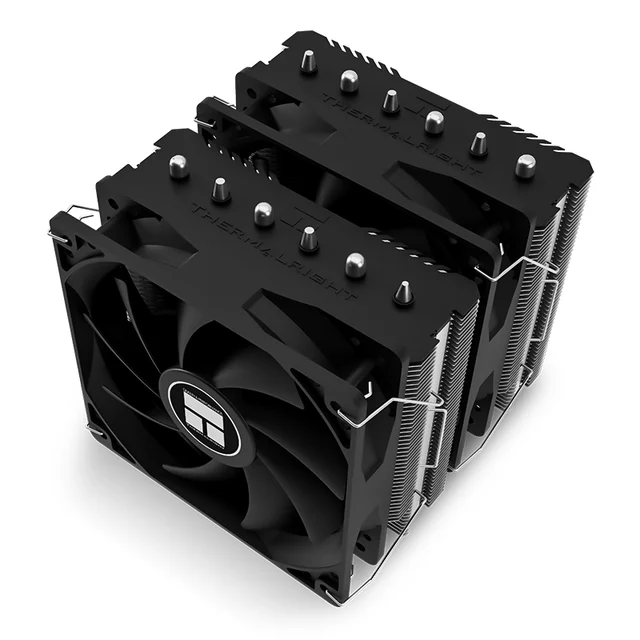
A dual-tower air cooler that cools like units costing several times more, for pocket change.
Best for: Anyone building a mainstream or high-end gaming/productivity PC who wants near-flagship cooling for the lowest sensible spend.
- Six-heatpipe dual-tower design cools mainstream and most high-end chips with ease
- Two 120mm fans stay quiet, rated around 25.6 dBA at full speed
- Compact 155mm height clears the lid of most mid-tower cases
- Broad socket support: Intel 115X/1200/1700/1851 and AMD AM4/AM5
- No RGB and a plain look if aesthetics matter to you
- Front fan can overhang the first RAM slot with very tall memory
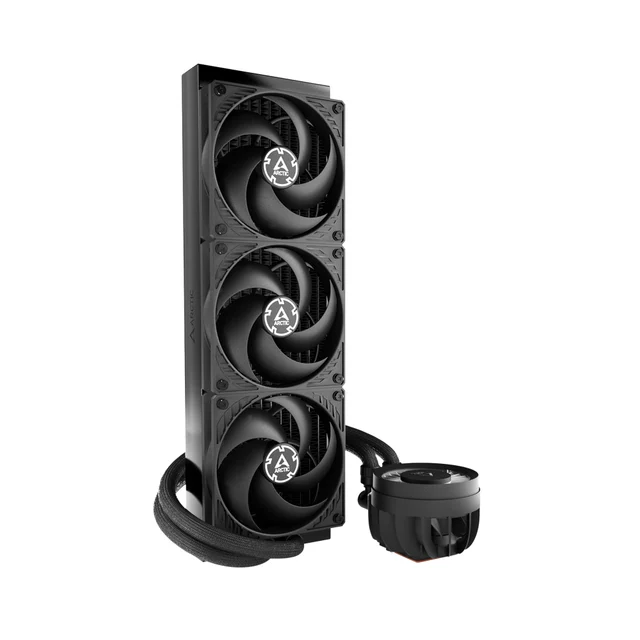
The 360mm AIO that keeps beating pricier rivals, with a VRM fan and a long warranty thrown in.
Best for: High-end i9 / Ryzen 9 builds, or anyone who wants maximum sustained cooling headroom and a clean pump-and-radiator look.
- Independent testing consistently ranks it among the best-cooling 360mm AIOs available
- Integrated VRM fan on the pump helps cool the surrounding motherboard area
- Three 120mm PWM fans stay near-silent at idle and low load
- Ships ready for Intel LGA1700/1851 and AMD AM5/AM4, with a long manufacturer warranty
- Needs a case with 360mm radiator support — not a drop-in for compact builds
- All three fans plus pump become audible when a flagship CPU is pushed to full tilt
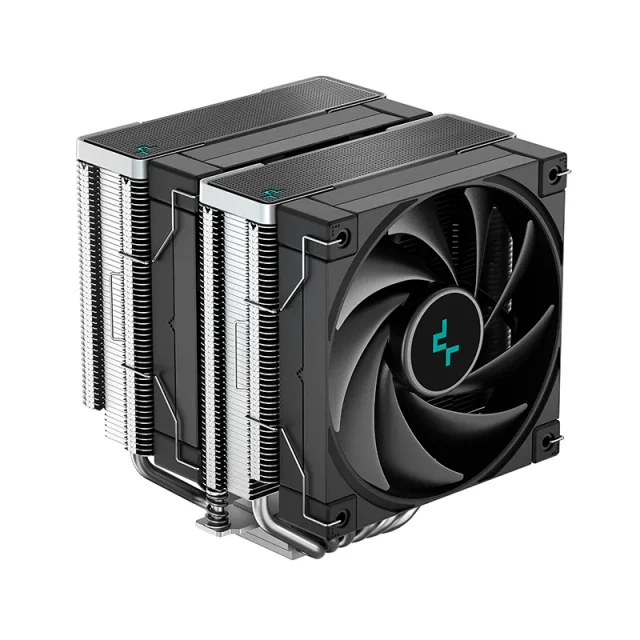
A superb, solidly built premium air tower — but the budget kings undercut it hard.
Best for: Builders who specifically want a premium all-metal air cooler with headroom and don't mind paying more than the value picks.
- Rated for a high thermal load (around 260W) from two 120mm fans and six heatpipes
- Dense all-black dual-tower build looks and feels premium
- Quiet under normal load, with fan noise topping out in the high-20s dBA
- Wide socket coverage including Intel LGA1700/1851 and AMD AM5/AM4
- Tall 160mm stack and heavy weight — check case clearance and mounting
- Front fan sits low over the DIMM slots, so tall RAM may need the fan raised
- Costs noticeably more than a budget dual-tower that cools nearly as well
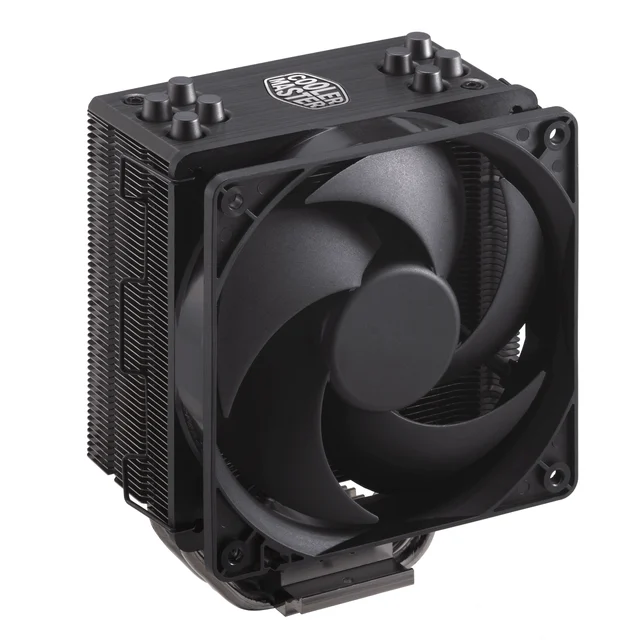
A classic that earned its reputation years ago and has since been lapped by cheaper, better coolers.
Best for: Only worth it if you find it far cheaper than a dual-tower alternative and you're cooling a modest CPU.
- Single-tower design leaves plenty of RAM clearance
- Quiet Silencio fan and a tidy all-black finish
- Easy, familiar installation on modern Intel and AMD sockets
- One tower and four heatpipes can't match dual-tower budget rivals on cooling
- Often costs about the same as a Peerless Assassin that clearly outperforms it
- Limited headroom for hotter high-core-count CPUs
| Criteria | Thermalright Peerless Assassin 120 SE Top pick | Arctic Liquid Freezer III 360 | DeepCool AK620 | Cooler Master Hyper 212 Black Edition |
|---|---|---|---|---|
| Verdict | Buy it | Buy it | It depends | Skip it |
| Best for | Anyone building a mainstream or high-end gaming/productivity PC who wants near-flagship cooling for the lowest sensible spend. | High-end i9 / Ryzen 9 builds, or anyone who wants maximum sustained cooling headroom and a clean pump-and-radiator look. | Builders who specifically want a premium all-metal air cooler with headroom and don't mind paying more than the value picks. | Only worth it if you find it far cheaper than a dual-tower alternative and you're cooling a modest CPU. |
| Price tier | $ · budget | $$$ · premium | $$ · mid-range | $ · budget |
| Cooling design | Air, dual-tower, 6 heatpipes | 360mm AIO liquid, VRM fan | Air, dual-tower, 6 heatpipes | Air, single-tower, 4 heatpipes |
| Cooling headroom | Handles mainstream to most high-end chips | Highest — tames flagship i9/Ryzen 9 | High (rated ~260W) | Modest — best for mid-range CPUs |
| Noise (rated) | Quiet (~25.6 dBA max) | Near-silent at idle; audible at full load | Quiet (high-20s dBA max) | Quiet single fan (~27 dBA max) |
| Height / case fit | 155mm — fits most mid-towers | Needs 360mm radiator support | 160mm — check clearance | 159mm — fits most mid-towers |
| RAM clearance | Good; raise front fan for tall RAM | Excellent — pump clears DIMMs | Tight; raise fan for tall RAM | Excellent — single tower |
| Socket support | Intel 115X/1200/1700/1851, AMD AM4/AM5 | Intel LGA1700/1851, AMD AM5/AM4 | Intel 1200/1700/1851, AMD AM4/AM5 | Intel 1200/1700, AMD AM4/AM5 |
| Install effort | Easy, well-guided | Moderate — radiator mounting | Easy, but heavy to hold | Easy, familiar |
| Price tier | $ · budget | $$$ · premium | $$ · mid-range | $ · budget |
Which one is right for you?
- Anyone building a mainstream or high-end gaming/productivity PC who wants near-flagship cooling for the lowest sensible spend. Buy it Thermalright Peerless Assassin 120 SE
- High-end i9 / Ryzen 9 builds, or anyone who wants maximum sustained cooling headroom and a clean pump-and-radiator look. Buy it Arctic Liquid Freezer III 360
- Builders who specifically want a premium all-metal air cooler with headroom and don't mind paying more than the value picks. It depends DeepCool AK620
- Only worth it if you find it far cheaper than a dual-tower alternative and you're cooling a modest CPU. Skip it Cooler Master Hyper 212 Black Edition
How we judged the field
We don’t run our own thermal lab. Instead, we synthesize independent testing, teardown coverage, and aggregated owner reports, then weigh them against the specs each manufacturer publishes. For CPU coolers, a handful of things separate a great pick from a frustrating one: raw cooling capacity (how much heat it can shed before your CPU throttles), noise under real load, physical fit (tower height versus case clearance, and whether the fan blocks your RAM), socket support for current Intel and AMD platforms, and install experience. We also keep an eye on value — cooling performance per dollar is where this category has changed the most, and it’s why a cheap air cooler can embarrass expensive hardware.
A quick word on air versus liquid. A big dual-tower air cooler is simple, reliable, and has no pump to wear out; it handles almost any mainstream or high-end CPU. A 360mm all-in-one (AIO) liquid cooler moves heat to a large radiator and generally wins on peak cooling for the hottest flagship chips, at the cost of needing radiator space in your case and having more parts that can eventually fail. Neither is universally ‘better’ — it depends on your chip and your case.
Thermalright Peerless Assassin 120 SE — buy
This is the cooler that rewrote the budget category. It’s a dual-tower design with six heatpipes and two 120mm fans, and independent testing repeatedly shows it trading blows with coolers that cost several times as much. Rated fan noise tops out around 25.6 dBA, so it stays quiet, and at 155mm tall it slips into most mid-tower cases without drama. Socket support is broad — Intel 115X/1200/1700/1851 and AMD AM4/AM5 — and owners consistently describe the mounting hardware as straightforward. There’s no RGB and the look is plain, and with very tall RAM you may need to nudge the front fan up a few millimeters. Those are small prices to pay. For a mainstream gaming or productivity build, this is the default recommendation.
Arctic Liquid Freezer III 360 — buy
When you genuinely need the most cooling — a flagship i9 or Ryzen 9 that runs hot under sustained load — this is the AIO to reach for. Independent testing has ranked the Liquid Freezer III line among the best-performing 360mm units available, and it undercuts several pricier competitors while doing it. Practical extras set it apart: a small VRM fan built into the pump helps cool the power-delivery area around the socket, and it ships ready for Intel LGA1700/1851 and AMD AM5/AM4 with a long warranty. The trade-offs are inherent to liquid cooling: you need a case that supports a 360mm radiator, and three fans plus the pump do become audible when you push a flagship chip to its limit. If your build can house it, it’s the strongest cooler in this comparison.
DeepCool AK620 — it depends
The AK620 is genuinely excellent — a dense, all-black dual-tower rated for a high thermal load (around 260W) with two 120mm fans that stay quiet in normal use. Build quality feels a cut above budget coolers. The catch is value: it costs meaningfully more than a Peerless Assassin that cools nearly as well, so the decision comes down to whether you specifically want the premium look and the extra headroom. It’s also a tall (160mm), heavy cooler, and its front fan sits low enough that tall RAM may force you to raise it. Buy it if you’ve decided you want a top-tier air cooler and the aesthetics matter to you; if you’re optimizing for value, the budget dual-tower gets you most of the way for less.
Cooler Master Hyper 212 Black Edition — skip
The Hyper 212 is a legend — for years it was the default first upgrade over a stock cooler. It’s still a tidy, quiet single-tower with four heatpipes and generous RAM clearance, and it installs easily on modern sockets. But the category moved on. A single tower with four heatpipes simply can’t match the dual-tower budget coolers that now sell for about the same money, and it has less headroom for hotter, high-core-count chips. Independent testing and owner reports line up on this: unless you find one for far less than a dual-tower alternative and you’re cooling a modest CPU, your money is better spent elsewhere.
Peerless Assassin 120 SE vs Liquid Freezer III 360: which should you buy?
This is the real decision for most shoppers: the value air king or the premium AIO. The Peerless Assassin 120 SE wins on price, simplicity, and universal fit — it drops into almost any case, has no pump to worry about, and cools mainstream and even most high-end CPUs quietly. For the large majority of builds, it’s all the cooler you’ll ever need, and it leaves budget for a better GPU or SSD.
The Liquid Freezer III 360 pulls ahead when the heat load climbs. If you’re running a flagship chip that sustains high wattage — heavy rendering, compiling, or all-core workloads — the 360mm radiator sheds more heat and keeps clocks higher for longer, and the built-in VRM fan is a thoughtful bonus. The costs are real: you need radiator space, you’re adding a pump to the list of parts that can eventually fail, and it’s louder at full tilt. Rule of thumb: mainstream and most high-end CPUs, take the Peerless Assassin; a genuine flagship in a roomy case, take the Liquid Freezer III 360.
What to look for
- Match the cooler to the chip. A budget dual-tower handles mainstream and most high-end CPUs; save the 360mm AIO for hot flagship processors.
- Measure clearance twice. Check the cooler’s height against your case’s listed maximum, and confirm a 360mm radiator will actually fit before buying an AIO.
- Mind your RAM. Tall air towers can overhang the first memory slot; verify your RAM height or plan to raise the front fan.
- Confirm the socket. Make sure the cooler lists your exact socket (Intel LGA1700/1851, AMD AM5/AM4) and grab any free mounting kit the brand offers.
- Noise is tunable. Fan curves in your BIOS affect real-world loudness as much as the cooler itself; a good cooler gives you room to run fans slower.
- Weigh value, not just peak numbers. The best-cooling unit isn’t always the smart buy — a cheaper cooler that’s ‘good enough’ frees money for the rest of the build.
Our final take
CPU cooling is one of the few PC categories where the value pick is also, for most people, simply the right pick. The Thermalright Peerless Assassin 120 SE cools quietly, fits nearly everything, and costs a fraction of what its performance suggests — buy it and move on. If you’re building around a flagship CPU and have the case for it, the Arctic Liquid Freezer III 360 is the strongest cooler here and a smart high-end choice. The DeepCool AK620 is a lovely premium air tower that’s easy to justify only if you specifically want it, and the Cooler Master Hyper 212 Black Edition is a fine cooler that newer budget rivals have simply outclassed. Pick based on your chip and your case, and you won’t go wrong.
Questions, answered
Air cooler or liquid AIO — which should I get?
For most people, a good dual-tower air cooler like the Peerless Assassin is quieter to maintain, has no pump to fail, and cools mainstream and high-end chips just fine. A 360mm AIO like the Liquid Freezer III makes sense when you're running a flagship CPU that runs hot, want the lowest possible temperatures, or prefer the cleaner look of a radiator and a low-profile pump over a large tower.
Will a big air cooler block my RAM?
It can. Tall towers position a front fan low over the memory slots, so very tall RAM with big heat spreaders may not fit unless you slide the fan upward (which slightly raises total height). The Peerless Assassin and DeepCool AK620 both allow this; single-tower coolers and AIOs generally leave RAM clearance untouched. Always check your cooler's listed height against your case and your RAM height against the cooler.
Do these coolers support the latest Intel and AMD sockets?
Yes. All four support current mainstream platforms. Intel's LGA1851 uses the same mounting layout as LGA1700, so LGA1700-ready coolers fit it, and AMD's AM5 shares AM4 mounting. Owners report smooth installs across Intel 1200/1700/1851 and AMD AM4/AM5, though it's worth confirming your exact socket on the product page and grabbing any free mounting kit a brand offers.
How much does noise really differ between these?
In normal desktop use all four are quiet, with rated fan noise in the mid-to-high 20s dBA. The biggest difference shows under sustained heavy load: a triple-fan AIO plus its pump can become audible when a flagship chip is pushed hard, while a large air tower often stays calmer because it moves less air to shed the same heat. Reviewers note that fan curves in your BIOS matter as much as the cooler itself.
Is the Cooler Master Hyper 212 still worth buying?
Only situationally. It's a well-built, quiet single-tower cooler, but independent testing and owner reports agree that today's budget dual-tower coolers cool noticeably better for similar money. If you spot a Hyper 212 far cheaper than the alternatives and you're cooling a modest CPU, it's serviceable — otherwise a dual-tower like the Peerless Assassin is the smarter buy.
More Tech & Gadgets reviews
 The Best Digital Photo Frames: 4 Compared (and One to Skip)
  The Best DIY Home Security Systems: 4 Compared (and One to Skip)
  The Best Laptop Docking Stations: 4 Compared (and One to Skip)
  The Best Camera Drones: 4 Compared (and One to Skip)
  The Best E-Ink Tablets: 4 Compared (and One to Skip)
  The Best E-Readers in 2026: Kindle vs Kobo, and the One to Skip