Explained
Wood Lathes, Explained
After reading, you'll understand the specs that decide which hobby wood lathe fits your work.
In this guide
Wood lathe listings pack a lot of numbers into one line, and the biggest ones are not always the ones that matter. First-time buyers often compare horsepower and ignore the spindle thread, or buy on swing and find the speed range too high for their bowls. A lathe spins heavy workpieces, so the manual deserves a full read before first use. This guide explains the terms in plain English.
The 30-second version
- Swing sets bowl size, and distance between centers sets spindle length.
- Spindle thread decides accessory fit, so check it before you buy a chuck.
- Low minimum speed helps with big blanks, and makers publish the range.
- Weight and build affect stability, though not every maker publishes a weight.
- Read the manual in full, because the maker's safety instructions are the authority.
The products this guide is about
Our verdict on each, with the full reasoning on the companion review.
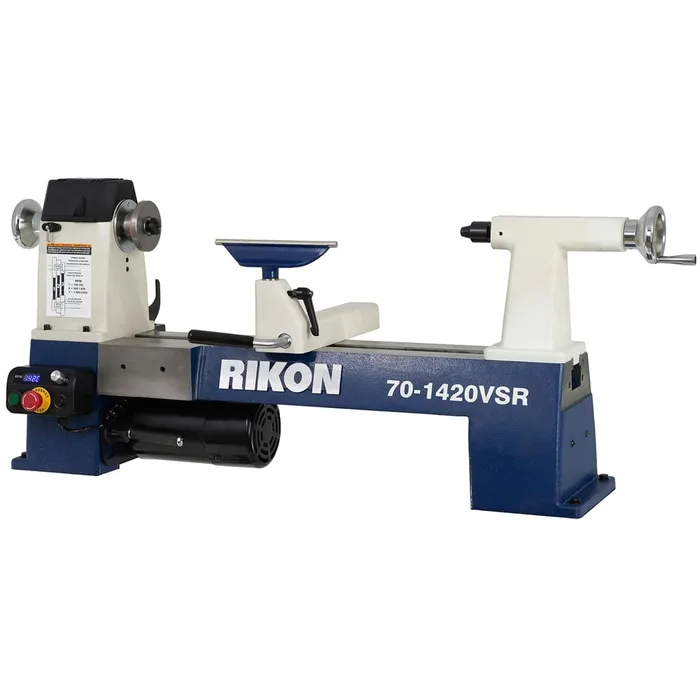
- Buy RIKON 70-1420VSR 14 x 20 Variable Speed Midi Lathe The biggest benchtop lathe in the group, with a 14 inch swing, a 1-1/2 HP motor and reverse.
- Buy WEN 34035 14 x 20 Variable Speed Benchtop Wood Lathe Matches the Rikon's swing and length on paper at a much lower tier. Amazon
- Buy JET JWL-1221VS 12 x 21 Variable Speed Wood Lathe A 12-1/2 inch swing lathe with a large speed readout, a spindle lock and 24 indexing positions. Amazon
- It depends NOVA Comet II DR Midi Lathe 46303 A compact 12 inch swing lathe with digital speed readout that goes down to 250 RPM. Amazon
- It depends Laguna Tools Laguna Revo 12|16 Midi Lathe MLAREVO1216EVS A 1 HP PWM-controlled midi lathe with an unusually low speed range, sold only through dealers. Amazon
- Skip SainSmart Benchtop Wood Lathe 10 x 24 (101-93-BWL-A) A light 600 W lathe with a non-standard spindle thread and a high minimum speed.
What actually matters
- Swing - The largest diameter that spins over the bed. It sets the biggest bowl or platter you can mount.
- Distance between centers - The longest piece that fits between headstock and tailstock. It matters for legs, spindles and spindle work.
- Motor power - Listed as horsepower, watts or amps depending on the maker. Compare like with like and be cautious when only amps are given.
- Speed range - The lowest and highest spindle RPM. A lower minimum is useful for larger blanks.
- Spindle thread - The thread that chucks and faceplates screw onto. It must match for them to fit.
- Morse taper - The taper in the headstock and tailstock for centers and drill chucks. MT2 is common on these lathes.
- Mass - A heavier machine usually moves less under load. Makers publish weights inconsistently, so compare only what is stated.
The specs, in plain English
Green flags vs red flags
Green flags
- The maker states swing, between-centers length, motor and speed range
- The spindle thread and Morse taper are published
- A warranty term and a manual are available to read
- The speed range starts low for bowl work
- Accessories for the stated thread are easy to find
Red flags
- No spindle thread or taper is stated
- Only amps or watts are given with no horsepower comparison
- A minimum speed that is high for large blanks
- Unclear what is included in the box
- A weight that is missing or very low for the stated capacity
Who's who: the brands
- RIKON - Sells a range of mini, midi and larger lathes with a 5 year warranty on the models we read.
- JET - A JPW brand in the same family as Powermatic, listing a variable speed midi with a digital readout.
- NOVA (Teknatool) - Known for midi lathes and chucks, with a stated 2 year mechanical warranty on the Comet II DR.
- Laguna Tools - Sells a dealer-only midi lathe with a PWM controller and a very low minimum speed.
- WEN - Lists benchtop lathes with 14 inch and 12 inch swings and a two-year warranty.
How to read a listing without getting fooled
Start with the specification table or manual, not the headline. Note swing, distance between centers, motor rating and speed range, then find the spindle thread and Morse taper. If a spec is missing, treat it as unknown. Compare power in the same unit across models, and confirm what is in the box, since some listings include centers and a faceplate and others do not. Finally, read the safety section of the manual, which the maker writes for that machine.
How much should you spend?
Wood lathes span budget, mid-range and premium tiers. Budget models tend to give a smaller motor or lighter build and sometimes a non-standard thread. Mid-range models can list large capacity with a modest motor rating. Premium models usually list larger motors, longer warranties or finer controls. Compare stated specs and support within a tier before paying more, and remember chucks, stands and extensions are often separate.
Questions, answered
Is a bigger swing always better?
A bigger swing lets you turn larger bowls, but it also needs a stronger motor and more bench space. Match the swing to the largest piece you expect to turn. Many hobby projects fit a 12 inch swing.
Do I need a stand?
Some makers sell stands and extensions separately, and several of these lathes are listed as benchtop. Check each maker's page for what is included and what the machine is designed to sit on.
What does MT2 mean?
It is a Morse taper size 2, used on the headstock and tailstock of many lathes. It holds centers and drill chucks. Check that your accessories list the same taper.
Can I use any chuck?
No. The chuck must match the spindle thread. Most of the lathes here list 1 inch x 8 TPI, but the Rikon 70-1420VSR lists 1-1/4 inch x 8 TPI and the SainSmart lists M18x1.5.
Or jump to the head-to-head: RIKON 70-1420VSR 14 x 20 Variable Speed Midi Lathe vs WEN 34035 14 x 20 Variable Speed Benchtop Wood Lathe.