Explained
Rugged Outdoor Bluetooth Speakers, Explained
After reading, you will understand every spec on a rugged speaker's box and know which numbers actually matter for how and where you listen.
In this guide
Rugged outdoor Bluetooth speakers now range from pocket floaters to backpack-sized party boxes, and their spec sheets blur together fast. The confusing part is that a higher number is not always better for you: a bigger battery or a tougher rating means nothing if the speaker is too heavy to carry or sinks in the pool you wanted it for. This guide decodes the terms so you match a speaker to how you actually use it.
The 30-second version
- An IP rating is not the same as floating. Both digits describe dust and water resistance, but only speakers explicitly described as floating stay on the surface if dropped in water.
- Match battery and size to your outings, not the biggest number. A full-day battery and a phone-charging port matter for camping, while a tiny floater is smarter for the pool or a day bag.
- Sound outdoors behaves differently than indoors. Open air swallows bass and volume, so passive radiators and outdoor-tuned drivers matter more than raw wattage claims.
- Pairing usually works only within one brand. Stereo and multi-speaker linking generally requires matching units from the same maker, so plan purchases around one ecosystem.
- The best speaker is the one you will actually carry. Weight, a loop or carabiner, and grab-and-go convenience decide whether a speaker comes with you or stays home.
The products this guide is about
Our verdict on each, with the full reasoning on the companion review.
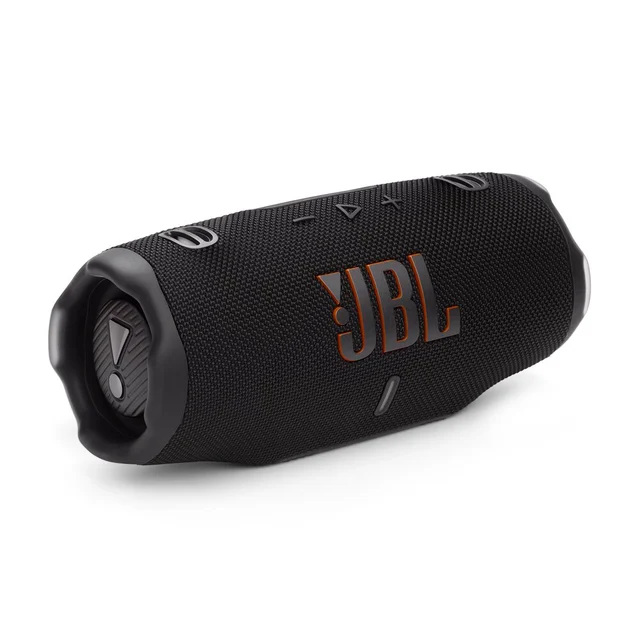
- Buy JBL Charge 6 The do-everything rugged speaker: big sound, marathon battery, and a built-in powerbank that keeps your phone alive on the trail. Amazon
- Buy Ultimate Ears WONDERBOOM 4 The toughest, most pocketable floater here, and the one you can throw in any bag without a second thought. Amazon
- It depends Bose SoundLink Flex (2nd Gen) The best-sounding compact of the bunch, but you pay for the refinement and give up the endurance features. Amazon
- Skip Ultimate Ears HYPERBOOM A superb party speaker that is simply too big, heavy, and expensive to be most people's outdoor grab-and-go. Amazon
What actually matters
- Ingress protection (the IP rating) tells you how well the speaker survives dust and water, which is the whole point of a rugged model destined for beaches, trails, and rain.
- Floating versus submersible decides whether the speaker is safe near open water; a submersible speaker survives a dunk but may sink, while a floating one stays retrievable.
- Battery life and powerbank output determine how long the music lasts and whether the speaker can also revive your phone far from an outlet.
- Portability and mounting (weight, size, and a loop or clip) decide whether the speaker is a true grab-and-go companion or a stay-at-home box.
- Sound at outdoor volume matters more than indoor listening tests, because open air disperses sound and thins out bass quickly.
- Connectivity and pairing (Bluetooth version, multi-device or Auracast support, USB-C) affect range, stability, and whether you can link speakers for bigger sound.
- Durability beyond water such as a rated drop height and rubberized housing keeps the speaker alive through the knocks of real outdoor use.
The specs, in plain English
Green flags vs red flags
Green flags
- A clearly stated IP rating of IP67 or higher, printed plainly rather than vaguely called 'water-resistant'.
- The word 'floats' if you plan to use it in or near open water.
- A quoted battery life close to a full day if you camp or spend long days out.
- A loop, strap, or carabiner mount and a weight you are honestly willing to carry.
- Recent Bluetooth and USB-C charging, which keep the speaker useful for years.
- A rated drop height or rugged, rubberized housing for real-world knocks.
Red flags
- Vague terms like 'splash-proof' with no IP number, which usually means limited protection.
- Assuming a high IP rating means it floats; many submersible speakers sink.
- Huge advertised wattage with no mention of how it sounds outdoors.
- A big, heavy 'party' speaker marketed as a grab-and-go outdoor carry.
- Promises of cross-brand stereo pairing, which rarely works in practice.
- No stated battery life, or a figure measured only at low volume.
Who's who: the brands
- JBL - A mainstream leader in rugged portable speakers, known for durable, bass-forward models with modern connectivity and long battery life.
- Ultimate Ears (UE) - Specialists in tough 360-degree speakers spanning tiny clip-on floaters to large splash-resistant party units, with app-based multi-speaker pairing.
- Bose - A premium audio brand valued for refined, balanced tuning in compact speakers, often prioritizing sound quality over extra endurance features.
- Sony - A broad electronics maker offering rugged waterproof speakers with punchy sound and app control across several size classes.
- Anker (Soundcore) - A value-focused brand delivering rugged, feature-rich speakers that undercut premium rivals on price.
How to read a listing without getting fooled
Start with the IP rating and read it literally: the first digit is dust, the second is water, and both matter outdoors. Then check separately whether the listing says the speaker floats, because a tough rating does not guarantee buoyancy. Treat quoted battery life as a best case, usually measured at moderate volume, and expect less if you play loudly. Be skeptical of headline wattage numbers, which say little about how a speaker actually performs in open air; look instead for mentions of passive radiators or outdoor tuning. Confirm the Bluetooth version and whether any advertised stereo or group pairing is limited to the same brand. Finally, weigh the physical facts, the size, weight, and whether there is a loop or clip, against how you realistically plan to carry it.
How much should you spend?
How much to spend depends far more on your use than on chasing the top model. Entry-level rugged speakers already deliver solid water resistance, floating designs, and loud-enough 360-degree sound, and they are the smart choice if you mainly want something to toss in a bag or take to the pool. Stepping up to the mid-range is where you gain the most useful extras for outdoor life: longer battery, a phone-charging powerbank port, higher IP ratings, and noticeably fuller sound, and for most buyers this tier is the value sweet spot. Paying flagship prices makes sense only if you genuinely need party-scale volume for large gatherings; for a hike, a beach day, or a campsite, that money buys size and weight you will not want to carry. Match the spend to the scenario, and the mid-range usually wins.
Questions, answered
What is the difference between waterproof, floating, and submersible?
These describe different things. 'Water-resistant' or 'waterproof' with an IP rating means the speaker survives contact with water, and 'submersible' means it can be fully underwater briefly. 'Floating' is separate and means it stays on the surface if dropped. A submersible speaker can still sink, so if you want it in a pool or lake, look specifically for the word 'floats'.
How much battery life do I really need?
It depends on your outings. For short trips or backyard use, half a day is plenty. For camping or all-day events far from an outlet, aim for close to a full day, and consider a model with a powerbank port so the speaker can also charge your phone. Remember that quoted figures are usually measured at moderate volume, so budget for less if you play loudly.
Can I pair two speakers together for bigger or stereo sound?
Often, but generally only within a single brand. Many makers let compatible units play in stereo or as a group through a shared feature or app, yet pairing across different brands almost never works. If multi-speaker sound is a goal, plan to buy matching units from the same maker.
Does a higher IP rating mean better sound?
No. An IP rating measures only dust and water protection, not audio quality. A speaker can be extremely rugged and sound thin, or be only moderately rated and sound excellent. Judge toughness and sound separately, and pay attention to how a speaker is described at outdoor volume rather than to its water rating.
Is a bigger, more powerful speaker always better outdoors?
Not for most people. Larger speakers play louder and go deeper, but they are heavy, bulky, and often only splash-resistant rather than submersible floaters. For hikes, beaches, and day trips, a compact, tougher speaker you will actually carry usually serves you better than a party box that stays home.
Or jump to the head-to-head: JBL Charge 6 vs Ultimate Ears WONDERBOOM 4.