Explained
Lip Balms with SPF, Explained
After reading, you'll understand how to tell a real SPF lip balm from a moisturizer and which label claims to trust.
In this guide
Lip balm shelves mix sunscreen sticks with plain moisturizers that look almost the same. First-time buyers often assume any balm from a sun brand protects them. The label tells you the truth if you know where to look: an SPF number, the words broad spectrum, and a list of active ingredients.
The 30-second version
- Look for an SPF number, because a balm without one is a moisturizer.
- Broad spectrum matters, since it covers UVA as well as UVB.
- Zinc oxide means mineral, and the other listed actives are chemical filters.
- Water resistance is time-limited, so reapply sooner after eating or drinking.
- Read the actives box, because it is the part regulated as a drug label.
The products this guide is about
Our verdict on each, with the full reasoning on the companion review.
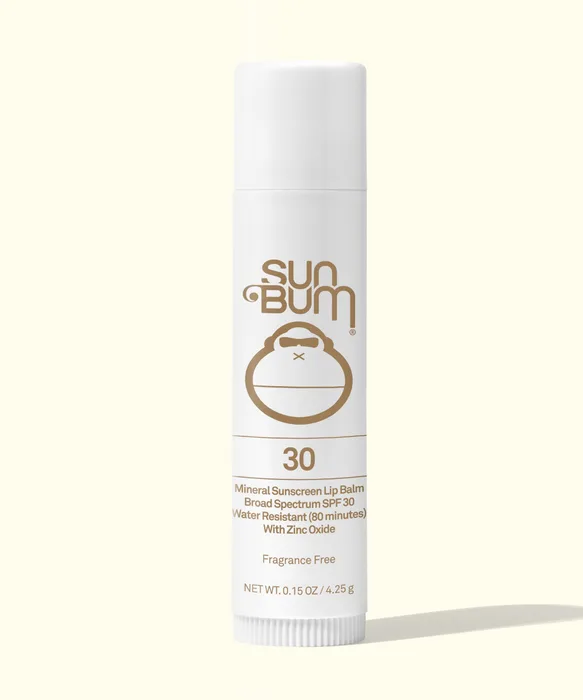
- Buy Sun Bum Mineral SPF 30 Sunscreen Lip Balm A zinc oxide stick with a short, plant-oil ingredient list and a broad spectrum SPF 30 claim.
- Buy Blistex Five Star Lip Protection SPF 30 A conventional chemical-filter SPF 30 stick that states 80 minutes of water resistance.
- It depends Aquaphor Lip Protectant + SPF 30 A petrolatum-heavy tube for dry, cracked lips that also carries a broad spectrum SPF 30 claim.
- Skip Sun Bum CocoBalm Lip Balm - Banana Cream A flavored coconut and aloe balm from a sunscreen brand that states it contains no sunscreen.
What actually matters
- SPF number - it measures protection against UVB burning rays. A higher number blocks slightly more, but reapplication matters more than the number.
- Broad spectrum - it indicates UVA coverage as well. Without it, a stick may stop burning but not longer-wave damage.
- Active ingredients - these are the sunscreen compounds. They are listed with percentages in a drug facts style box.
- Water resistance claim - a stated number of minutes of tested resistance. It does not survive eating, licking or wiping.
- Inactive ingredients - the oils, waxes, flavors and preservatives. They decide feel, taste and allergy risk.
- Format - a stick is quick and clean while a tube spreads a thicker layer. Pick what you will actually reapply.
- No-sunscreen statement - some makers state that a product contains no sunscreen. Believe it and look elsewhere for sun protection.
The specs, in plain English
Green flags vs red flags
Green flags
- An SPF number and the words broad spectrum on the pack.
- A complete actives list with percentages.
- A published inactive ingredient list.
- A stated water resistance time, if you are active outdoors.
- A format you will reapply easily, such as a stick.
Red flags
- A sun-themed brand name but no SPF number on the pack.
- A maker page that says the product contains no sunscreen.
- An ingredients section with no list at all.
- Claims of all-day protection with no reapplication advice.
- Heavy flavoring that encourages licking it off.
Who's who: the brands
- Sun Bum - Known for sun care with mineral and chemical lip options and a separate no-SPF CocoBalm line.
- Blistex - Known for long-running medicated and SPF lip products.
- Aquaphor - Known for petrolatum-based healing ointments, including lip products with SPF.
- Burt's Bees - Known for natural-positioned lip balms, which we did not verify on a maker page for this review.
- Carmex - Known for classic medicated lip balms, which we did not verify on a maker page for this review.
How to read a listing without getting fooled
Start with the front of the pack for an SPF number and broad spectrum. Then find the drug facts box and read the active ingredients and their percentages. Check for a water resistance line and the number of minutes. Last, scan the inactive list for anything you react to, and read directions for reapplication timing. If a maker page links to an ingredients section but shows nothing, rely on the package.
How much should you spend?
Lip balms with SPF sit in the budget to mid-range tiers. Mineral sticks tend to land a step above basic chemical sticks, while drugstore tubes and sticks are at the budget end. A higher tier does not give you more SPF, since the stated number is the same across our picks. Spend on the filter type and ingredient list you prefer, and buy two so you always have one at hand.
Questions, answered
Is lip balm with SPF the same as sunscreen?
Yes, it is regulated as a sunscreen drug product and has a drug facts style box. That is why you see active ingredients with percentages. A plain balm without those actives is only a moisturizer.
How often should I reapply?
Reapply often, since lips lose product when you eat, drink and lick them. Water resistance labels give a tested number of minutes, and real-world wear is usually shorter. For a long day on snow, check your lips at every break.
Are lip sunscreens safe if swallowed?
Small amounts that wear off while eating are expected with any lip product. Follow the label directions and keep them away from young children. Ask a doctor or pharmacist if you have concerns about a specific ingredient.
Can I use my face sunscreen on my lips?
You can for a quick fix, but face sunscreen often tastes bad and wears off fast. A dedicated stick is made for lips and is easier to reapply. Use both for a day on the snow.
Or jump to the head-to-head: Sun Bum Mineral SPF 30 Sunscreen Lip Balm vs Blistex Five Star Lip Protection SPF 30.