Explained
Lighted Makeup Mirrors, Explained
After reading, you'll understand CRI, lux, color temperature and magnification, and how to pick a mirror that shows true color.
In this guide
Most people shop for makeup mirrors by size and look, then wonder why their foundation looks different outdoors. Light quality decides that, and few listings explain it. The specs that matter are CRI, brightness range, light temperature, magnification and battery life.
The 30-second version
- CRI tells you about color, and 90 or higher means skin tones look close to daylight.
- Lux tells you about brightness, and a range is more useful than a peak.
- Magnification changes what you see, so choose 1x for the whole face and 10x only for detail.
- Light temperature matters, because makeup looks different in warm and cool light.
- Missing figures are a signal, since mirrors with good light usually publish it.
The products this guide is about
Our verdict on each, with the full reasoning on the companion review.
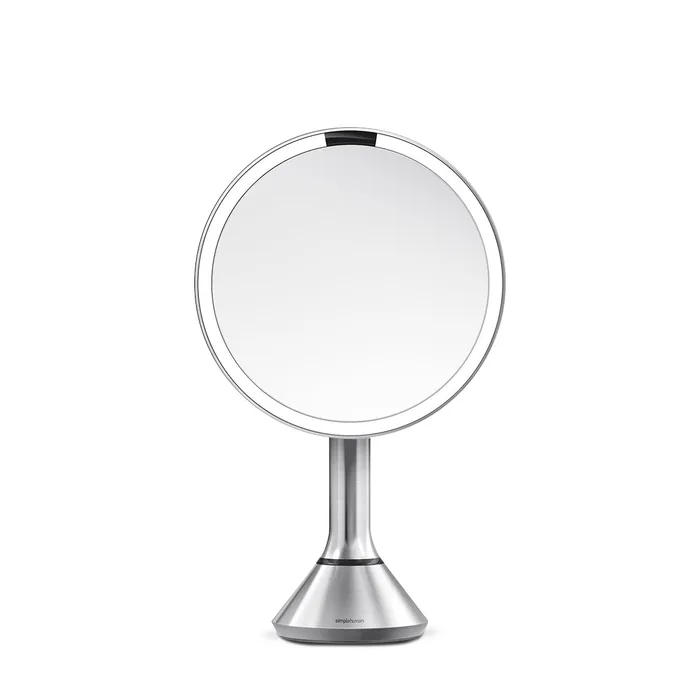
- Buy simplehuman Sensor Mirror Round A premium 5x mirror that turns on as you approach and publishes its brightness range.
- Buy Fancii Vera Lighted Vanity Mirror A full-face vanity mirror with color-accurate 95 CRI lighting for less.
- It depends Fancii Mira 2 Magnifying Mirror 10x A cheap 10x magnifier with adjustable light for detail work, as a second mirror.
- Skip RIKI LOVES RIKI SKINNY A slim, creator-focused mirror that publishes less about its light than cheaper rivals.
What actually matters
- CRI - Measures how accurately light shows colors, up to 100. Higher CRI makes makeup look the same in the mirror and outside.
- Brightness (lux) - How much light reaches your face. Adjustable brightness lets you match the room and time of day.
- Color temperature - Warm, neutral or cool light. Neutral daylight-like light is best for everyday makeup.
- Magnification - 1x shows the full face; 5x and 10x show detail but less of the face.
- Battery and charging - Battery life ranges from hours to weeks. USB-C is the most convenient connector.
- Activation - Sensors and touch controls make daily use easier than small buttons.
- Warranty - LEDs and batteries are the parts that fail, so longer coverage adds value.
The specs, in plain English
Green flags vs red flags
Green flags
- A published CRI of 90 or higher.
- A published brightness range.
- Adjustable light temperature.
- Battery life stated in weeks or with clear hours.
- A warranty of two years or more.
Red flags
- No CRI or brightness figures.
- Only very high magnification for a main mirror.
- Older charging ports on a new, premium mirror.
- Badges and influencer photos instead of specs.
- A short warranty on a battery-powered mirror.
Who's who: the brands
- simplehuman - Home products brand known for sensor-activated mirrors, trash cans and soap pumps.
- Fancii - Makeup mirror brand known for color-accurate LED vanity and compact mirrors.
- RIKI LOVES RIKI - Lighted mirror brand focused on creators, with phone holders and selfie controls.
- Zadro - Long-running maker of magnifying and lighted mirrors.
- Conair - Personal care brand selling budget lighted mirrors.
How to read a listing without getting fooled
Look for the light specs first: CRI, brightness range and color temperature options. Then check magnification and mirror size, and whether that fits how you do your makeup. Next, check battery life, charging connector and whether it can run plugged in. Finally, compare the warranty. If a listing leads with awards and photos but has no light figures, compare it against a mirror that publishes them.
How much should you spend?
Budget lighted mirrors are often small magnifiers or compacts with basic LEDs. Mid-range mirrors add higher CRI, dimmable settings and better batteries. Premium mirrors add motion sensors, published brightness ranges, long battery life and long warranties. Spend more if you do makeup daily and want accurate light.
Questions, answered
Can a lighted mirror replace good bathroom lighting?
For makeup, largely yes, because it lights your face directly and evenly. It won't fix a dark room for other tasks. Positioning the mirror to face you straight on gives the best results.
Why does my makeup look different outside?
Indoor light is often warmer and less color-accurate than daylight. A high-CRI, daylight-temperature mirror helps close that gap. Check your makeup near a window if you can.
Is 10x magnification too much?
For full-face makeup, yes, because you see only a small area and it can distort perspective. It is useful for eyeliner, brows and tweezing. Most people use it as a second mirror.
How long do LED mirror lights last?
LEDs are long-lasting, but batteries wear over time. A longer warranty, like simplehuman's five years, covers the parts most likely to fail.
Or jump to the head-to-head: simplehuman Sensor Mirror Round vs Fancii Vera Lighted Vanity Mirror.