Explained
Hot Air Brushes, Explained
After reading, you'll understand which hot air brush specs matter, which claims are marketing, and how to match a barrel to your hair.
In this guide
Hot air brushes look simple, but the listings are full of terms that do not mean much without numbers. First-time buyers tend to compare wattage, which says little about how hot or how fast a tool styles. Most listings skip the temperatures of each setting, so 'low' on one brush can be hotter than 'high' on another. And multi-stylers add Coanda barrels, smart attachments and voltage limits that change who the tool is for.
The 30-second version
- Heat and speed control matter more than wattage, because separate settings let you dry with airflow instead of heat.
- Published temperatures are rare, so a maker that lists them gives you more to go on than one that does not.
- Barrel size should follow hair length, with smaller oval barrels for shorter hair and larger ones for longer hair.
- Multi-stylers are worth it only if you curl or straighten, since a single brush dryer handles a basic blowout for far less money.
- Most brush dryers are single voltage, so check the rating before taking one abroad.
The products this guide is about
Our verdict on each, with the full reasoning on the companion review.
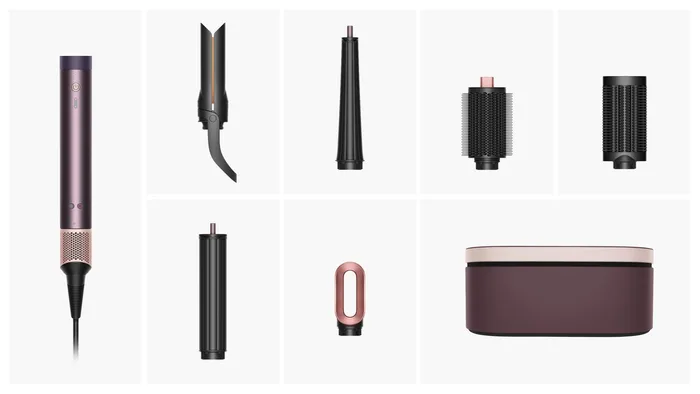
- Buy Dyson Airwrap Co-anda2x Multi-Styler and Dryer (Straight+Wavy) A 1,700 W multi-styler with six attachments that dry, curl, straighten, smooth and volumize, and set their own heat and airflow.
- Buy L'ange Le Volume 2-in-1 Titanium Brush Dryer A 1000W oval brush dryer in 60mm or 75mm that publishes its real temperatures and weighs 1.1 lb.
- It depends T3 AireBrush (Oval) A 1200W oval blow dry brush with 3 heat and 2 speed settings, a ceramic surface and a 2-year warranty.
- Skip Wavytalk Air Sculpt 5-in-1 Hot Air Brush Set A five-head hot air brush kit whose own page disagrees on its power and publishes no temperatures.
What actually matters
- Heat settings - The number of heat steps and their actual temperatures decide how gently you can work. Three settings with no temperatures listed is the minimum, not a feature.
- Speed settings - A separate speed control lets you raise airflow without raising heat. That is the most useful upgrade on mid-priced tools.
- Barrel shape - Oval barrels give volume and bends, round barrels give a classic smooth blowout. Coanda barrels wrap hair around themselves with airflow to make curls.
- Barrel size - Larger barrels give smoother, looser shapes on long hair. Smaller barrels reach the root and curl the ends of shorter hair.
- Weight - You hold the tool overhead for the whole session. A stated weight around a pound is comfortable for most people.
- Cord - A 6 ft or longer cord with a 360° swivel stops twisting and lets you reach the back of your head. Short fixed cords are a daily annoyance.
- Warranty and voltage - These tools combine a motor, a heater and bristles that wear, so a 2-year warranty is worth having. Single-voltage tools may fail or be damaged on foreign power.
The specs, in plain English
Green flags vs red flags
Green flags
- Temperatures listed for each heat setting
- Separate heat and speed controls
- A stated weight around a pound or less
- A cord of 6 ft or more with a 360° swivel
- A 2-year warranty or longer
Red flags
- Power figures that disagree within the same listing
- Damage-reduction claims with no stated test or comparison
- No weight published
- Only a single combined heat and speed dial at a mid-range price
- Travel marketing on a tool that is single voltage
Who's who: the brands
- Dyson - Makes the Airwrap multi-stylers, which use Coanda airflow and smart attachments at a premium price.
- L'ange - Known for affordable brush dryers like Le Volume, sold in two barrel sizes with published temperatures.
- T3 - A mid-priced hair tool brand known for ceramic surfaces and separate heat and speed controls.
- Wavytalk - Sells budget hot air brush kits and air stylers with many interchangeable heads.
How to read a listing without getting fooled
Start with the control layout: count the heat settings and speed settings separately, and look for a temperature next to each. Then check the barrel shape and size against your hair length, and find a stated weight. Read the electrical line closely; it tells you the voltage and wattage, and whether the tool is single voltage. Compare the description with the spec list, because some listings disagree with themselves on power. Finally, check what is in the box and the warranty length, and treat any percentage claim about damage or speed as marketing unless the maker explains how it was measured.
How much should you spend?
Budget brush dryers ($ · budget) do a single round-brush blowout and are the right buy for most people; look for one that lists its temperatures and a barrel size for your hair. Mid-range tools ($$ · mid-range) add separate heat and speed control, better surfaces and longer warranties, which matter most for fine or color-treated hair. Premium multi-stylers ($$$ · premium) add curling barrels, air straighteners and smart attachments, and only pay off if you use several heads each week.
Questions, answered
Does higher wattage mean a better hot air brush?
Not necessarily. Wattage is the power drawn, not the temperature or airflow you feel. A tool with separate speed control can dry fast at a lower heat. Compare heat settings, published temperatures and weight before wattage.
What is the difference between a hot air brush and an air styler?
A hot air brush is usually a single brush head on a dryer body, built for blowouts. An air styler, or multi-styler, takes interchangeable heads such as Coanda curling barrels, brushes and a dryer nozzle. Air stylers cost more and do more looks.
Should I use a hot air brush on wet hair?
Most makers suggest rough-drying first. L'ange recommends towel drying and rough-drying to about 70% before styling, and Wavytalk says its kit is designed for damp hair. Starting soaking wet means more passes and more heat.
Are ionic claims real?
Negative ion features are widely used to reduce static and frizz, but makers rarely publish measurements. Treat ionic as a nice extra, not a reason to choose one tool over another with better controls.
Or jump to the head-to-head: Dyson Airwrap Co-anda2x Multi-Styler and Dryer (Straight+Wavy) vs L'ange Le Volume 2-in-1 Titanium Brush Dryer.