Explained
Heated Jackets, Explained
After reading, you'll understand how to compare heated jackets by zones, battery size and runtime, and spot a listing that does not add up.
In this guide
Heated jacket listings lean on big hour counts and brand names, and first-time buyers often compare the wrong numbers. A runtime means little without knowing the setting and the battery. Voltage and milliamp-hours are easy to misread. Some jackets include the battery, while others are sold without it. This guide covers the terms you will see and the red flags worth catching.
The 30-second version
- Read the setting, because a headline runtime almost always describes low heat.
- Compare batteries in Wh, not mAh, since voltage changes what a mAh figure means.
- Zones matter more than count, so look at where the panels sit, with chest and back first.
- Insulation still counts, because a flat battery turns a heated jacket into a normal one.
- Check the box contents, since some jackets ship without a battery or charger.
The products this guide is about
Our verdict on each, with the full reasoning on the companion review.
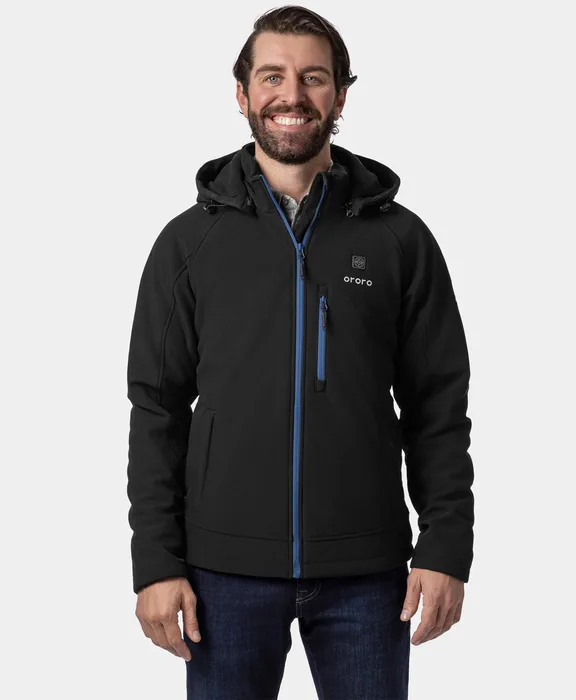
- Buy Ororo Men's Classic Heated Jacket 2.0 (4 Heating Zones) The most fully documented jacket here: four zones, a stated runtime at three settings, a battery in the box and a machine-wash note.
- Buy Gerbing 7V Men's Khione Insulated Heated Jacket 2.0 A properly insulated ripstop jacket with four zones, a neck heater and a lifetime warranty, at the cost of a small battery.
- It depends Milwaukee M12 Heated TOUGHSHELL Work Jacket (M100B-20M) A work jacket built around the M12 battery system, so it makes sense only if you already own the batteries.
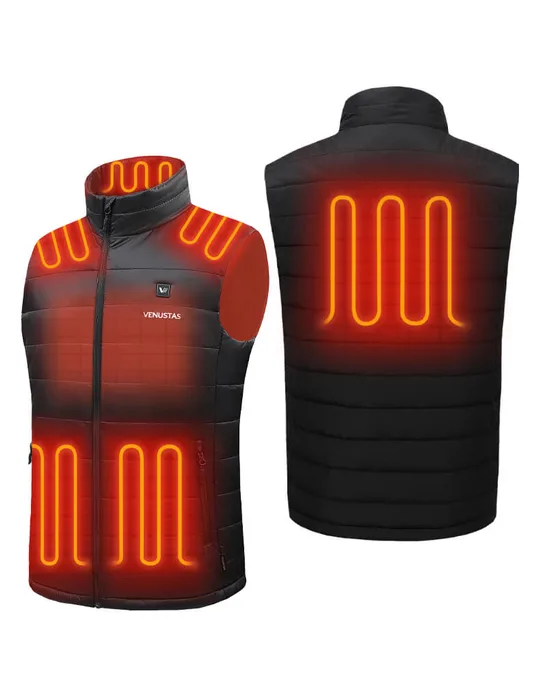
- Skip Venustas Unisex Dual Control Heated Jacket 7.4V-12H, U9001 Pro Six zones and a 12-hour headline, but the product page gives conflicting battery numbers for the Pro model.
What actually matters
- Heating zones - these are the panels or wires in the jacket. Chest and back warm the core, and neck or pocket zones add comfort.
- Battery capacity (Wh) - watt-hours set how much energy you carry. Bigger packs run longer at the same setting.
- Runtime per setting - hours on high, medium and low. High is usually a few hours, so this is what to read first.
- Heat settings - most jackets have three or four levels. Makers do not always publish the temperature of each.
- Washability - machine washable usually means gentle cycle with the battery removed. Check the care label.
- Shell and insulation - the outer fabric handles wind and light rain, and the fill keeps you warm without power.
- Battery included - some jackets sell the battery separately, which can change the real cost.
The specs, in plain English
Green flags vs red flags
Green flags
- Hours are listed at each heat setting.
- Battery capacity is given in Wh and mAh with matching voltage.
- Care instructions are stated.
- Insulation and shell materials are named.
- The package contents include battery and charger.
Red flags
- Only one best-case runtime is given.
- Battery numbers disagree within the same page.
- No battery or charger is mentioned.
- Warmth claims with no temperature or setting.
- Waterproof wording with no seam or fabric detail.
Who's who: the brands
- Ororo - Sells a wide range of heated jackets with optional larger battery upgrades.
- Gerbing - Long-running heated apparel brand with 7V jackets and a lifetime warranty on this model.
- Milwaukee - Power tool maker whose heated gear runs on M12 batteries.
- Venustas - Sells heated apparel at a range of runtime tiers, with several battery options.
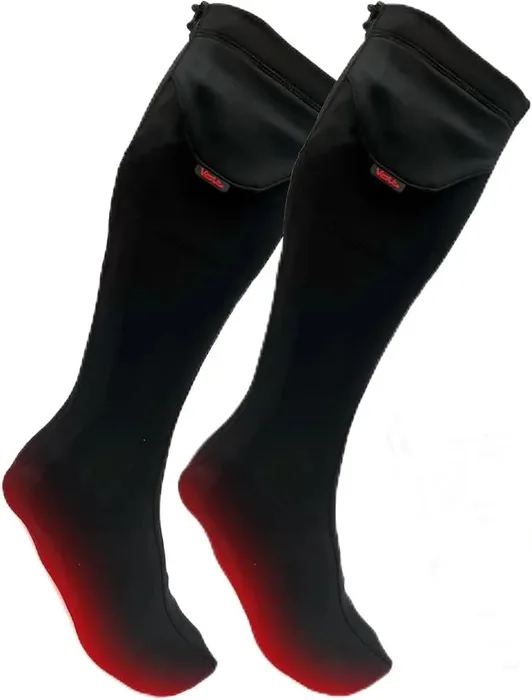
- Mobile Warming - Heated apparel line under Fieldsheer, covered in our vest, glove and sock reviews.
How to read a listing without getting fooled
Start with the battery line. Convert any mAh and voltage to Wh, and check the numbers agree across the page. Then find runtime and note the setting. Next, check zones, then the shell and insulation, then the care label. Finally look at the package contents for battery and charger. If a page does not state a figure, treat it as unknown, not as good.
How much should you spend?
Heated jackets sit in the mid-range to premium tiers. Mid-range jackets tend to include a battery and a modest shell, while premium models add real insulation and longer warranties. A jacket sold without a battery can look cheaper but needs a pack and charger, which can move it into a higher tier. A bigger battery upgrade is usually a smaller step than buying a second jacket.
Questions, answered
What is the difference between a heated jacket and a heated hoodie?
A hoodie is usually lighter, with a knit or fleece body and fewer zones, often just chest and back. A jacket tends to add a wind-resistant shell and insulation. Gerbing, for example, lists three panels on the chest and upper back for its hoodie. Pick a hoodie for layering and a jacket for stand-alone use.
Can I take a heated jacket battery on a plane?
Airlines generally treat lithium batteries as carry-on items with watt-hour limits, and rules vary by carrier and country. Check the Wh figure on your pack and your airline's policy before you fly. Do not pack spare batteries in checked bags.
Do I need a separate charger?
It depends on the model. Gerbing lists a wall charger in the package. For other jackets, the listing may not say. Confirm the box contents, because a missing charger adds cost and delay.
Can I use a power bank?
Some jackets support USB or power bank charging, but this varies, and we only discuss what each maker lists. Check your jacket's manual before you plug in a third-party pack. Using the wrong voltage can damage the battery.
Or jump to the head-to-head: Ororo Men's Classic Heated Jacket 2.0 (4 Heating Zones) vs Gerbing 7V Men's Khione Insulated Heated Jacket 2.0.