Explained
Heated Gloves, Explained
After reading, you'll understand how heat coverage, battery size, runtime claims and waterproofing decide whether heated gloves keep your fingers warm.
In this guide
Heated gloves are sold on maximum temperature and battery life, but the numbers often come without context. Where the heat reaches matters as much as how hot it gets, and runtime depends heavily on the setting. The glove itself still needs to be waterproof and insulated. Here is what to look for.
The 30-second version
- Fingertip heat matters most, because fingers get cold before the back of the hand.
- Runtime depends on the setting, and high can last a quarter as long as low.
- 7.4V batteries are standard, so compare their mAh.
- Waterproofing still matters, because wet gloves feel cold when the heat drops.
- Batteries wear out first, so check the warranty and replacement cost.
The products this guide is about
Our verdict on each, with the full reasoning on the companion review.
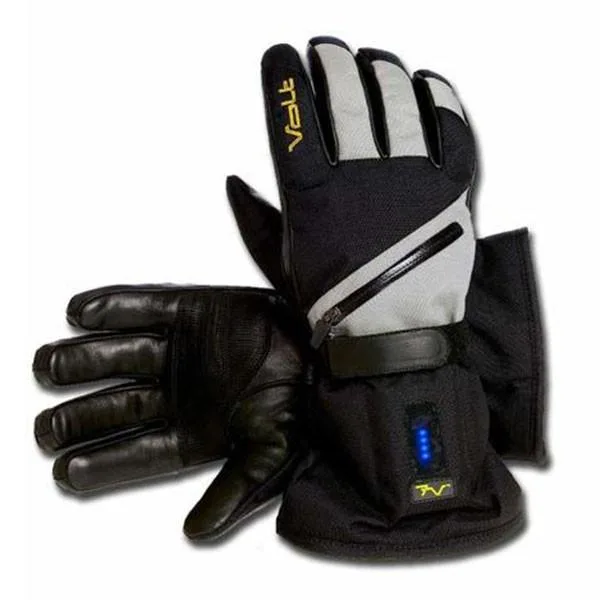
- Buy Volt Heat Tatra 7V Heated Snow Gloves Full-hand heating over 150°F with two 7.4V batteries and an honest runtime chart.
- Buy Mobile Warming Squall 3.0 Heated Glove A waterproof, touchscreen-friendly heated glove with USB-C charging and a machine-washable build.
- It depends Gobi Heat Epic II Heated Ski Gloves The hottest top setting here, with conductive thread around every fingertip, but a shorter runtime.
- Skip Outdoor Research Prevail Heated GORE-TEX Glove A well-built GORE-TEX glove whose product page leaves out the heating specs that matter.
What actually matters
- Heat coverage - back of hand, fingers, thumb or palm. More coverage means warmer fingers.
- Battery - voltage and mAh. Two batteries, one per glove, are standard.
- Runtime by setting - a chart beats a single number. Plan on low or medium for all-day use.
- Maximum heat - published figures range from about 135°F to over 150°F. More headroom helps in deep cold.
- Waterproofing - a membrane liner keeps hands dry. Water-resistant is less protection.
- Insulation - grams of insulation keep warmth when the battery is low. More on the back than the palm is common.
- Care and warranty - washable gloves are easier to live with. Battery warranties are often one year.
The specs, in plain English
Green flags vs red flags
Green flags
- Heat that reaches the fingers and thumb.
- A runtime chart by heat setting.
- Battery voltage and capacity stated.
- A named waterproof membrane.
- Clear washing and battery care instructions.
Red flags
- No battery capacity or runtime on the product page.
- Maximum temperature not stated.
- "Water-resistant" on a snow glove.
- No insulation details.
- No warranty terms for the batteries.
Who's who: the brands
- Volt Heat - A heated apparel brand with 7V gloves, jackets and socks and published runtime charts.
- Mobile Warming - A heated apparel brand, sold through Fieldsheer, with 7.4V gloves and Bluetooth garments.
- Gobi Heat - Known for heated gloves and vests using conductive thread heating.
- Outdoor Research - An outdoor brand whose ALTIHeat line adds battery heating to GORE-TEX gloves and mitts.
How to read a listing without getting fooled
Start with the heat coverage and look for fingers and thumb, not just the back of the hand. Then find the battery voltage and capacity and a runtime chart by setting, along with the maximum temperature. Check the waterproof membrane and the insulation weights, then the care instructions. Finally, read the warranty and see whether spare batteries are sold and what they cost.
How much should you spend?
Budget heated gloves often use small USB power banks and heat mainly the back of the hand. Mid-range gloves add 7.4V batteries, finger heating, waterproof liners and washable builds, which is the best value for most people. Premium gloves add full-hand heating, leather palms, premium membranes and higher maximum temperatures.
Questions, answered
Heated gloves or heated mittens?
Mittens are warmer because your fingers share heat, and many brands sell heated versions. Gloves give you dexterity for poles, zips and phones. Choose mittens for very cold, low-dexterity days.
Can I use heated gloves without the battery?
Yes, they work as regular insulated gloves. Thicker insulation makes them more useful when the battery is flat. Waterproofing matters more in that case.
How do I store heated glove batteries in summer?
Store them partly charged in a cool, dry place. Top them up every few months. Fully draining or storing them hot shortens their life.
Should heated gloves fit tight?
Close but not tight, so heat reaches your fingers without cutting circulation. Too loose and heat escapes. Measure your hand around the knuckles and use the brand's chart.
Or jump to the head-to-head: Volt Heat Tatra 7V Heated Snow Gloves vs Mobile Warming Squall 3.0 Heated Glove.